Media Home
 UN Web TV
 UN Audiovisual Library
 UN Photo
Unifeed
SOUTH SUDAN / DISPLACED MATERNAL MORTALITY
STORY: SOUTH SUDAN / DISPLACED MATERNAL MORTALITY
TRT: 4.37
SOURCE: UNICEF
RESTRICTIONS: NONE
LANGUAGE: DINKA /ARABIC /NATS
DATELINE: 21 MAY 2014, MINGAKAMAN, SOUTH SUDAN
1.Med shot,rain at Mingakaman IDP camp
2.Close up,rain drops
3.Close up,UNICEF car getting submerged into a pull of water
4.Wide shot, Mingakaman IDP camp with flooded water
5.Med shot,children at the IDP camp walking in pool of water
6.Med shot of crowded makeshift camps
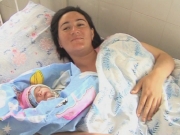
7.Med shot, midwife checking a 5 hour- old baby boy at the IDP camp
8.Close up, baby boy
9.Close up,,mother
10. Various shots,,midwife assisting the mother to breastfeed her baby
11.Close up,mother breastfeeding the baby
12.Med shot, grandmother watching the baby
13.SOUNDBITE(Arabic) kuei Kang, displaced mother:
“I went to the natal clinic yesterday, I was seen by the midwife and she told me that it was my time to give birth but the waters had not broken. Then I came back home and the labor started at once last night, my husband was here and I told him to go to call the midwife, but since they could not find her, we called the mother in-law, she is the one who helped me to give birth around four a.m.”
14.Med shot, husband and his wife
15.Various shots,husband checking his newborn baby
16.SOUNDBITE (Arabic) Kang Ruben, 23 year old:
” Everything went well with the delivery, but the main problem now is that here in this camp, I have no job and a woman who has given birth needs many things like proper food, clothes, many, many things that I cannot provide her because of the current situation.”
17. Wide shot, midwife walking from the UNICEF health center carrying a medical equipment to check the well being of the baby and the mother
18.Med shot, midwife checking on the baby with a stethoscope
19.Close up,baby being checked
20.Close up, face of midwife wearing the stethoscope
21.Close up, baby sleeping
22.Wide shot, woman walking to the UNICEF health clinic
23.Med shot, woman coming for antenatal care
24.SOUNDBITE (English) Dr. Garang Kur Apiu, UNICEF Health and Nutrition Officer:
“The general situation from the beginning was very bad, you have seen such mothers who are delivering without assistance, health services were not there and a lot has happened.”
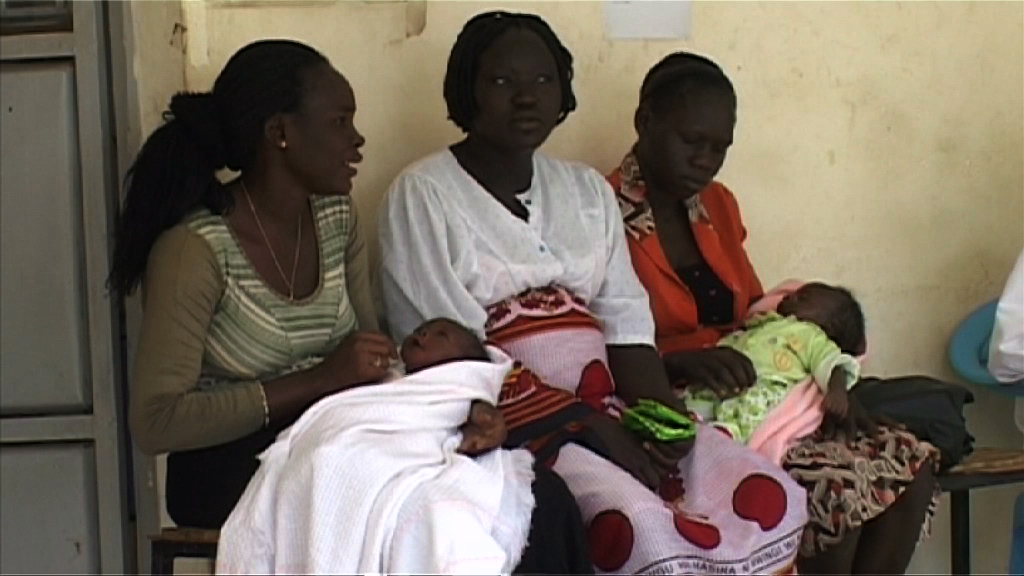
25.Various shots, women and their children waiting at the UNICEF Health clinic
26.SOUNDBITE (English) Dr. Garang Kur Apiu, UNICEF Health and Nutrition Officer:
“There is no hospital, caesarean section is supposed to happen, when there are complications and it is nowhere. Aweria it takes six hours or more and Juba takes seven hours. So this period is really very critical- Bor hospital is the nearest but it needs a boat, transport means -there should be a boat for the partners who are implementing maternal health so that they can quickly shift the patients when a decision has been made for referral to Bor hospital, which is the nearest”
27.Pan right, from pool of water to women standing with their children
28.Med shot,girls preparing traditional grains in hollow piece of wood
29.Med shot, traditional hut with children in the background
30.Med shot,children dancing and laughing
Tens of thousands of people that fled from fighting in South Sudan are sheltering in a makeshift camp in flood-prone Mingkaman.
The onset of the rainy season last month has not only increased the risk of disease, but also added strain on humanitarian workers struggling to cope with the ever increasing numbers of displaced.
It is within these conditions that pregnant mothers give birth.
Despite attending antenatal care at a UNICEF supported maternal health clinic, 19-year-old Kuei Kang couldn’t reach the clinic when labor pains set in.
SOUNDBITE(Arabic) Keui Kang, displaced mother:
“I went to the natal clinic yesterday, I was seen by the midwife and she told me that it was my time to give birth but the waters had not broken. Then I came back home and the labor started at once last night, my husband was here and I told him to go to call the midwife, but since they could not find her, we called the mother in-law, she is the one who helped me to give birth around four a.m.”
Far from home, without a job and depending on humanitarian aid, the baby’s father worries how to provide for his family.
SOUNDBITE (Arabic) Ruben Kang, 23 year old:
”Everything went well with the delivery, but the main problem now is that here in this camp, I have no job and a woman who has given birth needs many things like proper food, clothes, many, many things that I cannot provide her because of the current situation.”
Even before the conflict, South Sudan had one of the highest maternal mortality rates in the world, with one in seven females dying in pregnancy or childbirth.
A young girl in this country is three times more likely to die from childbirth than to enter the eighth grade.
Poor infrastructure, inadequate transport services, distance from health facilities and lack of midwives play a big role in maternal mortality in South Sudan.
Dr. Garang Kur Apiu, a UNICEF health and nutrition officer says the conditions are challenging.
SOUNDBITE (English) Dr. Garang Kur Apiu, UNICEF Health and Nutrition Officer:
“The general situation from the beginning was very bad, you have seen such mothers who are delivering without assistance, health services were not there and a lot has happened.”
Download
There is no media available to download.