Media Home
 UN Web TV
 UN Audiovisual Library
 UN Photo
Side Events
Every Women, Every Child , Saving Lives, Protecting Futures
Commission on the Status of Women, Fifty-ninth Session,3rd Meeting AM
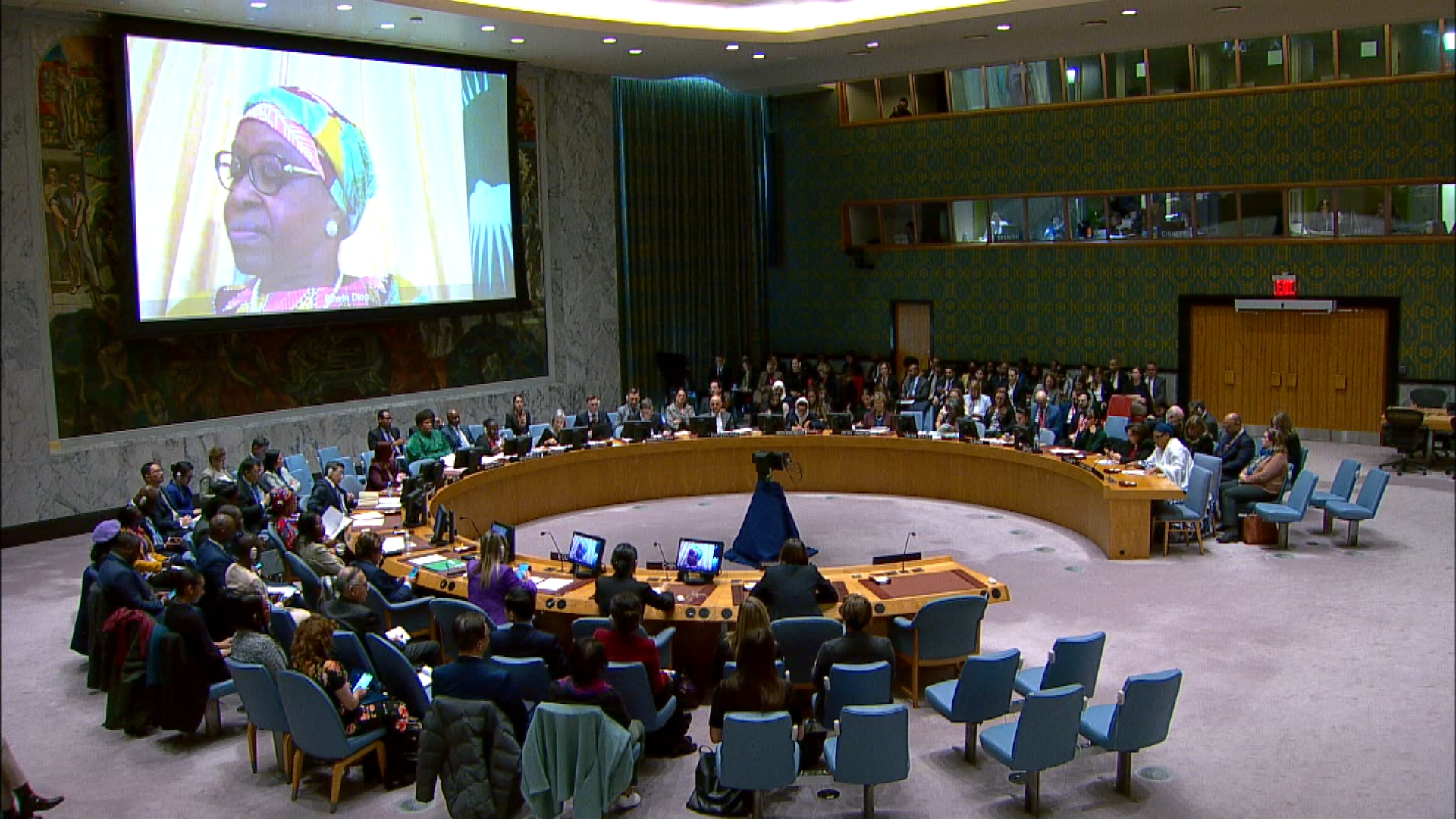
Opening of the High-level Event on Every Women, Every Child , Saving Lives, Protecting Futures
Time to Establish ‘Old Girls’ Network’ to Help Future Generations, Says Netherlands’ Education, Culture, Science Minister
The urgency of integrating gender equality and women’s empowerment as a stand-alone goal, as well as a cross-cutting element of the post-2015 development agenda, dominated the second day of the fifty-ninth session of the Commission on the Status of Women, with some speakers suggesting specific ways of advancing the overarching spirit of the Beijing Declaration and Platform for Action.
Efforts to end early and child marriage should be included in the new agenda, as that practice deprived girls of their rights and physically and mentally harmed the world’s most precious assets, Canada’s Minister for the Status of Women said.
Several speakers, including ministers and senior government officials, said that despite the progress achieved since the Declaration’s adoption in 1995, significant challenges remained in closing the gender pay gap, securing equal political and economic power between women and men and eliminating all forms of gender-based violence.
Women who occupied leadership positions should understand that they were the agents of change for an egalitarian society, the President of the National Council of Women of Argentina said. “When women work together they can bring about great change,” she said. “Now they need to change not the course of history, but history itself.”
While economic and social indicators for women had been improving across the world, few women had the power to make decisions about their lives, the Minister of Education, Culture and Science of the Netherlands said. The time had come to establish an “old girls’ network” to help future generations live a life without having to constantly look over their shoulders, she added.
Some speakers highlighted context-specific challenges to the advancement of women and stressed the need for targeted responses. Nauru’s representative said that as a small island developing State, the country was vulnerable to economic shocks and its efforts to offer women opportunities could be quickly reversed when forced to deal with a volatile world economy.
Issuing an urgent call, Iraq’s Minister of State for Women’s Affairs asked the international community to urgently address the question of the Islamic State in Iraq and the Levant/Sham (ISIL/ISIS), which was today a challenge for everybody. “We have not received enough support in this war,” she said, adding that the situation was rapidly exacerbating problems for women across her country.
Also speaking today were ministers and high-level officials from Kenya, Mexico, Liberia, Japan, Tunisia, Iceland, Guinea, Paraguay, Burkina Faso, Haiti, Sudan, Togo, Nicaragua, Peru, Kuwait, Guinea-Bissau, Poland, Malawi, Democratic Republic of the Congo, Afghanistan, Burundi, Namibia, Italy, Portugal, Russian Federation and Kazakhstan.
In the morning, the Commission held four high-level round-table discussions, where ministers and other senior Government officials exchanged views on: making the economy work for women and girls; investing in gender equality and the empowerment of women; transforming politics and public life to achieve gender equality; and accountability for realizing de facto equality for women and girls.
The Commission will meet at 10 a.m. on Wednesday, 11 March, to continue its discussions.