Media Home
 UN Web TV
 UN Audiovisual Library
 UN Photo
Unifeed
GENEVA / EMMISSION GAP REPORT
STORY: GENEVA / EMISSIONS GAP REPORT
TRT: 01:48
SOURCE: UNTV CH
RESTRICTIONS: NONE
LANGUAGE: ENGLISH / NATS
DATELINE: 6 NOVEMBER 2015 GENEVA, SWITZERLAND
RECENT
1. Aerial shot, Palais des Nations
6 NOVEMBER 2015 GENEVA, SWITZERLAND
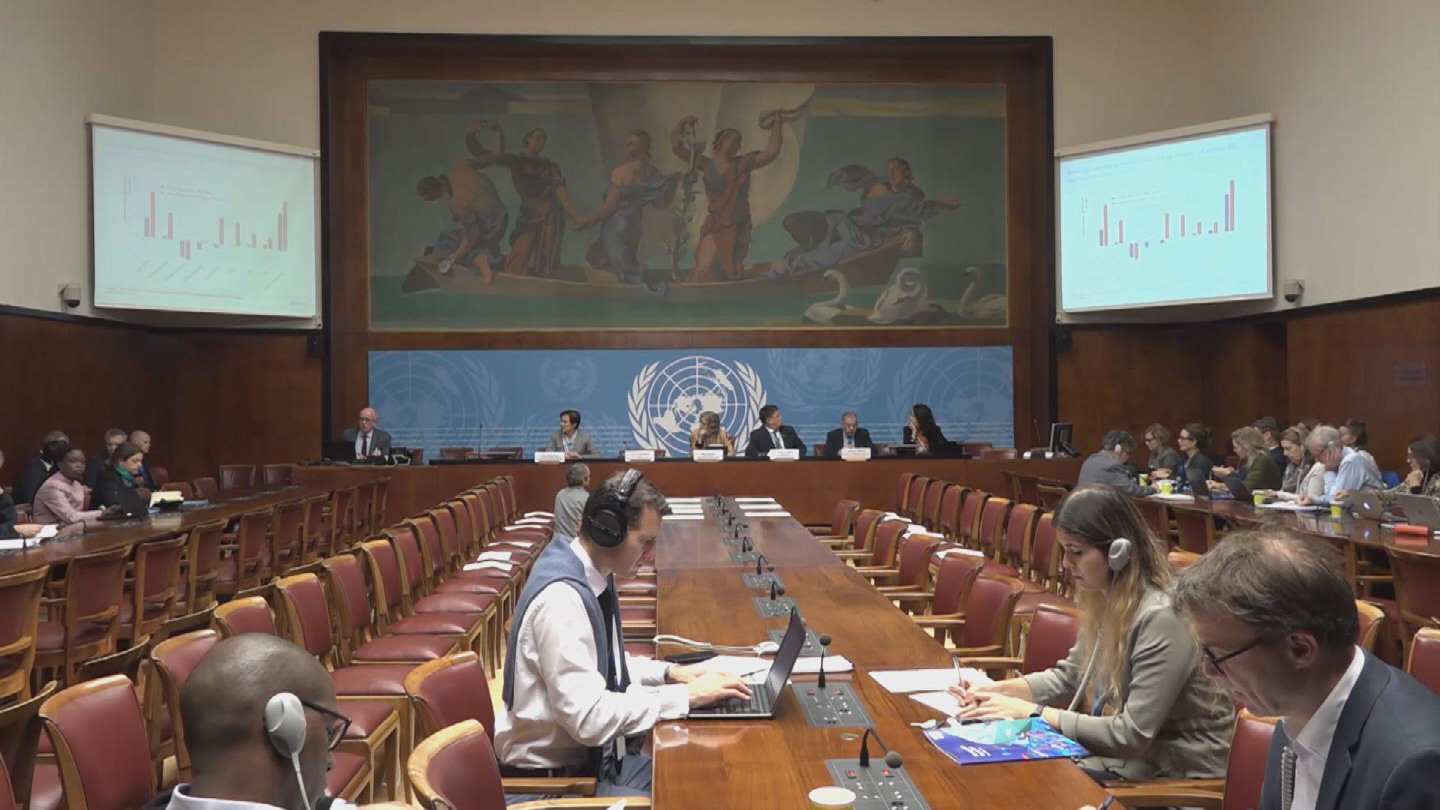
2. Wide shot, press briefing room
3. SOUNDBITE (English) Jacqueline Mc Glade, UNEP Chief Scientist:
” We are also seeing the benefit of having INDC’s at this moment on the table, because they fulfil some of the necessary conditions to support the sustainable development goals and that combination, I think, will drive the process much more quickly towards the low carbon economies”.
4. Med shot, podium
5. SOUNDBITE (English) Jacqueline Mc Glade, UNEP Chief Scientist:
“Is it sufficient to stay below the two degrees? Simply on their own INDCs and current policies will not take us on the two degree trajectories. They will take us – if they are fully implemented – on to a trajectory somewhere between 3 and 3,5 degrees”.
6. Med shot, panel
7. SOUNDBITE (English) Jacqueline Mc Glade, UNEP Chief Scientist:
“We have a range of ideas, solutions and practical implementation that is already ongoing in energy efficiency, the way that we use renewable energies, as Achim Steiner has pointed out, different international cooperatives, cities are dynamic that must be taken into account and, of course, long standing commitments to forest and forest mitigation activities”.
8. Med shot, journalists
9. SOUNDBITE (English) Jacqueline Mc Glade, UNEP Chief Scientist:
“2030 is just really our first stopping off point because, as our director said, it is important to remember to keep within the IPCC guidelines of 1000 Giga tonnes in the atmosphere to avoid to going above the 2 degrees trajectory. We need to be in net zero emissions at least by the second half of the century. So the 2030 destination, so to speak, is the first stop. We need to do more and continue to do more to stay on track”. 10. Close up, diagram from the report
11. Wide shot, press briefing room
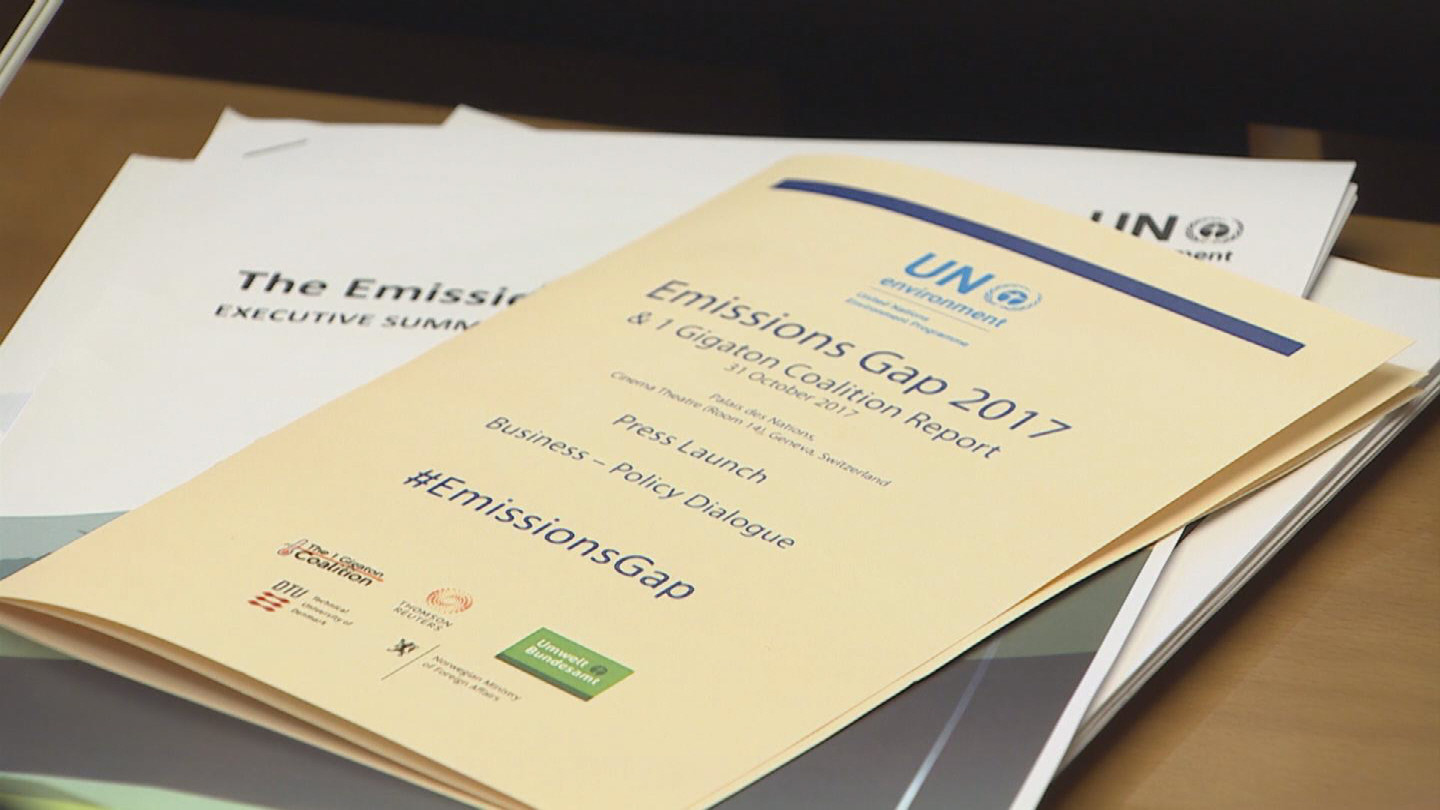
Three weeks ahead of a key climate conference in Paris, the United Nations Environment Programme (UNEP) launched the Emissions Gap Report 2015 offering a scientific assessment of the mitigation contributions from the submitted Intended Nationally Determined Contributions (INDCs).
More countries than ever are preparing to limit emissions of damaging greenhouse gases, says the launched today by the United Nations Environment Programme (UNEP) in Geneva.
The report is focusing on country pledges for the Paris climate meeting.
Around 150 countries have now submitted plans showing how they intend to cut back on emissions, covering almost 90 per cent of the world’s emissions.
Jacqueline Mc Glade, UNEP’s Chief Scientist, said today in Geneva that ”we are also seeing the benefit of having INDC’s at this moment on the table, because they fulfil some of the necessary conditions to support the sustainable development goals and that combination, I think, will drive the process much more quickly towards the low carbon economies”.
As in the previous reports, this one also compares the resulting emission levels in 2030 with what science says is required to be on track towards the agreed target of a global average temperature increase below 2 °C by 2100.
Jacqueline Mc Glade, UNEP Chief Scientist, said “is it sufficient to stay below the two degrees? Simply on their own INDCs and current policies will not take us on the two degree trajectories. They will take us – if they are fully implemented – on to a trajectory somewhere between 3 and 3,5 degrees”.
The report presented also selected areas where enhanced action can be taken, accelerated and scaled up to close the emissions gap.
Jacqueline Mc Glade, UNEP Chief Scientist: “We have a range of ideas, solutions and practical implementation that is already ongoing in energy efficiency, the way that we use renewable energies, as Achim Steiner has pointed out, different international cooperatives, cities are dynamic that must be taken into account and, of course, long standing commitments to forest and forest mitigation activities”.
Jacqueline Mc Glade, UNEP Chief Scientist: “2030 is just really our first stopping off point because, as our director said, it is important to remember to keep within the IPCC guidelines of 1000 Giga tonnes in the atmosphere to avoid to going above the 2 degrees trajectory. We need to be in net zero emissions at least by the second half of the century. So the 2030 destination, so to speak, is the first stop. We need to do more and continue to do more to stay on track”.
The global community reached an agreement in September 2015 on a set of 17 sustainable development goals to be achieved by 2030, including climate change. Countries that are meeting shortly in Paris at the United Nations Framework Convention on Climate Change (UNFCCC) 21st Conference of the Parties (COP 21) will aim to establish a new global agreement on climate change. The objective will be also in finding a framework to provide technological and financial support for developing countries to accelerate the transition towards low carbon and climate resilient development paths.
Download
There is no media available to download.