Media Home
 UN Web TV
 UN Audiovisual Library
 UN Photo
Unifeed
UN / REFUGEE CRISIS
STORY: UN / REFUGEE CRISIS
TRT: 3.00
SOURCE: UNIFEED-UNTV
RESTRICTIONS: NONE
LANGUAGE: ENGLISH / NATS
DATELINE: 19 NOVEMBER 2015, NEW YORK CITY
FILE – RECENT, NEW YORK CITY
1. Wide shot, exterior United Nations headquarters
19 NOVEMBER 2015, NEW YORK CITY
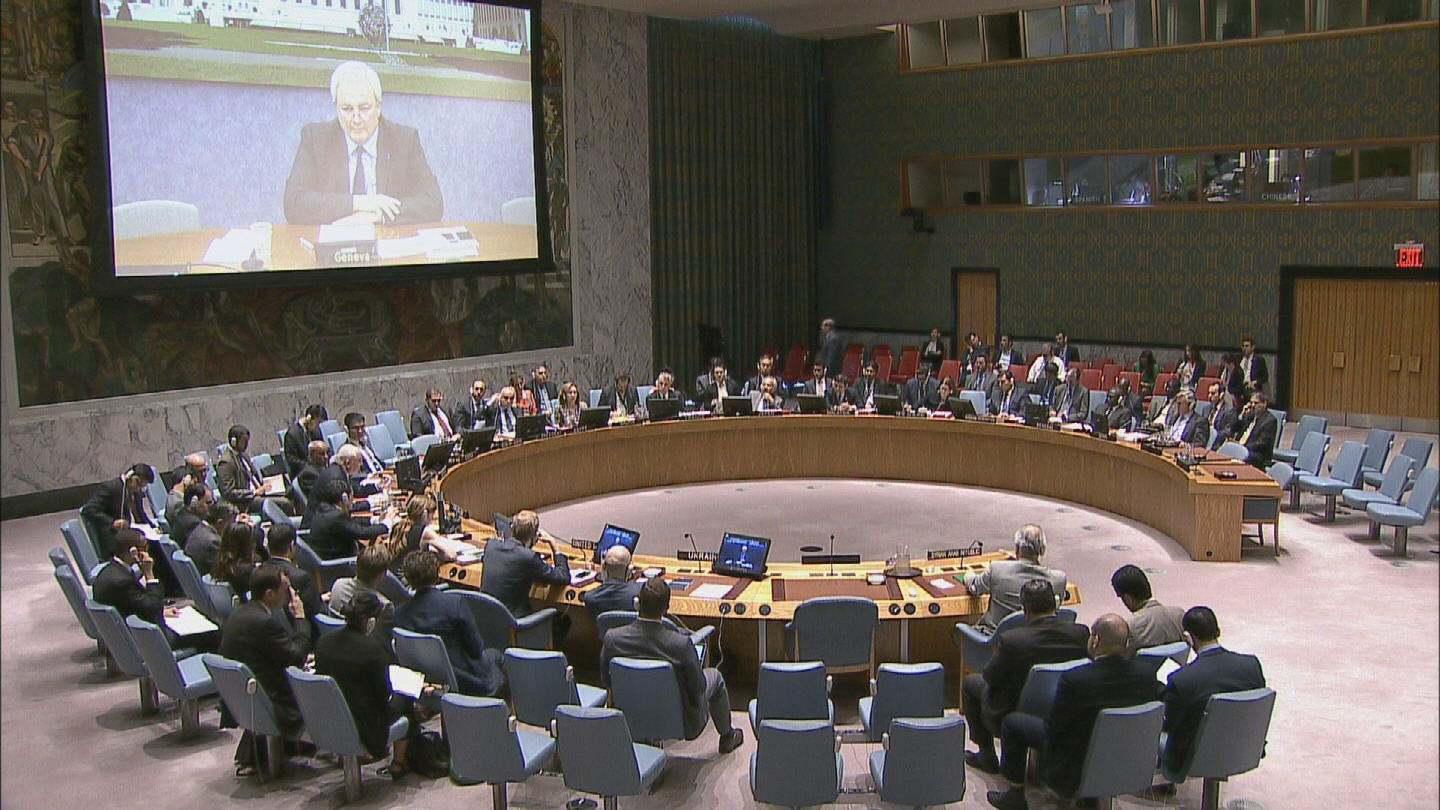
2. Wide shot, conference room
3. Wide shot, dais
4. SOUNDBITE (English) António Guterres, United Nations High Commissioner for Refugees:
“We cannot maintain for decades in a protracted situation populations in camps with simple care and maintenance. We need to be able to provide different kinds of futures before a solution is found. We need to move from care and maintenance to self-reliance. But to move to self-reliance means that the countries where these people are, and more than 80 percent of the refugees in the world are in the developing world, that these countries get the solidarity of the international community. We need a new compact to make it possible for refugees to have a dignified life and for the countries that are hosting them to be able to do so without a dramatic impact in their economies and their societies.”
5. Wide shot, participants
6. SOUNDBITE (English) Mogens Lykketoft, President of the General Assembly:
“In no way do those attacks reduce the moral and legal obligations of the international community towards displaced people. On the contrary, they serve to underline even further why so many people are risking their lives to secure international protection and why we, the international community must not fail them for the second time.”
7. Med shot, participants
8. SOUNDBITE (English) David Miliband, President and CEO of International Rescue Committee:
“Anyone in the United States over the last three days will have seen a massive debate starting here over resettlement. And you can see what happens when ignorance and fear are combined in a way that can cause real concern amongst populations. Resettlement cannot be the whole answer, but it is a substantive and a symbolic gesture. And in a country like the United States which has such well-developed systems for security vetting of refugees – after all in harder to get to the United States as a refugee than under any other category – when there is that kind of security vetting, it makes all the more sense to expand programmes at a time of international need as there is at the moment.”
9. Wide shot, dais
10. SOUNDBITE (English) Helen Clark, Administrator of the United Nations Development Programme (UNDP):
“These crises cannot be approached by relief first and development second. We have to act simultaneously. It is better for the people caught up in a protracted crisis, and it does reduce the relief burden which Stephen O'Brien, Antonio and others are finding impossible at the current time. We have seen humanitarian relief spending triple in the last ten years. It’s still not enough. And it can’t be enough. We have to look at how we reduce demand by building the dignity and resilience of people.”
11. Wide shot, dais
12. SOUNDBITE (English) Stephen O'Brien, Under-Secretary-General for Humanitarian Affairs and Emergency Relief:
“If displaced people and refugees cannot access the help they need, because it simply isn’t there, they will move on. It is clear that the funding gap is playing a significant part in the current refugee and displacement crises.”
13. Wide shot, conference room
The United Nations General Assembly met today (19 Nov) on tackling the global refugee crisis in the shadow of last week’s terrorist attacks in Paris and Beirut, with top officials pleading that the door for genuine refuge not be slammed shut in the name of security.
The United Nations High Commissioner for Refugees, António Guterres, called for a new compact on displacement.
He said “we cannot maintain for decades in a protracted situation populations in camps with simple care and maintenance. We need to be able to provide different kinds of futures before a solution is found. We need to move from care and maintenance to self-reliance.”
Noting that more than 80 percent of the refugees in the world are in the developing world, Guterres said these countries must receive “the solidarity of the international community” in order “to make it possible for refugees to have a dignified life and for the countries that are hosting them to be able to do so without a dramatic impact in their economies and their societies.”
General Assembly President Mogens Lykketoft also addressed the security issue, which has seen calls after the attacks for limiting refugee access lest terrorist infiltrate among them.
Lykketoft said these attacks should in no way “reduce the moral and legal obligations of the international community towards displaced people.”
On the contrary, he said, “they serve to underline even further why so many people are risking their lives to secure international protection and why we, the international community must not fail them for the second time.”
Former British Secretary of State and President and CEO of International Rescue Committee, David Miliband, spoke about the current debate going on in the United States on refugee resettlement.
He said “you can see what happens when ignorance and fear are combined in a way that can cause real concern amongst populations.”
He said “a country like the United States which has such well-developed systems for security vetting of refugees – after all in harder to get to the United States as a refugee than under any other category – when there is that kind of security vetting, it makes all the more sense to expand programmes at a time of international need as there is at the moment.”
The Head of the United Nations Development Programme (UNDP), Helen Clark, said “these crises cannot be approached by relief first and development second. We have to act simultaneously. It is better for the people caught up in a protracted crisis, and it does reduce the relief burden.”
Clark said “we have seen humanitarian relief spending triple in the last ten years. It’s still not enough. And it can’t be enough. We have to look at how we reduce demand by building the dignity and resilience of people.”
For his part, the UN Humanitarian Affairs Chief, Stephen O'Brien, said “if displaced people and refugees cannot access the help they need, because it simply isn’t there, they will move on. It is clear that the funding gap is playing a significant part in the current refugee and displacement crises.”
Download
There is no media available to download.