Media Home
 UN Web TV
 UN Audiovisual Library
 UN Photo
Unifeed
RWANDA / GENDER EQUALITY
STORY: RWANDA / GENDER EQUALITY
TRT: 3:33
SOURCE: IFAD
RESTRICTIONS: NONE
LANGUAGES: KINYARWANDA / ENGLISH / NATS
DATELINE: 20 – 23 OCTOBER 2015, KIREHE DISTRICT & KIGALI, RWANDA
20 – 22 OCTOBER, 2015 - KIREHE DISTRICT, RWANDA
1.Pan right, road leading towards valley and farms
2.Wide shot, Epiphanie Mukamurenzi carrying pot of hot water
3.Wide shot, Epiphanie handing Bosco Ndatimana pot of water
4.Med shot, children watching their parents at work
5.Med shot, cow staring as Bosco milks it
6.Wide shot, Bosco milking cow, Epiphanie feeding it
7.Med shot, Bosco milking cow
8.Closeup shot, Epiphanie’s face as she brushes cow
9.Med shot, Epiphanie brushing cow with grass
10.Closeup shot, cow eating
11.Med shot, Bosco handing bucket of milk to Epiphanie
12.SOUNDBITE (Kinyarwanda) Epiphanie Mukamurenzi, Farmer:
“My husband and I used to be very, very poor. We fought all the time. Everything changed when we received this cow and the training. In the past, my husband would spend our money without consulting me. Our family is so different now. We live in harmony and we’re both involved in financial decisions.”
13.Med shot, Bosco pushing wheelbarrow as Epiphanie sweeps cowshed
14.Various shots, Bosco feeding cow
15.SOUNDBITE (Kinyarwanda) Bosco Ndatimana, Farmer:
“Happiness has been brought back into this house. The gender training was critical because I used to think that the money from milk and bananas was for me, and the money from beans and such, was for women. We have been taught that the money we make is for the good of the entire family.”
16.Various shots Raymond Kamwe, Project Gender Specialist, conducting gender training
17.SOUNDBITE (Kinyarwanda) Raymond Kamwe, Project Gender Specialist
“Gender is a key part of our training program because we know the significant role that women play in lifting households out of poverty. Women are critical for the agricultural sector so we emphasise gender equality in farming so that they can contribute and share their vision for their family’s future.”
23 OCTOBER 2015 - KIGALI, RWANDA
18.Wide shot, Kigali cityscape
19.Med shot, entrance to the Ministry of Agriculture
20.Closeup shot, hand holding a computer mouse
21.Various shots, Kayilisa Caritas and colleague discussing field reports
22.SOUNDBITE (English) Kayilisa Caritas, Gender Coordinator, Ministry of Agriculture:
“We can’t talk about gender equality without talking the independence – the financial independence of women. So, we want our women to be economically empowered so that they can face their future in terms of agriculture.”
20 – 22 OCTOBER, 2015 - KIREHE DISTRICT, RWANDA
23.Various shots of woman tying up her goat
24.Various shots of Epiphanie using her sewing machine
Out of its violent past, Rwanda now ranks as a country with the one of the world’s smallest gender gaps. After the genocide, 70 percent of its population was women and they ensured that gender equality was enshrined in the new constitution.
Now this east African country is the first in the world where women hold a parliamentary majority, with 64 per cent of its parliament female. New laws have given women rights to land, inheritance, education and employment opportunities and now, thanks to support from the UN’s International Fund for Agricultural Development, gender equality is also reaching the most rural communities.
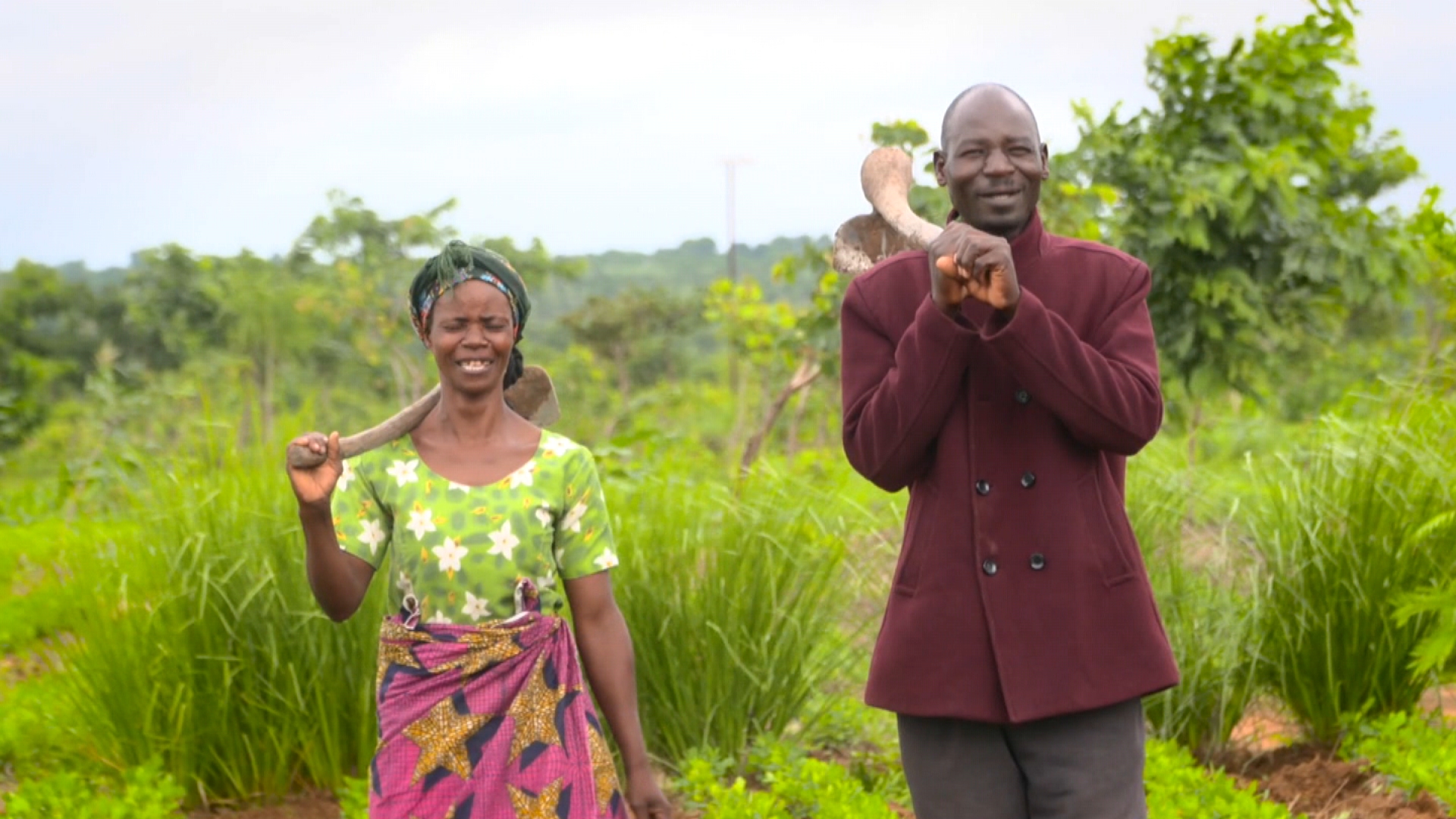
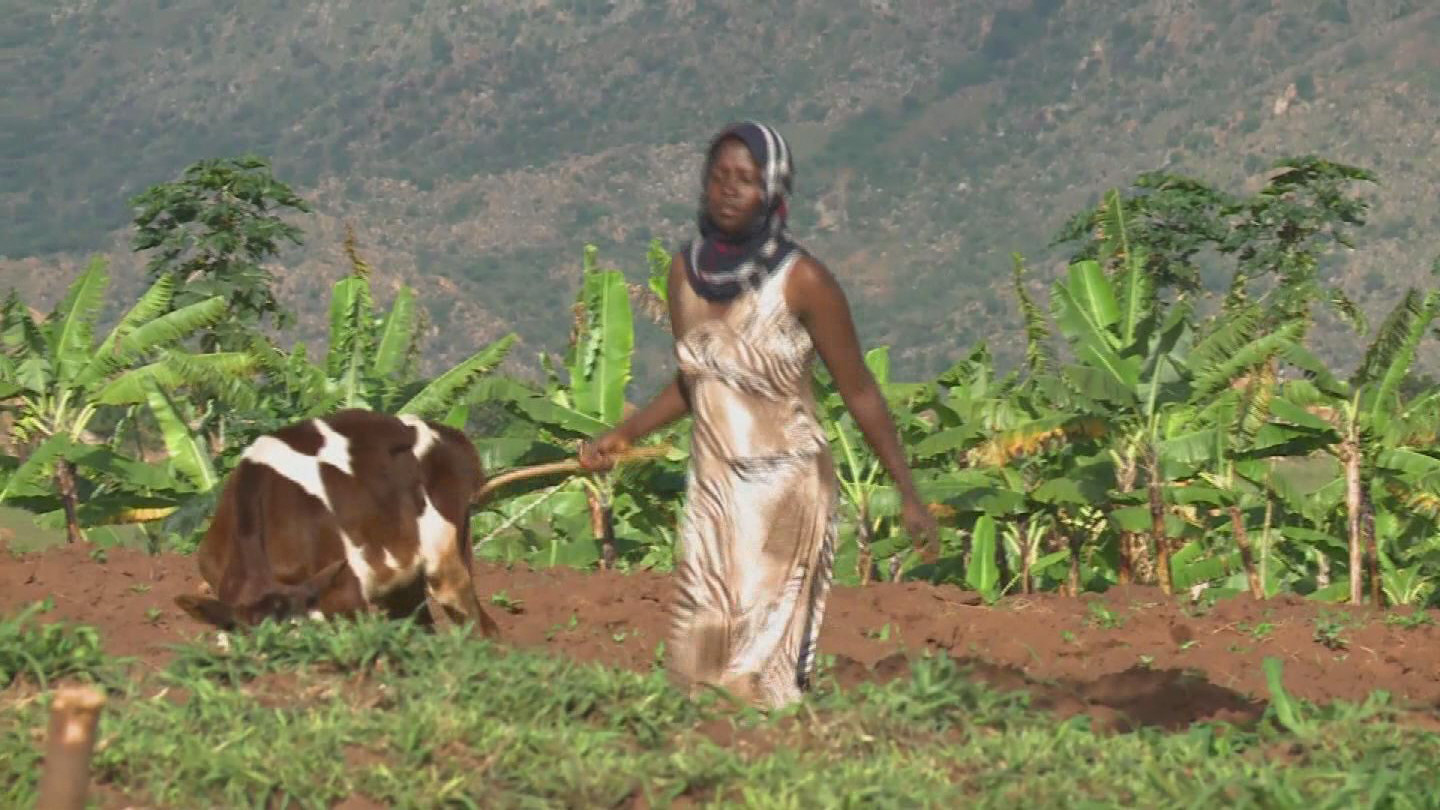
Like most farmers here in eastern Rwanda, Epiphanie Mukamurenzi is up with the sun.
She and her husband, Bosco Ndatimana, work closely together during the daily morning milking session.
This would have been unthinkable just a few years ago, when Epiphanie was confined to household chores while Bosco exclusively handled anything to do with their income.
Things started to change five years ago, when a livestock-training programme made them rethink their relationship as husband and wife.
“My husband and I used to be very, very poor. We fought all the time. Everything changed when we received this cow and the training. In the past, my husband would spend our money without consulting me. Our family is so different now. We live in harmony and we’re both involved in financial decisions,” she says.
Qualifying families, like Epiphanie and her husband, were each given a cow and trained to raise it. The purpose of the training was to help increase their incomes, but with gender equality high on the Government’s agenda, it also served a different purpose. Everyone who received livestock also had to attend training in gender equality.
“Happiness has been brought back into this house. The gender training was critical because I used to think that the money from milk and bananas was for me, and the money from beans and such was for women. We have been taught that the money we make is for the good of the entire family,” says Epiphanie’s husband Bosco Ndatimana.
So far, about 6000 families have gone through this training and the project’s gender specialist, Raymond Kamwe, says it is essential for them to learn about the link between gender inequality in the household and poverty.
“Gender is a key part of our training programme because we know the significant role that women play in lifting households out of poverty. Women are critical for the agricultural sector so we emphasise gender equality in farming so that they can contribute and share their vision for their family’s future,” says Raymond.
And this is exactly what the government wants to achieve. “We can’t talk about gender equality without talking about the financial independence of women. So we want our women to be economically empowered so that they can face their future,” says Kaylisa Caritas, the Gender Coordinator in Rwanda’s Ministry of Agriculture.
And the economic empowerment of women will have positive benefits for the country as a whole. A recent study estimates that global GDP could increase by as much as US$28 trillion by 2025 if more women like Epiphanie participated in economic growth in the same way as men. It looks like Rwanda is on the way to achieving that.
Download
There is no media available to download.