Media Home
 UN Web TV
 UN Audiovisual Library
 UN Photo
Unifeed
GENEVA / ATTACKS ON HEALTH
STORY: GENEVA / ATTACKS ON HEALTH
TRT: 02:31
SOURCE: WHO
RESTRICTIONS: NONE
LANGUAGE: ENGLISH / NATS
DATELINE: 26 MAY 2016, GENEVA, SWITZERLAND
RECENT, GENEVA, SWITZERLAND
1. Wide shot, exterior, Palais des Nations
26 MAY 2016, GENEVA, SWITZERLAND
2. SOUNDBITE (English) Rick Brennan, Director, Emergency Risk Management and Humanitarian Response, WHO:
“We have documented during 2014 and 2015 close to 600 attacks on health care in 19 countries, which have resulted in over 900 deaths and 1,500 injuries worldwide, and while those figures are absolutely startling and of great concern to any humanitarian, any health worker, any mother or father, what they don't reflect is the follow-on affects to families and communities. Every attack on healthcare disrupts the delivery of health services and denies communities access to essential health services in emergencies, the time they are really needed most. Perhaps one of the most concerning findings of the report is that close to two thirds on the attacks on health care, on health facilities, on health workers, on ambulances, on patients have been deliberate.”
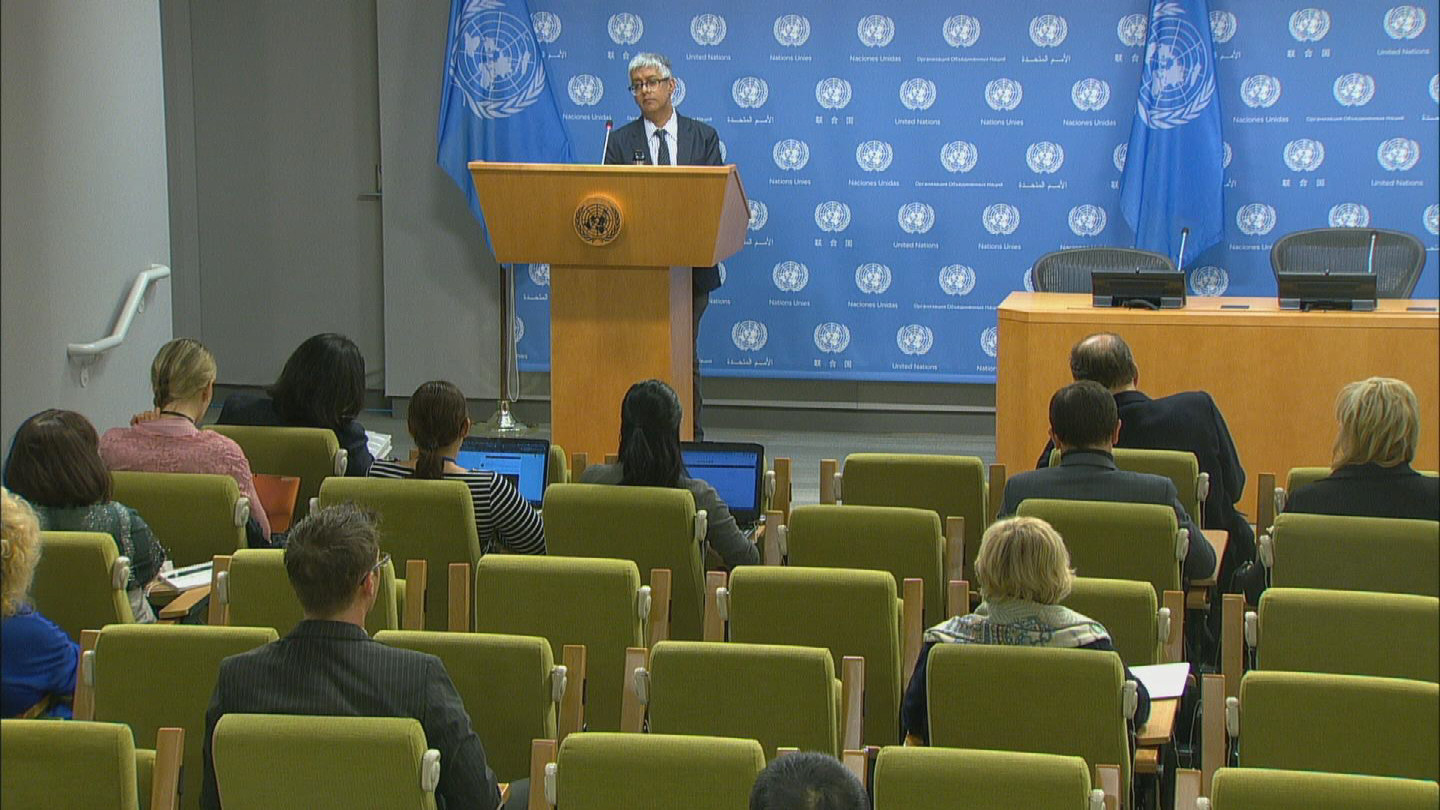
3. Med shot, journalists
4. SOUNDBITE (English) Rick Brennan, Director, Emergency Risk Management and Humanitarian Response, WHO:
“I think it is important to reflect on the fact that most of these have been in conflict settings, and there are rules of war, and they are called the Geneva Conventions, and one of the most important rules of war is that you don't attack health facilities, healthcare providers, the sick, the disabled.”
5. Med shot, journalist
6. SOUNDBITE (English) Rick Brennan, Director, Emergency Risk Management and Humanitarian Response, WHO:
“We have in many international agreements the affirmed right of each individual to healthcare, and that right to health is not diminished one inch in conflict. So again, people's sacred right to health care is disrupted by these attacks.”
7. Med shot, journalist
8. SOUNDBITE (English) Bruce Aylward, Executive Director, Outbreaks and Health Emergencies, WHO:
“We have to be very clear, that where we document the most attacks may not be the most dangerous. There may be people, places, where there are not health services being delivered, because we cannot get sustainable presence on the ground to be able to operate. Other people point to the fact, and it came up in a discussion yesterday on the attacks on health workers, that so many people have been killed and there has been such an attrition, that the rate of attacks have decreased. That's how bad it is getting in some places.”
9. Wide shot, journalists
A new report from the World Health Organization (WHO) shows that over the two-year period from January 2014 to December 2015, there were 594 reported attacks on health care that resulted in 959 deaths and 1561 injuries in 19 countries with emergencies.
WHO’s Director of Emergency Risk Management and Humanitarian Response, Rick Brennan, told reporters today (26 May) in Geneva that “while those figures are absolutely startling and of great concern to any humanitarian, any health worker, any mother or father, what they don't reflect is the follow-on affects to families and communities. Every attack on healthcare disrupts the delivery of health services and denies communities access to essential health services in emergencies, the time they are really needed most.”
Brennan added that “perhaps one of the most concerning findings of the report is that close to two thirds on the attacks on health care, on health facilities, on health workers, on ambulances, on patients have been deliberate.”
The WHO official said it was “important to reflect on the fact that most of these have been in conflict settings, and there are rules of war, and they are called the Geneva Conventions, and one of the most important rules of war is that you don't attack health facilities, healthcare providers, the sick, the disabled.”
He said the right to health “is not diminished one inch in conflict.”
WHO’s Executive Director, Outbreaks and Health Emergencies, Bruce Aylward, said “there may be people, places, where there are not health services being delivered, because we cannot get sustainable presence on the ground to be able to operate.”
Aylward said that “so many people have been killed and there has been such an attrition, that the rate of attacks have decreased. That's how bad it is getting in some places.”
According to the report, more than half of the attacks were against health care facilities and another quarter of the attacks were against health care workers. Sixty-two per cent of the attacks were reported to have intentionally targeted health care.
Download
There is no media available to download.