Media Home
 UN Web TV
 UN Audiovisual Library
 UN Photo
Unifeed
GENEVA / SYRIA AID TASK FORCE
STORY: GENEVA / SYRIA AID TASK FORCE
TRT: 3:17
SOURCE: UNTV CH
RESTRICTIONS: NONE
LANGUAGE: ENGLISH / NATS
DATELINE: 14 JULY 2016 GENEVA, SWITZERLAND
RECENT – GENEVA, SWITZERLAND
1. Wide shot, exterior, Palais des Nations
14 July 2016 GENEVA, SWITZERLAND
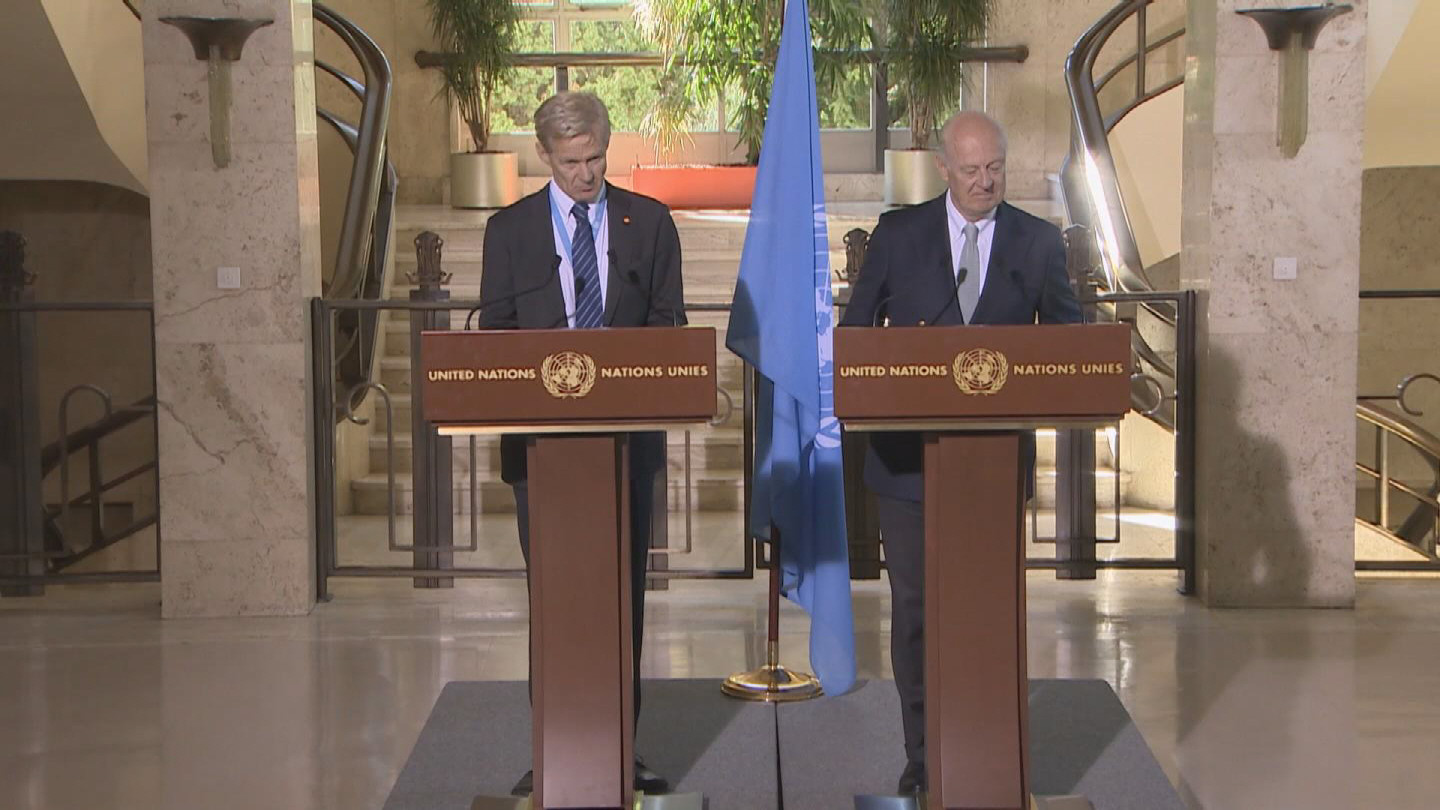
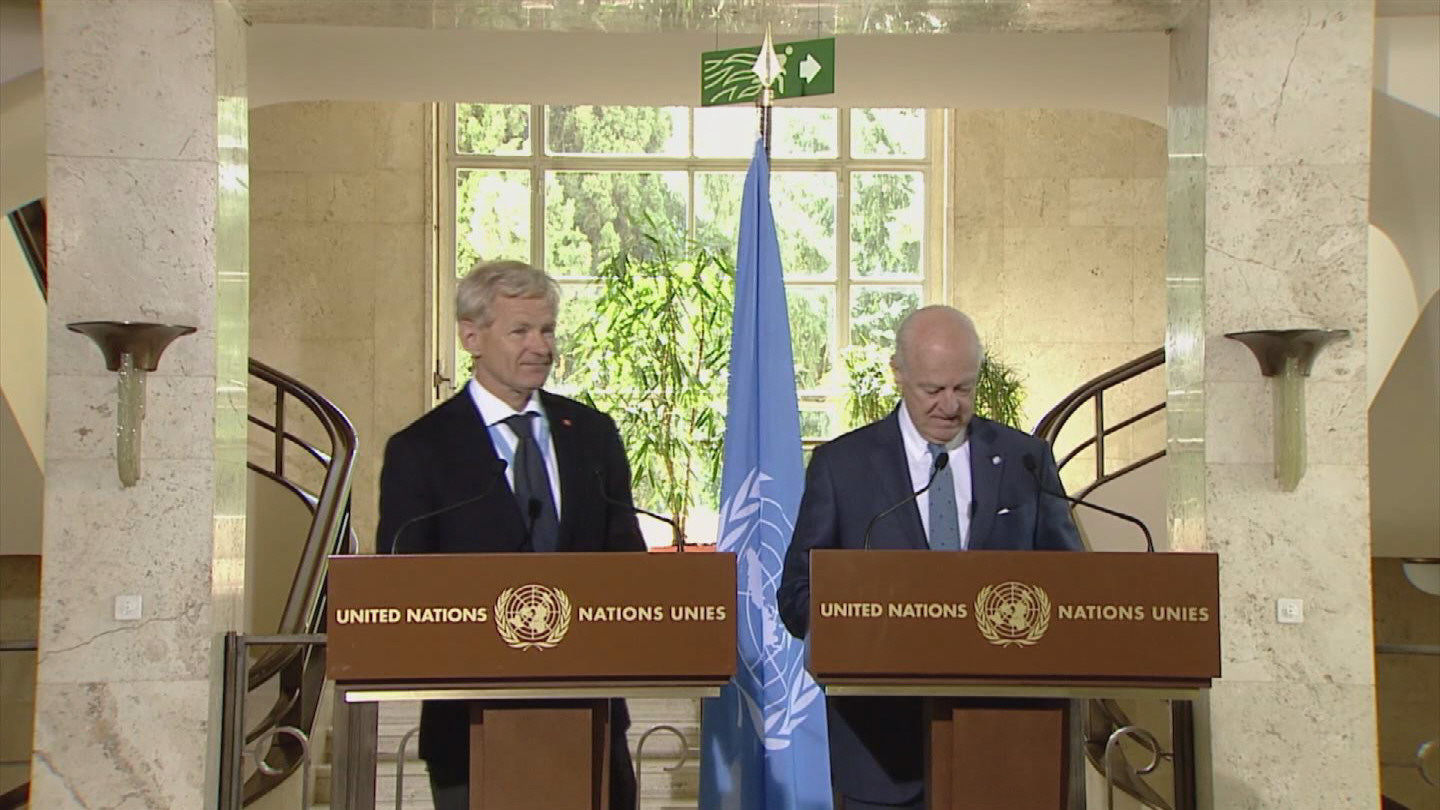
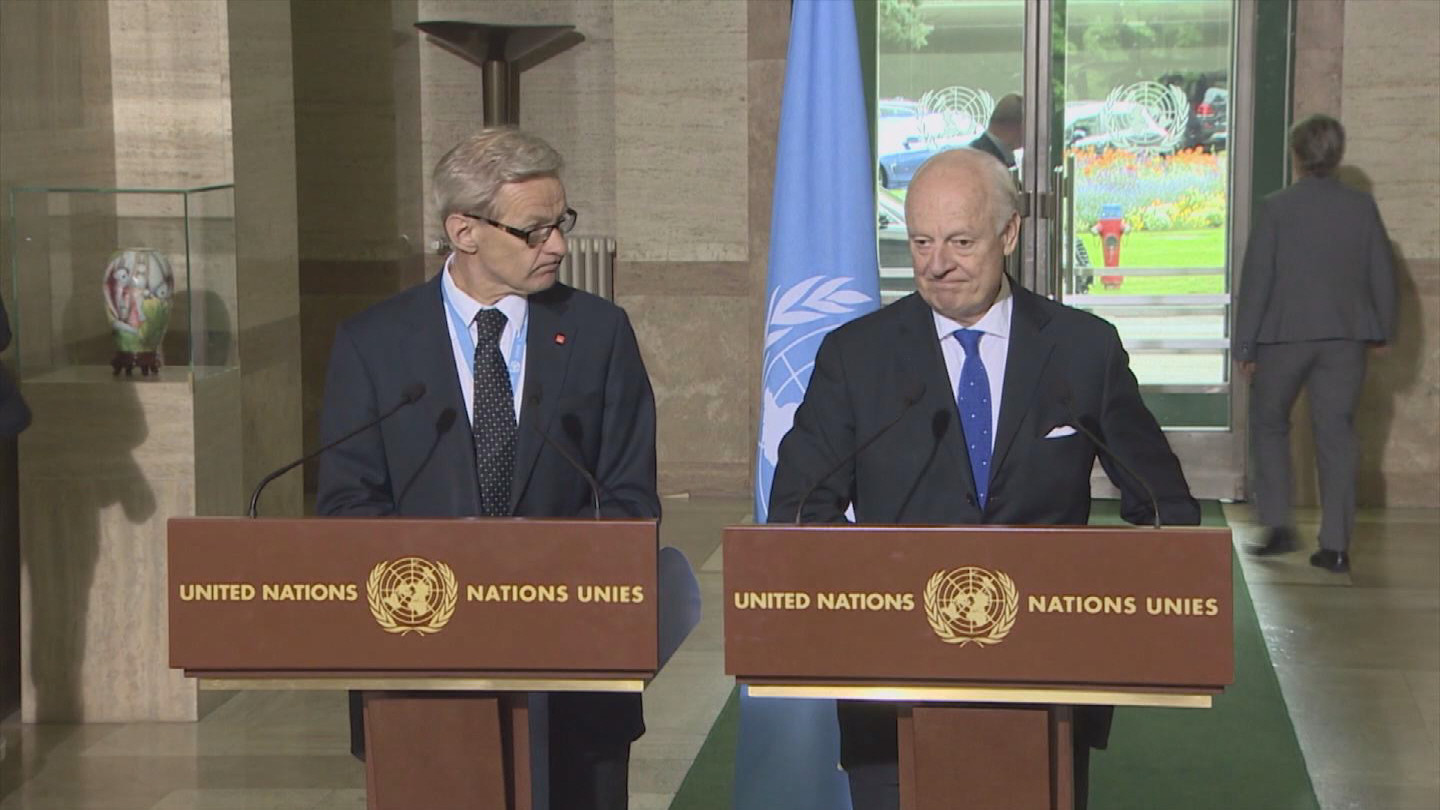
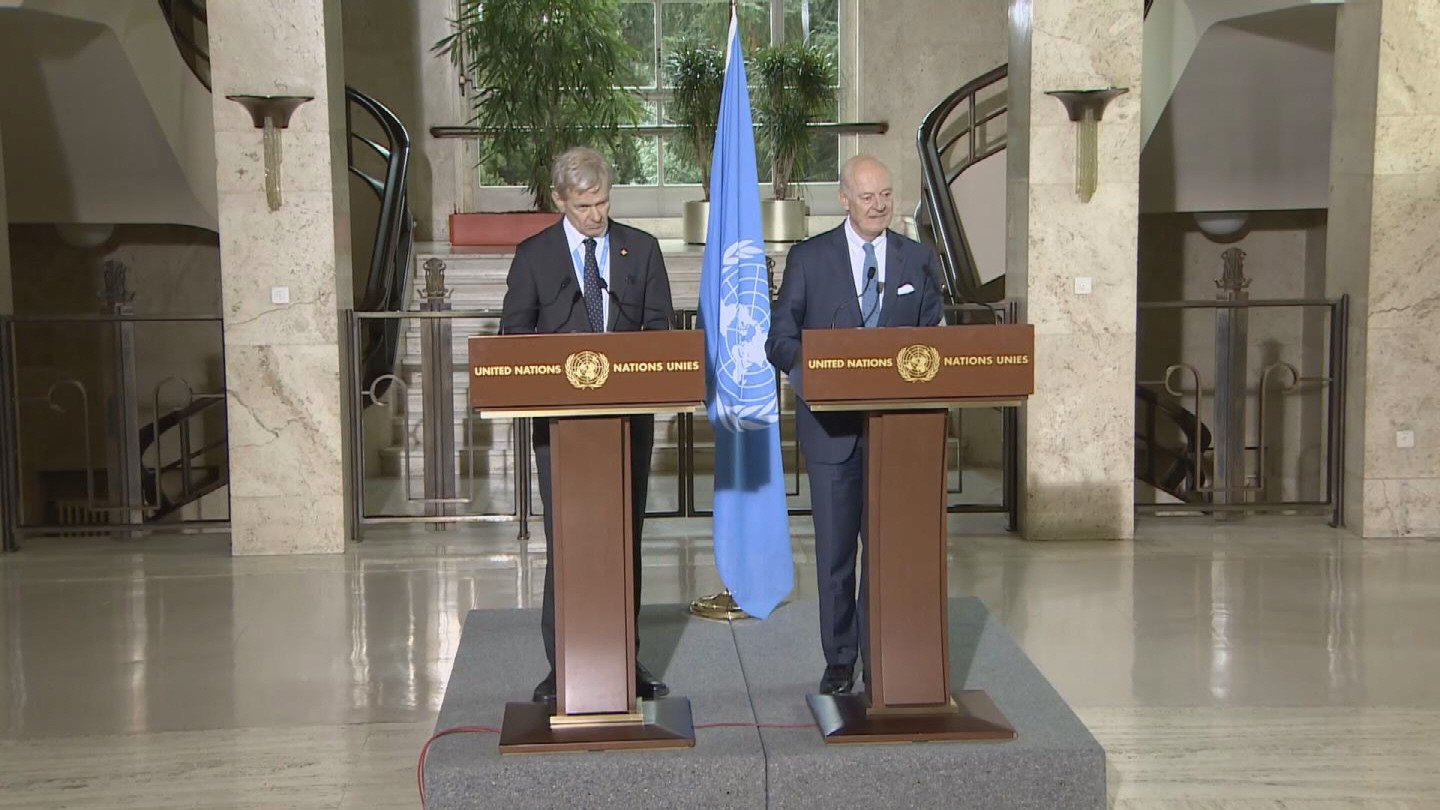
2. Wide shot, podium
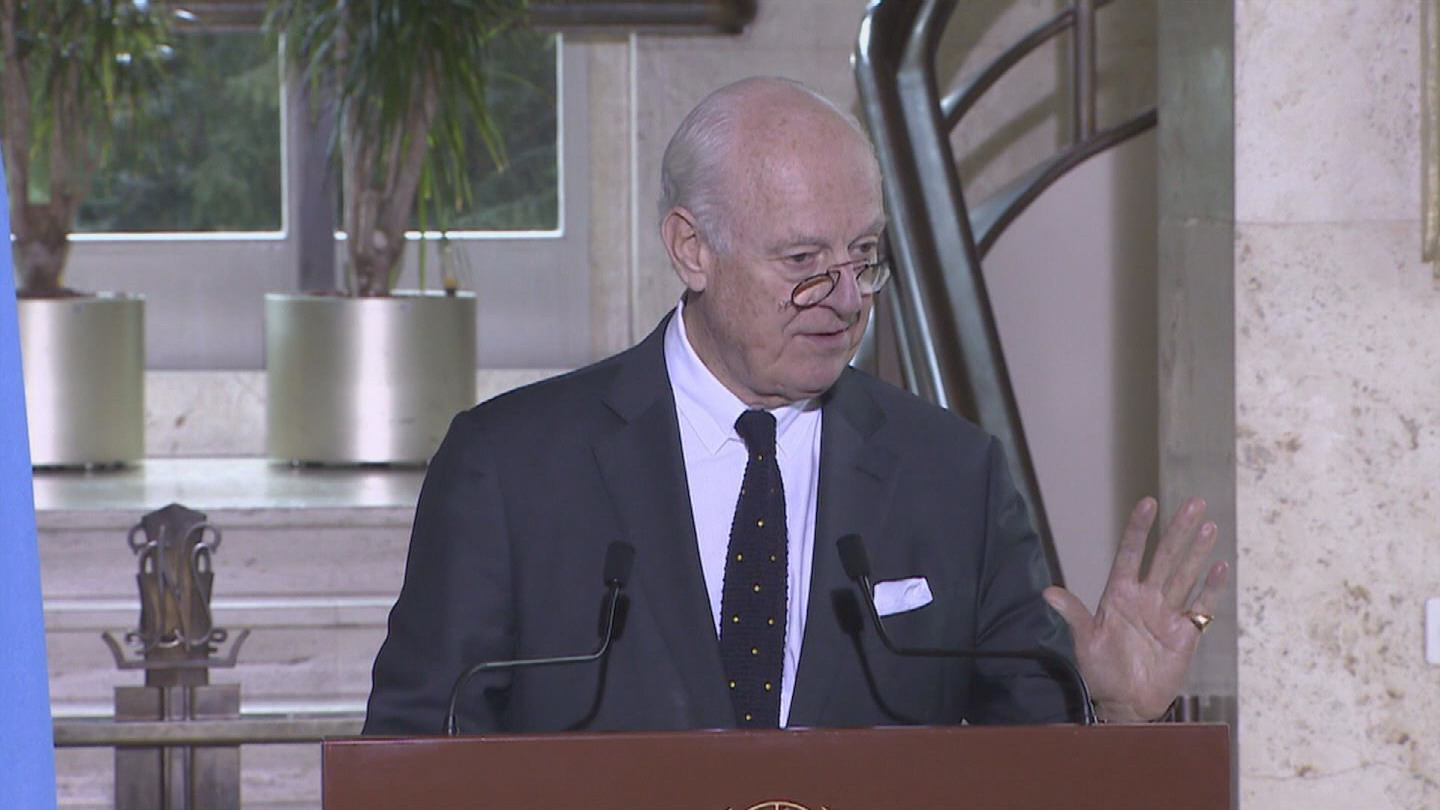
3. SOUNDBITE (English) Staffan de Mistura, Special Envoy for Syria, United Nations:
“We are ready, we want to do it, but to get something effective we need the help of the two co-chairs, because that will give a huge chance for this talks not to just be another Geneva which I am determined to avoid with the blessing, I am sure, of everyone else”.
4. Med shot, security
5. SOUNDBITE (English) Jan Egeland, Special Advisor to the Special Envoy for Syria, United Nations:
“Up until now 62 percent of the poor people living in besieged areas have been reached either once or several times over these months since we started in February. That is far from what we had hoped but it is many times better than all of 2015 combined.”
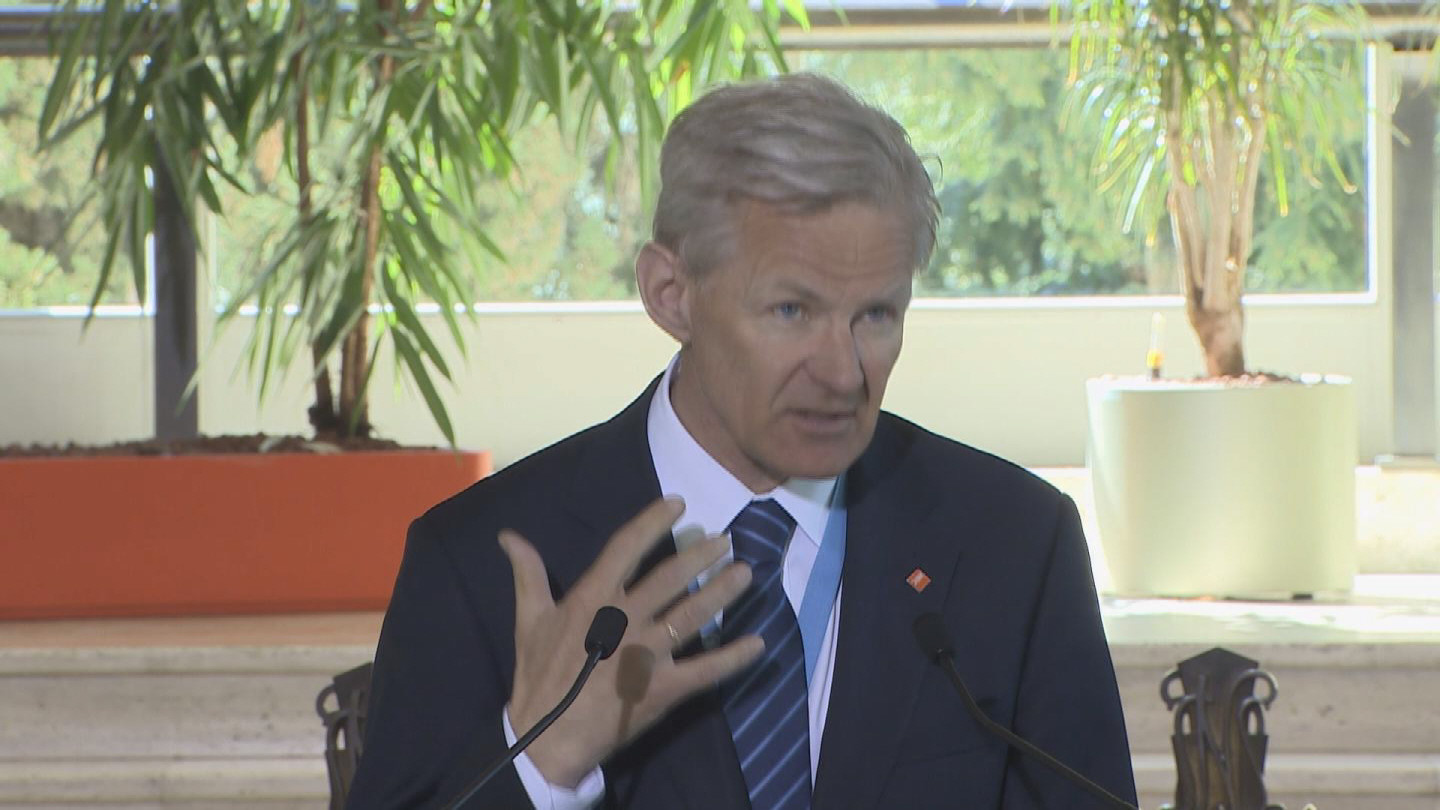
6. Close up, spokesperson
7. SOUNDBITE (English) Jan Egeland, Special Advisor to the Special Envoy for Syria, United Nations:
“The one area, I would like to invite my colleague Elizabeth Hoff to come and address this, the medical services area. I consider, Staffan consider, we consider this to be the area where we have failed the most because we haven’t been able to provide access for our humanitarian colleagues and WHO and UNICEF and ICRC and the Syrian Red Crescent, etc. and the biggest killer I think in the besieged areas now, is the lack of medical services and the most horrific debacle for morality in international law is that humanitarian facilities are deliberately targeted still in Syria more than in any other place on earth”.
8. Medium shot, journalists
9. SOUNDBITE (English) Elizabeth Hoff, Country Director, World Health Organisation (WHO) in the Syrian Arab Republic:
“What we have seen is that they have reported 229 attacks in 2014 and 2015 together out of 594 in total. So 228 attacks happened of these total attacks in Syria. And we saw that there was an increase 93 attacks in 2014 and 135 in 2015.”
10. Close up, journalist
11. SOUNDBITE (English) Elizabeth Hoff, Country Director, World Health Organisation (WHO) in the Syrian Arab Republic:
“We are asking for sustained and regular deliveries of medicines, vaccines, medical consumables and medical equipment. And it is particularly disturbing for us that surgical equipment, burns, that is mostly affecting civilians are continuing to be removed from convoys as well as antibiotics and analgesics. So people, if they are not properly treated, they cannot even die in peace, because they are not receiving the necessary pain killers and palliative care that is needed in many of the besieged areas”.
12. Close up, journalist
13. Close up, cameraman
14. Wide shot, departure from podium
United Nations (UN) special envoy for Syria Staffan de Mistura said that an upcoming US-Russia meeting is critical for the Syria peace process, expressing hope that the event will make progress on resolving the crisis in the Middle Eastern country.
Speaking to reporters today (14 Jul) in Geneva, he said that, “we are ready, we want to do it, but to get something effective we need the help of the two co-chairs, because that will give a huge chance for this talks not to just be another Geneva which I am determined to avoid with the blessing, I am sure, of everyone else."
De Mistura’s remarks came as US Secretary of State John Kerry is expected to meet Russian President Vladimir Putin and Foreign Minister Sergei Lavrov in Moscow later on Thursday.
Concerning the humanitarian operations in Syria, Jan Egeland the UN humanitarian task force coordinator, presented a mid-year review to the media. He said that “up until now 62 percent of the poor people living in besieged areas have been reached either once or several times over these months since we started in February. That is far from what we had hoped but it is many times better than all of 2015 combined.”
Egeland said that the priority now is to get access to the 4 towns of Madaya, Foah, Zabadani and Kefraya since malnutrition is growing there and starvation “is next”. He also warned that Aleppo is “on the verge of becoming another besieged location”.
He also said that “the one area, I would like to invite my colleague Elizabeth Hoff to come and address this, is the medical services area. I consider, Staffan consider, we consider this to be the area where we have failed the most because we haven’t been able to provide access for our humanitarian colleagues and WHO and UNICEF and ICRC and the Syrian Red Crescent, etc. and the biggest killer I think in the besieged areas now, is the lack of medical services and the most horrific debacle for morality in international law is that humanitarian facilities are deliberately targeted still in Syria more than in any other place on earth”.
According to Hoff an open source for 2014 and 2015 among 19 countries has put Syria on top of the list with the highest number of attacks on health facilities and health workers. The WHO director said that “what we have seen is that they have reported 229 attacks in 2014 and 2015 together out of 594 in total. So 228 attacks happened of these total attacks in Syria. And we saw that there was an increase 93 attacks in 2014 and 135 in 2015.”
She said that among one of their main demands are the protection of health facilities and health workers. “We are asking for sustained and regular deliveries of medicines, vaccines, medical consumables and medical equipment. And it is particularly disturbing for us that surgical equipment, burns, that is mostly affecting civilians are continuing to be removed from convoys as well as antibiotics and analgesics. So people, if they are not properly treated, they cannot even die in peace, because they are not receiving the necessary pain killers and palliative care that is needed in many of the besieged areas”.
Download
There is no media available to download.