Media Home
 UN Web TV
 UN Audiovisual Library
 UN Photo
Unifeed
UN / YEMEN
STORY: UN / YEMEN
TRT: 03:42
SOURCE: UNIFEED
RESTRICTIONS: NONE
LANGUAGE: ARABIC / ENGLISH / NATS
DATELINE: 26 JANUARY 2017, NEW YORK CITY
RECENT - NEW YORK CITY
1. Wide shot, UNHQ exterior
26 JANUARY 2017, NEW YORK CITY
2. Wide shot, Security Council
3. SOUNDBITE (Arabic) Ismail Ould Cheikh Ahmed, Special Envoy for Yemen, United Nations:
“President Hadi’s repeated criticism of the roadmap, without agreeing to discuss it and amending its elements, undermines confidence in the peace process and prolongs the duration of the conflict. I have assured the President that the United Nations’ proposals are a negotiable roadmap to reach a comprehensive solution agreeable to all sides; and that there is no other solution that will ensure peace for Yemen and bring Yemenis to the negotiations table to address internal challenges, most notably the grievances of the South.”
4. Wide shot, O’Brien and Alyemany
5. SOUNDBITE (Arabic) Ismail Ould Cheikh Ahmed, Special Envoy for Yemen, United Nations:
“I hope Yemeni leaders will have the vision and wisdom to see the magnitude of the disaster they have brought to the country and that they take the bold decision to commit to a political solution, and put an end to the conflict. The solution to the Yemeni situation will not come from any outside party. The United Nations negotiates and mediates and the international community applies pressure and facilitates, but decision remains in the hands of the Yemenis taking part in this conflict and relies on their ability to compromise and apply their political conscience; and the court of history would not be merciful."
6. Pan left, delegates
7. SOUNDBITE (English) Stephen O'Brien, Under-Secretary-General for Humanitarian Affairs, United Nations:
“Girls, boys, women, and men are dying of hunger and diseases that are easily preventable and treatable. Unfortunately, vital food commodities and medicines cannot be imported easily due to access restrictions imposed by all parties. People with chronic diseases, including high blood pressure and diabetes, who are not receiving life-saving treatment due to medical shortages are slowly dying. The conflict in Yemen is now the primary driver of the largest food security emergency in the world. If there is no immediate action, famine is now a possible scenario for 2017.”
8. Wide shot, Security Council
9. SOUNDBITE (English) Stephen O'Brien, Under-Secretary-General for Humanitarian Affairs, United Nations:
“Yemen could run out of wheat within months unless traders can access lines of credit in the coming weeks. Foreign banks no longer accept financial transactions with many of Yemen's commercial banks. We must mobilize to sustain the traders' ability to import, replenish the country's stocks of staple food and reverse the trend of growing food insecurity and potential starvation. In addition, some humanitarian organizations are struggling to find enough cash to implement projects. The end result is a country in economic distress, which is translating into acute humanitarian need.”
10. Wide shot, O’Brien and Alyemany
11. SOUNDBITE (Arabic) Khaled Hussein Mohamed Alyemany, Permanent Representative of Yemen to the United Nations:
“There has been a lot of talk about the humanitarian suffering in the areas controlled by the coup forces, and unfortunately there is no discussion regarding the massacres taking place in Taez. We listened to the summary. It is entirely about the areas under the control of the rebels. We reaffirm that the coup is carrying out collective punishment against our people in the areas they control.”
12. Wide shot, Security Council
13. SOUNDBITE (Arabic) Khaled Hussein Mohamed Alyemany, Permanent Representative of Yemen to the United Nations:
“I told the Special Envoy that we, the legitimate authorities and in the liberated areas, do not have any prisoners and if they do exist, we are willing to look into releasing them immediately. Why is a human being punished with his freedom? Is it because he refuses the coup?”
14. Zoom out, Security Council
United Nations (UN) Envoy for Yemen Ismail Ould Cheikh Ahmed said the decision to end the conflict in the country was in the hands of the warring Yemeni parties alone and relied on their ability to compromise and "apply their political conscience" otherwise "the court of history would not be merciful."
Speaking to the Security Council today (26 Jan), the Special Envoy stressed that only a political solution could end the conflict, adding that those who believed in a military solution were simply prolonging the suffering of the Yemeni people. Ahmed said his team had completed preparations for a five day workshop in the Jordanian capital Amman to reach a ceasefire agreement and received confirmation from the Yemeni Government of its participation. He called on the Houthis and their allies to do the same.
Ahmed highlighted the concerns by both sides regarding the UN roadmap for a political solution in Yemen, but stressed that this was a preliminary document that was up for negotiations. He said President Abdrabuh Mansour Hadi’s “repeated criticism of the roadmap, without agreeing to discuss it and amending its elements, undermines confidence in the peace process and prolongs the duration of the conflict.” He said this document was a solution that could bring Yemenis to the negotiations table in order to “address internal challenges, most notably the grievances of the South.” Ahmed hoped Yemeni leaders would “have the vision and wisdom to see the magnitude of the disaster they have brought to the country and that they take the bold decision to commit to a political solution, and put an end to the conflict.”
UN humanitarian chief Stephen O’Brien said the plight of Yemeni children was particularly grim, with a child under the age of five dying every ten minutes of preventable causes. He said people were “dying of hunger and diseases that are easily preventable and treatable” as vital food commodities and medicines could not be easily imported due to access restrictions imposed by all parties. O’Brien said the Yemeni conflict was “now the primary driver of the largest food security emergency in the world” adding that if immediate action was not taken, famine was “a possible scenario for 2017.”
O’Brien said the sharp decline in the Yemeni Central Bank's foreign reserves combined with its move to Aden and lack of liquidity had a “ruinous socio-economic impact” on the country. He said Yemen could run out of wheat “within months” unless traders could access lines of credit in the coming weeks.
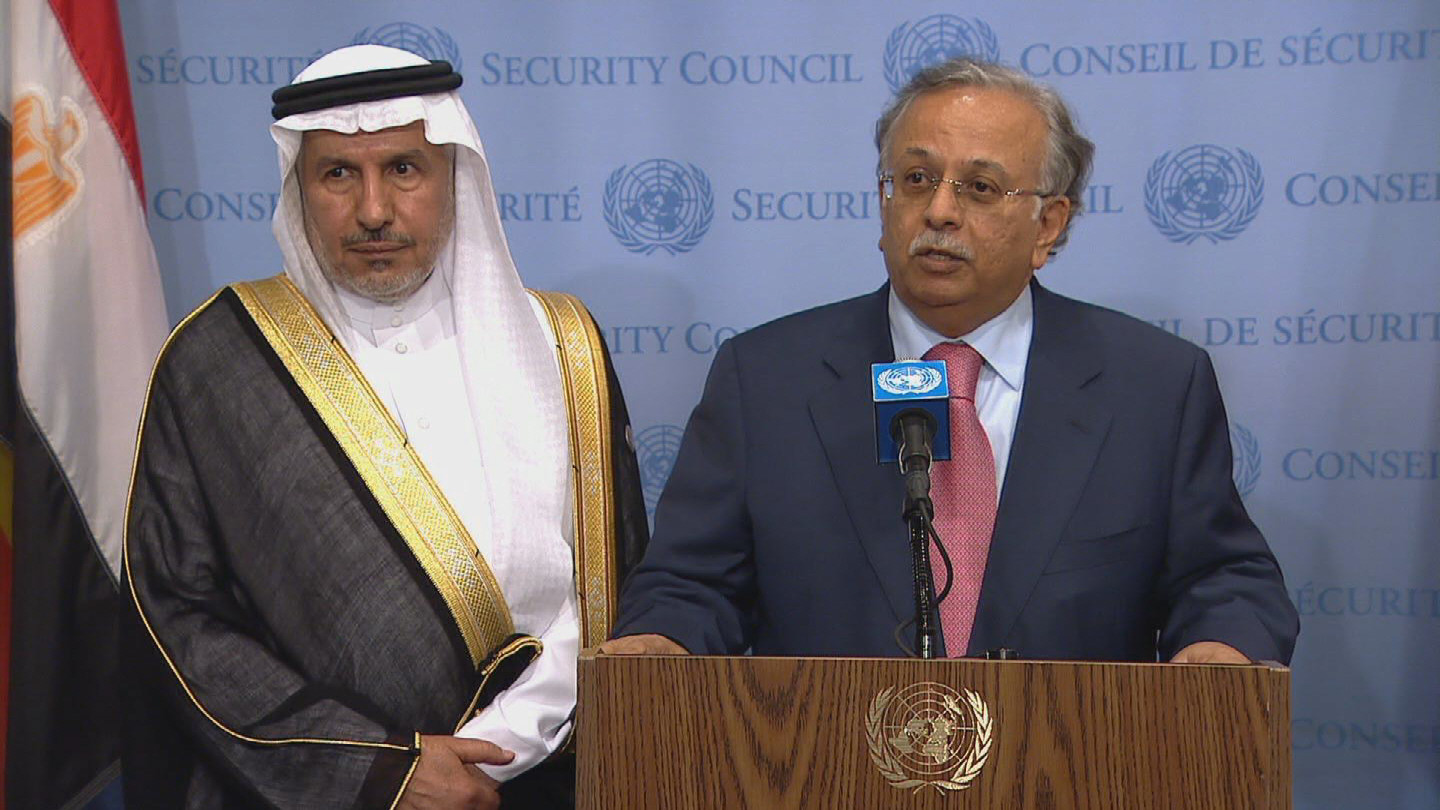
Yemeni ambassador Khaled Alyemany there had been “a lot of talk about the humanitarian suffering in the areas controlled by the coup forces, and unfortunately there is no discussion regarding the massacres taking place in Taez.” He said the Houthis and their allies were “carrying out collective punishment” on those supporting the government in areas they control. Alyemany stressed his Government’s decision to move the central bank to its temporary capital Aden came after the Houthis and their allies “stole billions” from the bank, adding that authorities had just yesterday been able to transfer salaries to “all employees in Sana’a.”
Alyemany said the coup’s “disregard for human dignity” had allowed them to recruit some 10,000 child soldiers and detain 4414 people, including 204 children, by the end of 2016. He said his Government did not have any prisoners and asked, “Why is a human being punished with his freedom? Is it because he refuses the coup?”
Alyemany said his government refused the “the Kerry roadmap” and asked the Special envoy to submit a new one that is based on the negotiations between the parties that took place in Kuwait last year. He said the Yemeni government would not accept the creation of an international precedent by legitimizing the coup and keeping it in power in any way.
Download
There is no media available to download.