Media Home
 UN Web TV
 UN Audiovisual Library
 UN Photo
Unifeed
GENEVA / HRC SOUTH SUDAN
STORY: GENEVA / HRC SOUTH SUDAN
TRT: 3:11
SOURCE: UNTV CH
RESTRICTIONS: NONE
LANGUAGE: ENGLISH / NATS
DATELINE: 14 MARCH 2017 GENEVA, SWITZERLAND
1. Wide shot, exterior, Palais des Nations
2. Wide shot, Human Rights Council room
3. Med shot, delegate South Sudan
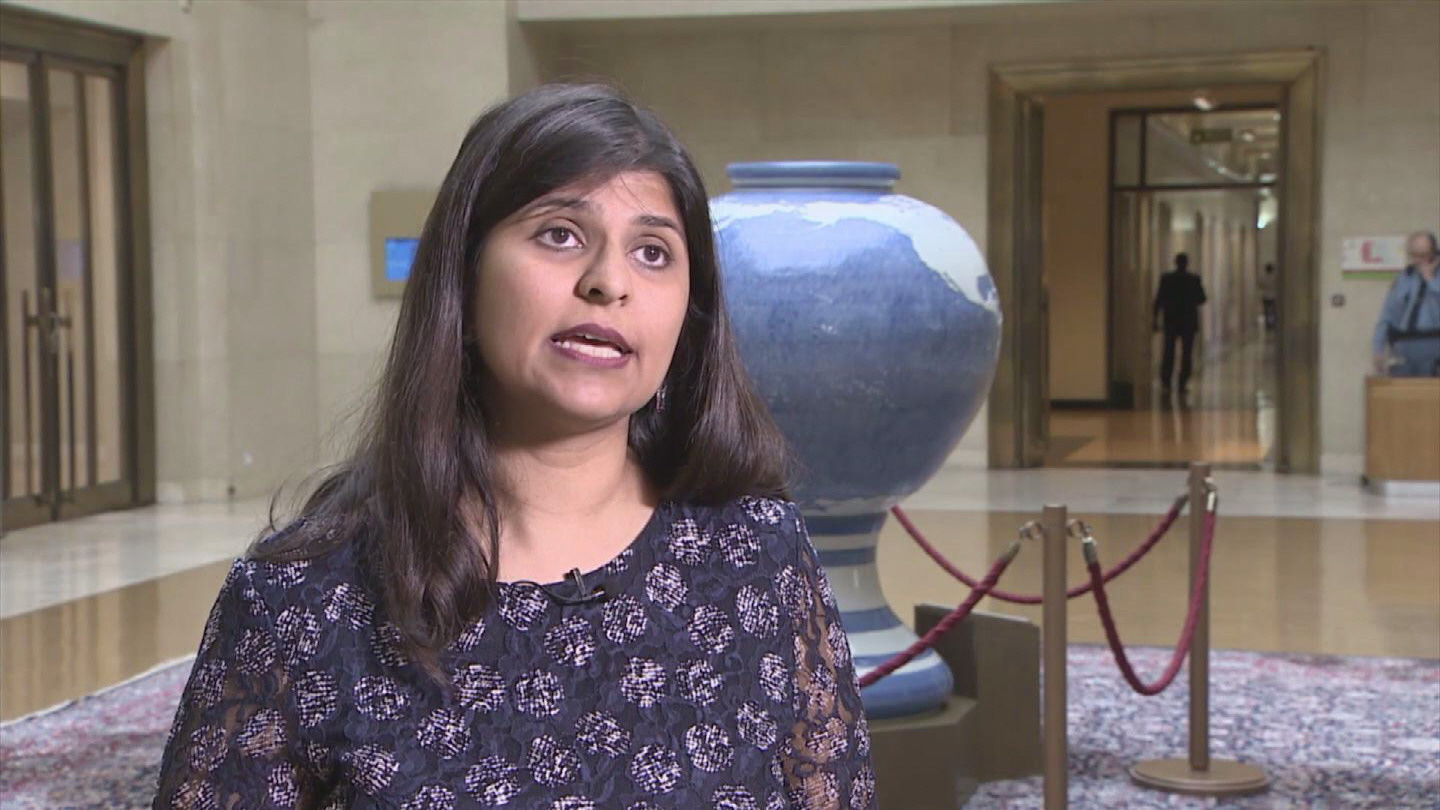
4. SOUNDBITE (English) Yasmin Sooka, Chairperson Commission on Human Rights in South Sudan:
“In the last 9 months there has been a massive increase in gross human rights violations and abuses, as well as an escalation in fighting in most of the country. This has contributed to the worsening humanitarian situation, which the UN has indicated is man-made and risks millions of lives”.
5. Wide shot, Human Rights Council room
6. SOUNDBITE (English) Yasmin Sooka, Chairperson Commission on Human Rights in South Sudan:
“Our report makes it clear that South Sudanese civilians have been deliberately and systematically targeted on the basis of their ethnicity by government and government-aligned forces, for killing, abduction, unlawful detention, deprivation of liberty, rape and sexual violence, the burning of their villages, and looting. On the ground, this translates into bound corpses left on roadsides, hunger where once there was plenty, and thousands of children ripped from their mothers - some forced to carry guns and kill – yet another lost generation”.
7. Close up, delegate from CAR
8. SOUNDBITE (English) Yasmin Sooka, Chairperson Commission on Human Rights in South Sudan:
“The extent and scale of sexual violence in South Sudan is so horrifying that the consequences of doing nothing are unthinkable. Perpetrators in South Sudan will be emboldened if the international community ignore this. Experience has shown that sexual violence is often treated by courts and prosecutors as a difficult crime to prove”.
9. Med shot, podium
10. SOUNDBITE (English) Yasmin Sooka, Chairperson Commission on Human Rights in South Sudan:
“The Commission has called for an international impartial and independent investigation to be established by the UN – to examine the most serious crimes, including conflict-related sexual violence, committed since December 2013”.
11. Close up, delegate
12. SOUNDBITE (English) Yasmin Sooka, Chairperson Commission on Human Rights in South Sudan:
“If the Government of South Sudan continues to deny humanitarians access to opposition-controlled areas hit by famine, there will be an even greater catastrophe. Everyone is hungry – by some reports the families of SPLA soldiers too”.
13. Wide shot, podium
14. SOUNDBITE (English) Paulino Wanawilla Unango, Minister of Justice and Constitutional Affairs of South Sudan:
“The report is not about a country I am coming from. There is a lot of resignations, based on allegations and a lot of assumptions of a reality that is not there and even the fact that the Commission is bold in saying that the majority of the large part of the South Sudan is under the non-state actors and all the institutions there are not functioning”.
15. Med shot, delegates
South Sudan's escalating violence has resulted in a massive increase in gross human rights violations over the past nine months. And as the humanitarian situation has worsened in recent weeks, the lives of millions of South Sudanese are now in jeopardy, according to Yasmin Sooka, Chairperson of the UN Commission on Human Rights in South Sudan, who spoke Tuesday (14 Mar) at the Human Rights Council in Geneva.
Sooka said “in the last 9 months there has been a massive increase in gross human rights violations and abuses, as well as an escalation in fighting in most of the country. This has contributed to the worsening humanitarian situation, which the UN has indicated is man-made and risks millions of lives.”
Arbitrary arrest and detention, torture, rape and assassination have become the norm, she added, describing the crimes that are affecting more and more areas of South Sudan as "chilling."
According to UN investigators, many South Sudanese have been targeted by the government and its followers because of their ethnicity.
The Chairperson said, “Our report makes it clear that South Sudanese civilians have been deliberately and systematically targeted on the basis of their ethnicity by government and government-aligned forces, for killing, abduction, unlawful detention, deprivation of liberty, rape and sexual violence, the burning of their villages, and looting.”
She added that “on the ground, this translates into bound corpses left on roadsides, hunger where once there was plenty, and thousands of children ripped from their mothers - some forced to carry guns and kill – yet another lost generation.”
These include murder, kidnapping, illegal detention, deprivation of liberty, rape and sexual violence, and the burning and looting of villages, according to the report.
In addition, UN experts described the frightening scale of sexual violence being used as weapon of war.
Sooka said, “The extent and scale of sexual violence in South Sudan is so horrifying that the consequences of doing nothing are unthinkable. Perpetrators in South Sudan will be emboldened if the international community ignore this. Experience has shown that sexual violence is often treated by courts and prosecutors as a difficult crime to prove.”
She told Council members “the Commission has called for an international impartial and independent investigation to be established by the UN – to examine the most serious crimes, including conflict-related sexual violence, committed since December 2013.”
According to the Chairperson of the Commission, South Sudan now has the “dubious distinction of being only the fourth nation this century where famine has been declared.”
A quarter of a million South Sudanese children are already malnourished. According to the Commission's report, the situation is likely to only get worse.
Sooka said, “If the Government of South Sudan continues to deny humanitarians access to opposition-controlled areas hit by famine, there will be an even greater catastrophe. Everyone is hungry – by some reports the families of SPLA soldiers too.”
The Minister of Justice and Constitutional Affairs of South Sudan, Paulino Wanawilla Unango, said “the report is not about a country I am coming from. There is a lot of exaggerations, based on allegations and a lot of assumptions of a reality that is not there and even the fact that the Commission is bold in saying that the majority of the large part of the South Sudan is under the non-state actors and all the institutions there are not functioning.”
During the debate, the Commission on Human Rights in South Sudan stressed that South Sudan was responsible for the third largest refugee crisis in the world, with over one and a half million people fleeing Countries and 2 million internally displaced persons. For the two months of January and February 2017 alone, some 120,000 people have joined Uganda.
Download
There is no media available to download.