Media Home
 UN Web TV
 UN Audiovisual Library
 UN Photo
Security Council
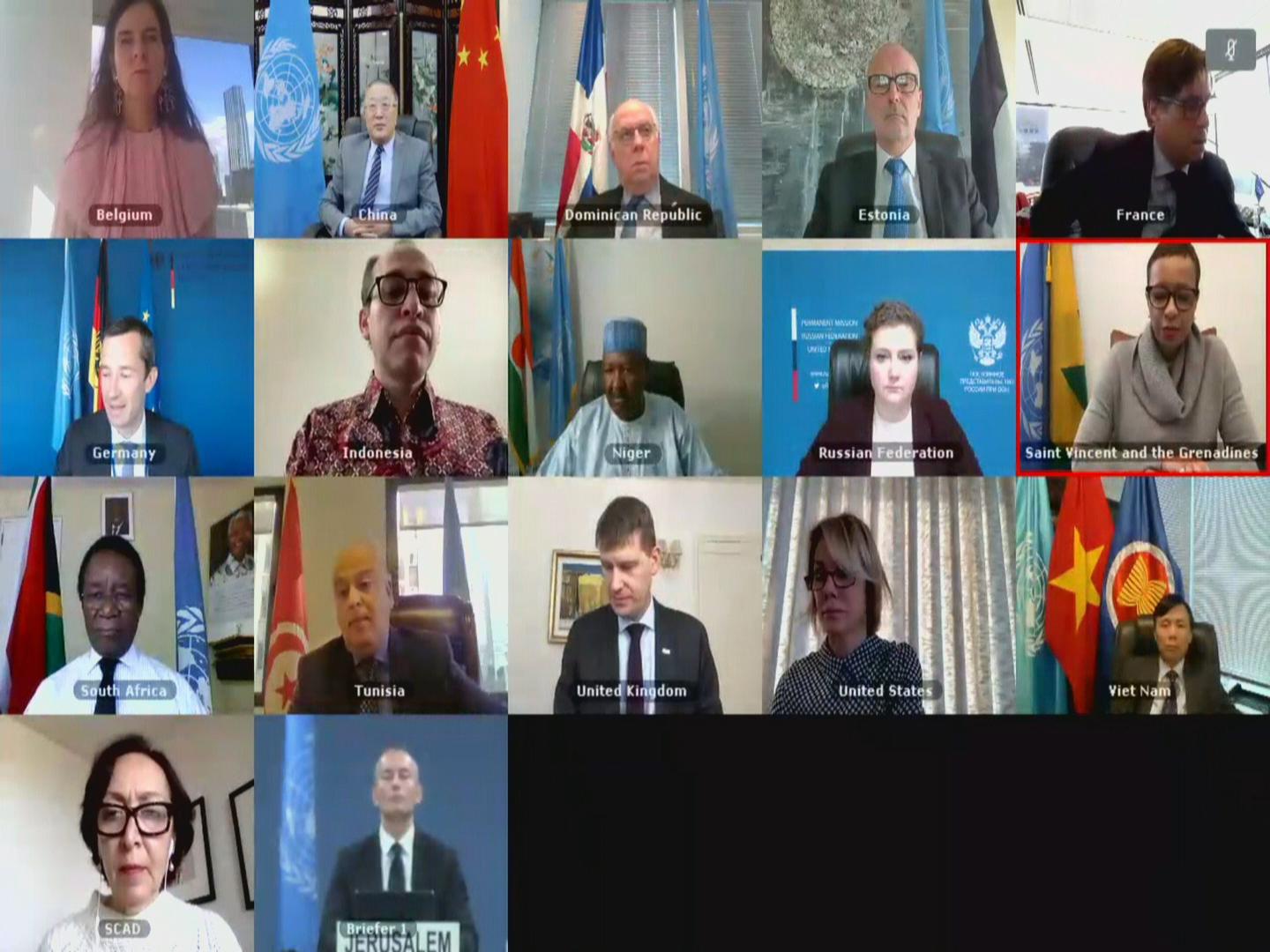
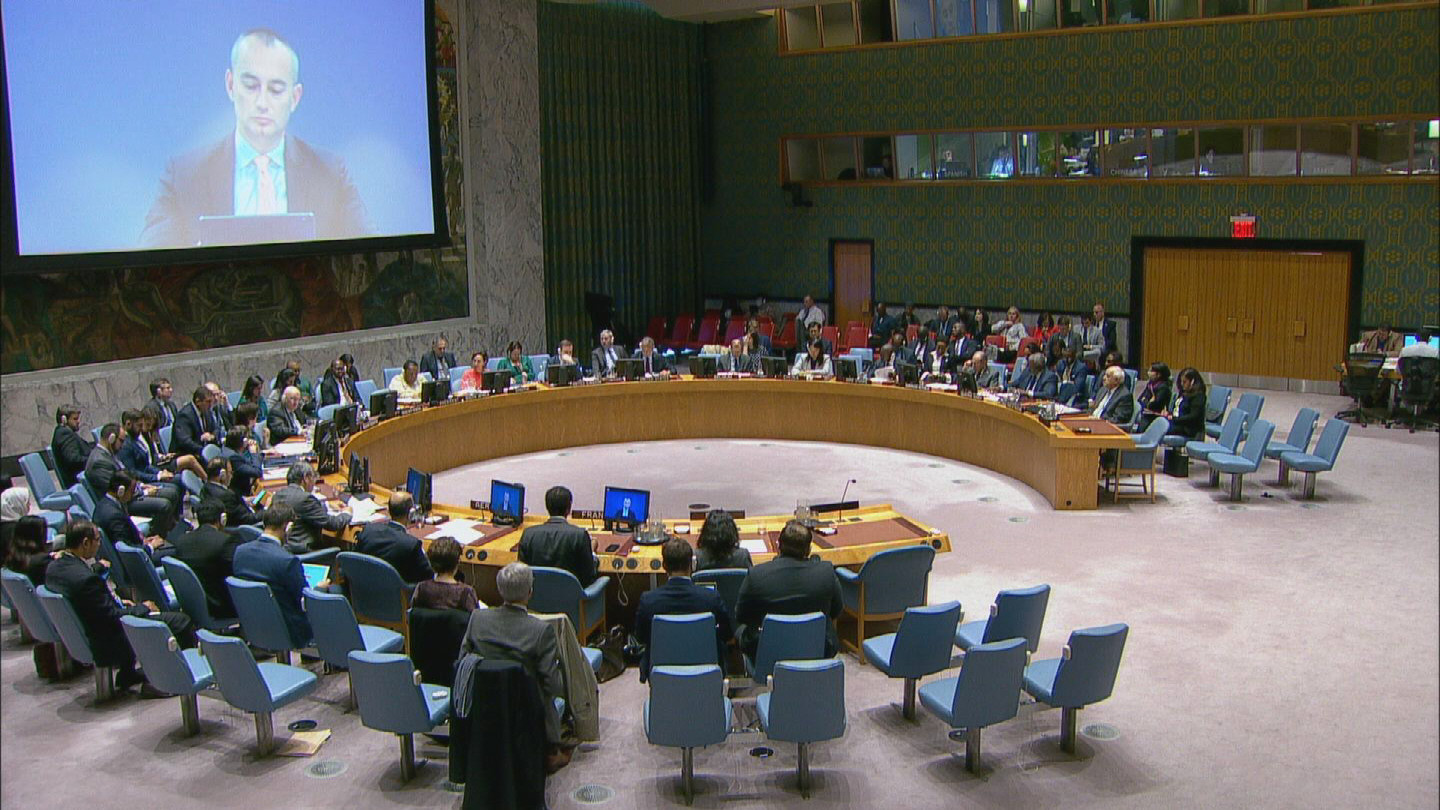
7929th Security Council Meeting: Situation in Middle East - Part 1
Amid Calls to Resume Direct Talks, State of Palestine Cites Hunger Strike, as Israel Says Protesters Include ‘Terrorists and Murderers’
Cooperation and multilateral approaches would be needed to address interlinked conflicts, cross-border humanitarian crises and violent extremism, the Special Coordinator for the Middle East Peace Process told the Security Council today, as it held its quarterly open debate on that region.
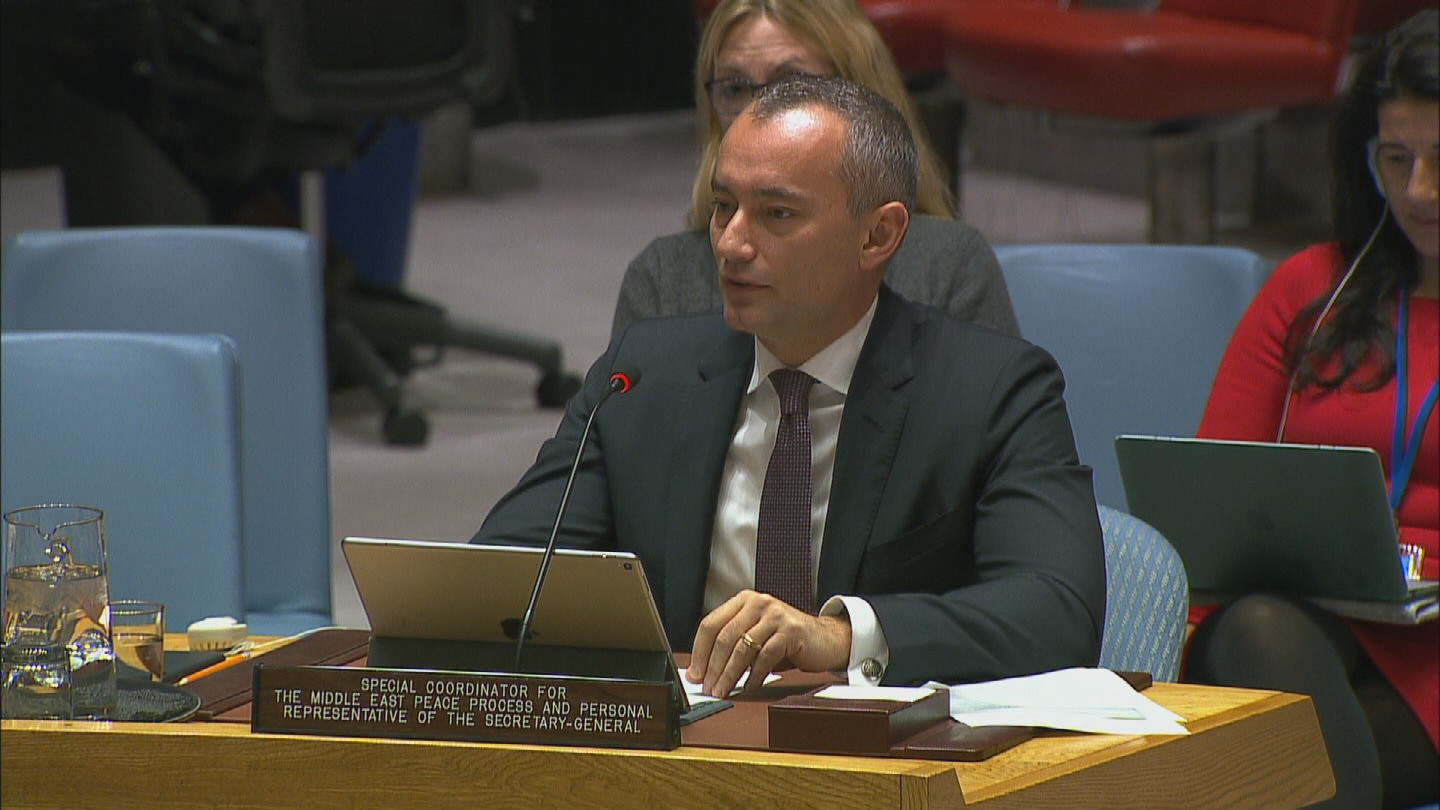
Briefing on the latest developments in the Middle East, including the Palestinian question, Special Coordinator Nickolay Mladenov said that a “perfect storm” had engulfed the region, with divisions opening the door to foreign intervention and manipulation. The Middle East required a surge in diplomacy for peace, with Member States assuming a leading role through a united Security Council, he said, quoting the Secretary-General.
“The complexities of the region’s conflicts means that political solutions based on justice, dignity and social cohesion are required to achieve peace and sustain peace,” he told participants in the day-long meeting, more than 50 of whom took the floor. “In today’s world, there can be no justification for terrorism, nor for the glorification of those who commit it,” he added. “But, without justice, dignity and the protection of human rights, communities will continue to fracture and provide fertile grounds for extremists.”
To that end, it was crucial to address the fragility of States, he said, emphasizing that Governments must respond to the legitimate demands of their people and strengthen social cohesion and reconciliation. That would provide a first line of defence against extremism, while also strengthening the voices of moderation and religious tolerance.
Nikki Haley (United States), Council President for April, presented a concept note for today’s debate, asking Member States to consider, among other questions, which regional players benefitted most from chaos in the Middle East, and which connections linked those States with terrorist groups.
Speaking later in her national capacity, she said the quarterly meetings on the Middle East had become “Israel-bashing sessions” and urged the 15-nation Council to focus instead on Iran and its partner militia Hizbullah.
The Permanent Observer for the State of Palestine said that, in a time of simmering crises and declining optimism, Middle East instability centred on the question of Palestine. Condemning Israel’s disrespect for Council decisions, he stressed that the colonization, fragmentation and annexation of Palestinian land would never bring peace. Israel must comply with Council demands.
Israel’s representative noted that the Council had met regularly for 17 years to discuss the Middle East under the false assumption that all regional ills could be traced to his country. It was time to end the obsessive focus on Israel, focus on dictators who gassed their own people, and classify Hizbullah and Hamas as terrorist organizations, he emphasized, adding that Iran was at the heart of an “alliance of evil”.
Iran’s representative responded by saying Israel and the United States wished to remove the Palestinian question from the Council’s open debates. Describing Israel as the sole obstacle blocking a Middle East zone free of weapons of mass destruction, he described the recent military action by the United States against Syria as a clear act of aggression against a Member State, as well as a violation of international law.
Many speakers emphasized the centrality of the Palestinian question — 70 years after the historic General Assembly resolution on the partition of Palestine — reiterating calls for the two sides to resume direct negotiations on the basis of a two-State solution. Numerous delegates renewed calls for Israel to halt settlement activities immediately, in accordance with Council resolutions, including most recently resolution 2334 (2016), adopted in December 2016.
France’s representative warned that any escalation of the Israel-Palestine conflict risked destabilizing the entire region, stressing that the disappearance of a two-State solution would plunge the situation “into the unknown”. His counterpart from China said Palestine remained at the crux of the Middle East issue. With the region at a cross-road, the dispute would undermine security and stability in the region and beyond if left unresolved.
Egypt’s representative said injustice against Arab peoples persisted due to foreign interference in the occupied Palestinian and Syrian territories. The question of Palestine was the cause of the oldest conflict and reflected the international community’s failure to find a solution while people remained under siege in the Gaza Strip. A mistaken belief that managing the conflict would be enough must be examined against the grim backdrop of the situation on the ground, he emphasized.
Uruguay’s representative pointed out that many rebel groups in Syria hid behind the label “moderate opposition”, yet they committed acts as reprehensible as those attributed to armed terrorists. The absence of State power, which sometimes resulted from unauthorized foreign military interventions, was among the factors encouraging the spread of terrorist groups in the Middle East.
Jordan’s representative, rejecting Israel’s unilateral steps to change reality on the ground, underlined that the Middle East would know no peace until the occupation ended. Her counterpart from South Africa expressed “disbelief” that 2017 marked the occupation’s fiftieth anniversary, saying that, given the Council’s lack of progress, its open debates at least provided opportunities for other Member States to express their views.
Syria’s representative urged the Security Council to focus on Israel’s violations of various resolutions and its refusal to withdraw from occupied Palestinian territories. He reiterated Syria’s support for the Palestinian people, and said that Israel had provided support to various armed terrorist groups, including Al-Nusra.
Others speaking today were representatives of Ukraine, Kazakhstan, Sweden, Russian Federation, United Kingdom, Japan, Ethiopia, Senegal, Italy, Bolivia, Venezuela, Lebanon, Liechtenstein, Morocco, Brazil, Pakistan, Peru, Cuba, Nicaragua, Indonesia, Oman, Kuwait, Saudi Arabia, Bangladesh, Uzbekistan (on behalf of the Organization of Islamic Cooperation), Viet Nam, Costa Rica, Malaysia, Qatar, Maldives, Turkey, Norway, Bahrain, Chile, Iceland, United Arab Emirates, Nigeria and Haiti, as well as the European Union and the Holy See.
Also delivering a statement was the Vice-Chair of the Committee on the Exercise of the Inalienable Rights of the Palestinian People.
The meeting began at 10:10 a.m. and ended at 4:30 p.m.
Related Content
7929th Security Council Meeting: Situation in Middle East - Part…
7929th Security Council Meeting: Situation in Middle East - Part…
8011th Security Council Meeting: Situation in Middle East, Including…
7885th Security Council Meeting: Situation in Middle East; Palestinian…