Media Home
 UN Web TV
 UN Audiovisual Library
 UN Photo
Unifeed
UN / UNHCR GLOBAL TRENDS
STORY: UN / UNHCR GLOBAL TRENDS
TRT: 03:06
SOURCE: UNIFEED
RESTRICTIONS: PLEASE CREDIT UNHCR FOR FILE FOOTAGE
LANGUAGE: ENGLISH / NATS
DATELINE: 19 JUNE 2017, NEW YORK CITY / FILE
RECENT - NEW YORK CITY
1. Wide shot, UNHQ exterior
19 JUNE 2017, NEW YORK CITY
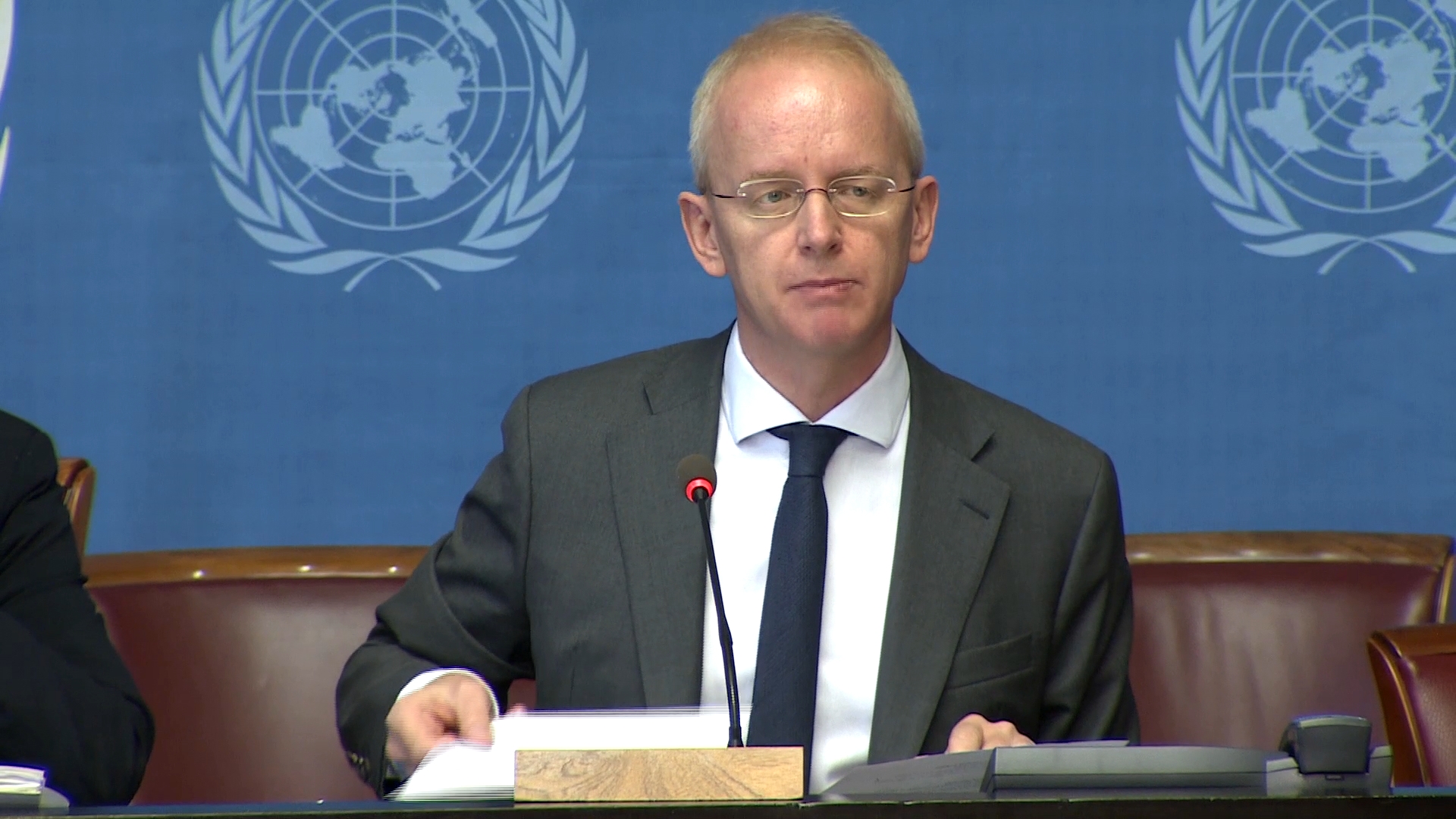
2. Wide shot, Kelley at dais
3. SOUNDBITE (English) Ninette Kelley, Director of New York office, United Nations High Commissioner for Refugees (UNHCR):
“While the rate of increase is somewhat less than the previous year, it remains true that this is a very depressing and high level of forced displacement. And when you look at it in its historical context, it is also quite disturbing. We are used to looking at the world and seeing progress but there is no progress to be made in terms of conflict violence that is producing people who have had to flee. Over the last two decades the numbers, for example, of people who have been forcibly displaced have doubled, and the greatest rate of increase was between 20012 and 2015 largely due to the Syria crisis.”
4. Wide shot, journalists
5. SOUNDBITE (English) Ninette Kelley, Director of New York office, United Nations High Commissioner for Refugees (UNHCR):
“I always say when we are looking at number, they can be kind of numbing and surely when you look at the global trends report it is overwhelming in the amount of detail there. But each individual number really reflects a deep level of human loss and trouble that is experienced every minute and every second of everyday; where 20 people are displaced every minute and 3 people are forcibly displaced from their home every single second.”
6. Wide shot, Kelly at dais
7. SOUNDBITE (English) Ninette Kelley, Director of New York office, United Nations High Commissioner for Refugees (UNHCR):
“We know that there were 75,000 children who arrived and made an asylum application unaccompanied or separated from their families. And I really ask you to pause and think about your own children, or your nieces, or your nephews, and then think about the journeys that refugees take across conflict areas, across deserts, climbing mountains, giving their lives to unscrupulous traffickers and smugglers; and imagine those journeys by children without their parents or without adult accompaniment; then they arrive and they are alone.”
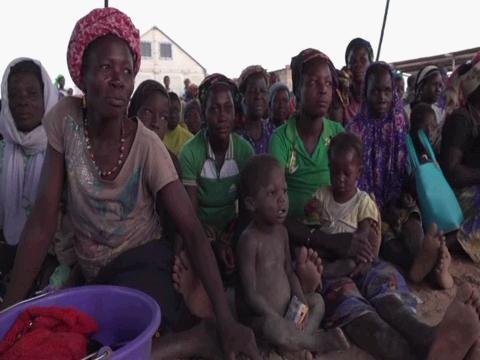
FILE – UNHCR - KARIANDOGO / LAMWO, UGANDA
8. Med shot, children waiting on queue
9. Close up, child’s face
10. Wide shot, young boy walking, carrying mattress
11. Med shot, children covering themselves with blankets on the ground
12. Close up, little girl crying
FILE – UNHCR - 09 MAY 2017, HAMAN AL-ALIL, SOUTH OF MOSUL, IRAQ
13. Wide shot, Hammam al-Alil Camp with IDPs walking in the street
14. Various shots, displaced people arriving at registration area
15. Wide shot, buses and people in camp
16. Wide shot, tents in camp
17. Wide shot, women and child walking in street
18. Med shot, little girl being carried by mother
FILE – UNHCR - 7 - 10 MAY 2017, KAKANDA REFUGEE CAMP, DUNDO, ANGOLA
19. Various shots, refugees disembarking from pickup truck
20. Wide shot, woman cooking
21. Wide shot, refugees sitting under tent
22. Med shot, child eating
The United Nations Refugee Agency (UNHCR) said some 65.6 million people worldwide were forcibly displaced from their homes by the end of 2016 setting yet another record high with an increase of 300,000 people compared to the previous year.
In its latest Global Trends Report, UNHCR said the number represents 40.3 million internally displaced, 22.5 million refugees, and 2.8 million asylum-seekers. The number also includes 5.3 million Palestinian refugees and 10.3 million people who were newly displaced in 2016. UNHCR said 51 percent of the world refugee population are children and 84 percent were being hosted by developing countries. The report notes that 55 percent of all refugees worldwide came from just three countries, Syrian, Afghanistan, and South Sudan.
Speaking to reporters in New York today (19 Jun), UNHCR’s New York office director Ninette Kelley said while the rate of increase is somewhat less than the previous year, the number represents a “very depressing and high level of forced displacement.” She said there was “no progress to be made in terms of conflict violence that is producing people who have had to flee” adding that over the last two decades the numbers of people who have been forcibly displaced have doubled.
Kelley said if displaced people around the world were a country, they would represent the 20th largest population in the world, bigger than the United Kingdom. She added that looking at numbers could be “kind of numbing” but each number in the report “really reflects a deep level of human loss and trouble that is experienced every minute and every second of everyday; where 20 people are displaced every minute and 3 people are forcibly displaced from their home every single second.”
Kelley said South Sudan had the largest growing forced displacement problem in the world, which has also made Uganda Africa’s top host for refugees. She said Uganda was receiving some 1,500 to 2,000 South Sudanese a day as the number of refugees in the country has passed one million.
Kelley said 75,000 children, unaccompanied or separated from their families, applied for asylum 2016. She said, “I really ask you to pause and think about your own children, or your nieces, or your nephews, and then think about the journeys that refugees take across conflict areas, across deserts, climbing mountains, giving their lives to unscrupulous traffickers and smugglers; and imagine those journeys by children without their parents or without adult accompaniment; then they arrive and they are alone.” Kelley said that number was underrepresented as many countries do no keep record of whether children were accompanied or not.
Download
There is no media available to download.