Media Home
 UN Web TV
 UN Audiovisual Library
 UN Photo
Unifeed
GENEVA / EMISSIONS GAP REPORT
STORY: GENEVA / EMISSIONS GAP REPORT
TRT: 2:40
SOURCE: UNTV CH
LANGUAGE: ENGLISH / NATS
ASPECT RATIO: 16:9
DATELINE: 31 OCTOBER 2017, GENEVA, SWITZERLAND
1. Wide shot, exterior, flags
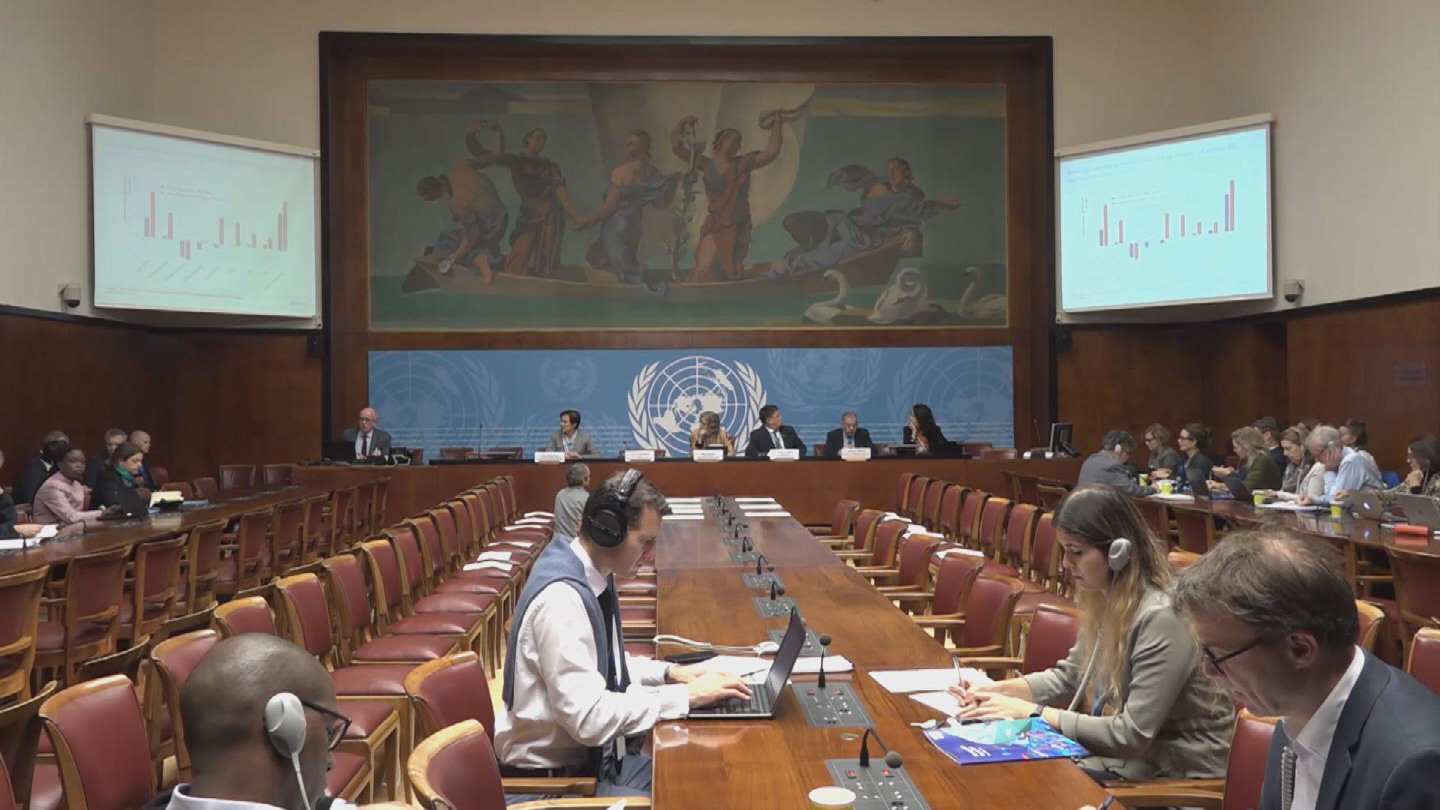
2. Wide shot, meeting room
3. SOUNDBITE (English) Edgar E. Gutiérrez-Espeleta, Minister of Environment and Energy of Costa Rica:
“The Gap Report we are launching today clearly shows that the Paris Agreement is faltering and without a stronger commitment to action by all governments we can unravel what we took so long to achieve.”
4. Wide shot, journalists
5. SOUNDBITE (English) Edgar E. Gutiérrez-Espeleta, Minister of Environment and Energy of Costa Rica:
“Should the United States follow through with its stated intention to leave Paris Agreement in 2020, the picture could become even bleaker.”
6. Close up, journalist
7. SOUNDBITE (English) Edgar E. Gutiérrez-Espeleta, Minister of Environment and Energy of Costa Rica:
“Cancun climate pledges for 2020, these pledges do not create a sufficiently ambitious starting point to meet the Paris goals, and 2020 is just around the corner. And even if all countries do stay in due course, the study clearly demonstrates that these emissions reductions achieved will amount to only one-third of those required to stay below 1.5 degrees Celsius. The other two-thirds will have to be addressed by what we call non-state actors: cities, states, industry and private sector.”
8. Med shot, podium
9. SOUNDBITE (English) John Christensen, Lead Author, United Nations Environment (UNEP):
“The conclusions of what we have seen is that with that gap, if that doesn’t change then hopefully of course it will, and that’s the whole idea about trying to come about with even higher level ambition indices by 2020 and so on. We are looking at something like 3-3.2 degrees at the end of the century, not 2 or 1 and a half.”
10. Close up, journalist
11. SOUNDBITE (English) John Christensen, Lead Author, United Nations Environment (UNEP):
“No single country can solve this, this is about collective action across the board and something everybody needs to contribute with their ability and all the principles that the Convention is on. But it is a challenge, it’s a big one.”
12. Close up, journalist
13. SOUNDBITE (English) John Christensen, Lead Author, United Nations Environment (UNEP):
“Unless counties get their act together, and up the ambitions of the indices by 2020 already, not waiting for 23 or 25 for the next submission, then you lose your own goals. They’re basically lost. You can do whatever you want in 25 and it’s gone. So don’t talk about keeping the targets of the agreement if you don’t actually act on it.”
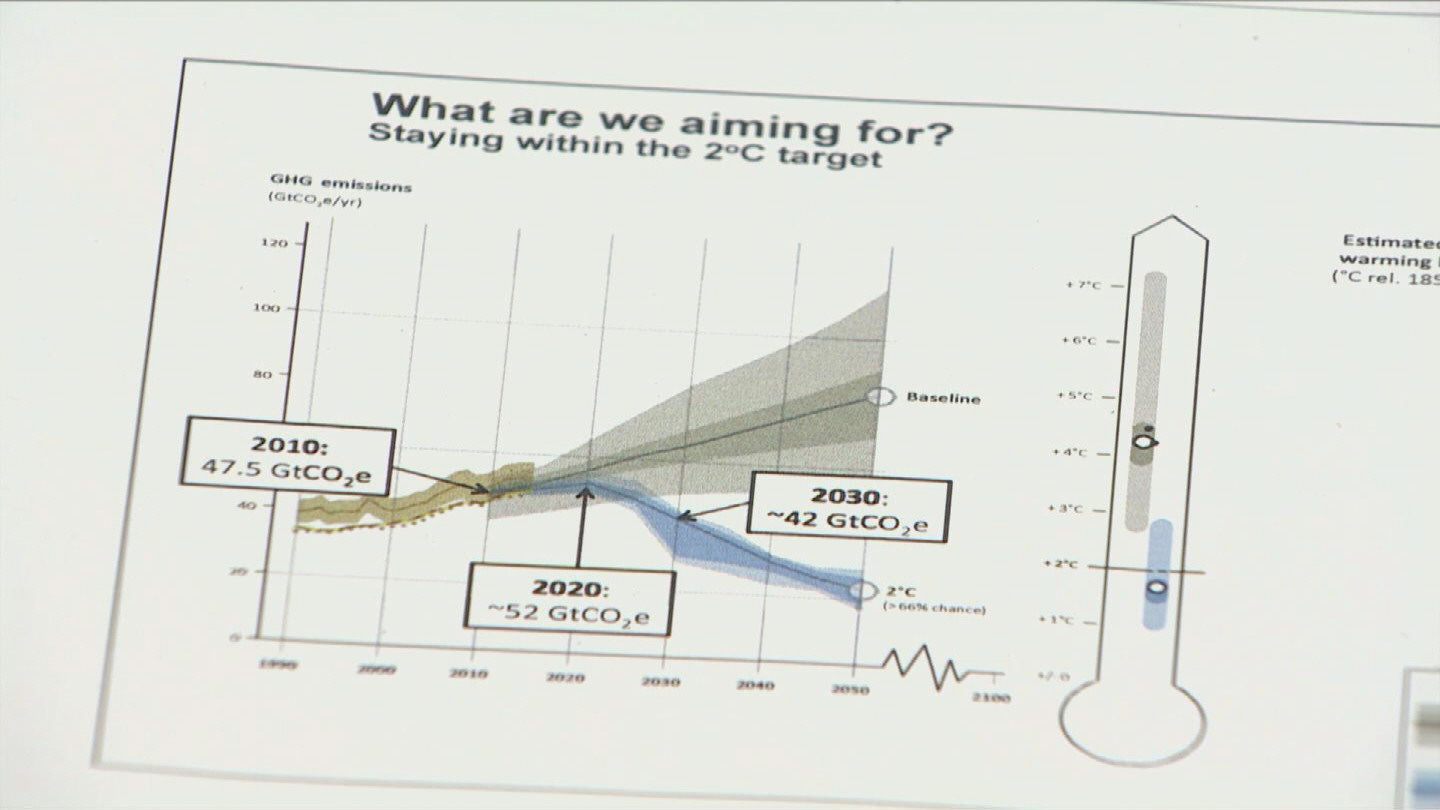
14. Close up, report cover
15. SOUNDBITE (English) Zitouni Ould Dada, Head of Technology for Sustainable Development, United Nations Environment (UNEP):
“We need to do more, and we need to do that more faster. So some of the conclusions that I want to leave you with from the report is that the energy sector has a great potential in contributing to reducing that emissions gap. What we need is to invest more in those similar projects so we can achieve more.”
16. Close up, journalist
17. Close up, journalist
According to the eighth edition of the UN Flagship Emissions Gap Report released today, the world is set to fall short of reaching global emissions reduction targets. The report’s findings clearly show that the “Paris Agreement is faltering” without a stronger commitment to action by all governments and non-state actors.
The eight edition of the report was launched in Geneva Tuesday (31 Oct), just days ahead of the convening of the UN Climate Change Conference (COP 23). The Emissions Gap Report tracks the policy commitments made by countries to reduce greenhouse gas emissions and analyses how these policies will translate into emissions reductions through 2030.
Edgar E. Gutiérrez-Espeleta, Minister of Environment and Energy of Costa Rica told reporters today in Geneva “the Gap Report we are launching today clearly shows that the Paris Agreement is faltering and without a stronger commitment to action by all governments we can unravel what we took so long to achieve.”
Gutiérrez-Espeleta added “should the United States follow through with its stated intention to leave Paris Agreement in 2020, the picture could become even bleaker.”
As things stand, even the full implementation of current conditional and unconditional Nationally Determined Contributions makes it likely that a temperature rise of at least 3 degrees Celsius will occur by 2100. This means that governments will need to deliver much stronger pledges when they are revised in 2020.
Gutiérrez-Espeleta said “Cancun climate pledges for 2020, these pledges do not create a sufficiently ambitious starting point to meet the Paris goals, and 2020 is just around the corner. And even if all countries do stay in due course, the study clearly demonstrates that these emissions reductions achieved will amount to only one-third of those required to stay below 1.5 degrees Celsius. The other two-thirds will have to be addressed by what we call non-state actors: cities, states, industry and private sector.”
The Lead Author of the report, John Christensen, stressed the need for a higher level of ambition to bridge the gap in global emissions.
He said “the conclusions of what we have seen is that with that gap, if that doesn’t change then hopefully of course it will, and that’s the whole idea about trying to come about with even higher level ambition indices by 2020 and so on. We are looking at something like 3-3.2 degrees at the end of the century, not 2 or 1.5.”
Recognizing the increasingly important role of all countries and non-state actors, Christensen also emphasized the urgent need for collective action. The lead author said “no single country can solve this, this is about collective action across the board and something everybody needs to contribute with their ability and all the principles that the Convention is on. But it is a challenge, it’s a big one.”
Christensen also highlighted that “unless counties get their act together, and up the ambitions of the indices by 2020 already, not waiting for [20]23 or [20]25 for the next submission, then you lose your own goals. They’re basically lost. You can do whatever you want in [20]25 and it’s gone. So don’t talk about keeping the targets of the agreement if you don’t actually act on it.”
The launch panellists reiterated that governments and non-state actors need to take urgent action to meet the Paris Agreement goals.
Zitouni Ould Dada, Head of Technology for Sustainable Development at UNEP said “we need to do more, and we need to do that more faster. “So some of the conclusions that I want to leave you with from the report is that the energy sector has a great potential in contributing to reducing that emissions gap. What we need is to invest more in those similar projects so we can achieve more.”
The event also included the launch of The One Gigaton Coalition Report, which evaluates the greenhouse gad emissions’ reductions resulting from renewable energy and energy efficiency projects implemented in developing countries, which are estimated to amount to over one Gigaton of CO2 by 2020.
Thomson Reuters also presented the latest data that tracks actions to lower emissions by companies in the Global 250, along with their value chains, which is estimated to account for approximately one third of global annual emissions.
Download
There is no media available to download.