Media Home
 UN Web TV
 UN Audiovisual Library
 UN Photo
Security Council
8182nd Security Council Meeting: Situation in Guinea-Bissau
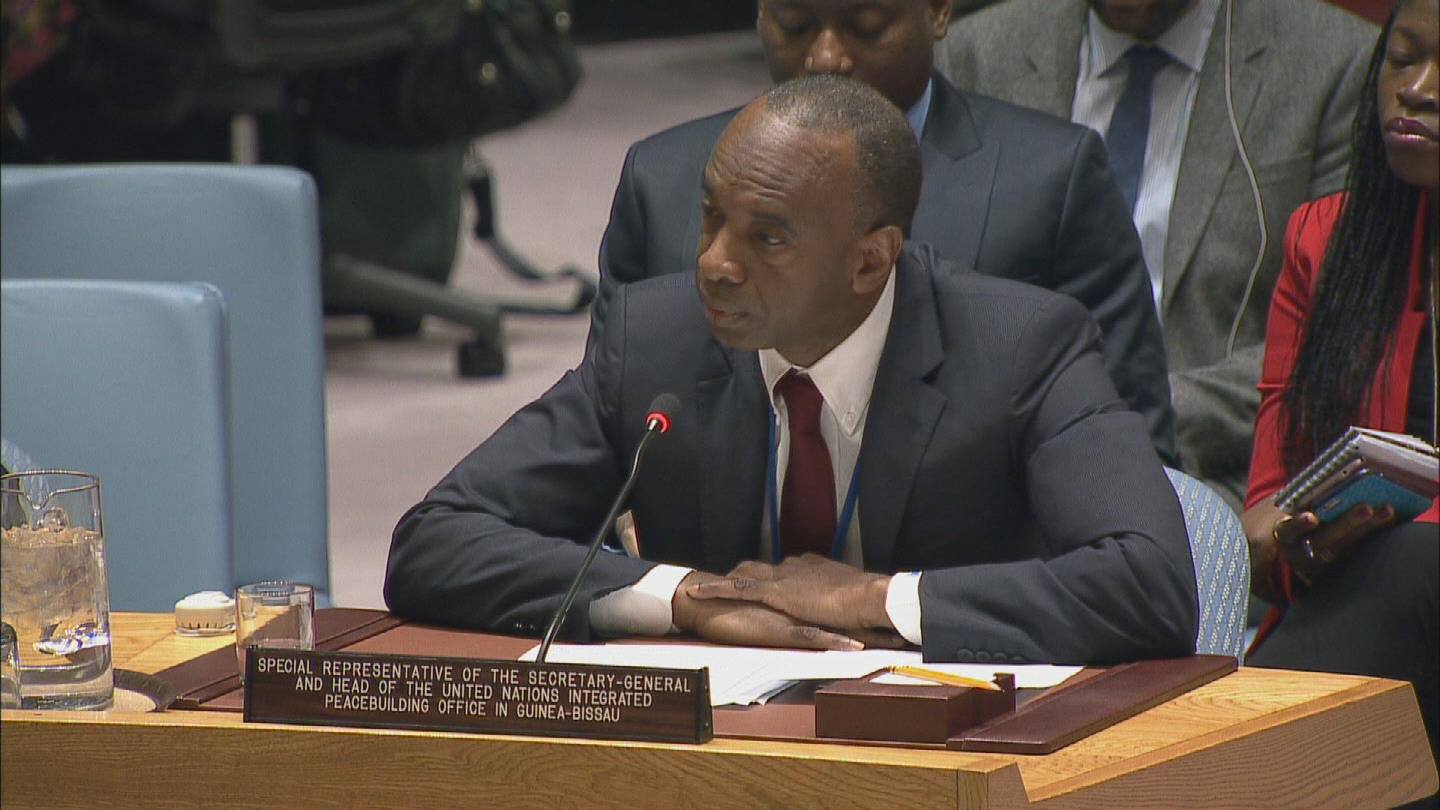
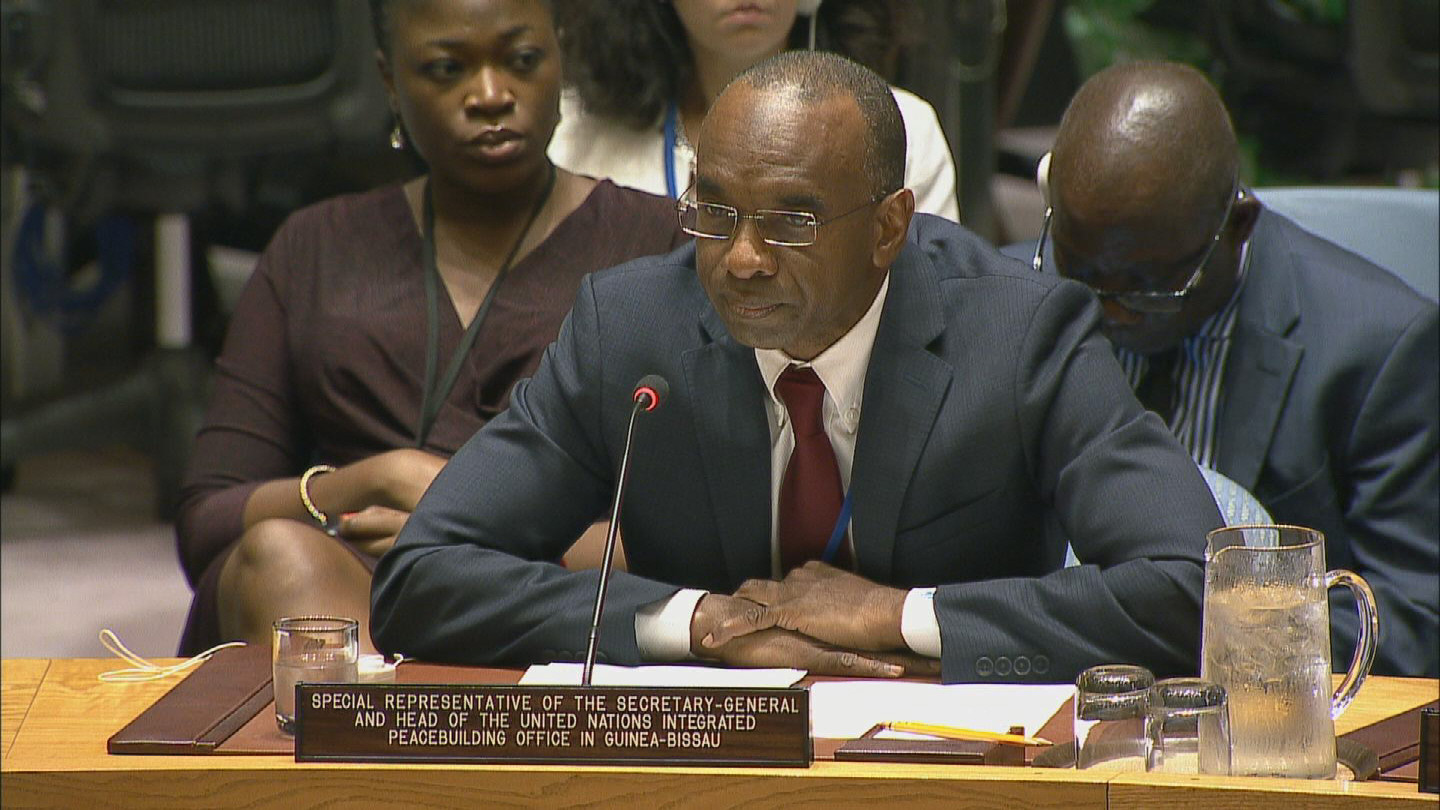
The political situation in Guinea-Bissau was evolving swiftly, the Secretary-General’s Special Representative told the Security Council today, as he outlined the latest developments in that country, including those that had obstructed the full implementation of the Conakry Agreement.
Modibo Ibrahim Touré, who also heads the United Nations Integrated Peacebuilding Office in Guinea-Bissau (UNIOGBIS), briefed the Council on the Secretary-General’s report on that country, while noting that he would focus his remarks on the events that had occurred since its publication, given the constantly changing political landscape. Guinea-Bissau President José Mário Vaz had dismissed former Prime Minister Umaro Sissoco Embaló and replaced him with Artur Silva. The African Party for the Independence of Guinea and Cape Verde had issued a statement denouncing that appointment, as it did not conform with the stipulations of the Conakry Agreement. The Party for Social Renewal, and the group of 15 renegade members of the African Party for the Independence of Guinea and Cape Verde also stressed they would only participate in a Government formed under a consensual Prime Minister in strict compliance with the accord.
In other developments, the African Party for the Independence of Guinea and Cape Verde had re-elected Domingos Simões Pereira as its leader, and the Economic Community of West African States (ECOWAS) imposed targeted sanctions on more than a dozen individuals deemed to be obstructing the implementation of the Conakry Agreement, he said. While the absence of a functioning Government had limited the ability of UNIOGBIS to implement some of its mandated tasks, the Office needed to focus its efforts on supporting national leaders in their efforts to appoint an acceptable Prime Minister, and organize and conduct timely elections.
Recalling that ECOWAS Heads of State had recently laid out a 30-day deadline for Guinea-Bissau’s political actors to implement the Conakry Agreement, Mauro Vieira, Chair of the Guinea-Bissau configuration of the Peacebuilding Commission, said that the ECOWAS Commission would begin to apply sanctions against those who were standing in the way of a political solution.
The Guinea-Bissau Configuration had briefed the Council on two occasions in 2017, he noted, and it also hoped to work with outside partners like the World Bank. It had also convened a briefing by the United Nations Under-Secretary‑General for Political Affairs, where the ECOWAS sanctions and other issues were discussed. The need to respect Guinea-Bissau’s constitutional framework to organize elections was expressed, and participants also voiced their support for the renewal of the UNIOGBIS mandate.
The representative of Côte d’Ivoire emphasized that the adoption by ECOWAS of individual sanctions against those considered hostile to the conflict resolution process should give an “electric shock” to the political class in Guinea-Bissau. He underscored that Guinea-Bissau had no Government, and that there was a crisis of confidence between the President and his political party. Political stakeholders needed to find a consensus-based solution to the crisis, he said.
Many delegates emphasized the importance of implementing the Conakry Agreement, including the representative of Equatorial Guinea, who stressed that the accord was the main reference point for the political future of the country. Political actors in Guinea-Bissau should join forces to make it possible to form an inclusive Government. That would lay the foundation for legislative and presidential elections to be organized, he said.
The representative of the Netherlands noted the urgency of appointing a consensus Prime Minister in Guinea-Bissau and of holding elections in a timely and transparent manner. In that regard, increased pressure from ECOWAS could lead to tangible progress. The Council could assist that effort by firmly supporting ECOWAS in taking up its role and responsibility. Additionally, the mandate of UNIOGBIS should be renewed for no less than one year, as that would allow for the setting of more concrete priorities.
The representative of Guinea-Bissau said that the political crisis in his country began much sooner than with the signing of the Conakry Agreement. While the accord was a step in the right direction, the two main parties had expressed disagreement over a crucial element, that of the necessity of consensus on the choice of a candidate for Prime Minister. That lack of consensus had overshadowed the appointment, and brought about a political paralysis that had allowed the crisis in the country to continue. He cautioned that it was not the case that the application of sanctions would help bring about consensus on that matter. Instead, a compromise-based solution should be sought.
Also speaking today were the representatives of the United States, Ethiopia, France, Peru, Sweden, United Kingdom, Poland, Kazakhstan, Bolivia, China, Russian Federation, Kuwait and Togo.
The meeting began at 3:11 p.m. and ended at 4:58 p.m.
Related Content