Media Home
 UN Web TV
 UN Audiovisual Library
 UN Photo
Unifeed
UNAMA / PROTECTION OF CIVILIANS
STORY: UNAMA / PROTECTION OF CIVILIANS
TRT: 02:59
SOURCE: UNAMA
RESTRICTION: NONE
LANGUAGE: ENGLISH / NATS
DATELINE: 15 FEBRUARY 2018, KABUL, AFGHANISTAN
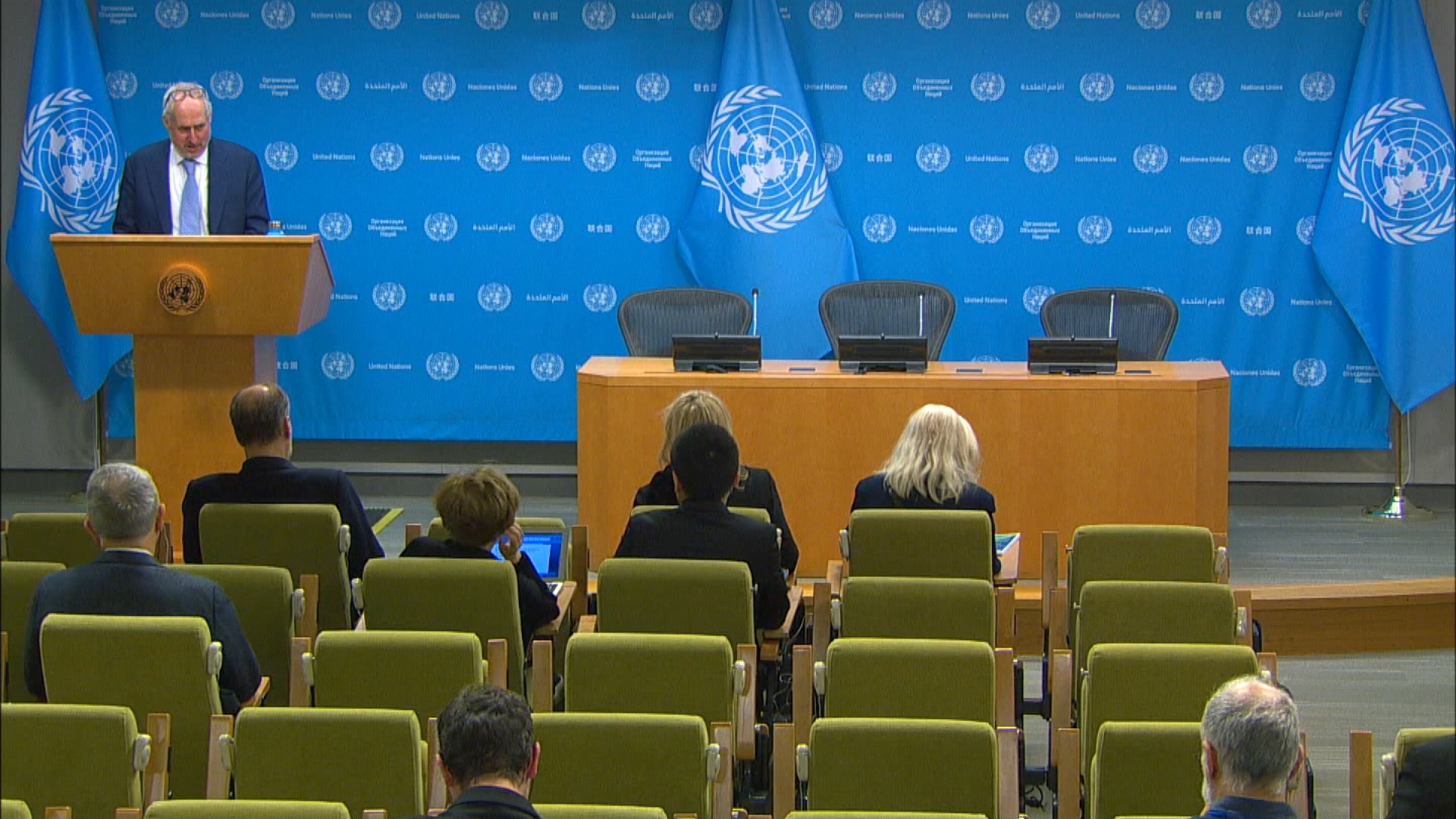
1. Various shots, conference room
2. SOUNDBITE (English) Tadamichi Yamamoto, UN Secretary-General’s Special Representative for Afghanistan:
“The statistics in this report provide a credible data about the war’s impact, but the figures along capture the appalling human suffering inflicted on the civilian population of Afghanistan. The finding showed that the majority of civilian casualty resulted from suicide attacks, IEDs, ground engagement, targeted killings, explosive remnants of war and the airstrikes.”
3. Med shot, speaker on stage
4. SOUNDBITE (English) Tadamichi Yamamoto, UN Secretary-General’s Special Representative for Afghanistan:
“While the report covers 2017, I take this opportunity to again condemn in the strongest terms the Taliban’s attack in January at Intercontinental Hotel in PD2 of Kabul city and the attack by Da’esh against Save the Children in Jalalabad.”
5. Med shot, speaker on stage
6. SOUNDBITE (English) Tadamichi Yamamoto, UN Secretary-General’s Special Representative for Afghanistan:
“When we see civilians being deliberated targeted, you wonder how long that this has to go along? What were the perpetrators thinking? They claimed to represent the interest of the Afghans, yet, their actions are the opposite.”
7. Wide shot, speakers on stage
8. SOUNDBITE (English) Danielle Bell, Human Rights Director, United Nations Assistance Mission in Afghanistan (UNAMA):
“In 2017, UNAMA documented 10,453 civilian casualties, a nine per cent decrease from 2016. This reduction is an important step, but I must emphasize that 2017 was the fourth consecutive year where the Mission recorded more than 10,000 civilian casualties.”
9. Wide shot, audience
10. SOUNDBITE (English) Danielle Bell, Human Rights Director, United Nations Assistance Mission in Afghanistan (UNAMA):
“The suicide attacks together with Improvised Explosive Devices or IEDs caused 40 per cent of civilian casualties, followed by ground engagements which caused 33 per cent, and then targeted killings, explosive remnants of war and airstrikes.”
11. Med shot, speakers on stage
12. SOUNDBITE (English) Danielle Bell, Human Rights Director, United Nations Assistance Mission in Afghanistan (UNAMA):
“Civilian casualties attributed to Da’esh who caused 1,000 casualties or 10 per cent of all casualties as well as the attack on May 31st in Kabul which caused almost 600 casualties.”
13. Wide shot, speakers on stage
14. SOUNDBITE (English) Danielle Bell, Human Rights Director, United Nations Assistance Mission in Afghanistan (UNAMA):
“Suicide and complex attacks killed the most civilians, killing and injuring over 2,300 civilians, a 17 per cent increase from last year.”
15. Wide shot, conference room
The latest annual UN report documenting the impact of the armed conflict on civilians in Afghanistan said more than 10,000 civilians lost their lives or suffered injuries during 2017.
A total of 10,453 civilian casualties - 3,438 people killed and 7,015 injured - were documented in the 2017 Annual Report released today (15 Feb) by the UN Assistance Mission in Afghanistan (UNAMA) and the UN Human Rights Office. Although this figure represents a decrease of nine per cent compared with 2016, the report highlights the high number of casualties caused by suicide bombings and other attacks using improvised explosive devices (IEDs).
Tadamichi Yamamoto, the Secretary-General’s Special Representative for Afghanistan said “the statistics in this report provide a credible datae about the war’s impact, but the figures along capture the appalling human suffering inflicted on the civilian population of Afghanistan. The find show that the majority of civilian casualty resulted from suicide attacks, IEDs, ground engagement, targeted killings, explosive remnants of war and the airstrikes.”
Yamamoto, who also heads UNAMA, expressed deep concern at the increased harm to civilians caused by suicide attacks.
He said “while the report covers 2017, I take this opportunity to again condemn in the strongest terms the Taliban’s attack in January at Intercontinental Hotel in PD2 of Kabul city and the attack by Da’esh against Save the Children in Jalalabad.”
Yamamoto added “when we see civilians being deliberated targeted, you wonder how long that this has to go along? What were the perpetrators thinking? They claimed to represent the interest of the Afghans, yet, their actions are the opposite.”
The second leading cause of civilian casualties in 2017 was ground engagements between anti-government elements and pro-government forces, although there was a decrease of 19 per cent from the record levels seen in 2016.
The report attributes close to two-thirds of all casualties (65 per cent) to anti-government elements: 42 per cent to the Taliban, 10 per cent to Daesh / Islamic State Khorasan Province (ISIL-KP), and 13 per cent to undetermined and other anti-government elements.
Pro-Government Forces caused a fifth of civilian casualties: 16 per cent were attributed to the Afghan national security forces, two per cent to international military forces, one per cent each to pro-Government armed groups and undetermined pro-Government forces. Unattributed cross-fire during ground engagements between anti-government elements and pro-government forces caused 11 per cent of civilian casualties.
Danielle Bell, Human Rights Director at UNAMA said “In 2017, UNAMA documented 10,453 civilian casualties, a nine per cent decrease from 2016. This reduction is an important step, but I must emphasize that 2017 was the fourth consecutive year where the Mission recorded more than 10,000 civilian casualties.”
Women and children remained heavily affected by conflict-related violence. UNAMA documented that, in 2017, 359 women were killed - a rise of five per cent - and 865 injured. Child casualties - 861 killed and 2,318 injured - decreased by 10 per cent compared with 2016.
Bell noted “the suicide attacks together with Improvised Explosive Devices or IEDs caused 40 per cent of civilian casualties, followed by ground engagements which caused 33 per cent, and then targeted killings, explosive remnants of war and airstrikes.”
She added “civilian casualties attributed to Da’esh who caused 1,000 casualties or 10 per cent of all casualties as well as the attack on May 31st in Kabul which caused almost 600 casualties.”
The deadliest single incident documented since UNAMA began recording civilian casualties in 2009 occurred in Kabul on 31 May when a suicide attacker detonated a truck laden with approximately 2,000 kilos of military grade explosives during the morning rush hours in a densely populated area. This massive blast killed 92 civilians and injured 491.
Bell also said “suicide and complex attacks killed the most civilians, killing and injuring over 2,300 civilian, a 17 per cent increase from last year.”
Attacks where anti-government elements deliberately targeted civilians accounted for 27 per cent of the total civilian casualties recorded in Afghanistan in 2017 - mainly from suicide and complex attacks directed at civilians or civilian objects.
The report attributes 1,000 civilian casualties (399 deaths and 601 injured) and the abduction of 119 civilians to Daesh / ISIL-KP. The report states that the group mainly targeted civilians in 2017 but also conducted indiscriminate and disproportionate attacks against security forces in civilian areas. UNAMA recorded 160 deaths and 252 injuries to civilians during six attacks targeting places of worship, religious leaders, and worshippers claimed by Daesh / ISIL-KP in 2017.
The report observes that the number of airstrikes conducted by international military forces and Afghan air forces increased significantly. UNAMA documented 631 civilian casualties (295 deaths and 336 injured) from aerial operations conducted by pro-government forces, a seven per cent increase from 2016, and the highest number from airstrikes in a single year since 2009. Aerial operations accounted for six per cent of all civilian casualties in Afghanistan in 2017.
The report commends actions taken by the Government of Afghanistan and Pro-Government security forces in 2017 to protect communities from harm, highlighting the 23 per cent reduction in civilian casualties attributed to pro-government forces.
Other protection measures adopted by the Government included a national policy to prevent civilian casualties and ratification of the 1980 Convention on Certain Conventional Weapon instruments, which under Protocol V directs clearance of explosive remnants of war.
The report stresses the importance of implementing Protocol V, noting that in 2017, UNAMA documented 164 deaths and 475 injured as a result of explosive remnants of war. Eighty-one per cent of the victims were children and many of those who survived lost limbs or eyes, and suffered other serious injuries and psychological trauma, limiting their prospects for a normal life.
Among its recommendations, the report urges parties to the conflict to take all feasible precautions to protect civilians and civilian installations. It calls on anti-government elements to cease the deliberate targeting of civilians and civilian objects and the indiscriminate and disproportionate use of all IEDs.
Download
There is no media available to download.