Media Home
 UN Web TV
 UN Audiovisual Library
 UN Photo
Unifeed
GENEVA / YEMEN HUMAN RIGHTS VIOLATIONS
STORY: GENEVA / YEMEN HUMAN RIGHTS VIOLATIONS
TRT: 2:23
SOURCE: UNTV CH
RESTRICTIONS: NONE
LANGUAGE: ENGLISH / NATS
DATELINE: 28 AUGUST 2018 GENEVA, SWITZERLAND
1. Exterior shot, Palais des Nations.
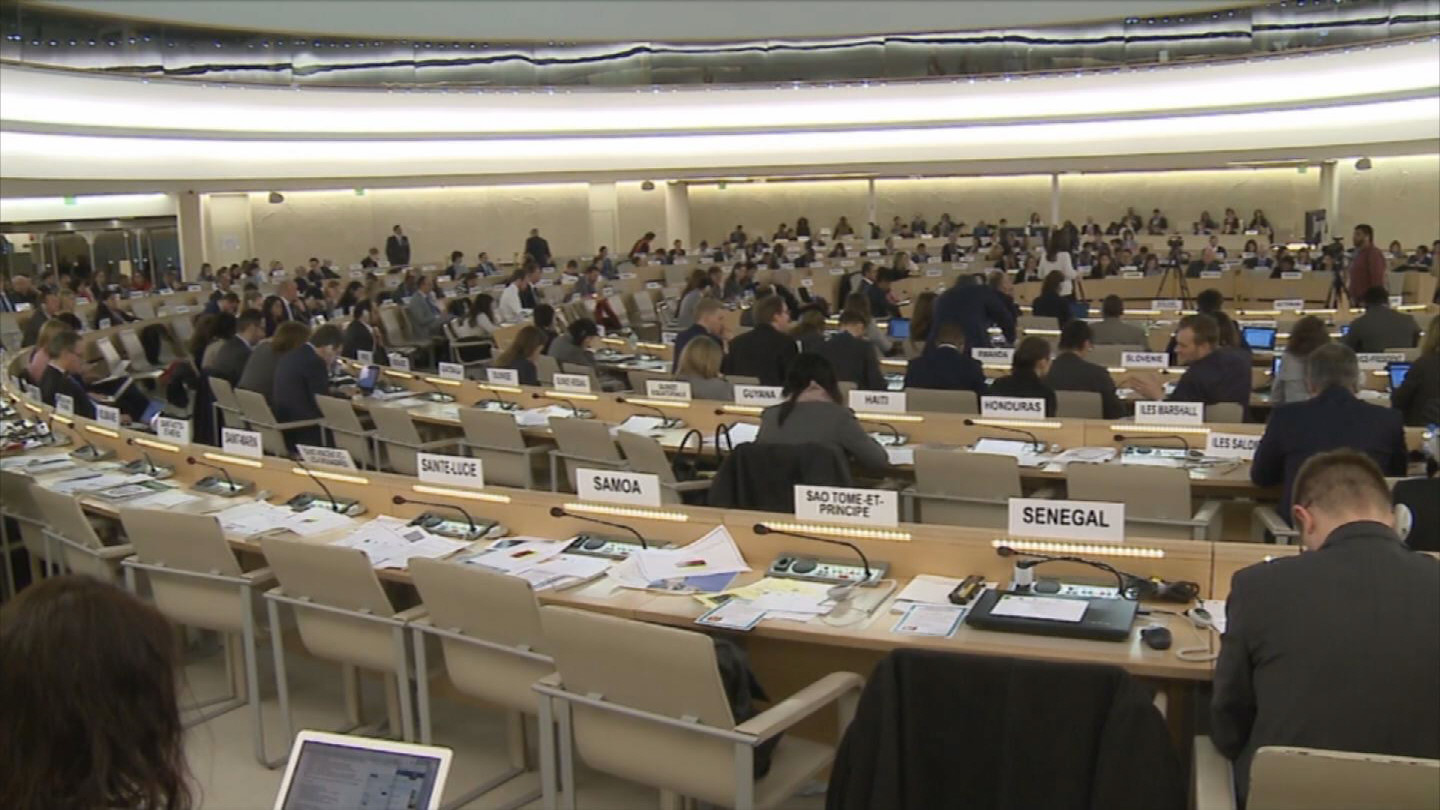
2. Wide shot, United Nations press room.
3. Med shot, journalists.
4. Med shot, group of eminent experts at the podium.
5. SOUNDBITE (English) Charles Garraway, Group of Eminent Experts on Yemen:
“The Group of Eminent Experts has reasonable grounds to believe, that the Governments of Yemen, the United Arab Emirates and Saudi Arabia are responsible for human rights violations. The Group of Eminent Experts has also reasonable grounds to believe, that the de facto authorities are responsible, in the areas over which they exercise effective control, for human rights violations.”
6. Med shot, journalist.
7. SOUNDBITE (English) Charles Garraway, Group of Eminent Experts on Yemen:
“Individuals in the government of Yemen and the coalition, including Saudi Arabia and the United Arab Emirates, may have conducted attacks in violation of the principles of distinction, proportionality and/or proportions, which may amount to war crimes.”
8. Med shot, journalist.
9. SOUNDBITE (English) Charles Garraway, Group of Eminent Experts on Yemen:
“If there are systemic flaws in the targeting process, causing civilian casualties beyond what one would expect, then that process needs to be examined, and where there are flaws they need to be addressed and amended. We have seen no sign that there has been any attempt to do that.”
10. Close up, cameraman.
11. SOUNDBITE (English) Charles Garraway, Group of Eminent Experts on Yemen:
“Despite the severity of the situation, we continue to witness a total disregard of the suffering of the people of Yemen. This crisis has reached its peak, with no apparent sight of light at the end of the tunnel. It is indeed a forgotten crisis.”
12. Close up, journalist.
13. Close up, journalists.
14. Close up, journalists typing.
15. Wide shot, journalists and podium in the background.
Parties on both sides of the conflict in Yemen have perpetrated - and continue to perpetrate - violations and crimes under international law, with a “total disregard” for the suffering of millions of civilians, senior UN-appointed investigators said on Tuesday.
Created by the Human Rights Council in Geneva, the Group of Eminent Experts on Yemen analysed violations and abuses of international human rights law, humanitarian law and criminal law, making more than a dozen visits to the war-torn country and neighbouring States.
Panel member of the group, Charles Garraway told reporters in Geneva Tuesday (28 Aug) that “the Group of Eminent Experts has reasonable grounds to believe that the Governments of Yemen, the United Arab Emirates and Saudi Arabia are responsible for human rights violations.”
Turning to the Houthi opposition forces, which he also described as “de facto authorities”, Garraway added that the UN panel also has “reasonable grounds to believe, that the de facto authorities are responsible, in the areas over which they exercise effective control, for human rights violations”.
The experts’ findings cover the situation in Yemen from September 2014 to June 2018.
The roots of the conflict date back to uprisings in 2011, but fighting escalated in March 2015, when an international coalition led by Saudi Arabia intervened militarily at the request of Yemen’s President against “Houthi-Saleh” opposition forces – a reference to the former Yemen President, Ali Abdallah Saleh.
In recent years, the conflict has been marked by repeated airstrikes on public spaces including market places, civilian boats, detention facilities and hospitals.
Just last week, an airstrike in opposition-held Hudaydah governorate, in western Yemen, killed at least 26 children and four women. The report notes that coalition airstrikes have caused most direct civilian casualties, giving the UN panel “reasonable grounds” to believe that the attacks overstepped key war crimes thresholds.
Garraway said “Individuals in the government of Yemen and the coalition, including Saudi Arabia and the United Arab Emirates, may have conducted attacks in violation of the principles of distinction, proportionality and/or proportions, which may amount to war crimes,” adding that a confidential list of names would be handed over to the UN Office of the High Commissioner for Human Rights (OHCHR), pending further investigations.
He added in “more information is needed on some incidents documented by the Group of Experts to establish responsibility.”
Despite official meetings with coalition officials in Riyadh and Oman, Mr Garraway said that insufficient information had been provided about how airstrikes are planned and carried out.
Garraway said “If there are systemic flaws in the targeting process, causing civilian casualties beyond what one would expect, then that process needs to be examined. And where there are flaws they need to be addressed and amended. We have seen no sign that there has been any attempt to do that.”
According to the UN panel, more than 22 million people remain in need inside Yemen; almost all of them are women and children.
Even before the conflict, Yemen was one of the poorest countries on earth, importing almost all of its food, fuel and medicines. In November 2017, civilians were weakened further by a “total blockade on all the borders of Yemen, preventing all humanitarian aid and commercial trade, including food and fuel, from entering the country”, the Group of Experts’ report noted, adding that restrictions continued into June.
“The Houthi opposition’s role in causing “the majority” of reported civilian casualties in Ta’izz from shelling is highlighted, as well as its role in restricting food and aid access to civilian populations in the city, a strategically important location between Sana’a and the port cities of Aden and Hudaydah”.
Amid ongoing hostilities there, restrictions of goods that are “indispensable to the survival of the civilian population in Ta’izz”by the Houthi-Saleh forces “have been particularly harmful”, the report notes.
Garraway said “despite the severity of the situation, we continue to witness a total disregard of the suffering of the people of Yemen. This crisis has reached its peak, with no apparent sight of light at the end of the tunnel. It is indeed a forgotten crisis.”
Download
There is no media available to download.