Media Home
 UN Web TV
 UN Audiovisual Library
 UN Photo
Unifeed
ETHIOPIA / WEEDS TO ENERGY
STORY: ETHIOPIA / WEEDS TO ENERGY
TRT: 4:30
SOURCE: UUNHCR
RESTRICTIONS: PLEASE CREDIT UNHCR ON SCREEN
LANGUAGE: SOMALI /ENGLISH /NATS
DATELINE: 5 SEPTEMBER 2019, DOLLO ADO, ETHIOPIA
1. Aerial shot, forest of Prosopis Juliflora trees
2. Various shots, Prosopis trees
3. Close up, goat eating Prosopis
4. SOUNDBITE (Somali) Aden Abdullahi Ahmed, Local farmer:
“Where this tree grows, it eradicates all the other trees. It grows alone. That is the biggest problem. The roots grow deep down into the ground and stretch wide and it is hard for other trees to grow.”
5. Med shot, Ahmed cutting down branch
6. Close up, Ahmed cutting down branch
7. Close up, Prosopis leaves
8. Aerial shot, arid area
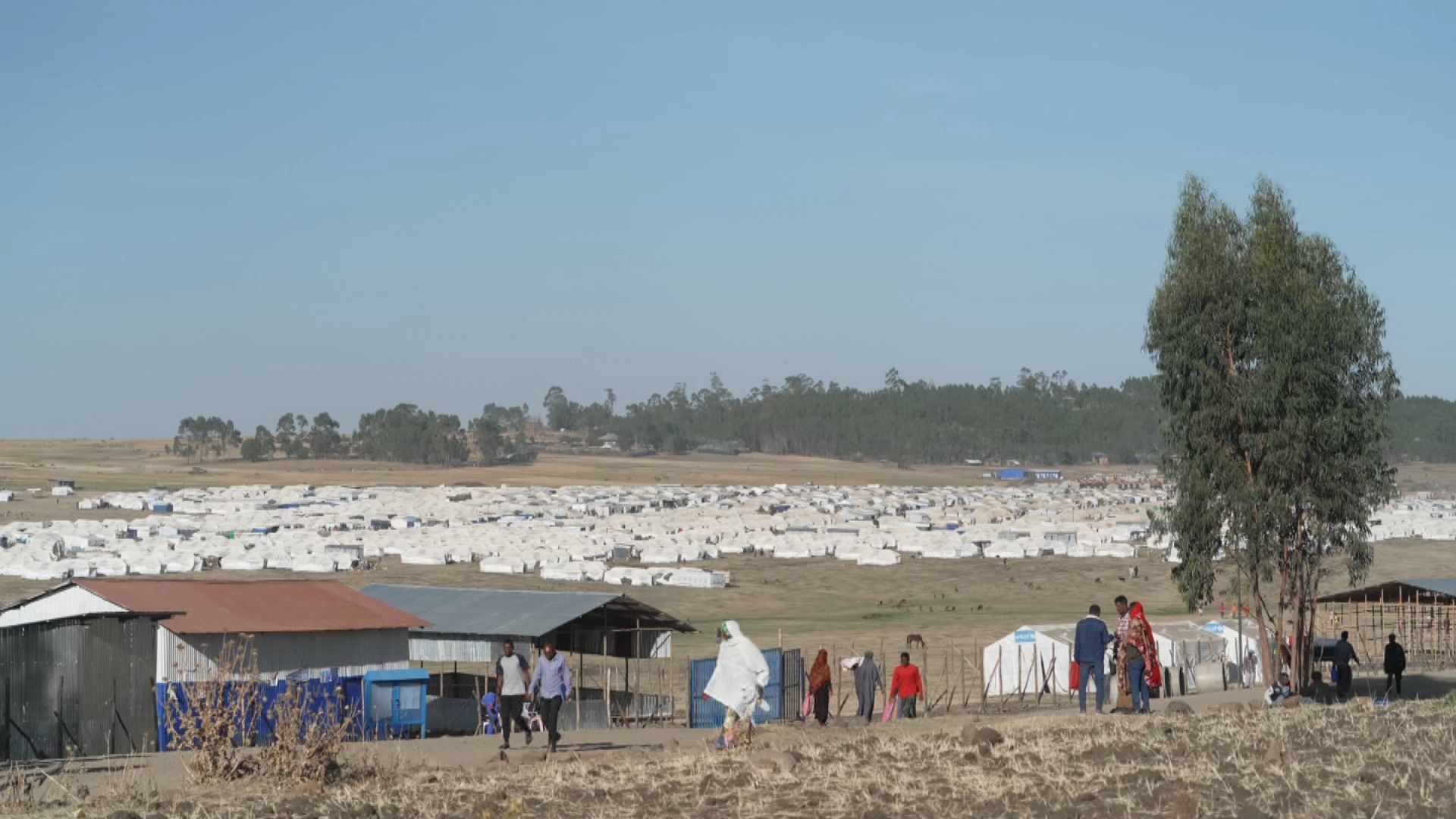
9. Wide shot, refugees
10. Med shot, Moge Abdi Omar talking to women
11. Med shot, women listening
12. Med shot, firewood
13. Med shot, women walking
14. SOUNDBITE (English) Moge Abdi Omar, Project Coordinator Wapydo:
“We have seen that there was a problem with the refugees and local host community, mostly conflict comes when they go to the bush and find firewood… there is a conflict. At the same time, all the refugee camp areas, if you see mostly it is very bare.”
15. Med shot, women carrying dried Prosopis twigs
16. Close up, twigs being burned
17. Various shots, making charcoal briquettes
18. SOUNDBITE (English) Moge Abdi Omar, Project Coordinator Wapydo:
“They become client and producer. The host community, they cut the Prosopis and they sell to the refugee cooperative. The refugee cooperative take the Prosopis and then they process it in this center.”
19. Med shot, Amina Abdi Osman, Somali refugee picking up briquette
20. Wide shot, Osman putting briquettes in sack
21. Close up, briquettes being placed in sack
22. SOUNDBITE (Somali) Amina Abdi Osman, Somali refugee:
“I did not know much about this prosopis. People would not harvest it because we knew it was harmful. But now I know that it is valuable.”
23. Close up, briquette being placed on charcoal stove
24. Med shot, Asha Ahmed, Somali Refugee putting briquette on stove
25. Close up, Ahmed’s face
26. Close up, hand’s stirring food on stove
27. SOUNDBITE (Somali) Asha Ahmed, Somali Refugee:
“Compared to the regular charcoal, I have seen that this one is better, but requires a lot of work to produce. I start using it from 2 pm and it will burn until 7 pm. Within three hours I am able to make tea and cook supper. After one hour the briquette is still burning and I can warm the food with it.”
28. Wide shot, Ahmed working in her kitchen
29. Close up,Ahmed’s face
A cooperative supported by the IKEA foundation is turning invasive weeds into energy and a source of livelihood for both refugees and their host communities in Ethiopia’s arid south
Prosopis Juliflora trees are designated as weeds and pests due to their invasive nature and abundance. It can even be harmful to animals grazing on it.
SOUNDBITE (Somali) Aden Abdullahi Ahmed, Local farmer:
“Where this tree grows, it eradicates all the other trees. It grows alone. That is the biggest problem. The roots grow deep down into the ground and stretch wide and it is hard for other trees to grow.”
First planted here about 50 years ago, Prosopis Juliflora spread fast, taking over resources in an already arid region in a community hosting over 150,000 refugees.
SOUNDBITE (English) Moge Abdi Omar, Project Coordinator Wapydo:
“We have seen that there was a problem with the refugees and local host community, mostly conflict comes when they go to the bush and find firewood… there is a conflict. At the same time, all the refugee camp areas, if you see mostly it is very bare.”
A cooperative supported by the IKEA foundation is fighting back, turning the weed into charcoal briquettes sold in markets across the arid region. The program is proving both environmentally friendly and a boost to the local economy.
SOUNDBITE (English) Moge Abdi Omar, Project Coordinator Wapydo:
“They become client and producer. The host community, they cut the Prosopis and they sell to the refugee cooperative. The refugee cooperative takes the Prosopis and then they process it in this center.”
The charcoal briquettes made out of Prosopis also burn longer than a regular charcoal.
SOUNDBITE (Somali) Asha Ahmed, Somali Refugee:
“Compared to the regular charcoal, I have seen that this one is better, but requires a lot of work to produce. I start using it from 2 pm and it will burn until 7 pm. Within three hours I am able to make tea and cook supper. After one hour the briquette is still burning and I can warm the food with it.”
Download
There is no media available to download.