Media Home
 UN Web TV
 UN Audiovisual Library
 UN Photo
Security Council
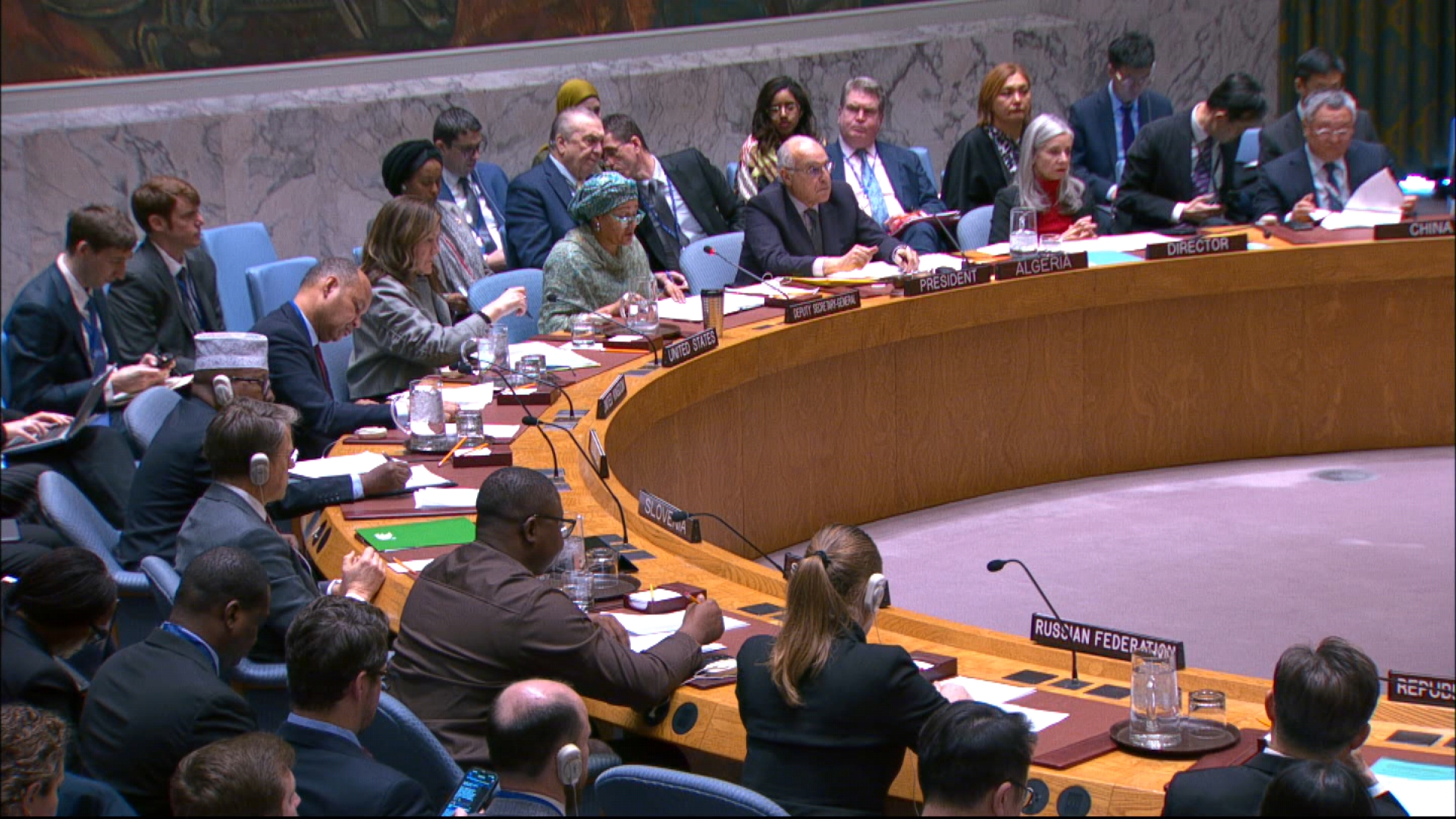
8688th Security Council Meeting: Briefings by Chairs of Subsidiary Bodies of the Security Council
Whereas the imposition of sanctions cannot be an end in itself, such measures can play a vital role in helping to restore peace and stability if Member States implement them in full, the outgoing chairs of Security Council subsidiary bodies told members today.
The chairs of five subsidiary bodies were briefing the 15‑member Council on the implementation and effects of sanctions imposed on military officers, officials as well as other individuals and entities in seven countries in Africa and the Middle East.
Kacou Houadja Léon Adom (Côte d’Ivoire), Chair of the Working Group on Peacekeeping Operations and the Committee established pursuant to resolution 2127 (2013) concerning the Central African Republic, said that as his delegation winds up its two‑year term as a non‑permanent Council member, it is more convinced than ever of the need to target individuals and groups jeopardizing peace processes. In the case of the Central African Republic, the Council must build on its past efforts and punish those deliberately violating the 6 February peace agreement signed in Bangui by the Government and 14 non‑State armed groups. Failure to do so will be interpreted as evidence of a weakened international focus on the country, he warned.
Luis Ugarelli (Peru), Chair of the 1373 Counter‑Terrorism Committee, 1566 Working Group on Counter‑Terrorism, Informal Working Group on International Tribunals and the 2140 Yemen Sanctions Committee, said the latter is focused on sending a clear message to all that there is no military solution to the conflict in that country and that international humanitarian law and international human rights law must be respected. He also emphasized the importance of communicating with Member States to ensure that counter‑terrorism efforts are consistent with international human rights law and international humanitarian law, while also highlighting the Committee’s work on the issue of foreign terrorist fighters.
Joanna Wronecka (Poland), Chair of the Committees established pursuant to resolution 1518 (2003) concerning Iraq and Kuwait, resolution 1591 (2005) concerning Sudan and resolution 2206 (2015) concerning South Sudan, reported incremental progress in the delisting of entities on the Iraq Committee’s sanctions list, noting that the number of those remaining has been reduced to 76. As for South Sudan, she said the arms embargo that the Council imposed in 2018 has helped to ease civilian suffering. Concerning Sudan, she said the situation in Darfur — which is closely linked to the political process currently under way in Khartoum — has improved greatly since sanctions were imposed, adding that political change presents a real opportunity for a comprehensive and inclusive peace agreement in that country’s western region.
Mansour Ayyad Sh. A. Alotaibi (Kuwait), Chair of the Security Council Committee established pursuant to resolution 1533 (2004) concerning the Democratic Republic of the Congo, said positive developments in that country emphasize the need to continue the fight against rampant impunity by armed groups and to send a clear message to those intent on undermining peace and security. Emphasizing that sanctions cannot succeed unless Member States implement them properly, he also highlighted the great lengths to which the Committee’s Group of Experts has gone to obtain credible information with a view to identifying spoilers.
Anatolio Ndong Mba (Equatorial Guinea), Chair of the Committee established pursuant to resolution 2048 (2012) concerning Guinea‑Bissau, stressed that sanctions are not an end in themselves, but a means to a goal. The time has come for the Council to lift the sanctions imposed on the country’s military, if not the entire regime of coercive measures, once elections are held on 28 December and a transfer of power has taken place. In the interim, it is vital for Guinea‑Bissau’s political leaders to ensure the country enjoys substantial progress to match the international support it enjoys.
The meeting began at 10:06 a.m. and ended at 11:11 a.m.
For further details please see SOURCE below.
MEETINGS COVERAGE
Download
There is no media available to download.
Related Content
8127th Security Council Meeting: Briefings by Chairs of Subsidiary…

7764th Security Council Meeting: Situation in Guinea-Bissau