Media Home
 UN Web TV
 UN Audiovisual Library
 UN Photo
Unifeed
WHO / COVID-19 UPDATE
STORY: WHO / COVID-19 UPDATE
TRT: 04:51
SOURCE: WHO
RESTRICTIONS: NONE
LANGUAGES: ENGLISH / NATS
DATELINE: 8 MAY 2020, GENEVA, SWITZERLAND / FILE
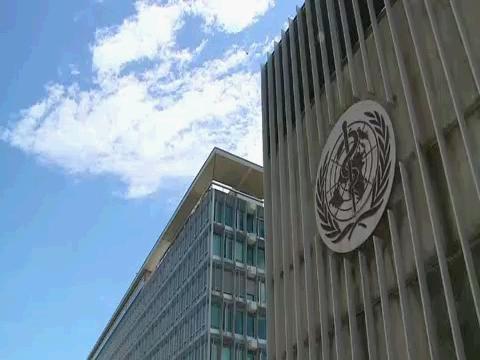
FILE - GENEVA, SWITZERLAND
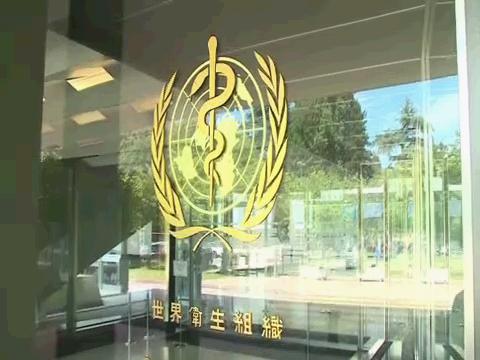
1. Various shots, exterior WHO Headquarters
8 MAY 2020, GENEVA, SWITZERLAND
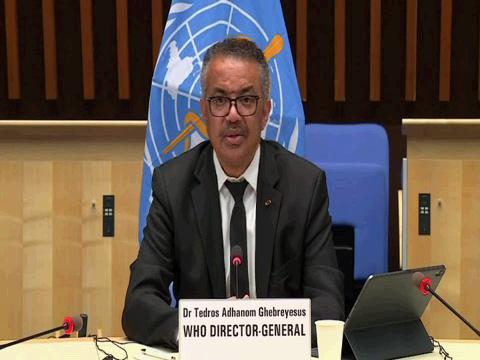
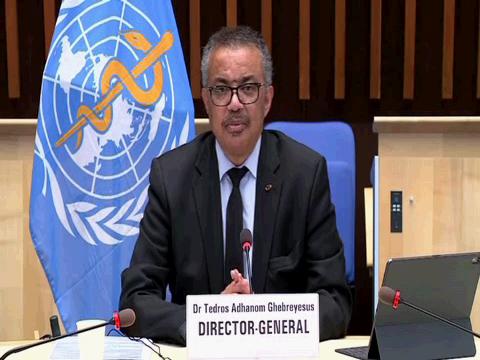
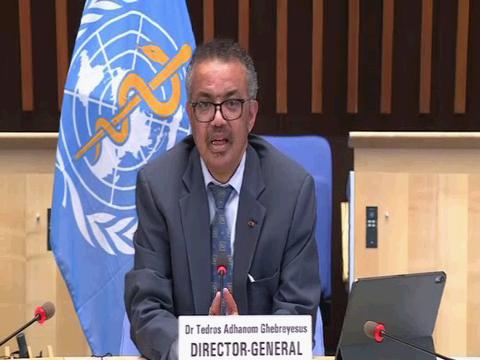
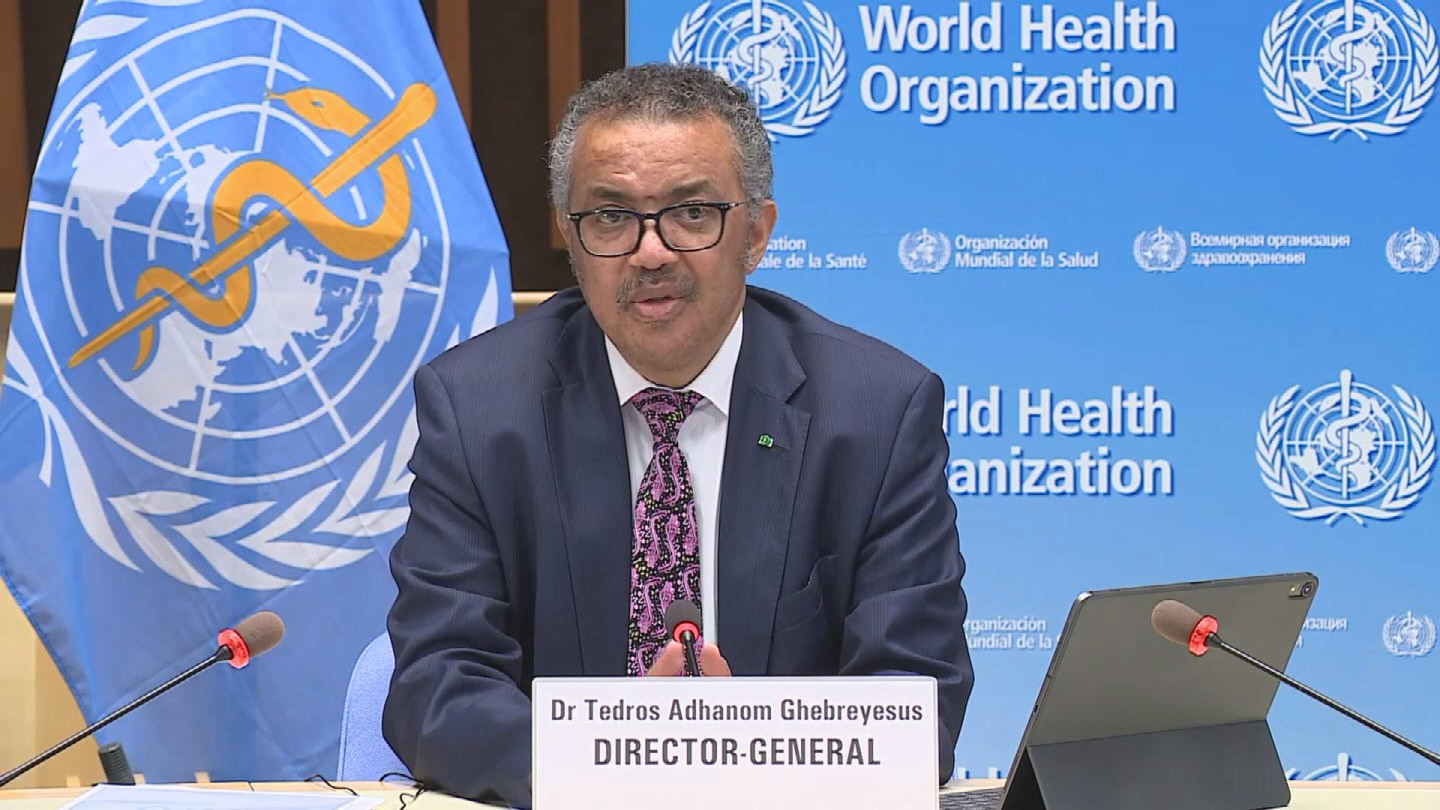
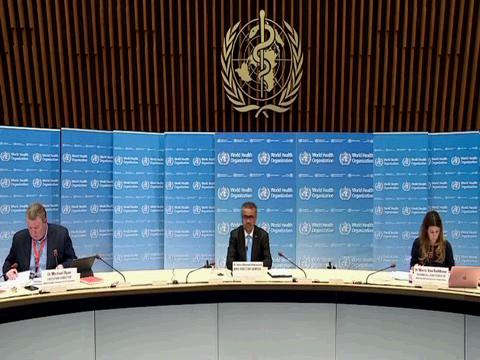
2. Wide shot, dais
3. SOUNDBITE (English) Tedros Ghebreyesus, Director-General, World Health Organization (WHO):
“Exactly 40 years ago today, on the 8th of May 1980, the World Health Assembly officially declared that the world and all its peoples have won freedom from smallpox. Small pox is the first and, to date, the only human disease to be eradicated globally.”
4. Wide shot, dais
5. SOUNDBITE (English) Tedros Ghebreyesus, Director-General, World Health Organization (WHO):
“As the world confronts the COVID-19 pandemic, humanity’s victory over smallpox is a reminder of what is possible when nations come together to fight a common health threat. Many of the basic public health tools that were used successfully then, are the same tools that have been used to respond to Ebola, and to COVID: disease surveillance, case finding, contact tracing, and mass communication campaigns to inform affected populations.”
6. Wide shot, dais
7. SOUNDBITE (English) Tedros Ghebreyesus, Director-General, World Health Organization (WHO):
“The decisive factor in the victory over smallpox was global solidarity. At the height of the Cold War, the Soviet Union and the United States of America joined forces to conquer a common enemy. They recognized that viruses do not respect nations or ideologies. That same solidarity, built on national unity, is needed now more than ever to defeat COVID-19.”
8. Wide shot, dais
9. SOUNDBITE (English) Dr Maria Van Kerkhove, Technical Lead for COVID-19, Health Emergencies Programme, World Health Organization (WHO):
“There are some studies, are some media reports of some studies, two studies in particular, that have not been peer reviewed, that have looked at the prevalence of smoking in people who've been hospitalized and not. These studies did not evaluate, they were not designed to evaluate whether smoking was protective or not, or in any shape or form. And they do not say that smoking is protective. I will repeat that, we know the harms of smoking and we know that smokers, if they do get infected with Covid-19, have a higher risk of severe disease and death.
10. Wide shot, dais
11. SOUNDBITE (English) Michael Ryan, Executive Director, Health Emergencies Programme, World Health Organization (WHO):
“So, I think when we look at COVID-19 we need to see that as a disease that obviously is a respiratory disease, that's spread by respiratory route, it causes a respiratory syndrome. It is clear that in a proportion of patients, it is causing a broader inflammatory response either within the vascular or that that's the blood carrying system or in other parts of the body. We've also seen reports of encephalitis or swelling or inflammation of the brain.”
12. Wide shot, dais
13. SOUNDBITE (English) Michael Ryan, Executive Director, Health Emergencies Programme, World Health Organization (WHO):
“I think you reflect our fervent desire of all human beings to reconnect with each other. And we share that sentiment here. We haven't shaken hands or hugged our friends in 18 weeks either, or seeing our family, some of us, and therefore it's really important that we work hard to get back there, but we also, we need to be careful. We've seen what this virus can do in situations where the virus has spread on, unstopped.”
14. Wide shot, dais
15. SOUNDBITE (English) Michael Ryan, Executive Director, Health Emergencies Programme, World Health Organization (WHO):
“There is a path out, but we must remain ever vigilant and we may have to have a significant alteration to our lifestyles until we get to a point where we have an effective vaccine, or, and effective treatments. but that doesn't mean it's all bad. I mean, we've seen some benefits to our environment. We've seen some benefits to our connectedness. Strangely enough, even though we've been disconnected physically, I think many of us have recognized how important those connections are. So, I think we need to move forward, recognizing that it's been, and is, and will be for many populations and countries, what we call systems still, this is a big challenge and we're not through it yet in many countries.”
16. Wide shot, dais
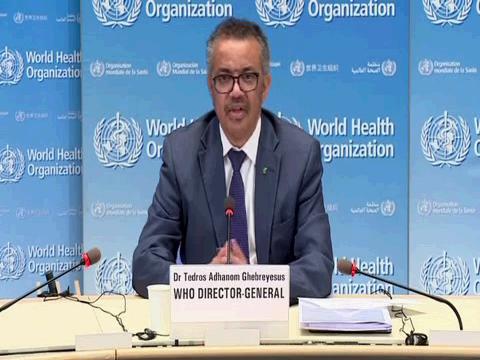
Marking the 40th anniversary since the World Health Assembly officially declared that the world was free from smallpox, the head of the World Health Organization (WHO), Dr Tedros Ghebreyesus, today (8 May) said “that same solidarity, built on national unity, is needed now more than ever to defeat COVID-19.”
Dr Tedros said, “as the world confronts the COVID-19 pandemic, humanity’s victory over smallpox is a reminder of what is possible when nations come together to fight a common health threat.”
He noted that “many of the basic public health tools that were used successfully then, are the same tools that have been used to respond to Ebola, and to COVID: disease surveillance, case finding, contact tracing, and mass communication campaigns to inform affected populations.”
The Director-General said, “the decisive factor in the victory over smallpox was global solidarity. At the height of the Cold War, the Soviet Union and the United States of America joined forces to conquer a common enemy. They recognized that viruses do not respect nations or ideologies.”
WHO’s technical lead on COVID-19, Dr Maria Van Kerkhove, spoke about two studies “that have not been peer reviewed, that have looked at the prevalence of smoking in people who've been hospitalized and not.” Van Kerkhove said these studies “were not designed to evaluate whether smoking was protective or not, or in any shape or form. And they do not say that smoking is protective.”
She stressed that smokers, “if they do get infected with Covid-19, have a higher risk of severe disease and death.”
The WHO’s Health Emergencies Programme Executive Director, Dr Michael Ryan, said COVID-19 “obviously is a respiratory disease” but noted that “in a proportion of patients, it is causing a broader inflammatory response either within the vascular or that that's the blood carrying system or in other parts of the body. We've also seen reports of encephalitis or swelling or inflammation of the brain.”
Ryan said, “we haven't shaken hands or hugged our friends in 18 weeks either, or seeing our family, some of us, and therefore it's really important that we work hard to get back there, but we also, we need to be careful. We've seen what this virus can do in situations where the virus has spread on, unstopped.”
He said, “there is a path out, but we must remain ever vigilant and we may have to have a significant alteration to our lifestyles until we get to a point where we have an effective vaccine, or, and effective treatments. but that doesn't mean it's all bad. I mean, we've seen some benefits to our environment. We've seen some benefits to our connectedness. Strangely enough, even though we've been disconnected physically, I think many of us have recognized how important those connections are. So, I think we need to move forward, recognizing that it's been, and is, and will be for many populations and countries, what we call systems still, this is a big challenge and we're not through it yet in many countries.”
According to the WHO’s latest situation report, there are now globally 3,759,967 cases and 259,474 deaths from COVID-19
Download
There is no media available to download.