Media Home
 UN Web TV
 UN Audiovisual Library
 UN Photo
Unifeed
GUTERRES / CLIMATE ADAPTATION SUMMIT
STORY: GUTERRES / CLIMATE ADAPTATION SUMMIT
TRT: 1:54
SOURCE: UNIFEED
RESTRICTIONS: NONE
LANGUAGE: ENGLISH /NATS
DATELINE: 25 JANUARY 2021, NEW YORK CITY
FILE
1. Exterior shot, national flags at the UNHQ
25 JANUARY 2021, NEW YORK CITY
2. SOUNDBITE (English) Antonio Guterres, Secretary-General of the United Nations:
“We begin this year with a heightened awareness of the importance of resilience. The COVID-19 pandemic has reminded us that we cannot afford to ignore known risks. Climate disruption is a risk we are well aware of. The science has never been clearer. We are facing a climate emergency. We are already witnessing unprecedented climate extremes and volatility, affecting lives and livelihoods on all continents.”
FILE
3. Exterior shot, UN flag and the UNHQ building
25 JANUARY 2021, NEW YORK CITY
4. SOUNDBITE (English) Antonio Guterres, Secretary-General of the United Nations:
“We need the trillions of taxpayers’ dollars funding the recovery from the COVID-19 pandemic to jump-start the low-carbon, high-resilience future we need. But recovery cannot only be for the developed world. We must expand the provision of liquidity and debt relief instruments to developing and middle-income countries that lack the resources to relaunch their economies in a sustainable and inclusive way.”
FILE
5. Tilt up, national flags at the UNHQ to the UNHQ building
25 JANUARY 2021, NEW YORK CITY
6. SOUNDBITE (English) Antonio Guterres, Secretary-General of the United Nations:
“Support for adaptation and resilience is a moral, economic and social imperative. Today, one person in three is still not adequately covered by early warning systems, and risk-informed early approaches are not at the scale required. As illustrated by the Global Commission on Adaptation, just 24 hours warning of a coming storm or heatwave can cut the ensuing damage by 30 per cent. We need to work together to ensure full global coverage by early warning systems to help minimize these losses. We have the tools, skills and opportunity to deliver “more, faster and better” adaptation actions.”
FILE
7. Close up, UN flag
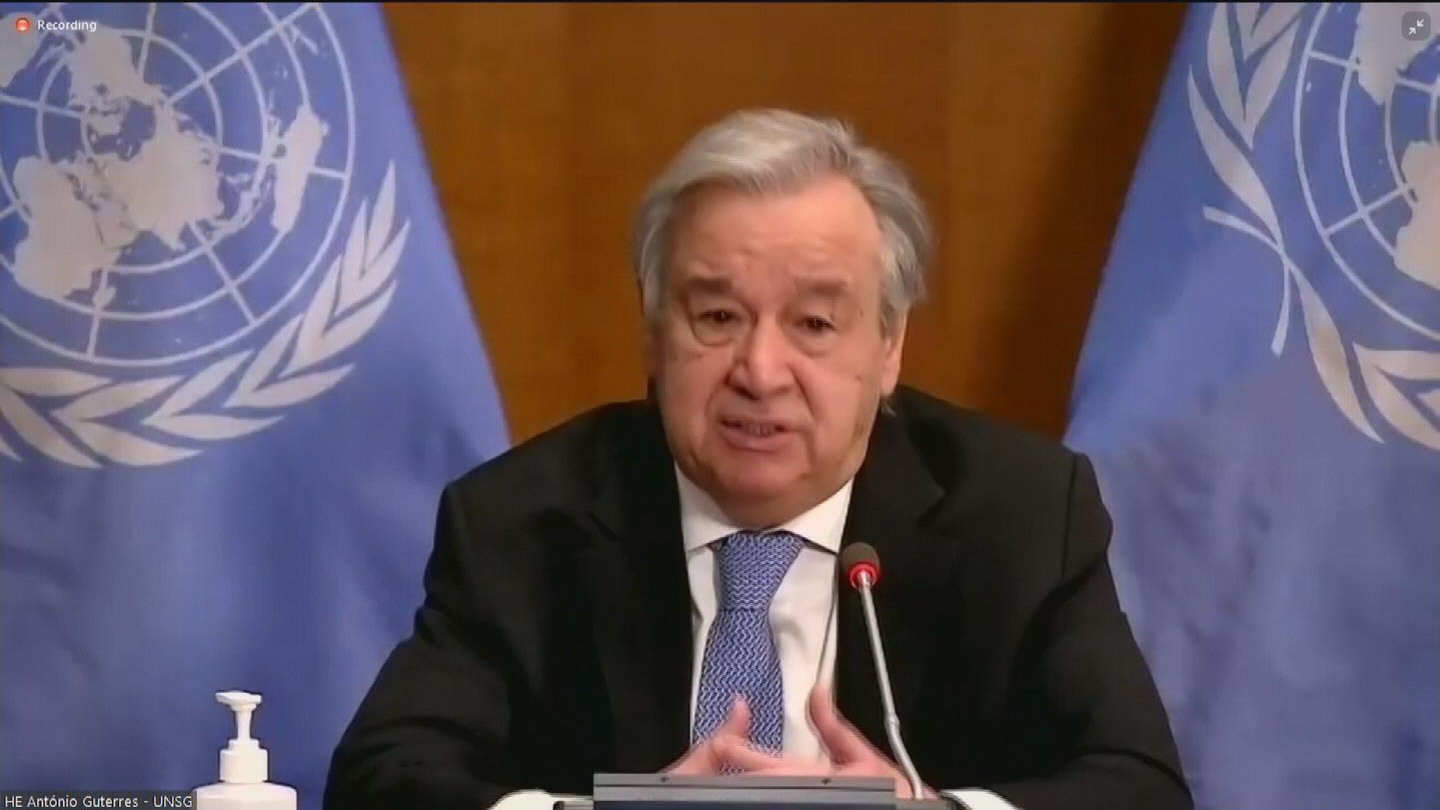
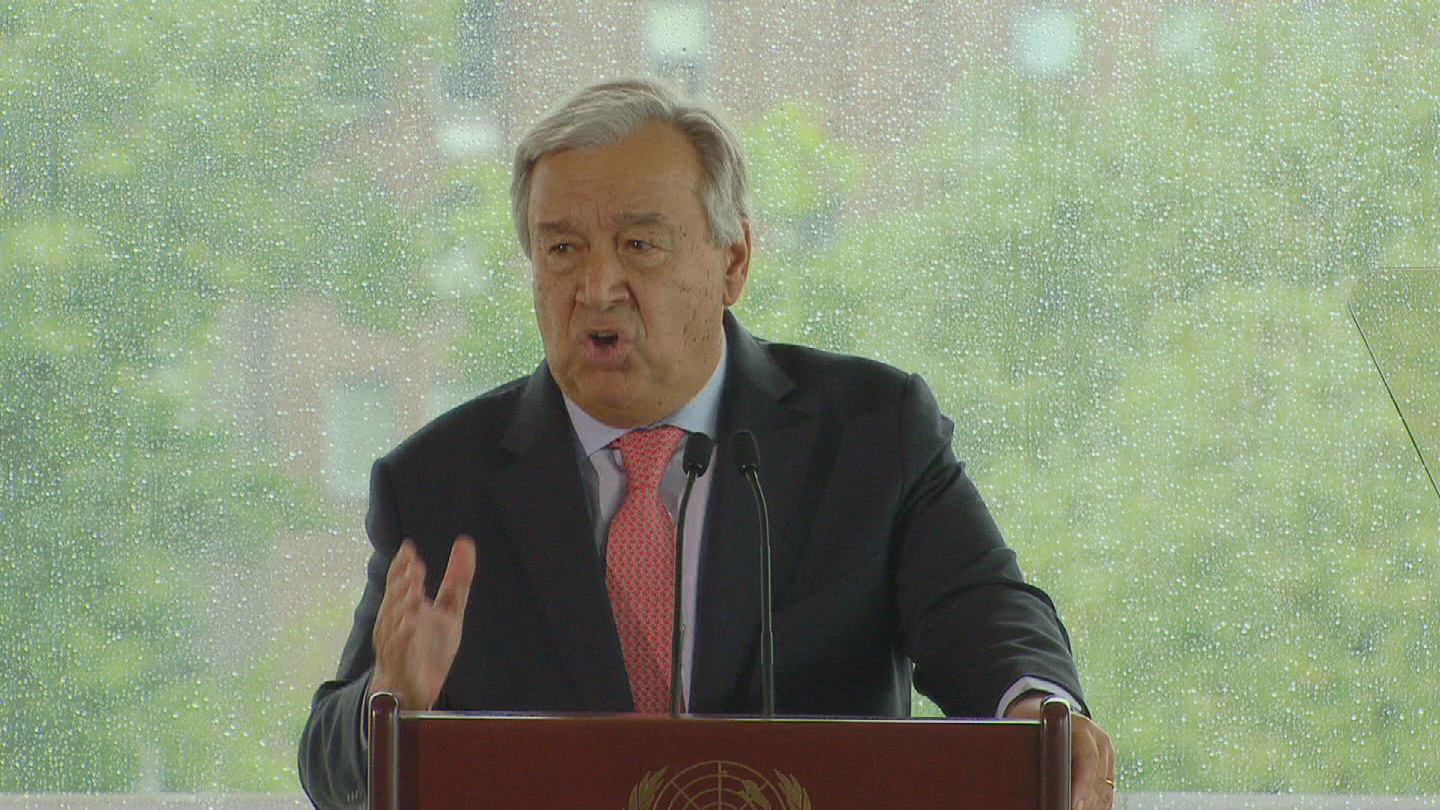
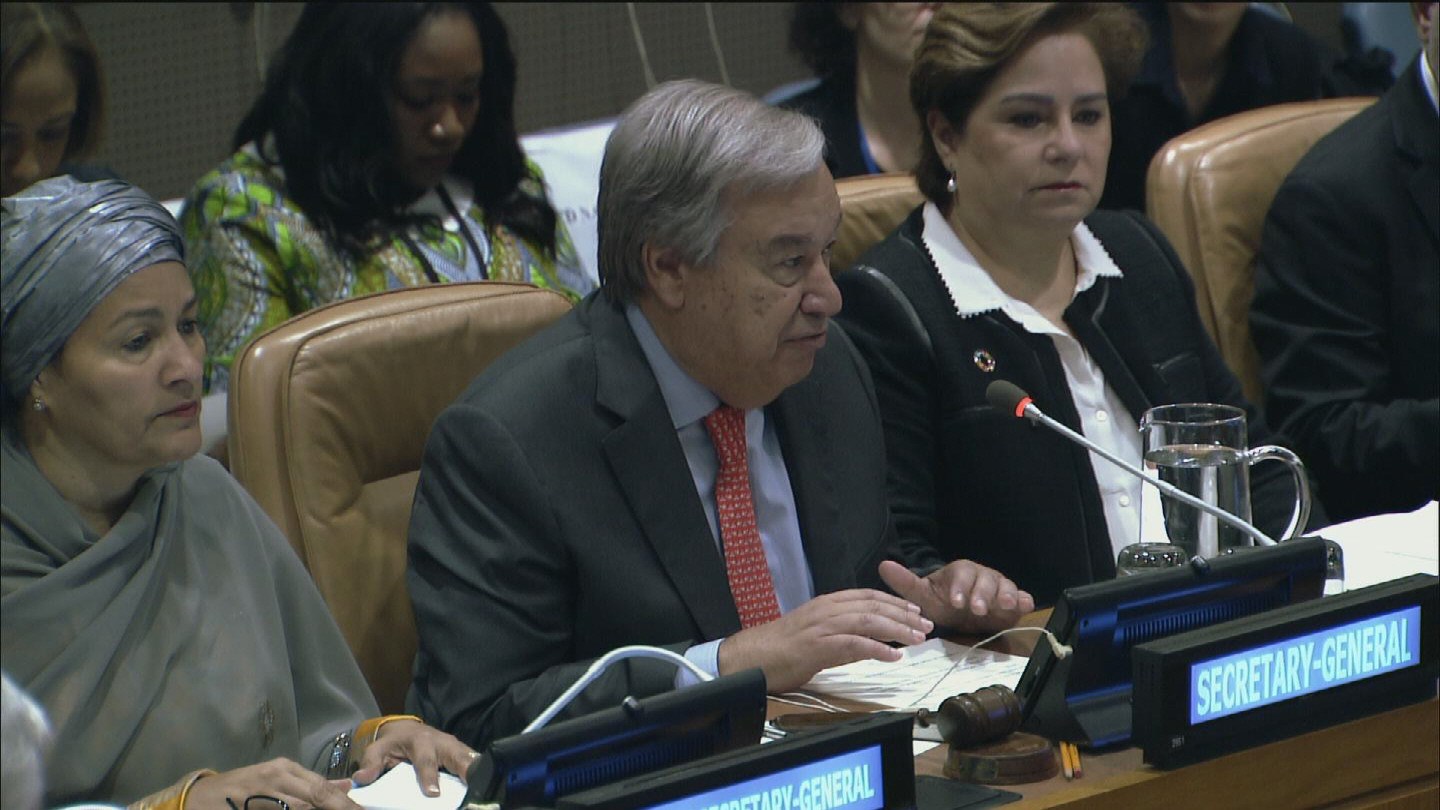
Speaking at the opening of the online Climate Adaptation Summit, hosted by the Netherlands, the UN chief Antonio Guterres said “support for adaptation and resilience is a moral, economic and social imperative.”
The Summit is expected to see the launch of a comprehensive Adaptation Action Agenda that “sets out clear commitments to deliver concrete new endeavors and partnerships to make our world more resilient to the effects of climate change,” according to the organizers.
In his remarks, the Secretary-General of the United Nations, Antonio Guterres said “we begin this year with a heightened awareness of the importance of resilience. The COVID-19 pandemic has reminded us that we cannot afford to ignore known risks. Climate disruption is a risk we are well aware of. The science has never been clearer. We are facing a climate emergency. We are already witnessing unprecedented climate extremes and volatility, affecting lives and livelihoods on all continents.”
According to the World Meteorological Organization, over the past half century, more than 11,000 disasters due to weather, climate and water-related hazards brought a damage of some USD 3.6 trillion. Extreme weather and climate-related hazards have also killed more than 410,000 people in the past decade, the vast majority in low and lower middle-income countries.
“We need the trillions of taxpayers’ dollars funding the recovery from the COVID-19 pandemic to jump-start the low-carbon, high-resilience future we need,” Guterres said. “But recovery cannot only be for the developed world. We must expand the provision of liquidity and debt relief instruments to developing and middle-income countries that lack the resources to relaunch their economies in a sustainable and inclusive way.”
The Secretary-General’s roadmap to adaptation and resilience has five priorities; significant increase of the volume and predictability of finance for adaptation and resilience of donor countries and multilateral, regional and national development banks; making all budget allocations and investment decisions climate-resilient; scaling-up existing catastrophe-triggered financial instruments, easing up access to finance, especially for the most vulnerable, and expand debt relief initiatives; and supporting regional adaptation and resilience initiatives.
“Support for adaptation and resilience is a moral, economic and social imperative,” Guterres said. “Today, one person in three is still not adequately covered by early warning systems, and risk-informed early approaches are not at the scale required. As illustrated by the Global Commission on Adaptation, just 24 hours warning of a coming storm or heatwave can cut the ensuing damage by 30 per cent. We need to work together to ensure full global coverage by early warning systems to help minimize these losses. We have the tools, skills and opportunity to deliver “more, faster and better” adaptation actions.”
The two-day Summit is bringing together a wide range of participants from governments, institutions, local communities, private sector and civil society, including youth movements, from all over the world.
Download
There is no media available to download.