Media Home
 UN Web TV
 UN Audiovisual Library
 UN Photo
Unifeed
GENEVA / SYRIA COMMISSION OF INQUIRY
STORY: GENEVA / SYRIA COMMISSION OF INQUIRY
TRT: 3:21
SOURCE: UNTV CH
RESTRICTIONS: NONE
LANGUAGE: ENGLISH/NATS
DATELINE: 13 March 2023 GENEVA, SWITZERLAND
1.Med shot, UN Geneva flag alley.
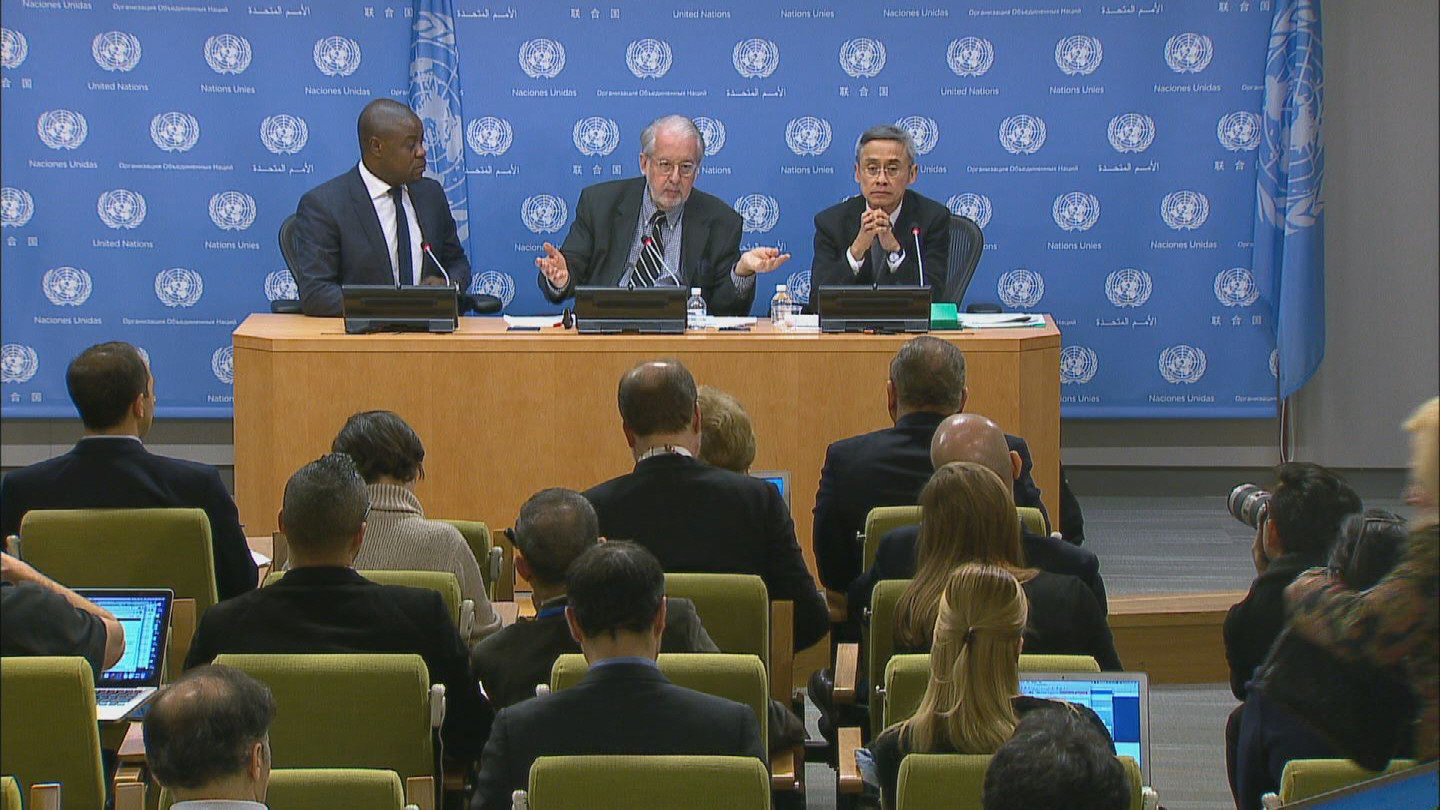
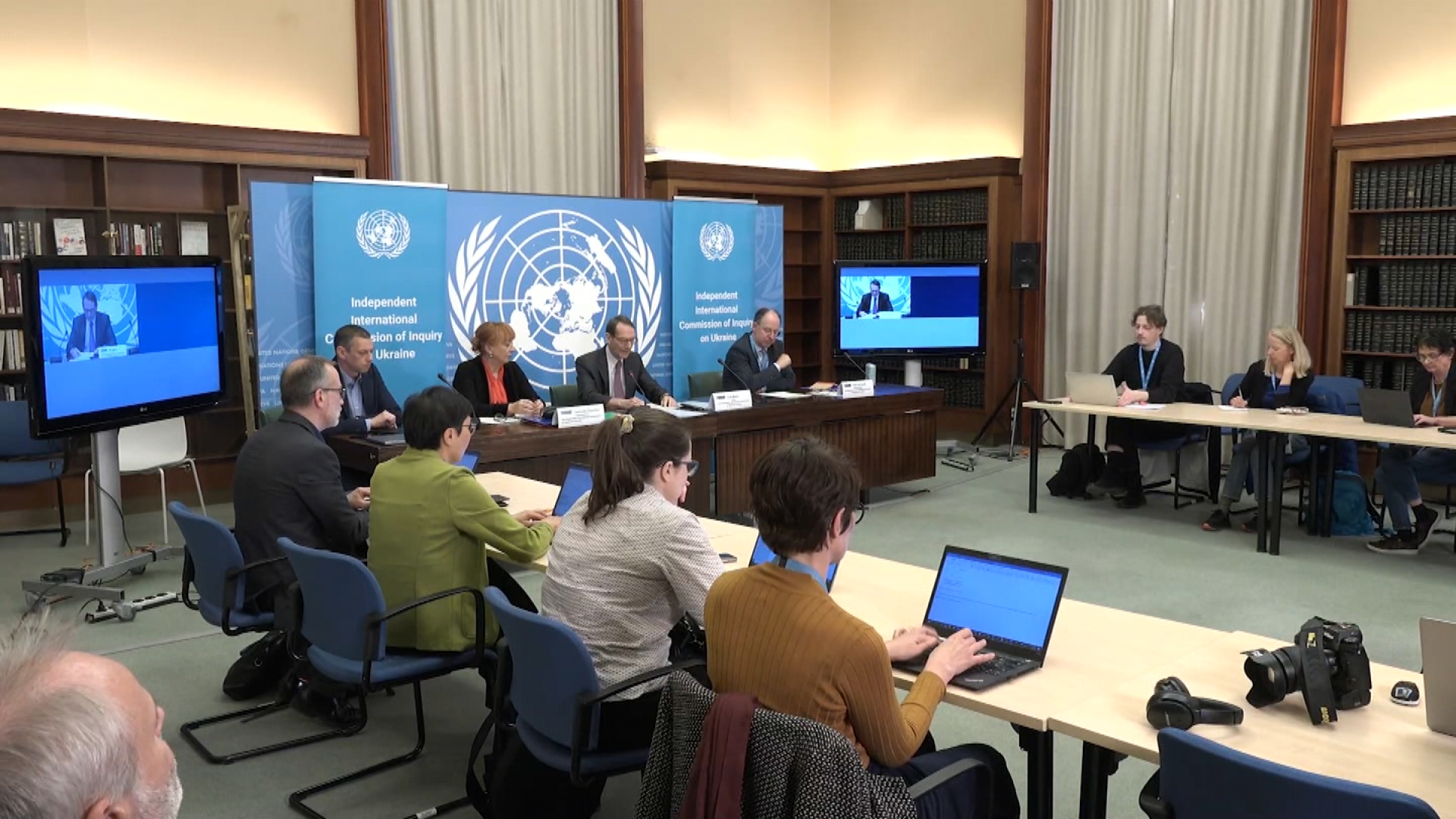
2.Wide shot, press room with Commissioners on the podium
3.SOUNDBITE (English) Hanny Megally, Commissioner of the Commission of Inquiry on the Syrian Arab Republic: “Clearly the armed groups were not helping by obstructing aid coming cross lines. The Syrian Government in Damascus took a week before they even allowed for the extra two crossings, and the United Nations and the international community seemed paralyzed during that period and that ‘s really what needs to be looked into”.
4.Med shot, laptop in front with speaker in background
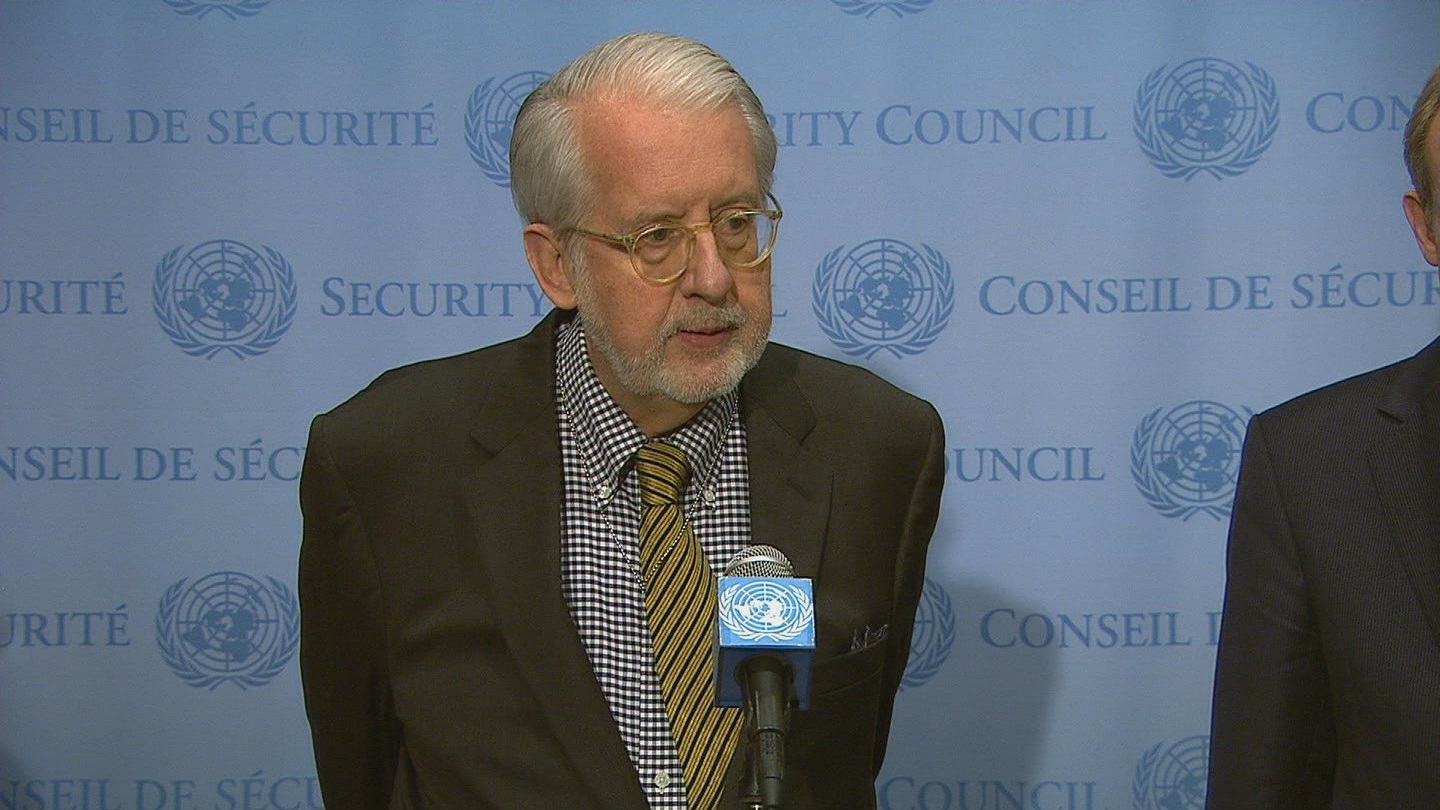
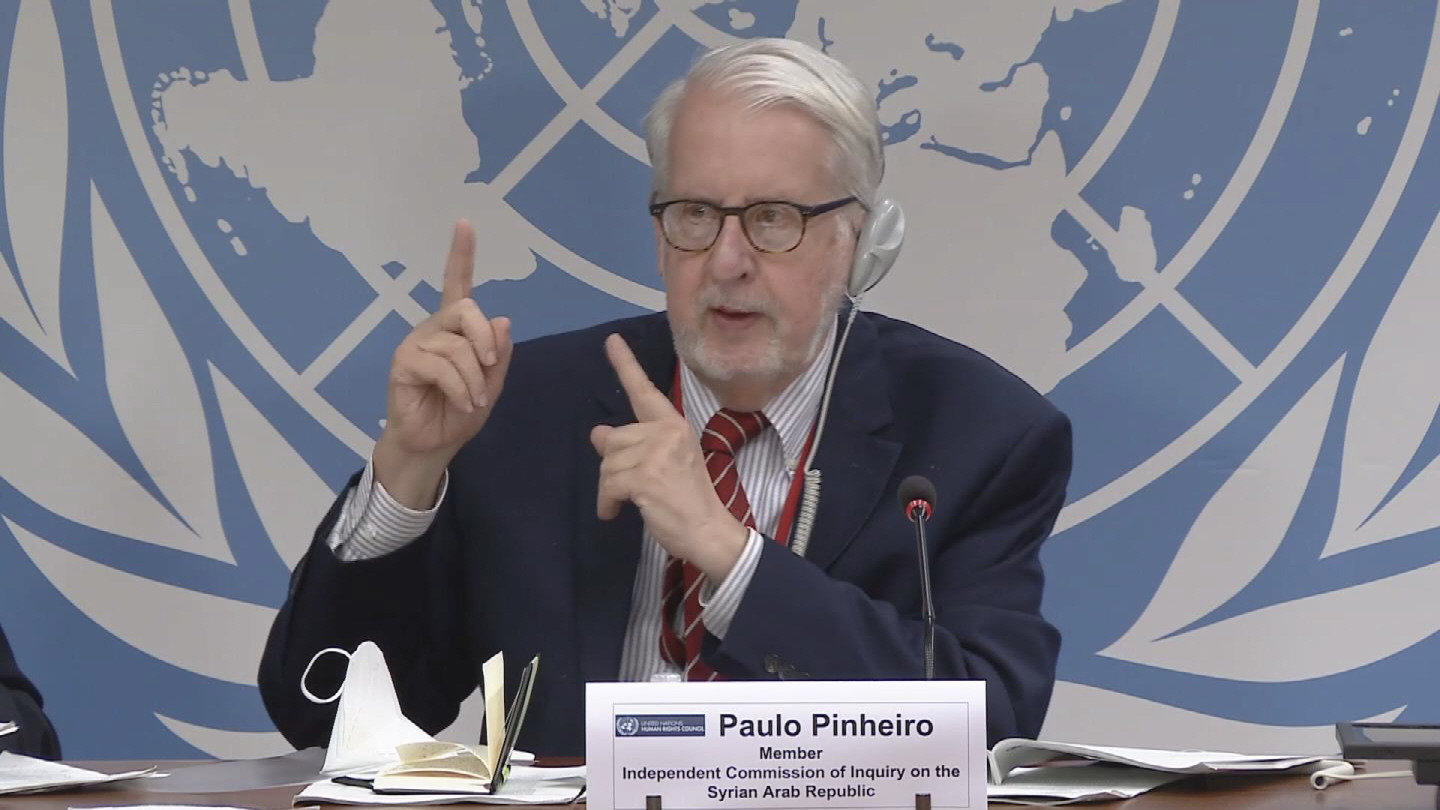
5.SOUNDBITE (English) Paulo Pinheiro, Chairperson of the Commission of Inquiry on the Syrian Arab Republic: “We are now investigating fresh attacks even in the very areas devastated by the earthquakes. These include last week’s reported Israeli attack on Aleppo international airport, a conduit for humanitarian aid”.
6.Med shot, photographers
7.SOUNDBITE (English) Paulo Pinheiro, Chairperson of the Commission of Inquiry on the Syrian Arab Republic: “We are really appalled that nearly 12 years into the conflict, Syrian Government forces used cluster ammunitions in densely populated displacement camps in opposition held Idlib governorate killing and injuring at least 67 civilians”.
8.Close up, journalists in front of screen with speaker
9.SOUNDBITE (English) Paulo Pinheiro, Chairperson of the Commission of Inquiry on the Syrian Arab Republic: “Syrians, for good reasons, felt abandoned and neglected by those supposed to protect them in the most desperate of their times. Many voices are rightly calling, and we agree with that for an investigation on accountability to understand what this failure, this disaster happened beyond the earthquake.”
10.Med shot, members of the Commission
11.SOUNDBITE (English) Hanny Megally, Commissioner of the Commission of Inquiry on the Syrian Arab Republic: “We have always argued there is no need for Security Council resolution anywhere when you have people in desperate straits. And this was an earthquake, it was an exceptional circumstance and legal scholars will argue in exceptional circumstances you can act even if it means crossing boundaries or trampling on state sovereignty so to speak”.
12. Med shot, photographer taking picture of the three Commissioners at the podium
13.SOUNDBITE (English) Paulo Pinheiro, Chairperson of the Commission of Inquiry on the Syrian Arab Republic: “In the northeast, the Kurdish-led Syrian Democratic Forces (SDF) continues to unlawfully hold 56,000 people, 56,000 people, mainly women and children, in Al-Hawl and Roj camps, where conditions continue to deteriorate”.
14.Med shot, Commissioners at podium
15.SOUNDBITE (English) Lynn Welchman, Commissioner of the Commission of Inquiry on the Syrian Arab Republic: “These camps are horrendous places, mostly women and children are living in there, some 56, 000 now, probably some 37,000 non-Syrians, it’s hard to find out exact numbers. Health care is very limited, education is very limited particularly for children, some of those children have no life apart from these awful conditions”.
16.Wide shot, press briefing room
17.Med shot, journalists listening
18.Wide shot, press briefing room with Commissioners at podium
At the launch of their latest report on Monday, few days before the 12th anniversary of the Syrian crisis, the UN Commission of Inquiry on the Syrian Arab Republic called for an independent investigation for the failure that they witnessed by the Syrian Government, the international community, including the United Nations, to rapidly direct urgent life-saving aid to northwest Syria after the massive earthquakes struck on February 6th.
“Syrians, for good reasons, felt abandoned and neglected by those supposed to protect them in the most desperate of their times,” said Paulo Pinheiro, Chairperson of the Commission of Inquiry on the Syrian Arab Republic, speaking today to journalists at the United Nations in Geneva. He added that “many voices are rightly calling, and we agree with that for an investigation on accountability to understand what this failure, this disaster happened beyond the earthquake.”
The Commission concluded that in the immediate aftermath of the earthquake, it took the Syrian Government a full week to consent to life-saving cross-border aid access. The Government and opposing Syrian National Army (SNA) both impeded cross-line aid to affected communities, while Hayat Tahrir al Sahm (HTS) in northwest Syria refused cross-line aid from Damascus.
“Clearly the armed groups were not helping by obstructing aid coming cross lines,” said Hanny Megally, member of the Syria Commission. “The Syrian Government in Damascus took a week before they even allowed for the extra two crossings, and the United Nations and the international community seemed paralyzed during that period and that‘s really what needs to be looked into”.
Precious time was lost, so the Commissioner, to get the approval of new border crossing points authorised by the UN Security Council.
Mr. Megally said that “we have always argued there is no need for Security Council resolution anywhere when you have people in desperate straits. And this was an earthquake, it was an exceptional circumstance and legal scholars will argue in exceptional circumstances you can act even if it means crossing boundaries or trampling on state sovereignty so to speak”.
Though the Commission is calling for a comprehensive ceasefire that is fully respected for civilians to be safe, including aid workers, “we are now investigating fresh attacks even in the very areas devastated by the earthquakes,” said Mr. Pinheiro. “These include last week’s reported Israeli attack on Aleppo international airport, a conduit for humanitarian aid.”
The latest report, prepared before the devastating earthquakes, is based on 467 first-hand interviews, corroborated by satellite imagery, photograph’s videos, documents. It provides a summary of violations committed against civilians in Syria during the second half of last year.
Civilians in the earthquake-affected northwest were particularly exposed to deadly attacks in the preceding months.
“We are really appalled that nearly 12 years into the conflict, Syrian Government forces used cluster ammunitions to strike densely populated displacement camps in opposition held Idlib governorate killing and injuring at least 67 civilians,” said Mr. Pinheiro, describing a single indiscriminate attack which occured in November.
These and other atrocities the Commission investigated continue a long-established pattern of indiscriminate attacks, which may amount to war crimes.
The report concludes that parties to the conflict in Syria committed widespread human rights violations and abuses in the months leading up to the earthquakes, continuing a decade-long pattern of failures to protect Syrian civilians, found the Syria Commission.
Further, it found that conditions for safe and dignified return are still not in place. Some Syrians were denied return outright. Others were arbitrarily arrested or prevented from accessing their homes and property upon return.
“In the northeast, the Kurdish-led Syrian Democratic Forces (SDF) continues to unlawfully hold 56,000 people, 56,000 people, mainly women and children, in Al-Hawl and Roj camps, where conditions continue to deteriorate,” said Mr. Pinheiro.
Commissioner member Lynn Welchman pointed out that “these camps are horrendous places, mostly women and children are living in there, some 56, 000 now, probably some 37,000 non-Syrians, it’s hard to find out exact numbers. Health care is very limited, education is very limited particularly for children, some of those children have no life apart from these awful conditions.”
The Commission will present its report to the UN Human Rights Council in Geneva on 21 March 2023.
Download
There is no media available to download.
Related Content