Media Home
 UN Web TV
 UN Audiovisual Library
 UN Photo
Security Council
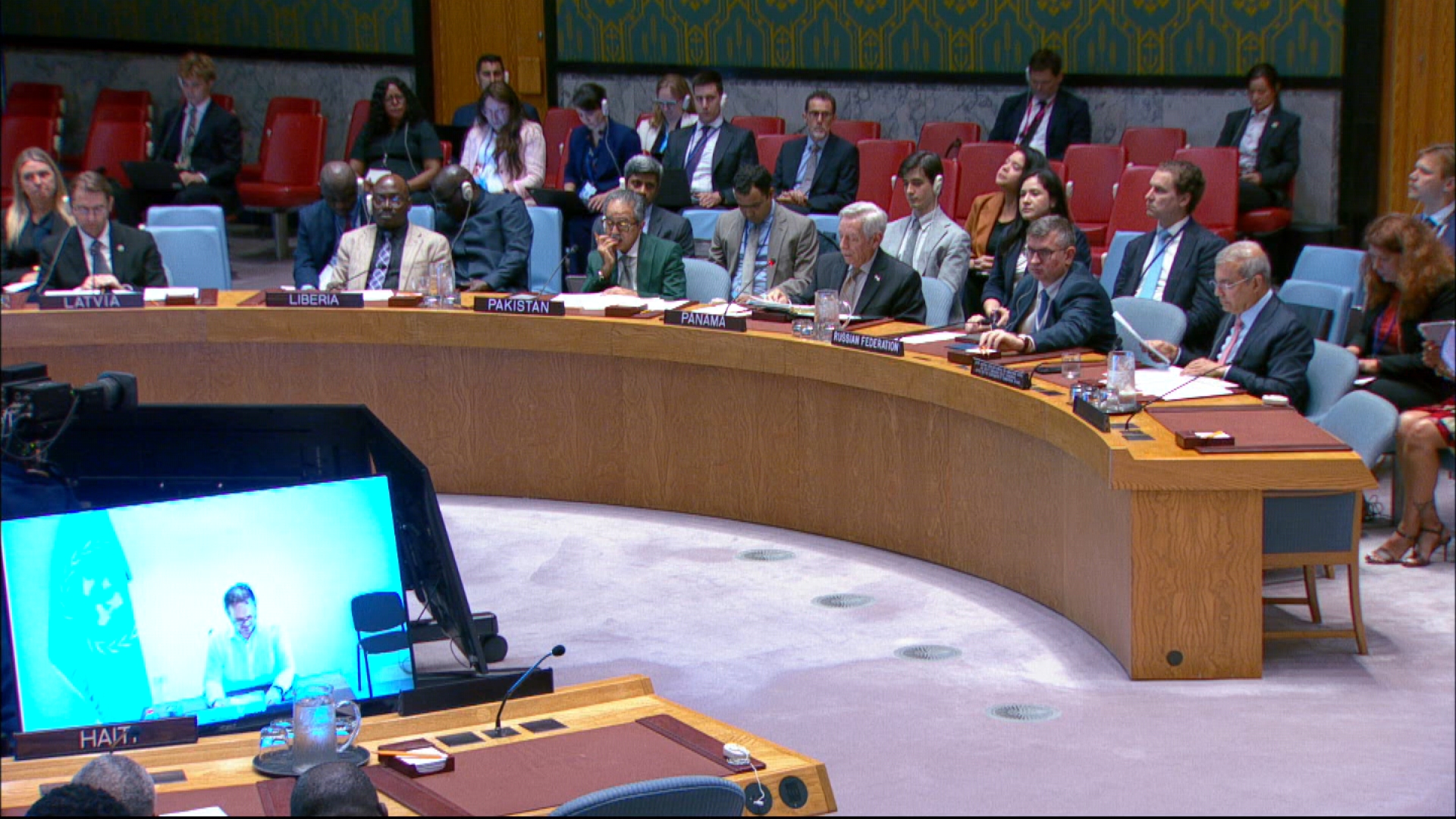
The Question Concerning Haiti - Security Council, 9311th Meeting
With Haiti descending into a catastrophic spiral of violence, the head of the United Nations office there warned the Security Council in her briefing today that the country’s people need help now.
Maria Isabel Salvador, Special Representative of the Secretary-General and Head of the United Nations Integrated Office in Haiti (BINUH), stressed that gang violence is expanding at an alarming rate in areas previously considered relatively safe in the capital, Port-au-Prince.nbsp;
The Haitian National Police force is severely understaffed and ill-equipped to address the violence and criminality, with deaths, dismissals and resignations cutting it from 14,772 to about 13,200 personnel — requiring urgent international support.nbsp;
She further noted that nearly half the population (5.2 million people) needs humanitarian assistance, with the internal displacements increasing by 50 per cent in the commune of Port-au-Prince compared to November 2022.nbsp;
Ghada Fathi Waly, Executive Director of the United Nations Office on Drugs and Crime (UNODC), noted the flow of illicit firearms and drugs into Haiti are fuelling violence — with heavily armed criminal gangs targeting critical infrastructure such as ports, grain storage facilities, police stations, court houses and prisons, and gaining control of major highways to the capital.nbsp;
She called on the international community to support large-scale actions to assist law enforcement and border management. nbsp;
In the ensuing debate, Member States concurred that the appalling violence, humanitarian situation and complete instability have reached levels that threaten to turn Haiti into a failed State.
Jean Victor Geneus, Minister for Foreign Affairs and Worship of Haiti, warned that “Haiti cannot wait any longer” — with the security context deteriorating over the past 48 hours, and chilling scenes of violence in the streets of the capital.
Noting the huge gap between the haves and have nots, with the minority (5 per cent) controlling 90 per cent of the country’s wealth, he affirmed that extreme poverty marginalizes those in poor neighbourhoods, who are recruited by armed gangs, including child soldiers.nbsp;
The meeting began at 10 a.m. and ended at 12:10 p.m.
Related Content
María Isabel Salvador (BINUH) on Haiti - Security Council Media…
UN / HAITI

UN / HAITI
Haiti - Security Council, 9449th meeting