Media Home
 UN Web TV
 UN Audiovisual Library
 UN Photo
UN / DPRK HUMAN RIGHT ABUSES
STORY: UN / DPRK HUMAN RIGHT ABUSES
TRT: 03:04
SOURCE: UNIFEED
RESTRICTIONS: NONE
LANGUAGES: ENGLISH / NATS
DATELINE: 20 MAY 2025, NEW YORK CITY / FILE
FILE - NEW YORK CITY
1. Wide shot, exterior United Nations Headquarters
20 MAY 2025, NEW YORK CITY
2. Wide shot, General Assembly
3. Wide shot, Assistant Secretary-General for Human Rights Ilze Brands Kehris at the General Assembly rostrum
4. SOUNDBITE (English) Ilze Brands Kehris, Assistant Secretary-General for Human Rights, United Nations:
“Our reports show that the human rights situation in the DPRK not only remains dire, but in many aspects is worsening. One example is the violation and crime of enforced disappearance. According to OHCHR analysis, hundreds of thousands of people have been forcibly disappeared by the DPRK, including DPRK nationals, non-return prisoners of war, and nationals from the Republic of Korea, Japan, and other countries. Their families have a right to know what happened to their loved ones.”5. Wide shot, Kehris at the rostrum
6. SOUNDBITE (English) Ilze Brands Kehris, Assistant Secretary-General for Human Rights, United Nations:
“Restrictions on freedom of expression have also increased in recent years. The authorities have adopted several laws prohibiting access to information coming from outside the country. The laws carry severe punishments, including the death penalty in some cases. The internet is not available. Similarly, freedom of movement is extremely restricted. People cannot travel outside, nor, in most cases inside the country, without the consent of the authorities.”
7. Wide shot, Special Rapporteur on the Situation of Human Rights in the Democratic People’s Republic of Korea, Elizabeth Salmón, at the rostrum
8. SOUNDBITE (English) Elizabeth Salmón, Special Rapporteur on the Situation of Human Rights in the Democratic People’s Republic of Korea:
“While isolating itself from the from most of the external world, the Democratic People's Republic of Korea has admitted that they have deployed its soldiers to the Russia, Ukraine conflict. This raises several concerns due to the poor human rights conditions of its soldiers while in service, and the government's widespread exploitation of its own people. As the DPRK expands its extreme militarization policies, it exacerbates the extensive reliance on forced labour and quota systems, showing how peace, security, and human rights are strongly interrelated.”
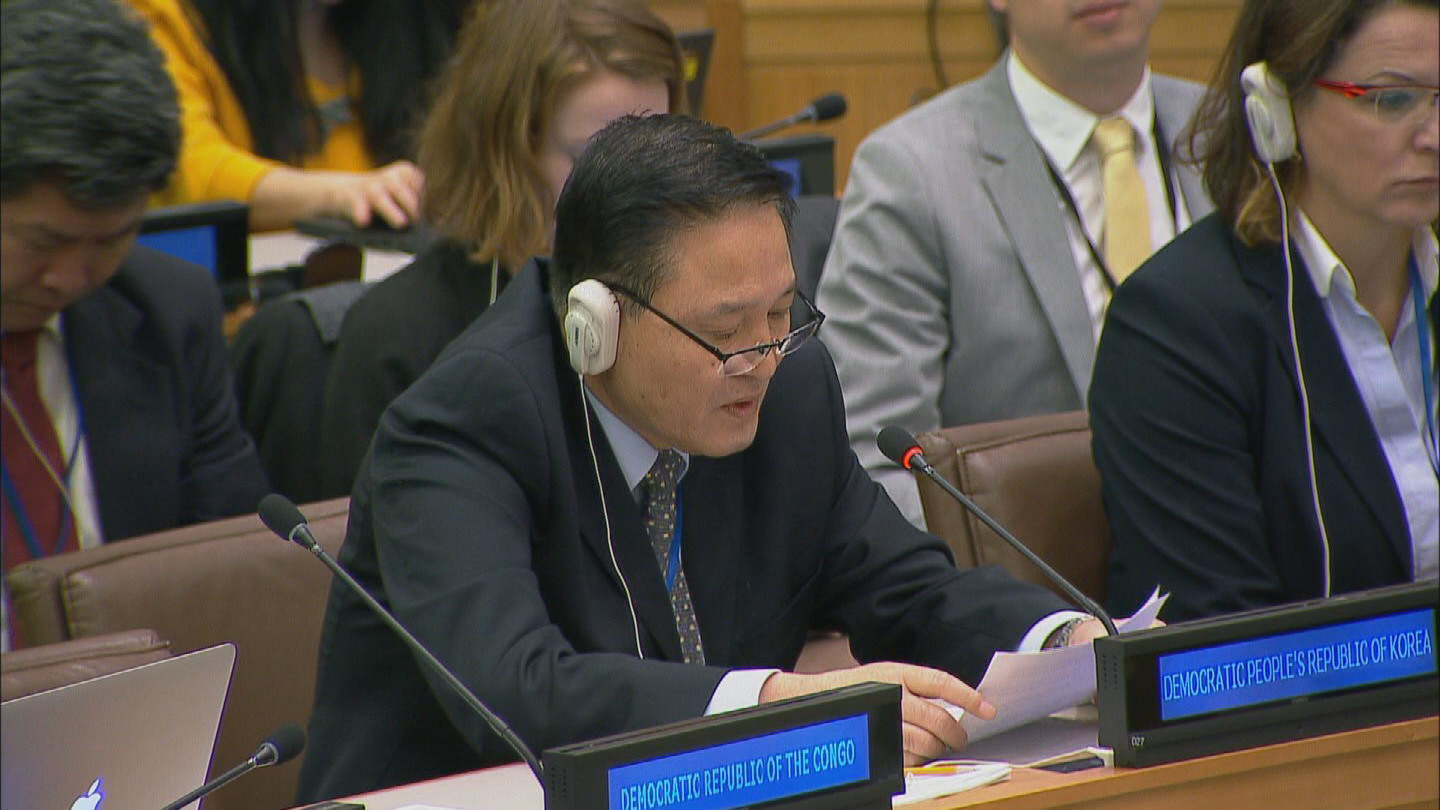
9. Wide shot, DPRK Ambassador Song Kim at the rostrum
10. SOUNDBITE (English) Song Kim, Permanent Representative to the United Nations, Democratic People’s Republic of Korea:
“It is shocking that such a meeting is convened at the Headquarters of the United Nations, going against universal will of the international community, opposing politicization, selectivity, double standard of human rights. Yet more deplorable indeed, is the invitation, as witnesses of the scum of the earth, who don't care about even their parents and families.”
11. Wide shot, Kim at the rostrum
12. SOUNDBITE (English) Song Kim, Permanent Representative to the United Nations, Democratic People’s Republic of Korea:
“We call on all member States aspiring to after independence and justice, to categorically opposed and reject the plot of the ulterior forces in their attempt to politicize and weaponize human rights.”
13. Wide shot, Kim walks away
Assistant Secretary-General for Human Rights Ilze Brands Kehris today (20 May) said, “the human rights situation in the DPRK not only remains dire, but in many aspects is worsening.”
Addressing a High-level General Assembly plenary meeting to address the human rights abuses and violations being committed in the Democratic People’s Republic of Korea (DPRK), Kehris noted that according to Office of the High Commissioner for Human Rights (OHCHR) hundreds of thousands of people have been forcibly disappeared by the DPRK, including DPRK nationals, non-return prisoners of war, and nationals from the Republic of Korea, Japan and other countries.”
She said, “restrictions on freedom of expression have also increased in recent years,” as the authorities “have adopted several laws prohibiting access to information coming from outside the country.”
These laws, Kehris said, “carry severe punishments, including the death penalty in some cases.”
She pointed out that “the internet is not available,” and “freedom of movement is extremely restricted. People cannot travel outside, nor, in most cases inside the country, without the consent of the authorities.”
For her part, the Special Rapporteur on the Situation of Human Rights in the Democratic People’s Republic of Korea, Elizabeth Salmón said, “while isolating itself from the from most of the external world, the Democratic People's Republic of Korea has admitted that they have deployed its soldiers to the Russia, Ukraine conflict. This raises several concerns due to the poor human rights conditions of its soldiers while in service, and the government's widespread exploitation of its own people.”
“As the DPRK expands its extreme militarization policies,” Salmón said, “it exacerbates the extensive reliance on forced labour and quota systems, showing how peace, security, and human rights are strongly interrelated.”
The DPRK representative, Ambassador Song Kim, said it was “shocking that such a meeting is convened at the Headquarters of the United Nations, going against universal will of the international community, opposing politicization, selectivity, double standard of human rights.”
“Yet more deplorable indeed,” Kim continued, “is the invitation, as witnesses of the scum of the earth, who don't care about even their parents and families.”
He called on “all member States aspiring to after independence and justice, to categorically opposed and reject the plot of the ulterior forces in their attempt to politicize and weaponize human rights.”
Eunju Kim, an Escapee from the Democratic People’s Republic of Korea and human rights activist; Greg Scarlatoiu, President and CEO of the “Committee for Human Rights in North Korea”; Gyuri Kang, Escapee from the Democratic People’s Republic of Korea; and Sean Chung, CEO of “HanVoice” (on behalf of a global coalition of 28 civil society organizations), presented their testimonies to the General Assembly meeting.
Download
There is no media available to download.