Media Home
 UN Web TV
 UN Audiovisual Library
 UN Photo
UN / NELSON MANDELA INTERNATIONAL DAY
STORY: UN / NELSON MANDELA INTERNATIONAL DAY
TRT: 06:27
SOURCE: UNIFEED
RESTRICTIONS: NONE
LANGUAGES: ENGLISH / NATS
DATELINE: 18 JULY 2025, NEW YORK CITY / FILE
FILE - NEW YORK CITY
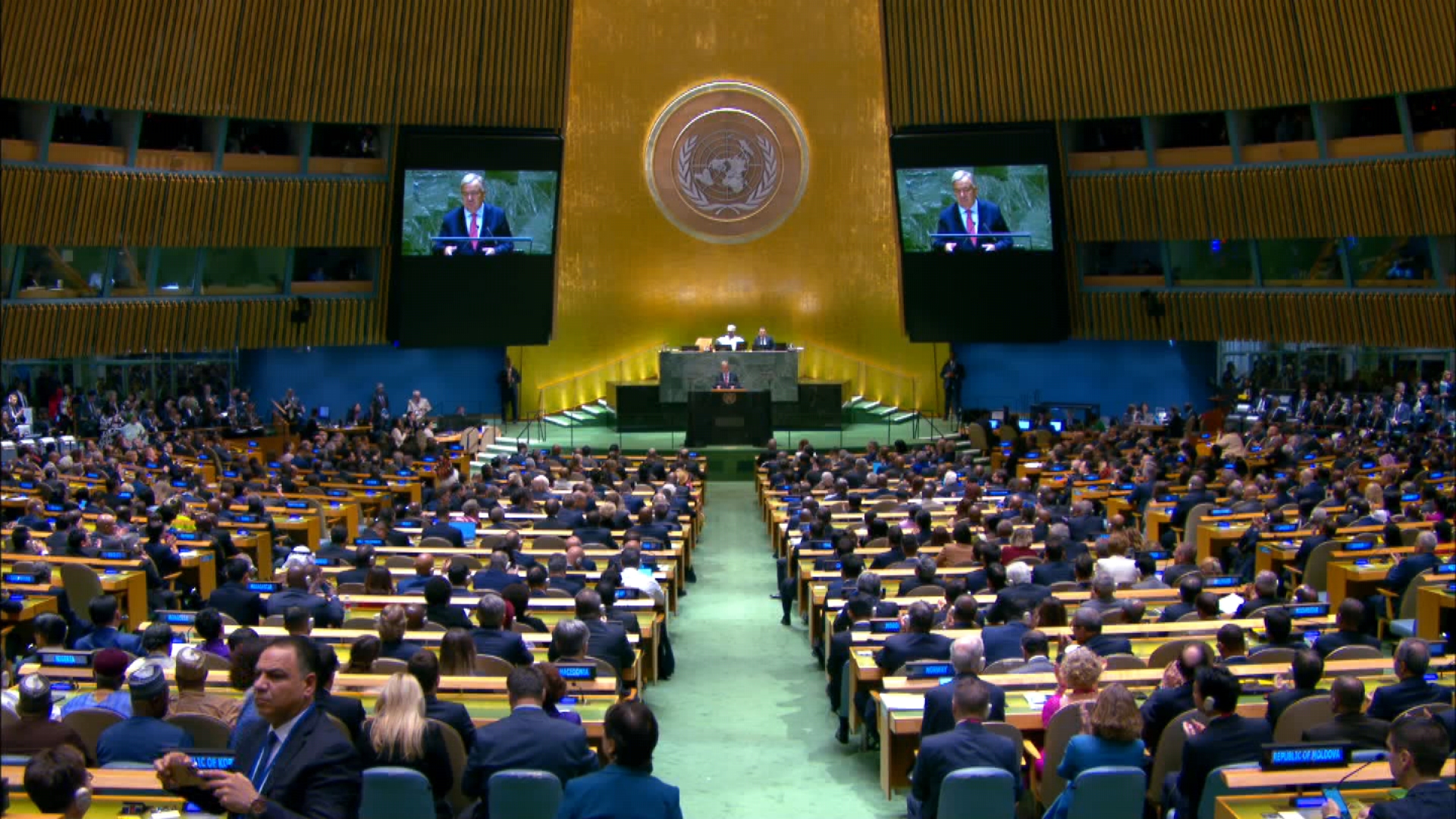
1. Wide shot, UN headquarters
18 JULY 2025, NEW YORK CITY
2. Wide shot, General Assembly
3. SOUNDBITE (English) Philemon Yang, President of the General Assembly, United Nations:
“Today, we celebrate one of the towering figures of our time: Nelson Mandela. We honour his courage. His leadership in the struggle for freedom. And his lifelong commitment to unity across Africa. Madiba embodied the values of peace, equality, human rights, and service to others. He reminded us that freedom is meaningless without justice. That justice is the bedrock of peace. That peace depends on institutions that protect the rights and dignity of all people. And that these fundamental freedoms must never be compromised.”
4. Wide shot, António Guterres walks up to the rostrum
5. SOUNDBITE (English) António Guterres, Secretary-General, United Nations:
“Today, we celebrate the life and legacy of Nelson Rolihlahla Mandela. Madiba’s extraordinary life was a triumph of the human spirit. He endured the brutal weight of oppression, and emerged not with a vision of vengeance and division — but of reconciliation, peace and unity. Today, Madiba’s legacy is now our responsibility. We must carry forward his commitment to peace, justice and human dignity. One of the central lessons of Mandela’s life was that power is not a personal possession, to be hoarded. Power is about lifting others up. It is about what we can achieve with one another, and for one another. Power is about people. In every facet of his life, Nelson Mandela demonstrated the power of collective, grassroots action to drive change and progress, and deliver power to the powerless.”
6. Wide shot, General Assembly
7. SOUNDBITE (English) António Guterres, Secretary-General, United Nations:
“This same spirit can be found in today’s winners of the Nelson Rolihlahla Mandela Prize. Ms. Brenda Reynolds is a Saulteaux member from Fishing Lake First Nation in Canada. She is a social worker, who turned her struggle against the most hideous of crimes against children into a national force for change, supporting and developing trauma responses for survivors and families of the residential schools system. Mr. Kennedy Odede grew up in the Kibera slum in Kenya. A long-time community activist, the organization he founded unites community groups from across the country and now reaches more than 2.4 million people each year with essential services — everything from education to water. Both prize winners embody Nelson Mandela’s words, which are engraved on their Prizes: “What counts in life is not the mere fact that we have lived. It is what difference we have made to the lives of others.” On behalf of the United Nations, I congratulate Ms. Reynolds and Mr. Odede on this well-deserved recognition.”
8. Wide shot, António Guterres leaves the podium
9. Wide shot, Naledi Pandor walks up to the rostrum
10. SOUNDBITE (English) Naledi Pandor, former Minister of International Relations and Cooperation in South Africa:
“The Nelson Mandela Foundation expresses profound thanks to this body for allowing us this unique opportunity to address you on Nelson Mandela International Day. President Mandela had an enduring appreciation for the bold role the United Nations played in advancing South Africa's liberation struggle. The UN steered us to freedom. Stood against apartheid domination, not through arms, but through bringing its undeniable moral weight into combat against injustice. That boldness, that courage, is needed more and more today.”
11. Wide shot, Naledi Pandor leaves the podium
12. Wide shot, Secretary-General presents the 2025 UN Mandela Prize award to Brenda Reynolds
13. SOUNDBITE (English) Brenda Reynolds, Social Worker, Recipient of the 2025 UN Mandela Prize:
“When I first found out that I was one of the two laureates for this year's Nelson Mandela awards, I was speechless and couldn't believe that I was selected. And even though I speak two languages, I still cannot find the words to express the depth of my gratitude and the humility I have to accept the United Nations Nelson Mandela prize. And happy birthday to him in the heavens today, because now he is one of our ancestors.”
14. Wide shot, Brenda Reynolds leaves the podium
15. Wide shot, Secretary-General presents the 2025 UN Mandela Prize award to Kennedy Odede
16. SOUNDBITE (English) Kennedy Odede, Community Activist, Recipient of the 2025 UN Mandela Prize:
“’I am the master of my fate. I am the captain of my soul.’ These words reminded him that even in captivity, his soul remained free. Mandela understood that poetry - and the act of turning within - possess great power. He observed that poetry bears witness to injustice, and in doing inner work, Mandela cultivated what he called "a flower in a graveyard." For him, Invictus became that flower - an affirmation of unbreakable human dignity.”
17. Wide shot, Kennedy Odede leaves the podium
The United Nations marked Nelson Mandela International Day with a call to carry forward the late South African leader’s commitment to justice, dignity, and peace. “Madiba’s extraordinary life was a triumph of the human spirit,” said UN Secretary-General António Guterres. “He endured the brutal w Madiba’s extraordinary life was a triumph of the human spirit. He endured the brutal weight of oppression, and emerged not with a vision of vengeance and division — but of reconciliation, peace and unity.”
Speaking at the General Assembly today (Jul 18), Guterres underscored that Mandela’s “legacy is now our responsibility.” He added, “One of the central lessons of Mandela’s life was that power is not a personal possession, to be hoarded. Power is about lifting others up. It is about what we can achieve with one another, and for one another. Power is about people.”
The General Assembly President, Philemon Yang, opened the commemorative event by honoring Mandela’s courage and his “lifelong commitment to unity across Africa.” He said, “Madiba embodied the values of peace, equality, human rights, and service to others. He reminded us that freedom is meaningless without justice. That justice is the bedrock of peace.”
South Africa’s former Minister of International Relations and Cooperation, Naledi Pandor, echoed that message, saying Mandela had “an enduring appreciation for the bold role the United Nations played in advancing South Africa's liberation struggle.” She noted that the UN “stood against apartheid domination, not through arms, but through bringing its undeniable moral weight into combat against injustice. That boldness, that courage, is needed more and more today.”
This year’s event also celebrated the 2025 laureates of the UN Nelson Mandela Prize: Brenda Reynolds of Canada and Kennedy Odede of Kenya.
Reynolds, a Saulteaux member from Fishing Lake First Nation and a social worker, was recognized for transforming personal trauma into national advocacy. “She turned her struggle against the most hideous of crimes against children into a national force for change,” Guterres said, praising her work to support survivors of Canada’s residential school system.
Reynolds said, “When I first found out that I was one of the two laureates for this year's Nelson Mandela awards, I was speechless and couldn't believe that I was selected. And even though I speak two languages, I still cannot find the words to express the depth of my gratitude and the humility I have to accept the United Nations Nelson Mandela prize. And happy birthday to him in the heavens today, because now he is one of our ancestors.”
Odede, a longtime community activist raised in Nairobi’s Kibera slum, was honored for his work uniting grassroots groups to provide education, water, and essential services to more than 2.4 million people across Kenya.
He reflected on Mandela’s resilience, quoting the poem Invictus: “’I am the master of my fate. I am the captain of my soul.’” Odede also said, “These words reminded him that even in captivity, his soul remained free. Mandela understood that poetry - and the act of turning within - possess great power. He observed that poetry bears witness to injustice, and in doing inner work, Mandela cultivated what he called "a flower in a graveyard." For him, Invictus became that flower - an affirmation of unbreakable human dignity.”
Both laureates, Guterres noted, embody Mandela’s own words, which are engraved on the prize: “What counts in life is not the mere fact that we have lived. It is what difference we have made to the lives of others.”
Download
There is no media available to download.
Related Content