
 Media Home
 UN Web TV
 UN Audiovisual Library
 UN Photo
OHCHR / VENEZUELA HUMAN RIGHTS
STORY: OHCHR / VENEZUELA HUMAN RIGHTS
TRT: 05:04
SOURCE: OHCHR / UNTV CH
RESTRICTIONS: NONE
LANGUAGE: ENGLISH / SPANISH / NATS
DATELINE: 16 MARCH 2026, GENEVA, SWITZERLAND
1. Wide shot, Palais de Nations
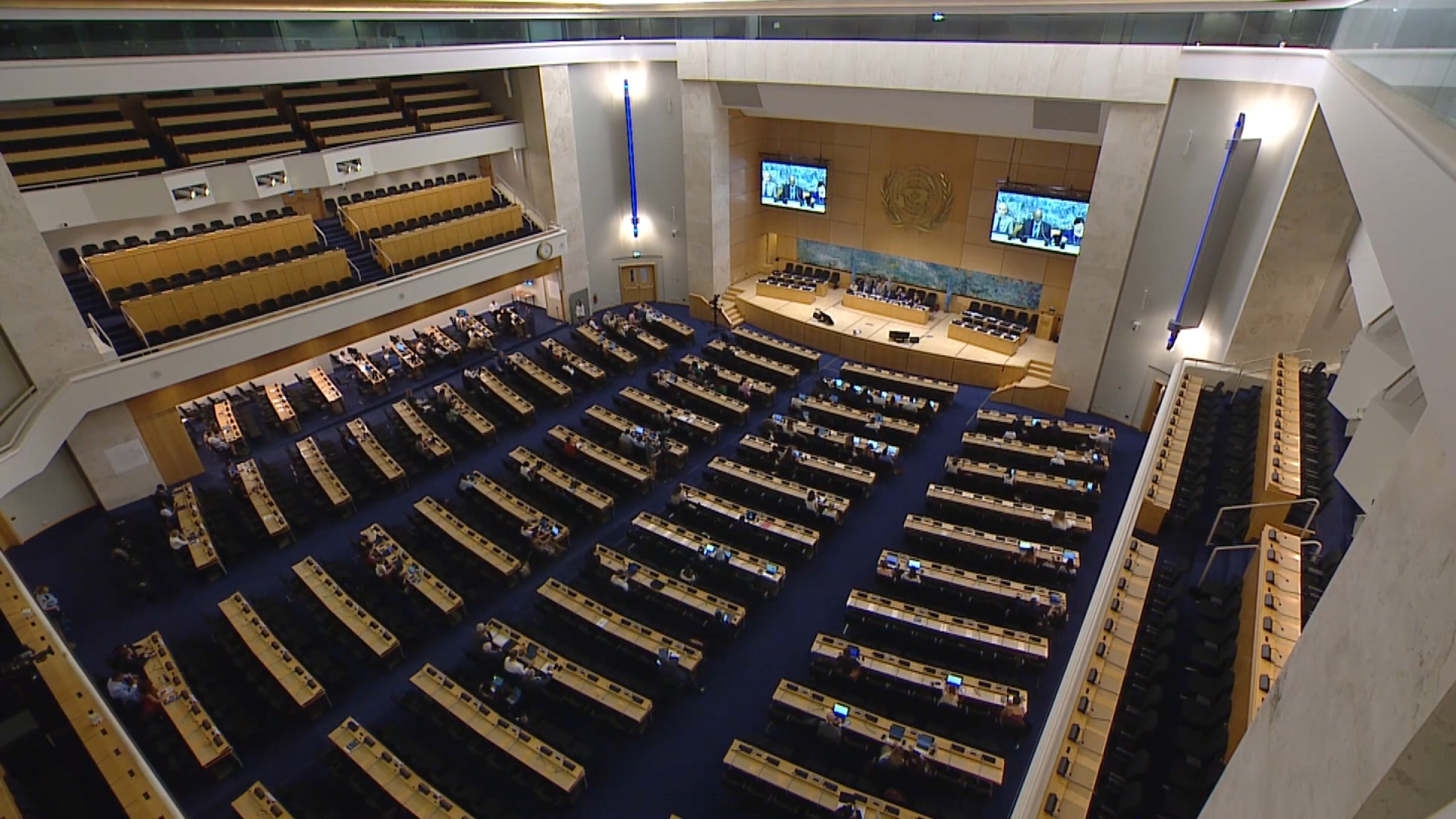
2. Wide shot, Assembly Hall A
3. SOUNDBITE (English) Volker Türk UN High Commissioner for Human Rights (OHCHR):
“Since my last update to this Council, the situation in Venezuela has been dominated by the US military intervention on 3 January, and its aftermath. In response to that intervention, the Venezuelan authorities declared a state of emergency. The security forces and armed civilian groups reportedly used this as the basis for intrusive measures, contributing to a climate of fear among the population. I urge the authorities to reassess the decree to ensure its necessity and proportionality.”
1. Wide shot, Assembly Hall A
2. SOUNDBITE (English) Volker Türk UN High Commissioner for Human Rights (OHCHR):
“At the same time, the Venezuelan authorities have moved to correct some of the wrongs of the past. A new Amnesty Law was adopted on 19 February. I regret that it was drafted without adequate consultation across society.”
3. Wide shot, Assembly Hall A
1. SOUNDBITE (English) Volker Türk UN High Commissioner for Human Rights (OHCHR):
“We have confirmed that since my last update, some 950 people who were arbitrarily detained have been released – some under strict conditions - including human rights defenders, political figures, journalists and trade unionists.”
2. Wide shot, Assembly Hall A
3. SOUNDBITE (English) Volker Türk UN High Commissioner for Human Rights (OHCHR):
“While I share the relief of those who have been freed, and their loved ones, they should never have been detained in the first place. I hope this practice ceases forever, and that the authorities adopt measures to uphold freedom of opinion, including the defence of human rights.”
4. Wide shot, Assembly Hall A
5. SOUNDBITE (Spanish) Volker Türk UN High Commissioner for Human Rights (OHCHR):
“I urge the authorities to ensure that all economic reforms and investments, including in its oil, gas and critical minerals sectors, uphold Venezuelans’ sovereignty over their natural resources. Revenues should be used to advance the economic, social and cultural rights of all Venezuelans, as well as to protect the environment.”
6. Wide shot, Assembly Hall A
7. SOUNDBITE (English) Volker Türk UN High Commissioner for Human Rights (OHCHR):
“Venezuelans are feeling a mix of hope, fear, and uncertainty. Human rights must guide the path ahead, and I would like to highlight five key areas for action. First, the authorities need to release all those who are still arbitrarily detained, immediately and unconditionally. Second, protecting and expanding civic space. This is essential to repairing the social fabric and strengthening democratic processes.”
8. Wide shot, Assembly Hall A
9. SOUNDBITE (English) Volker Türk UN High Commissioner for Human Rights (OHCHR):
“Third, structural reforms to the justice and security sectors. This includes dismantling the legal frameworks and practices that have enabled oppression of political dissent. Such reforms are key to ensuring access to justice, and rebuilding trust in institutions. The Government should also disarm and disband armed civilian groups who have intimidated and exercised control over people.”
10. Wide shot, Assembly Hall A
11. SOUNDBITE (English) Volker Türk UN High Commissioner for Human Rights (OHCHR):
“Fourth, ensuring and expanding access to healthcare, food, work, and basic services. I urge the authorities to guarantee adequate salaries, pensions and other social security measures to cover basic needs, and to renew their commitment to labour rights.”
12. Wide shot, Assembly Hall A
13. SOUNDBITE (English) Volker Türk UN High Commissioner for Human Rights (OHCHR):
“Finally, Venezuelans need to come together and agree on a comprehensive transitional justice strategy. Venezuelan society remains deeply polarized. Healing those divisions requires accountability for all the serious human rights violations committed over the past decades.”
14. Wide shot, Assembly Hall A
SOUNDBITE (English) Volker Türk UN High Commissioner for Human Rights (OHCHR):
“At this critical juncture, the country’s future must be decided by its people alone. The authorities, the opposition within and outside Venezuela, and all those with political responsibilities need to unite around human rights and put the people of their country first.”
15. Wide shot, Assembly Hall A
Volker Türk UN Human Rights chief on Monday delivered an update on the human rights situation in Venezuela to the 61st session of the Human Rights Council.
“Since my last update to this Council, the situation in Venezuela has been dominated by the US military intervention on 3 January, and its aftermath. In response to that intervention, the Venezuelan authorities declared a state of emergency. The security forces and armed civilian groups reportedly used this as the basis for intrusive measures, contributing to a climate of fear among the population. I urge the authorities to reassess the decree to ensure its necessity and proportionality, ” Türk said.
“At the same time, the Venezuelan authorities have moved to correct some of the wrongs of the past. A new Amnesty Law was adopted on 19 February. I regret that it was drafted without adequate consultation across society,” he added.
According to the authorities, some 7,700 people have been released unconditionally under the law. His Office has requested the official list of those released, as well as unfettered access to several detention centres, so far without success. He urged greater transparency regarding the release of detainees.
“We have confirmed that since my last update, some 950 people who were arbitrarily detained have been released – some under strict conditions - including human rights defenders, political figures, journalists and trade unionists,” he said.
Prominent figures among those released include Javier Tarrazona, Eduardo Torres, Kennedy Tejeda, Carlos Julio Rojas and Rocio San Miguel.
“While I share the relief of those who have been freed, and their loved ones, they should never have been detained in the first place. I hope this practice ceases forever, and that the authorities adopt measures to uphold freedom of opinion, including the defence of human rights,” he said.
Some 60 prisoners have been able to receive visits from their relatives or communicate with them, whereas previously there had been no information on their whereabouts.
In Spanish he stated: “Insto a las autoridades a garantizar que todas las reformas económicas y las inversiones, incluidas las que se hagan en los sectores del petróleo, el gas y los minerales esenciales, respeten la soberanía de las y los venezolanos sobre sus recursos naturales. Los ingresos deben utilizarse para promover los derechos económicos, sociales y culturales de todos las y los venezolanos, así como proteger el medio ambiente.”
(Translation: “I urge the authorities to ensure that all economic reforms and investments, including in its oil, gas and critical minerals sectors, uphold Venezuelans’ sovereignty over their natural resources. Revenues should be used to advance the economic, social and cultural rights of all Venezuelans, as well as to protect the environment.”)
“Venezuelans are feeling a mix of hope, fear, and uncertainty. Human rights must guide the path ahead, and I would like to highlight five key areas for action. First, the authorities need to release all those who are still arbitrarily detained, immediately and unconditionally. Second, protecting and expanding civic space. This is essential to repairing the social fabric and strengthening democratic processes,” the High Commissioner said.
He urged the authorities to enable civil society to work freely, to guarantee their participation in public affairs, and to protect NGOs, journalists, union members, and human rights defenders against threats and attacks.
“Third, structural reforms to the justice and security sectors. This includes dismantling the legal frameworks and practices that have enabled oppression of political dissent. Such reforms are key to ensuring access to justice, and rebuilding trust in institutions. The Government should also disarm and disband armed civilian groups who have intimidated and exercised control over people,” he said.
“Fourth, ensuring and expanding access to healthcare, food, work, and basic services. I urge the authorities to guarantee adequate salaries, pensions and other social security measures to cover basic needs, and to renew their commitment to labour rights,” Türk said.
“Finally, Venezuelans need to come together and agree on a comprehensive transitional justice strategy. Venezuelan society remains deeply polarized. Healing those divisions requires accountability for all the serious human rights violations committed over the past decades,” he stated.
“At this critical juncture, the country’s future must be decided by its people alone.
The authorities, the opposition within and outside Venezuela, and all those with political responsibilities need to unite around human rights and put the people of their country first,” he concluded.
Download
There is no media available to download.
Related Content
OHCHR / VENEZUELA HUMAN RIGHTS


