Media Home
 UN Web TV
 UN Audiovisual Library
 UN Photo
UN / STRAIT OF HORMUZ UPDATE
STORY: UN / STRAIT OF HORMUZ UPDATE
TRT: 01:05
SOURCE: UNIFEED
RESTRICTIONS: NONE
LANGUAGES: ENGLISH / NATS
DATELINE: 01 APRIL 2026, NEW YORK CITY / FILE
FILE – NEW YORK CITY
1. Wide shot, United Nations headquarters
01 APRIL 2026, NEW YORK CITY
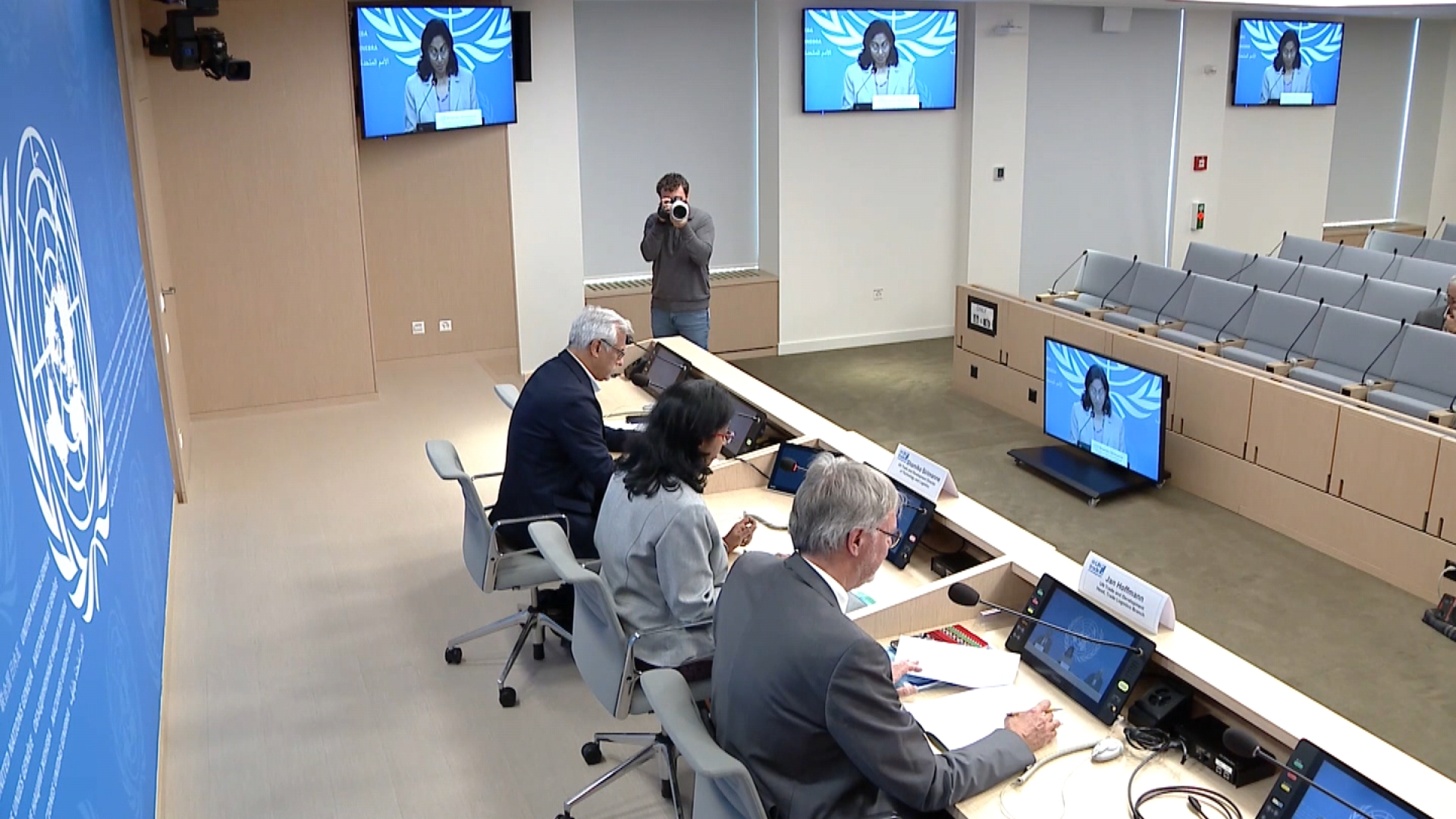
2. Wide shot, press briefing room
3. SOUNDBITE (English) Stéphane Dujarric, Spokesperson for the Secretary-General, United Nations:
“Our good friends at the UN Trade and Development office - or UNCTAD for short - has said in a report today that maritime traffic through the Strait of Hormuz has come to a near halt, with a 95 percent drop in daily ship transits over the past month. As a result, UNCTAD forecasts a drop by at least a percentage point in annual merchandise trade growth, as well as rising inflation, spurred on by a surge in crude oil prices. UNCTAD forecasts a drop in world GDP to about 2.6 percent by the end of the year, as well as a fall in stock markets and a depreciation of currencies in developing countries. Among other things, the agency calls for governments to consider a policy mix to stabilize price levels as inflation pressures rise, particularly for vulnerable populations; and for development banks to be empowered to provide emergency loans.”
4. Wide shot, end of press briefing
"UN Trade and Development office has said in a report today that maritime traffic through the Strait of Hormuz has come to a near halt, with a 95 percent drop in daily ship transits over the past month," a UN spokesperson said.
Stéphane Dujarric, Spokesperson for the Secretary-General, told reporters in New York today, "UNCTAD forecasts a drop by at least a percentage point in annual merchandise trade growth, as well as rising inflation, spurred on by a surge in crude oil prices. UNCTAD forecasts a drop in world GDP to about 2.6 percent by the end of the year, as well as a fall in stock markets and a depreciation of currencies in developing countries."
He also said, "Among other things, the agency calls for governments to consider a policy mix to stabilize price levels as inflation pressures rise, particularly for vulnerable populations; and for development banks to be empowered to provide emergency loans.”
Download
There is no media available to download.