Media Home
 UN Web TV
 UN Audiovisual Library
 UN Photo
IMF / EUROPE PRESS BRIEFING
STORY: IMF / EUROPE PRESS BRIEFING
TRT: 05:07
SOURCE: IMF
RESTRICTIONS: NONE
LANGUAGE: ENGLISH / NATS
DATELINE: 17 APRIL 2026, WASHINGTON DC
RECENT - WASHINGTON DC
1. Wide shot, IMF building exterior
17 APRIL 2026, WASHINGTON DC
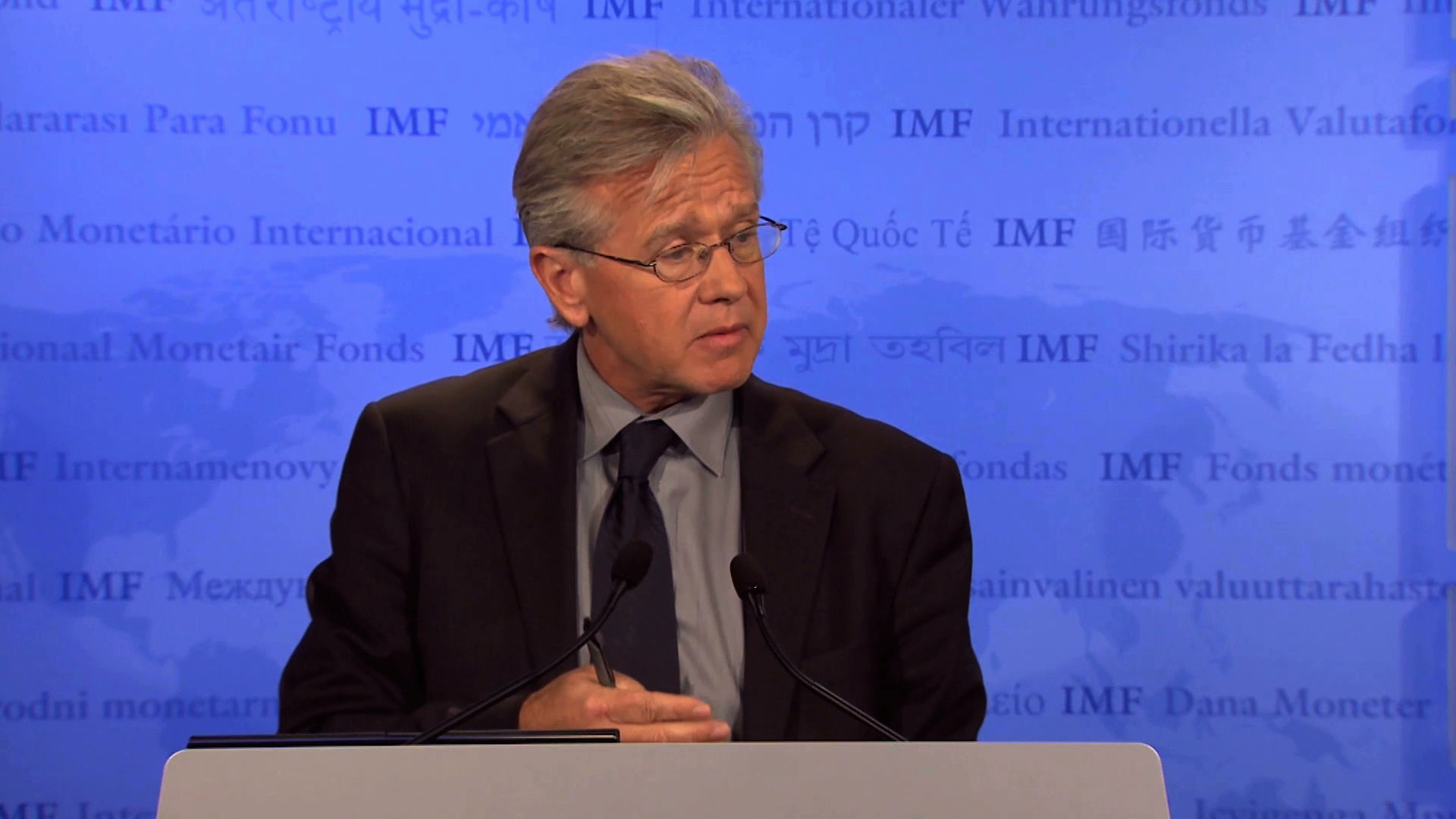
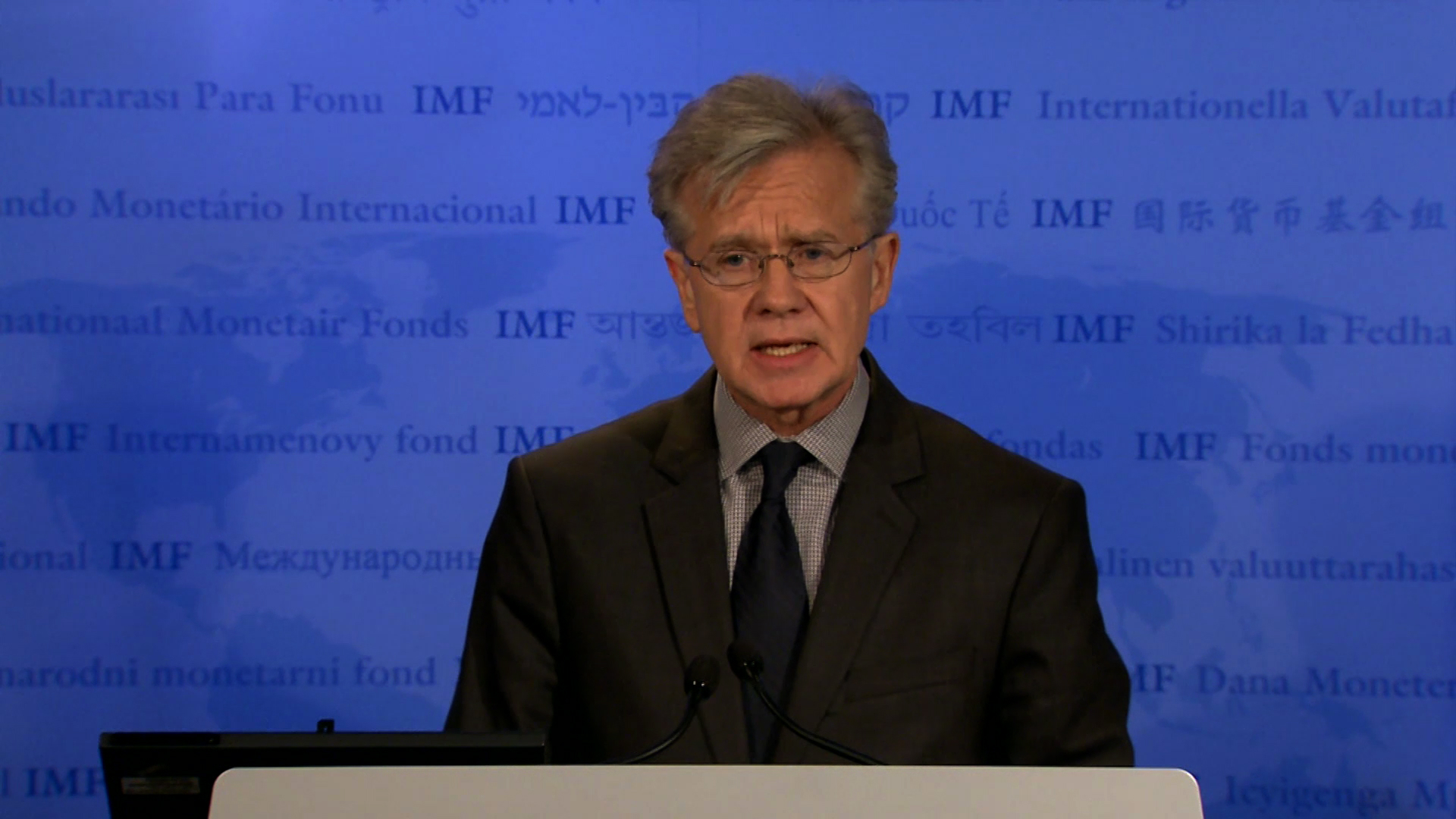
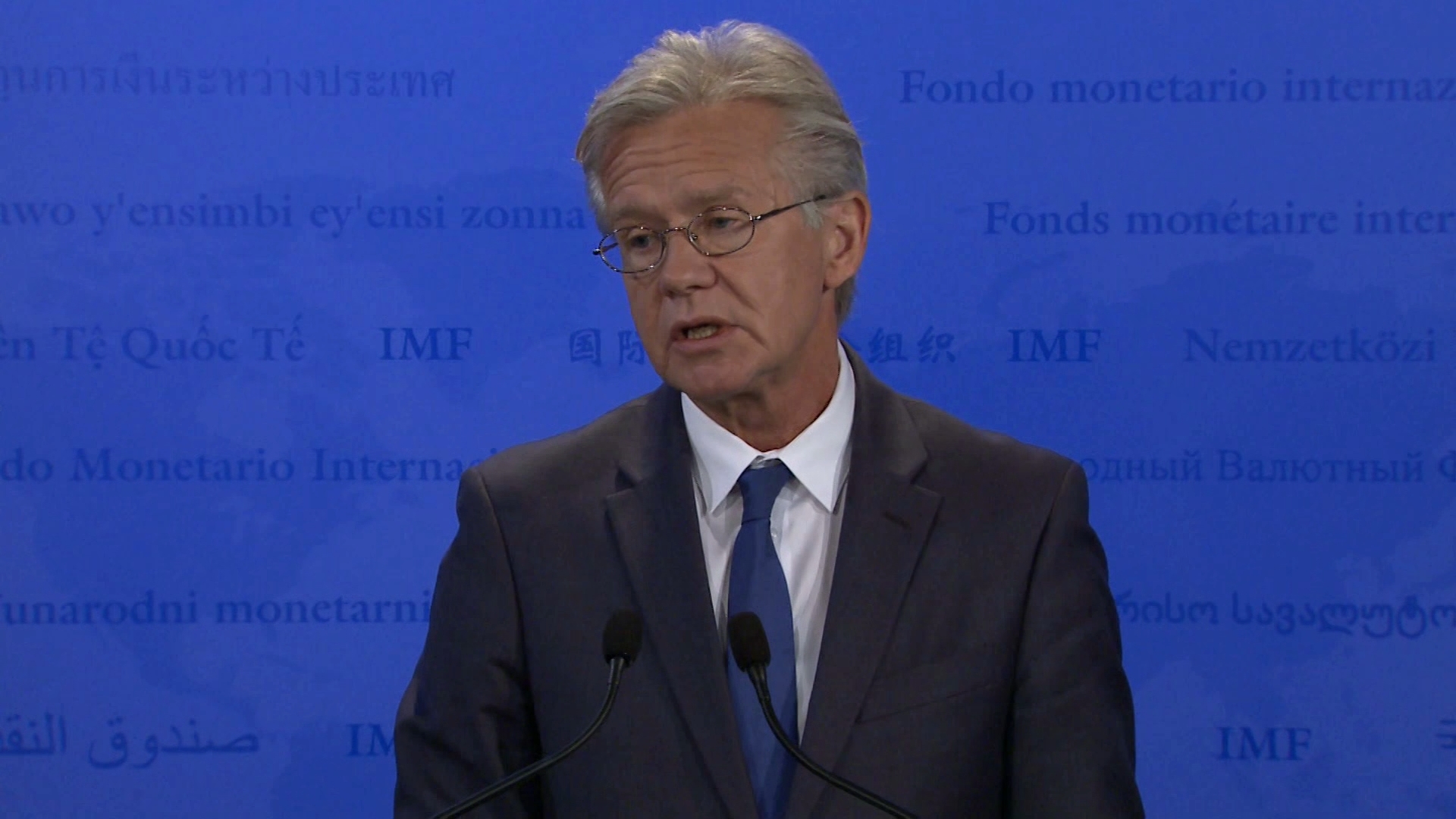
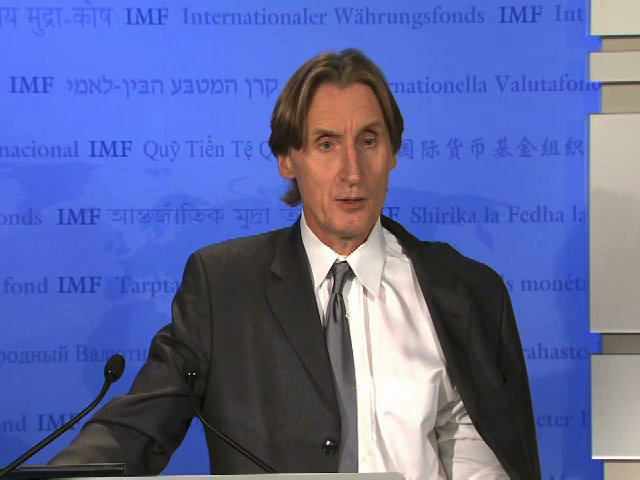
2. Med shot, Alfred Kammer speaking
3. SOUNDBITE (English), Alfred Kammer, Director, European Department, International Monetary Fund (IMF):
“We are expecting in our reference scenario that, the impact of the Iran war will shave off, over the next two-year, 0.5 percent of GDP on Euro-area growth. And we expect in a more severe scenario, that could be as bad as shaving off 1.7 percentage points of GDP. So those are the markers we have on the outlook. What does it mean in terms of short-term policy response? First of all, on the monetary policy side - so let me first look at the Euro area and at the ECB. They were in a good starting position, as President Lagarde said - and we fully agree with that assessment. And that also allows some time to see what kind of scenario is going to develop over the next few months, because we have huge uncertainty of whether we are staying with our reference forecast, or whether the outlook will worsen if the war is more persistent and if energy prices are more persistent. Our expectation is that the European Central Bank - and that is also our recommendation in the reference forecast - should stay with a neutral monetary policy stance. And that means we would see 225 basis points increase in the policy rate in 2026, but that, to some extent, can be taken back in 2027. Of course, there is uncertainty on this, and we need to see over the next few months what scenario we are in. But that's the recommendation we have if the reference forecast would materialize. For the Bank of England, we recommend to maintain a restrictive monetary policy stance.”
4. Med shot, journalist asking a question
5. Med shot, Alfred Kammer speaking
6. SOUNDBITE (English), Alfred Kammer, Director, European Department, International Monetary Fund (IMF):
“We are seeing many European countries putting together fiscal support packages for the population mostly, but also for the firms. Our recommendation here is not to suppress the price signal, because in the end, we need to balance demand and supply. And that is best, achieved through a price mechanism and not through rationing. Second recommendation is target the fiscal measures to the vulnerable - or if you want to go further, to some parts of the middle class to lower the impact of the shock. Why are we so insisting on the targeting? Fiscal space in Europe is at a premium, and the last energy support packages we had during the Russian gas shut off period cost, on average, 2.5 percent of GDP - and that's a large number. And we know that if European countries had just focused on the 40 percent of the population, the cost would have been 0.9 percent of GDP - much lower. And that fiscal space is not available and needs to be used for other expending.”
7. Med shot, journalist asking a question
8. Med shot, Alfred Kammer speaking
9. SOUNDBITE (English), Alfred Kammer, Director, European Department, International Monetary Fund (IMF):
“When you're looking at the energy union part - that's of course a lifeblood of the economy - yes, you need affordable energy; yes, there is an aim of decarbonizing that energy; but that is also of huge important in order to decrease external vulnerabilities. And this external vulnerability has shown up in the 70s. It has shown up again with the Russian gas shut off, and it has shown up again with the war in the Middle East. And that is the reliance on imported fossil fuels. And when we are looking at the current strategy - which is in place through the Green Deal - that Green Deal would eliminate or severely limit the import dependence on fossil fuels. And that would decrease one of the big vulnerabilities Europe has, and the vulnerability, which is extremely costly, as we are finding out once again. So, this is in a nutshell our messages for policymakers, that means act on the important and don't let your bandwidth completely be crowded out by the urgent.”
Europe entered 2026 expecting a modest improvement in growth, but the war in the Middle East has altered that trajectory, leading to a downgrade in growth and higher inflation, according to the European Regional Economic Outlook presented at the International Monetary Fund’s 2026 Spring Meetings. Alfred Kammer, Director of the European Department, outlined how the shock is reshaping the region’s outlook and policy response.
“We are expecting in our reference scenario that, the impact of the Iran war will shave off, over the next two-year, 0.5 percent of GDP on Euro-area growth. And we expect in a more severe scenario, that could be as bad as shaving off 1.7 percentage points of GDP. So those are the markers we have on the outlook. What does it mean in terms of short-term policy response? First of all, on the monetary policy side - so let me first look at the Euro area and at the ECB. They were in a good starting position, as President Lagarde said - and we fully agree with that assessment. And that also allows some time to see what kind of scenario is going to develop over the next few months, because we have huge uncertainty of whether we are staying with our reference forecast, or whether the outlook will worsen if the war is more persistent and if energy prices are more persistent. Our expectation is that the European Central Bank - and that is also our recommendation in the reference forecast - should stay with a neutral monetary policy stance. And that means we would see 225 basis points increase in the policy rate in 2026, but that, to some extent, can be taken back in 2027. Of course, there is uncertainty on this, and we need to see over the next few months what scenario we are in. But that's the recommendation we have if the reference forecast would materialize. For the Bank of England, we recommend to maintain a restrictive monetary policy stance,” suggested Kammer.
This approach reflects a cautious stance in the face of considerable uncertainty, with policymakers allowing time to assess how the outlook evolves under different scenarios. On the monetary side, this translates into holding rates steady where appropriate rather than moving ahead with previously expected easing. Attention then shifts to fiscal policy, where short-term measures are already being deployed to support households and firms.
“We are seeing many European countries putting together fiscal support packages for the population mostly, but also for the firms. Our recommendation here is not to suppress the price signal, because in the end, we need to balance demand and supply. And that is best, achieved through a price mechanism and not through rationing. Second recommendation is target the fiscal measures to the vulnerable - or if you want to go further, to some parts of the middle class to lower the impact of the shock. Why are we so insisting on the targeting? Fiscal space in Europe is at a premium, and the last energy support packages we had during the Russian gas shut off period cost, on average, 2.5 percent of GDP - and that's a large number. And we know that if European countries had just focused on the 40 percent of the population, the cost would have been 0.9 percent of GDP - much lower. And that fiscal space is not available and needs to be used for other expending,” Kammer explained.
Beyond these immediate responses, the focus shifts to longer-term priorities that can strengthen resilience and support growth. Efforts at both the national and European Union levels are centred on reducing structural barriers, improving labour mobility, deepening capital markets, and advancing energy integration. These reforms are seen as critical to addressing underlying vulnerabilities and improving the region’s capacity to withstand future disruptions.
“When you're looking at the energy union part - that's of course a lifeblood of the economy - yes, you need affordable energy; yes, there is an aim of decarbonizing that energy; but that is also of huge important in order to decrease external vulnerabilities. And this external vulnerability has shown up in the 70s. It has shown up again with the Russian gas shut off, and it has shown up again with the war in the Middle East. And that is the reliance on imported fossil fuels. And when we are looking at the current strategy - which is in place through the Green Deal - that Green Deal would eliminate or severely limit the import dependence on fossil fuels. And that would decrease one of the big vulnerabilities Europe has, and the vulnerability, which is extremely costly, as we are finding out once again. So, this is in a nutshell our messages for policymakers, that means act on the important and don't let your bandwidth completely be crowded out by the urgent,” concluded Kammer.
Download
There is no media available to download.