Media Home
 UN Web TV
 UN Audiovisual Library
 UN Photo
UNICEF / CHILDHOOD VACCINATION
STORY: UNICEF / CHILDHOOD VACCINATION
TRT: 01:57
SOURCE: UNICEF
RESTRICTIONS: PLEASE CREDIT UNICEF ON SCREEN / EMBARGO TILL 8:01PM EST, 23 APRIL 2026
LANGUAGE: NATS
DATELINE: PLEASE SEE SHOTLIST FOR DETAILS
FILE - 29 JANUARY 2024, LILONGWE DISTRICT, MALAWI
1. Close up, Rebecca (health worker) handling vaccines.
2. Med shot, vaccines with patients waiting in the background (pull focus)
FILE – 16 FEBRUARY 2025, SOMALIA
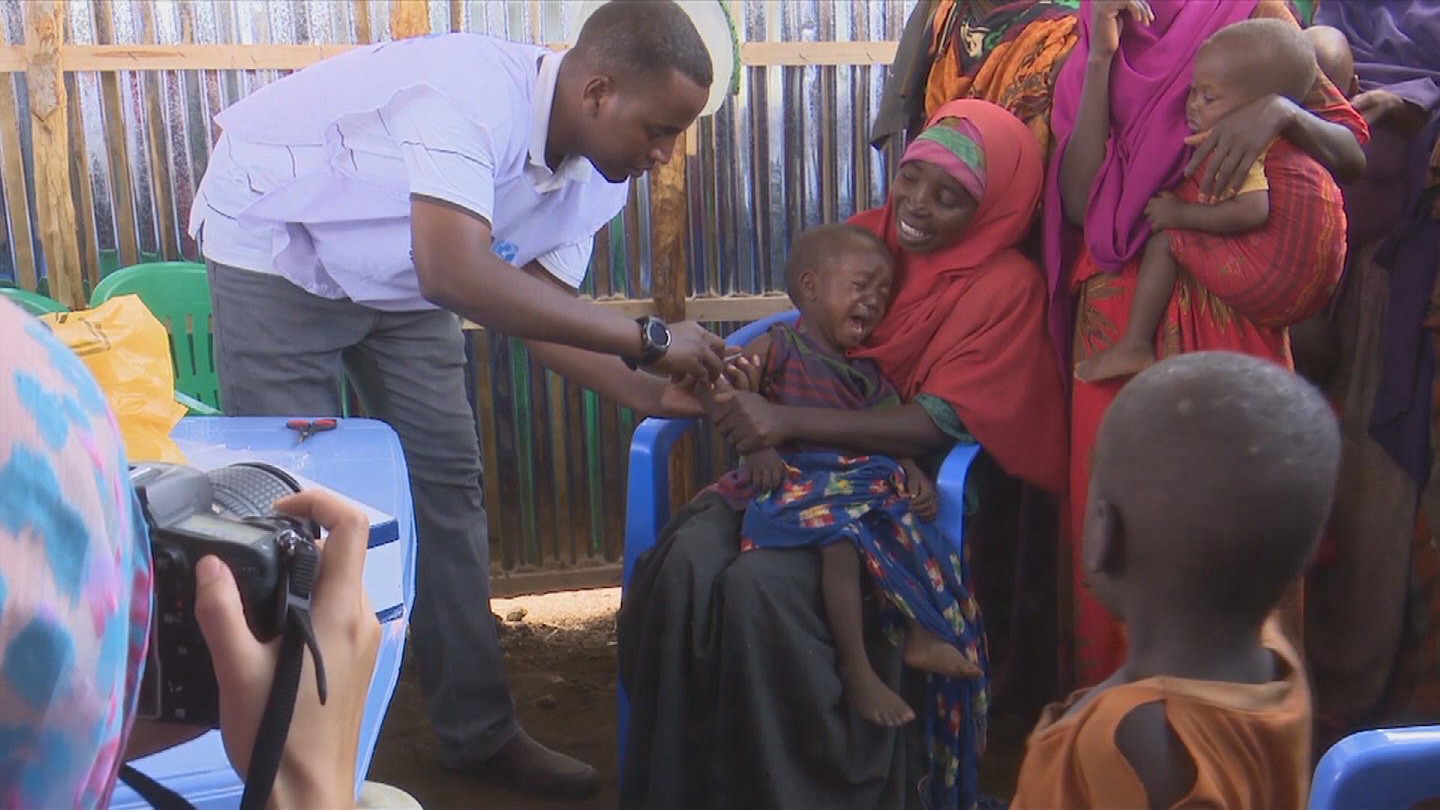
3. Wide shot, caregivers and children at vaccination event
Somalia launched a four-day nationwide polio vaccination campaign targeting 2.5 million children under the age of five in the consequential States, Jubaland, Hirshabelle, Southwest, Galmudug and Benaadir Regional Administration. Led by the Federal Ministry of Health and Human Services, with support from the World Health Organization (WHO), UNICEF, and the Global Polio Eradication Initiative, this campaign aims to stop the transmission of circulating variant type 2 poliovirus, which has been in circulation in Somalia since 2017.
4. Med shot, caregivers and children at vaccination event
5. Close up, vaccine storage box
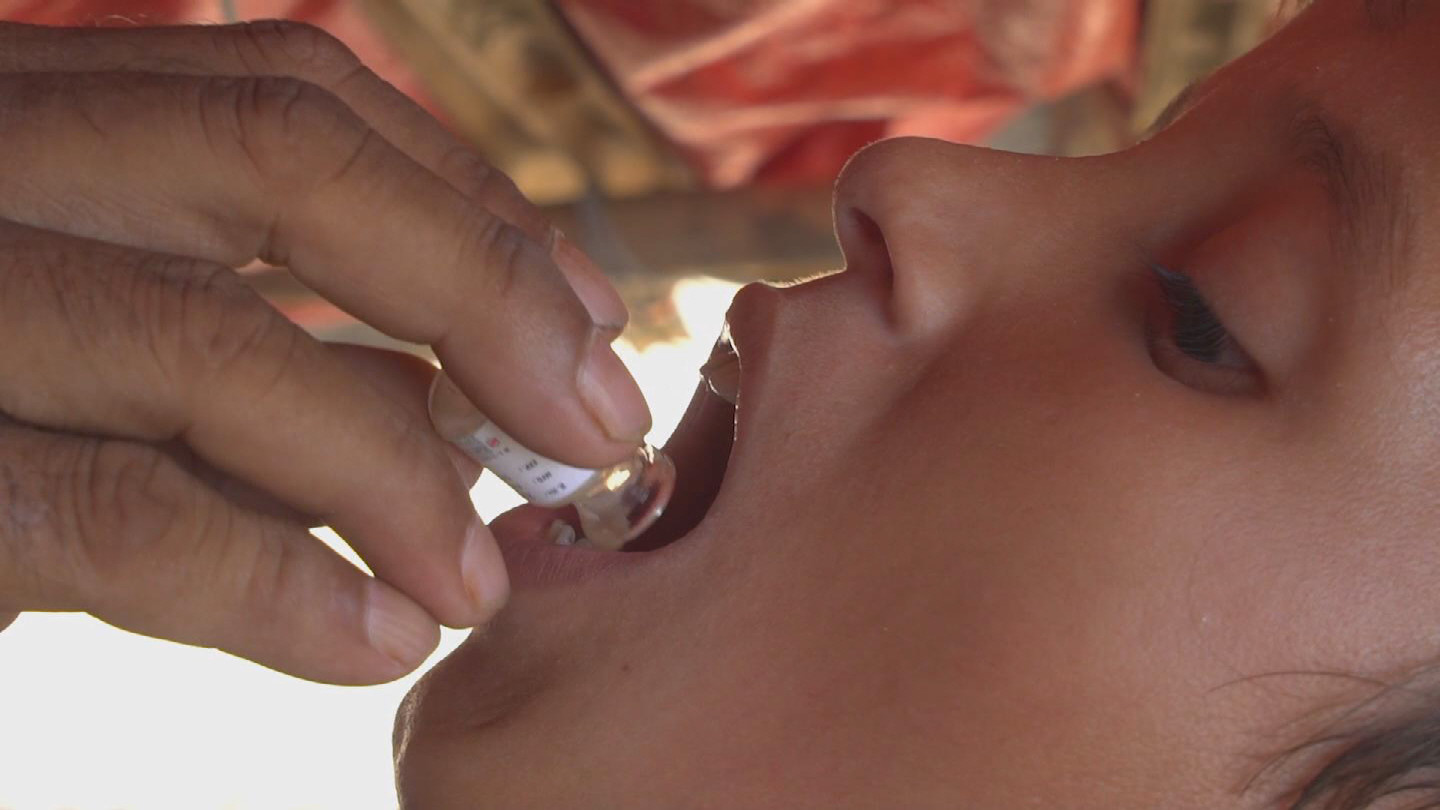
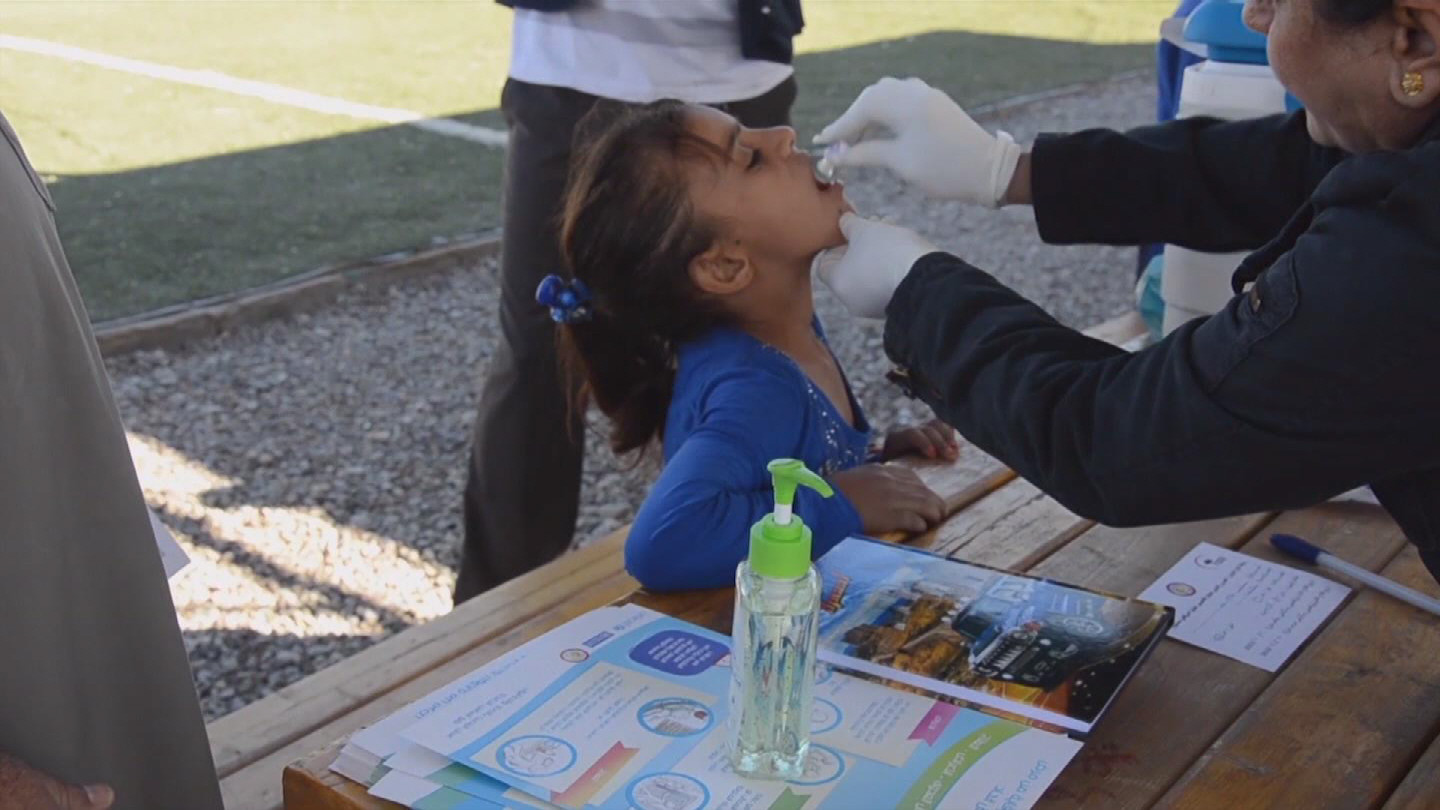
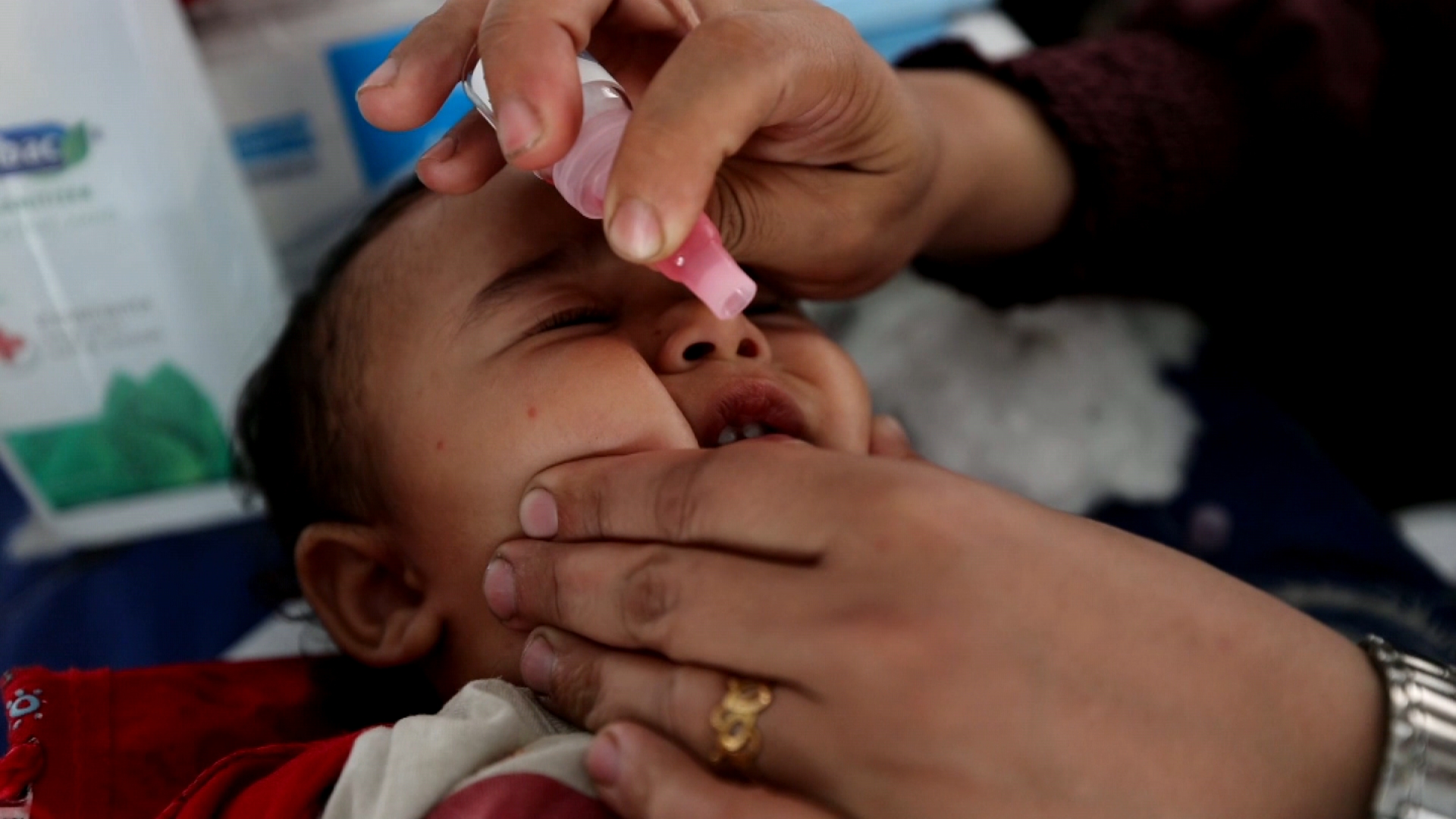
6. Close up, child receiving dose of polio vaccine
7. Wide shot, healthcare workers enter community center
8. Med shot, healthcare workers enter community center
9. Med shot, child receiving dose of polio vaccine
10. Med shot, aregivers and children at vaccination event
11. Close up, child receiving dose of polio vaccine
FILE - 18 MARCH 2025, DEH PARA VILLAGE, KHASH DISTRICT, BADAKHSHAN PROVINCE, AFGHANISTAN
12. Med shot, Payenda Atayee, mobile outreach vaccinator opening cold storage. Payenda has worked as an outreach vaccinator for 4 years based out of Shaheed Mosleh Basic Health Center. As just one of 1,500 mobile outreach vaccinators across Afghanistan, he is helping close the gap among zero-dose children - those who have never received a vaccine.
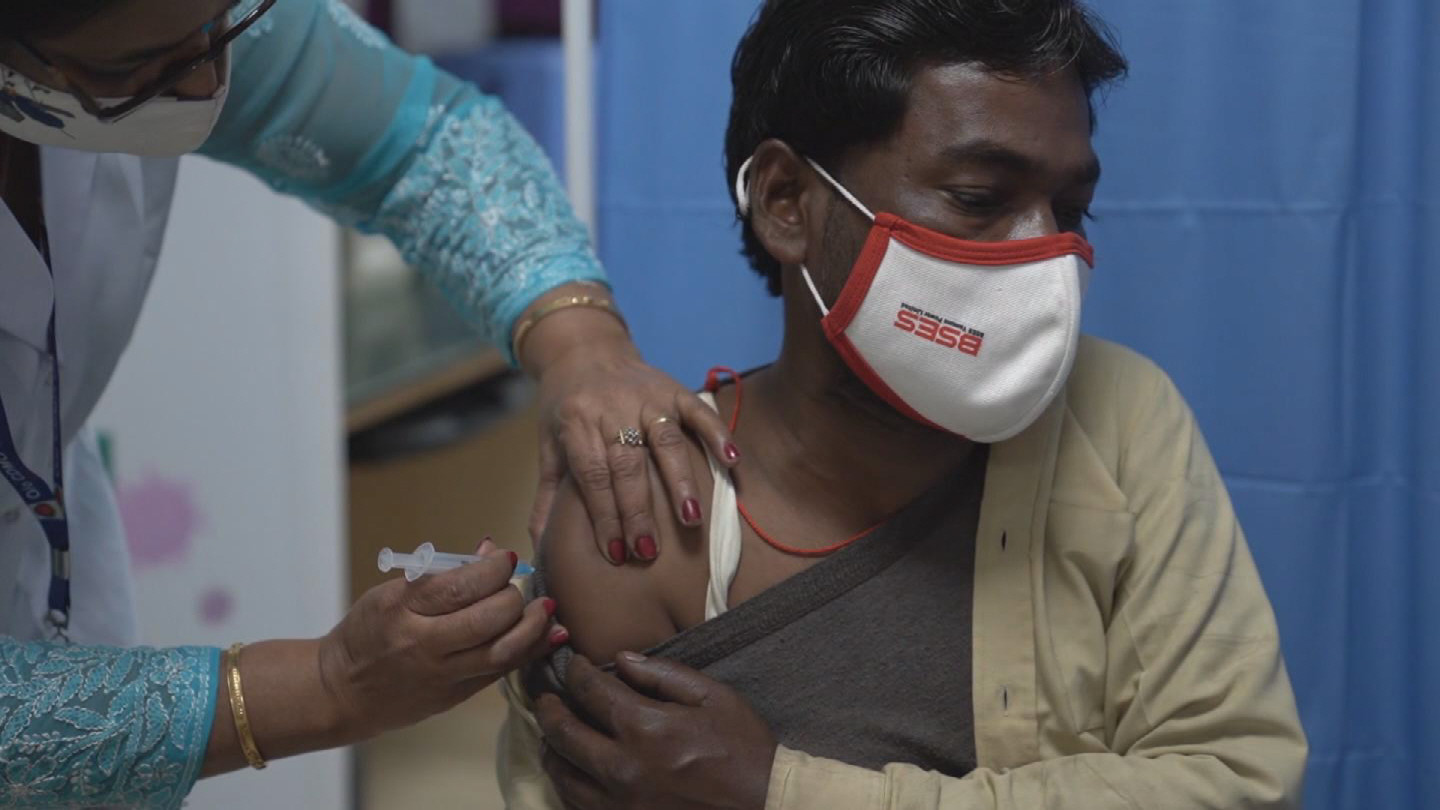
13. Med shot, Payenda loading mobile vaccine storage box
14. Med shot, Payenda loading mobile vaccine storage box
15. Med shot, children are vaccinated at the local mosque
16. Med shot, children are vaccinated at the local mosque
17. Wide shot, children are vaccinated at the local mosque
FILE - 5 AUGUST 2025, ISLAM QALA, AFGHANISTAN NEAR IRAN/AFGHANISTAN BORDER
18. Med shot, child receiving vaccine at Islam Qala Reception Center for refugees, asylum-seekers and returning Afghan nationals.
FILE - 22 FEBRUARY 2025, GAZA, STATE OF PALESTINE
19. Med shot, social mobilizers in the central Gaza Strip are working to raise community awareness about the third phase of the polio vaccination campaign.
20. Med shot, social mobilizers in the central Gaza Strip are working to raise community awareness about the third phase of the polio vaccination campaign.
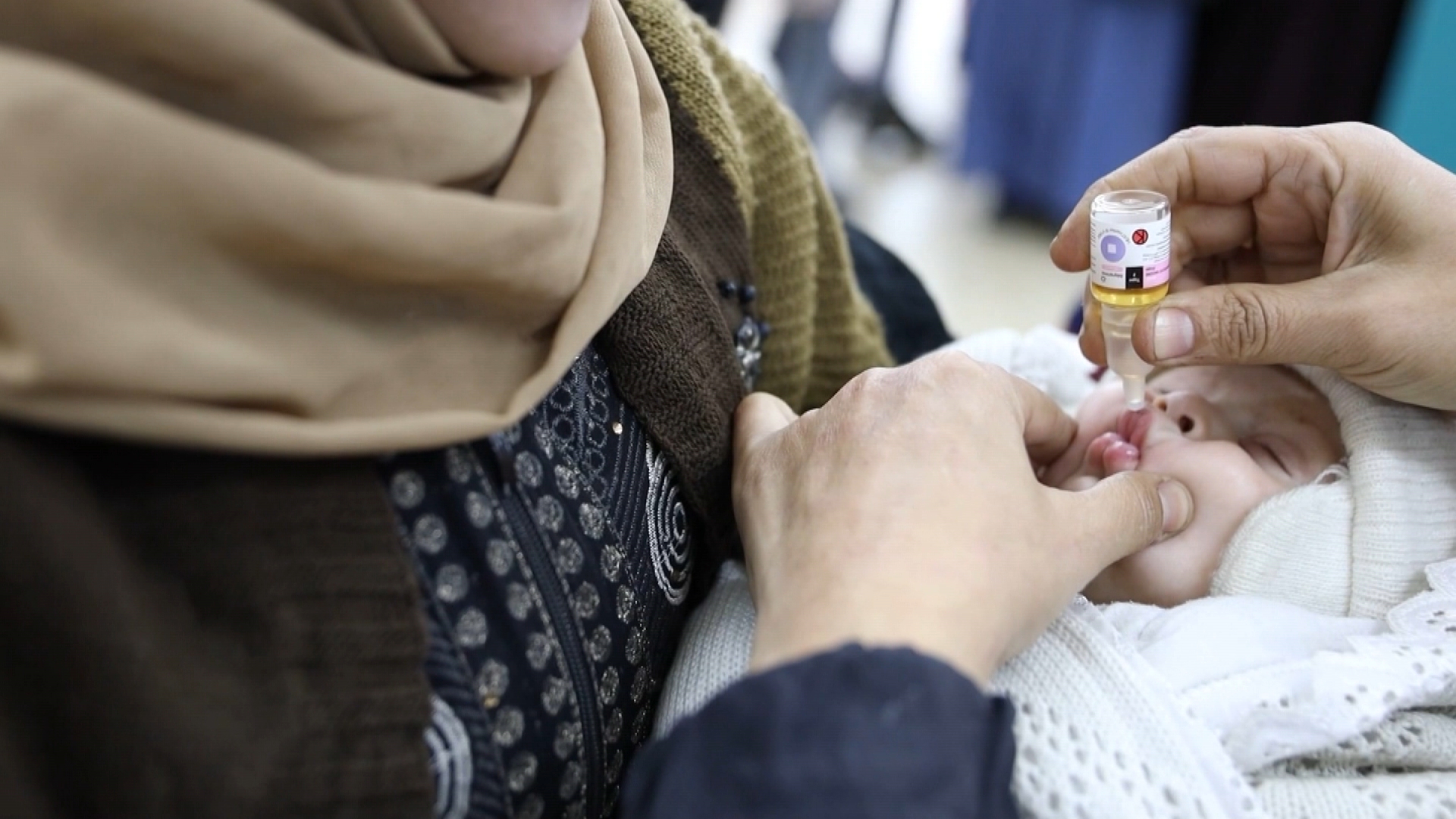
21. Close up, child receiving vaccine dose
22. Close up, child receiving vaccine dose.
23. Med shot, healthcare worker marks a children hand with a black marker to avoid duplicate vaccinations
24. Med shot, child receiving vaccine dose.
FILE - 26,27 DECEMBER 2020, KHAGRACHARI HILL TRACTS, BANGLADESH
25. Med shot, parents along with children queue outside the vaccination centre
26. Med shot, health workers vaccinate a child
27. Close up, health worker injects a child with syringe
FILE - 2024, Cameroon
28. Med shot, couple waits for their daughter to receive the malaria vaccine in Soa, Cameroon
FILE – 2023, KISUMU COUNTY, KENYA
29. Med shot, health worker registers a child for malaria vaccination.
30. Close up, Malaria vaccine vials stored inside cold storage.
31. Close up, health worker holds two vials of malaria vaccine
32. Close up, mother holds her child after vaccination
The Big Catch-Up (BCU), a historic multi-year, multi-country effort to address vaccination declines driven largely by the COVID-19 pandemic, has reached an estimated 18.3 million children aged 1 to 5 across 36 countries with more than 100 million doses of life-saving vaccines, helping to narrow critical immunity gaps, announced Gavi, the Vaccine Alliance (Gavi), WHO, and UNICEF at the start of World Immunization Week.
Of the 18.3 million children reached between 2023 and 2025, an estimated 12.3 million were “zero-dose children” who had not yet received a vaccine and 15 million had never received a measles vaccine. BCU also provided 23 million doses of inactivated polio vaccine (IPV) to un- and under-vaccinated children, an essential intervention to reach polio eradication. Programme implementation concluded on 31 March 2026. Although final data is still being compiled, the global initiative is forecasted to be on track to meet its target of reaching at least 21 million un- and under-immunized children.
However, agencies warn that while catch-up vaccination is an important strategy for closing immunization gaps, expanding the reach of routine immunization programmes remains the most effective and sustainable way to protect children and prevent outbreaks of vaccine-preventable diseases.
Addressing the vaccine equity gap
Beyond pandemic recovery, the BCU initiative focused on closing the vaccine equity gap. Millions of children every year miss the essential vaccinations they should receive before the age of one. Most of them live in fragile, conflict-affected, or underserved communities and are never caught up as they grow older.
The 36 participating BCU countries across Africa and Asia currently account for 60 percent of all zero-dose worldwide. Pandemic-related immunization programme disruptions exacerbated this issue, and, in these countries, added millions more zero-dose children to those who already chronically miss out. To address this issue, the Big Catch-Up looked beyond infant immunization, for the first-time ever systematically leveraging routine immunization systems to make deep inroads into the accumulated global cohort of older children between the ages of 1 to 5 – “older” because they should have received critical routine vaccines before the age of 1 – who remain vulnerable due to missed vaccinations.
BCU catalyzed long-lasting systems to identify, screen, vaccinate and monitor coverage rates in these older children – including updates to policies on age eligibility. Countries also oriented and trained health workers to identify, screen and vaccinate missed children as part of routine care and engaged with communities and civil society to support catch-up efforts. By expanding the reach of immunization to millions of previously missed children and their communities, and investing in systemic improvements, the BCU drive has made it easier for the countries to ensure these populations and others like them continue to receive essential health and immunization services in the future.
Among the participating countries, 12 countries (Burkina Faso, Democratic People’s Republic of Korea, Ethiopia, Kenya, Madagascar, Mauritania, Niger, Pakistan, Somalia, Togo, United Republic of Tanzania, and Zambia) reported reaching more than 60% of all zero-dose children under the age of 5 who had previously missed DTP1. In Ethiopia, more than 2.5 million previously zero-dose children received DTP1. The country also delivered nearly 5 million doses of IPV and more than 4 million doses of measles vaccine, among other key vaccines, to un- and under-vaccinated children. Countries outside this group also reached large numbers of children. In Nigeria, for example, 2 million previously zero-dose children were reached with DTP1, and 3.4 million doses of IPV were administered alongside millions of doses of other vaccines.
While these 36 countries received Gavi funding and technical assistance from WHO and UNICEF through BCU, many other countries also implemented activities during this period to accelerate efforts to catch-up missed children and recover immunization services following pandemic-related backsliding.
“As the largest ever international effort to reach missed children with life-saving vaccines, the Big Catch-Up shows what is possible when governments, partners and communities work together to protect the most vulnerable in society,” said Dr Sania Nishtar, CEO of Gavi, the Vaccine Alliance. “Thanks to this accomplishment, not only are millions of children now protected from preventable diseases but so are their communities, for generations to come.”
"By protecting children who missed out on vaccinations because of disruptions to health services caused by COVID-19, the Big Catch-up has helped to undo one of the pandemic's major negative consequences," said Dr Tedros Adhanom Ghebreyesus, Director-General of the World Health Organization. “The success of the Big Catch-up is a testament to health workers and national immunization programmes, which are now better equipped to find and vaccinate children missed by routine services."
"Vaccinations save lives,” said UNICEF Executive Director Catherine Russell. “This initiative shows what's possible when countries have the resources, tools, and political will to reach children with lifesaving vaccines. We've caught up with some of the children who missed routine vaccinations during the pandemic – but many more remain out of reach. The gains made through the Big Catch-Up must be sustained through investment in strong, reliable immunization systems, especially at a time where measles is resurging."
Looking at the challenges ahead
Through the Big Catch-Up, for the first time ever, countries and global partners successfully reached 12.3 million “older” zero dose children between the ages of 1 to 5. However, in 2024, an estimated 14.3 million infants under the age of one globally failed to receive a single vaccine through routine immunization programmes. Despite BCU demonstrating progress is possible with leadership and targeted investment and support, lowering this annual number of infants who miss out will require building systems that consistently reach the hardest to reach communities – against a backdrop of rising birth cohorts, conflict and displacement, funding cuts, and strained health systems.
The consequences of chronic gaps in routine immunization are plain to see. Measles outbreaks, for example, are rising in every region with around 11 million cases in 2024, and the number of countries facing large outbreaks has almost tripled since 2021. This surge is driven by persistent gaps in measles vaccination through routine immunization programmes, compounded by declining vaccine confidence in some previously high-coverage communities.
Large-scale catch-up efforts are resource intensive and should serve only as a gap-filling measure that is complementary to routine immunization. Timely vaccination according to national immunization schedules provides optimal protection and continues to be the most sustainable way to safeguard children and communities.
For every generation, vaccines work
WHO, UNICEF, and Gavi, along with countries and communities, are marking World Immunization Week (24-30 April 2026) with a joint campaign, "For every generation, vaccines work," calling on countries to sustain and expand vaccination coverage at every age. At the midpoint of the Immunization Agenda 2030 (IA2030), and central to Gavi's 2026–2030 strategy (Gavi 6.0), the priority remains the same: reaching zero-dose children and advancing equity in the hardest-to-reach communities, particularly in countries grappling with conflict, instability, or fragile health systems. Maintaining that momentum will require expanding long-term domestic investments in immunization programmes and reliable commitments from partners and donors.
Download
There is no media available to download.