Media Home
 UN Web TV
 UN Audiovisual Library
 UN Photo
GAZA / WATER CRISIS DISPLACED POPULATION
STORY: GAZA / WATER CRISIS DISPLACED POPULATION
TRT: 05:28
SOURCE: UNIFEED
RESTRICTIONS: NONE
LANGUAGES: NATS / ARABIC
DATELINE: 13 JULY 2026, GAZA CITY
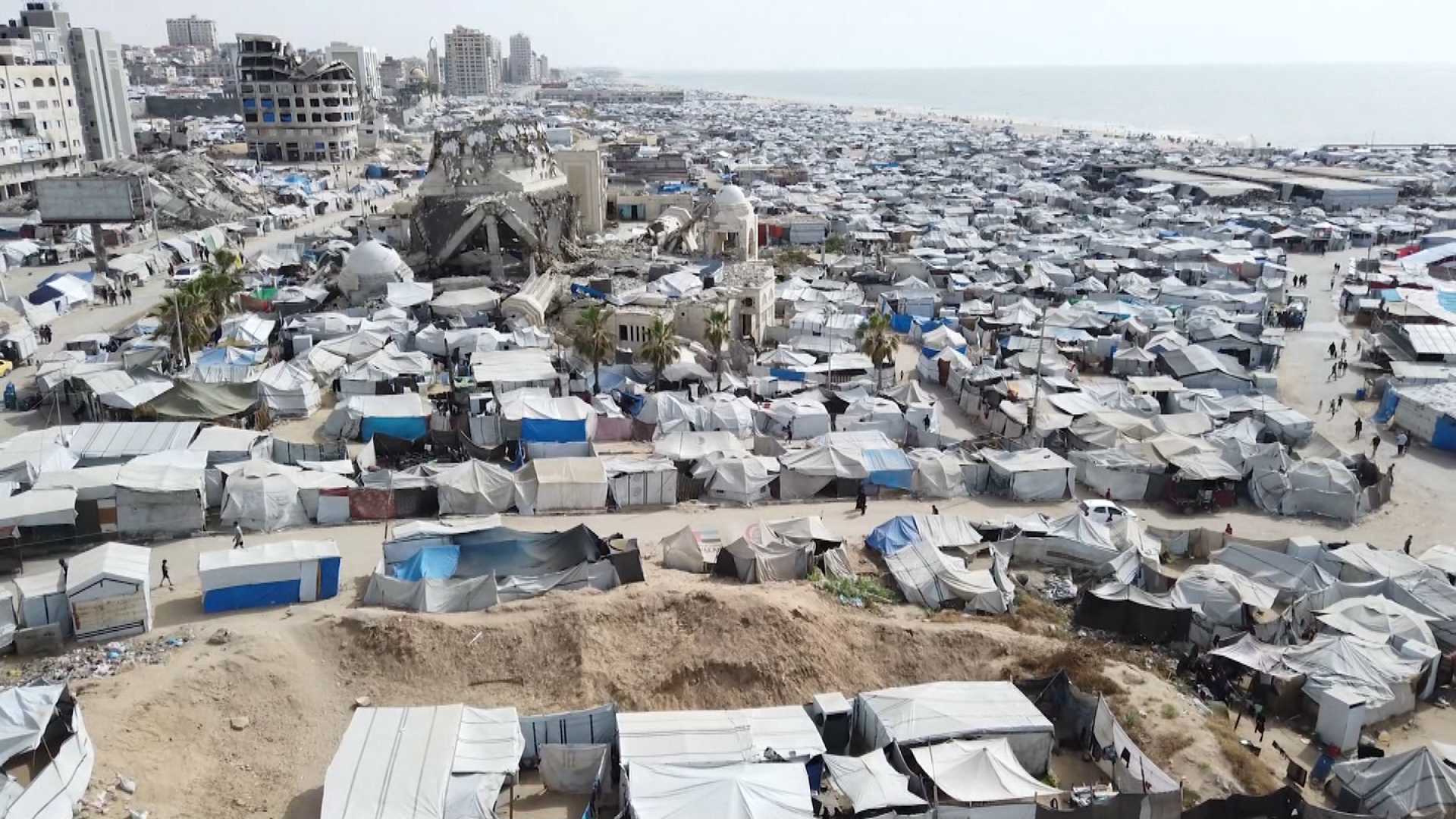
1.Various shots, densely packed displacement tents along the coastal strip west of Gaza City
2. Various shots, inside narrow alleys between the crowded displacement tents along the coastal strip west of Gaza City
3. Various shots, young girl playing near her family's torn tent by the seashore west of Gaza City
4. Various shots showing children, young men, and women forming a queue using different containers as placeholders while waiting for the truck delivering potable water.
5. Various shots of displaced resident Marwat Dawas standing beside various plastic containers she has placed in line while waiting for the potable water truck, speaking about the worn-out containers she uses to collect water.
6. SOUNDBITE (Arabic) Marwat Dawas, displaced person:
"We are suffering here in an extraordinary way because of the lack of desalinated drinking water. In fact, desalinated water is the only source available in this area. Seawater cannot be used because it is not suitable for any human use. We face a major struggle to obtain desalinated water, forcing us to carry water bags and containers. I live at the far end of the camp, and it is difficult to come here carrying these containers. The water truck does not always arrive, and sometimes desalinated water is simply unavailable. At times I don't even know whether I will make it to the queue in time to fill my containers. We do not receive desalinated water every day. Even the containers we use have become part of the hardship—I find myself choosing between carrying a water bag, a jerrycan, or a plastic bucket. The situation is extremely difficult, and we are living through immense suffering."
7. Various shots, desalinated water truck arriving at a displacement camp west of Gaza City, sounding its horn to alert residents
8. Various shots, displaced children and young men running between the tents carrying plastic containers to collect drinking water.
9. Various shots, displaced resident Moayen Maarouf running toward the water truck carrying empty plastic jerrycans
10. Various shots, displaced children, women, and young men gathering around the water truck
11. Various shots, Moayen Maarouf holding the water hose and filling his plastic jerrycans with desalinated water
12. Various shots, displaced children, women, and young men surrounding the water truck as they attempt to collect desalinated water
13. Various shots, images showing difficulty of accessing safe drinking water and the intense crowding around the truck, highlighting what has become a daily struggle for displaced people, particularly women and children
14. Various shots, children preparing to carry filled water jerrycans back to their tents
15. Various shots, water truck leaving the displacement camp after emptying its load
16.Various shots, children carrying filled drinking-water jerrycans back toward their tents
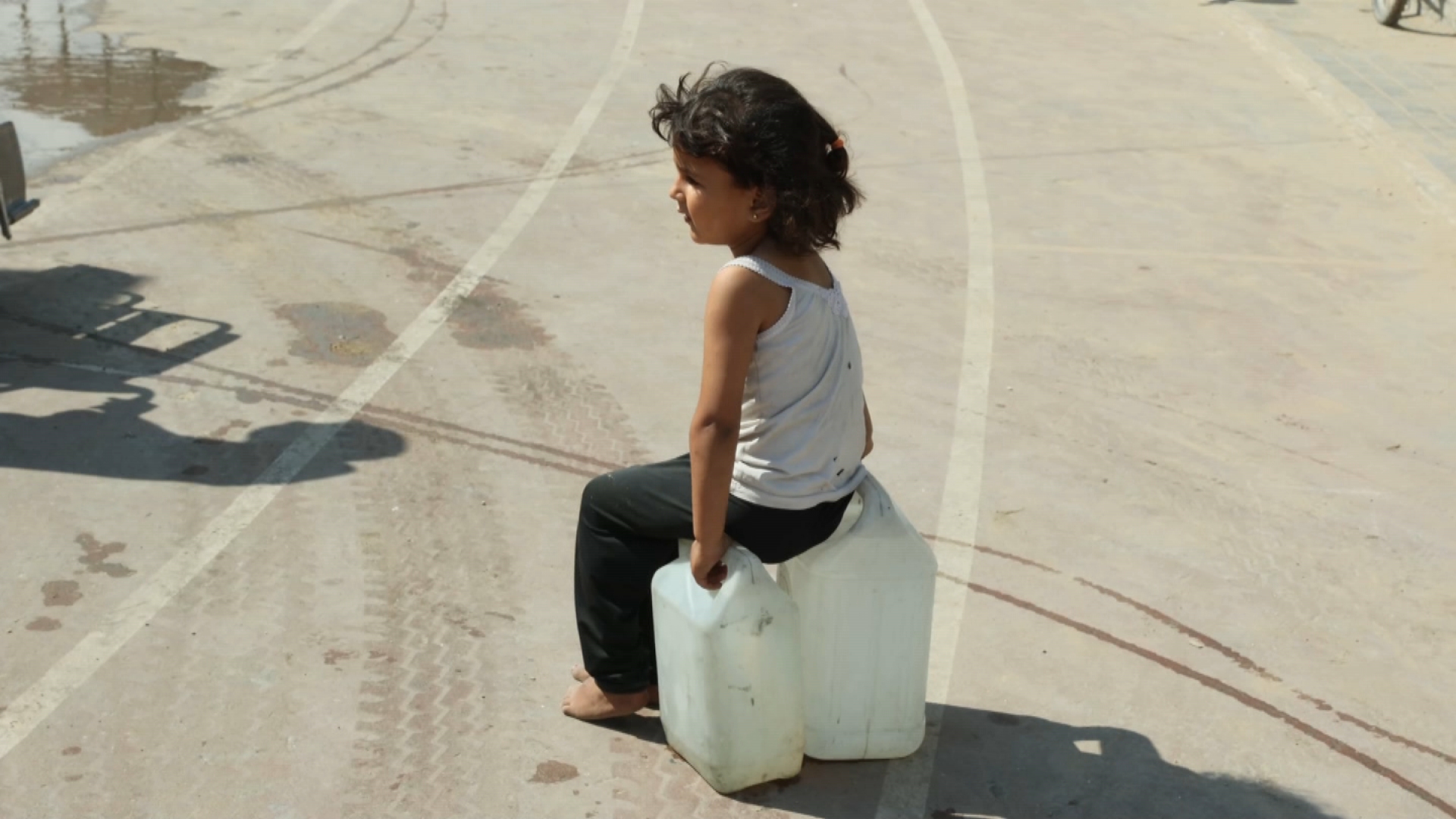
17. Various shots of a young girl sitting beside filled plastic jerrycans, unable to carry them
18. SOUNDBITE (Arabic) Moayen Maarouf:
"This is our daily routine. If the water truck comes and we don't hear its horn, we may miss the chance to collect water. Then we cannot drink or even wash ourselves. This is our life."
19. Various shots, Moayen Maarouf carrying filled plastic jerrycans into his tent.
20. Exterior shot, tent where Moayen Maarouf lives as he walks out.
At a displacement camp along the coastal strip west of Gaza City, each day begins with residents listening to the sound of a water truck's horn. Its arrival has become the signal for a daily race to secure enough safe drinking water, as Gaza's water crisis continues to deepen following widespread damage to water infrastructure and the growing reliance of hundreds of thousands of displaced people on water delivered by mobile tankers.
Between rows of tightly packed tents stretching along the shoreline, children and women move through the camp carrying jerrycans, water bags, and plastic containers, while others wait in long queues for the truck, which residents say does not arrive on a regular schedule.
Marwat Dawas, displaced from the northern Gaza town of Beit Lahia and now living in a camp near the beach west of Gaza City, says obtaining desalinated water has become part of the daily struggle.
"The water truck does not always come, and sometimes I don't know whether I will be able to collect water. We carry water bags and jerrycans and walk long distances inside the camp, while desalinated water is not available every day," she says.
When the truck finally arrives, dozens of children, women, and young men rush toward it carrying empty containers in an effort to secure their share before the supply runs out.
Moayen Maarouf, another displaced resident, says daily life now revolves around the arrival of the water truck.
"This is our daily routine. If the water truck arrives and we do not hear its horn, we may miss the chance to collect water. Then we cannot drink or wash ourselves. This is our life," he says.
According to the United Nations Children's Fund (UNICEF), around 1.1 million children in the Gaza Strip face daily uncertainty over access to water. The agency says 82% of households are experiencing water insecurity, while up to 70% of the population is unable to collect the recommended minimum of six litres of water per person per day for drinking and cooking.
UNICEF says water trucking remains a critical lifeline for hundreds of thousands of people despite operational challenges and continued pressure on Gaza's water systems.
For most displaced families across Gaza, mobile water trucks have become the primary source of drinking water. As overcrowded displacement camps and soaring summer temperatures place increasing strain on already limited water supplies, securing just a few litres of clean water has become one of the most difficult and exhausting parts of daily life for families living in tents.
Download
There is no media available to download.
Related Content
UN / GAZA UPDATE
8531st Security Council Meeting: Situation Concerning Iraq