Media Home
 UN Web TV
 UN Audiovisual Library
 UN Photo
FAO / STATE OF FOOD AND NUTRITION IN THE WORLD
STORY: FAO / THE STATE OF FOOD SECURITY AND NUTRITION IN THE WORLD 2026
TRT: 4:46
SOURCE: FAO
RESTRICTIONS: PLEASE CREDIT FAO ON SCREEN
LANGUAGE: ENGLISH / NATS
DATELINE: 13 JULY 2026, ROME, ITALY / ARCHIVE
DECEMBER 2025, DEIR AL-BALAH, GAZA STRIP
1. Wide shots, herder Tha’ir Yahya Eid Abu Sharif with his goats.
2. Close up, goat being feed.
21-22 OCTOBER 2024, MIFTA EL KHEIR, MAURITANIA
3. Various shorts, a group of farmers working in a community farm.
17 JULY 2025, SAN JUAN NONUALCO, LA PAZ, EL SALVADOR
4. Drone shot, Farmer working in maize field.
13 JULY 2026, ROME, ITALY
5. SOUNDBITE (English) Máximo Torero, Chief Economist, FAO:
“Global hunger has declined for a third consecutive year in 2025, demonstrating that progress is possible. However, the improvements remain fragile and unevenly distributed and insufficient to achieve the Sustainable Development Goals by 2030. So clearly there is a need to accelerate and to improve even more, as fast as possible.”
1-5 OCTOBER 2023, KAPOETA SOUTH COUNTY, SOUTH SUDAN
6. Close up, Michael Lokuru Kuri, pastoralist, watching dry maize.
7. Close up, Lokuru’s hands holding dry maize.
12 MARCH 2026, ABENGOUROU, CÔTE D’IVOIRE
8. Various shots, female farmers cooking a cassava-based dish.
13 JULY 2026, ROME, ITALY
9. SOUNDBITE (English) Máximo Torero, Chief Economist, FAO:
“It's the first time that the African continent has surpassed Asia in terms of number of people in hunger. Although it is important to mention that Africa previously rising trend is beginning to stabilize, with the share of its population facing hunger decreasing from 20.3 percent in 2024 to 20 percent in 2025. The continent now has the highest number of hungry people in absolute terms, but there is a slight improvement, which we need to keep accelerating.”
17-20 JULY 2022, VIGO, SPAIN
10.Wide shot, cargo ship navigating
11. Med shot, ship entering in the port
2023, GUINEA BISSAU
12. Tilt up, bags of urea fertilizer
13. Close up, FAO logo
21-22 OCTOBER 2024, MIFTA EL KHEIR, MAURITANIA
14. Close-up, FAO Officer training a farmer
16 SEPTEMBER 2024, COTONOU, BENIN
15. Wide shot, tractor ploughing a corn field
16. Close up, farmer seeding a corn field
13 JULY 2026, ROME, ITALY
17. SOUNDBITE (English) Máximo Torero, Chief Economist, FAO:
“It [The Strait of Hormuz crisis] will have an effect on production, it will have an effect on yields, and it will have a future effect on hunger. So depending on the length of the impact of the crisis on food inflation, which is driven by higher energy and fertilizer prices, we simulate that between 510 and 520 million people may still be facing hunger in 2030, with the global number of undernourished people expected to decrease by 20 percent. However, the potential disruptors, including the effects of weather extremes such as El Niño, which still we don't know, but they will be impacting in 2026 and 2027, are not part of this projection.”
2014, COOK ISLAND
18. Various shots, obese people in a street market
13 JULY 2026, ROME, ITALY
19. SOUNDBITE (English) Máximo Torero, Chief Economist, FAO:
“This steady increase and acceleration of not only obesity but also overweight is something that we need to tackle. The SOFI of this year has looked at the cost of healthy diets as one of the major reasons that explains the significant increase of adult obesity and overweight. Healthy diets today remain out of reach for billions of people.”
12 MARCH 2026, ABENGOUROU, CÔTE D’IVOIRE
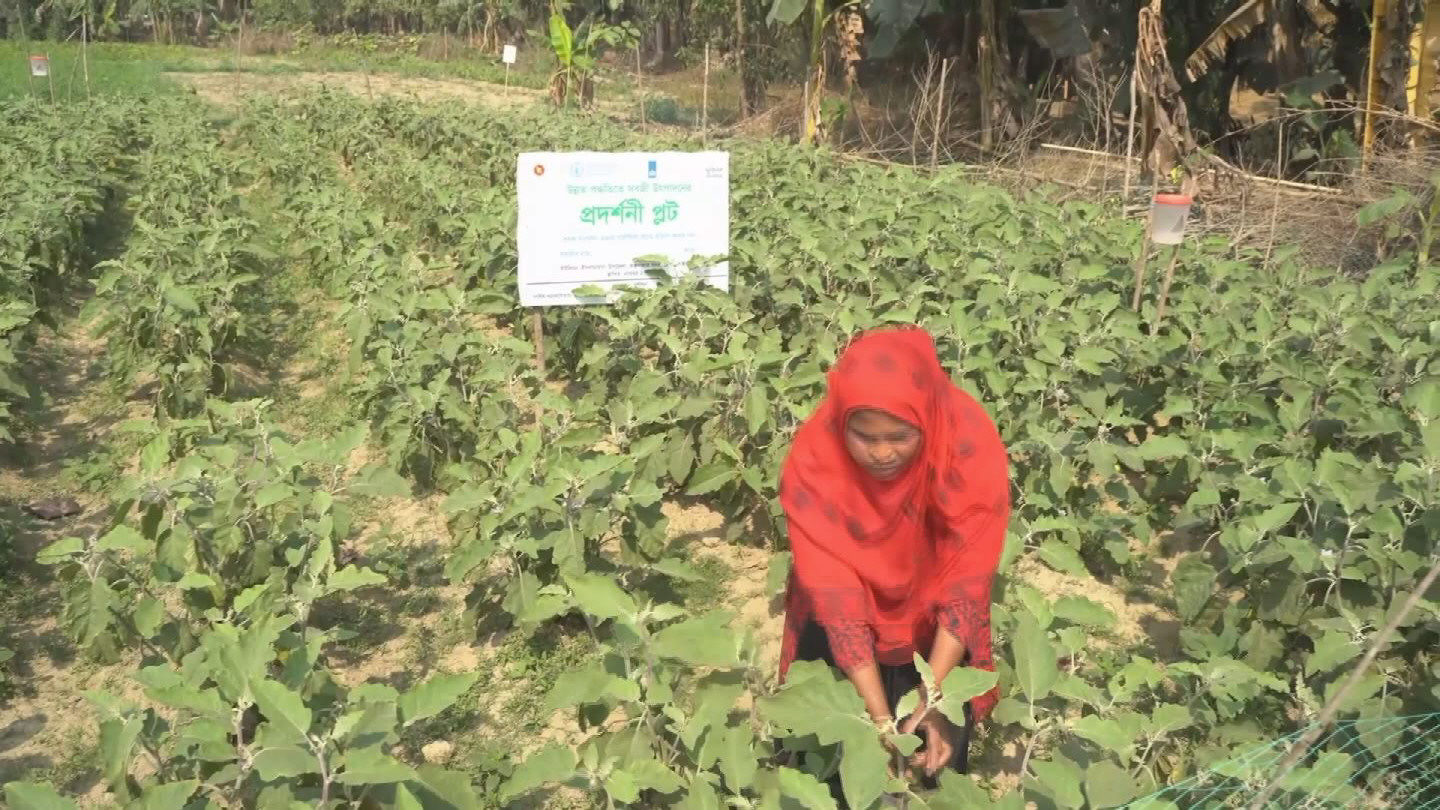
20. Drone shots, female farmers working on a field
23-25 PRIL 2025, LA GERIA, LANZAROTE, SPAIN
21. Various shots, legumes and strawberry production on black volcanic soil
13 JULY 2026, ROME, ITALY
22. SOUNDBITE (English) Máximo Torero, Chief Economist, FAO:
“There are two mechanisms that we need to look at, or two pillars. One is what is the needed infrastructure, so that we can accelerate increases in production and productivity, reduction of food losses of high-value commodities, which are required for the structure of a healthy diet. This means better storage facilities, better logistics, how we can have cooling facilities that will allow us to have a better supply of high-value commodities. The second pillar is about policies. And here the SOFI [report] simulates that subsidies in the agrifood system to starchy foods not necessarily will reduce the cost of healthy diets. On the contrary, when we subsidize high-value commodities and we support high-value commodities, the returns are a reduction of the cost of healthy diets. So the combination of both policies, one on the investment on hard infrastructure, which is needed both at the level of the value chain, but also at the level of market access through roads and penetration roads, and having policies that are really targeting the reduction [of prices] of high-value commodities, this means fruits and vegetables in the world, will allow us to be able to achieve a reduction of the cost of healthy diets. And today, this is essential not only for undernutrition, but it's also essential for the problem we are facing in overweight and obesity in the world.”
2019, ARARAT PROVINCE, ARMENIA
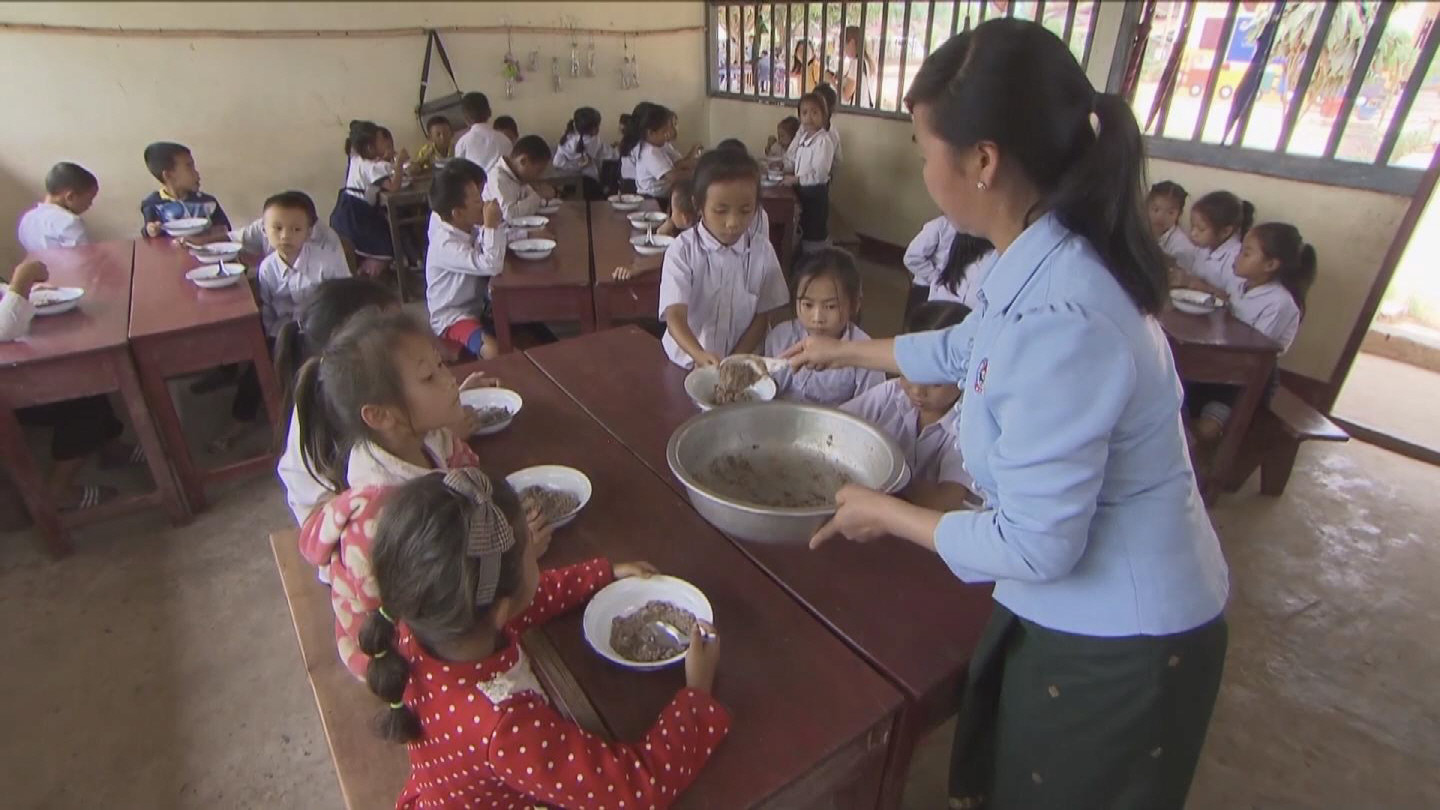
23. Wide shot, children eating lunch at the school canteen
Global hunger declined for a third consecutive year in 2025, demonstrating that progress is possible, but improvements remain fragile and unevenly distributed, according to a new United Nations report.
The State of Food Security and Nutrition in the World (SOFI 2026) report, jointly published by five United Nations specialized agencies, indicates that an estimated 7.8 percent of the global population, or about 645 million people, experienced hunger in 2025, down from 8.1 percent in 2024 and 8.6 percent in 2022.
Despite global progress, improvements remain uneven across regions, said Máximo Torero, Chief Economist of the Food and Agriculture Organization of the United Nations (FAO), commenting on the outcomes of the report.
SOUNDBITE (English) Máximo Torero, Chief Economist, FAO:
“Global hunger has declined for a third consecutive year in 2025, demonstrating that progress is possible. However, the improvements remain fragile and unevenly distributed and insufficient to achieve the Sustainable Development Goals by 2030. So clearly there is a need to accelerate and to improve even more, as fast as possible.”
Asia, together with Latin America and the Caribbean, has recorded steady improvements in recent years. In contrast, Africa now has the highest number of hungry people in absolute terms. The continent is home to approximately 309 million hungry people, compared with 292 million in Asia. Still, the report shows that Africa’s previously rising trend in hunger data is beginning to stabilize, said Máximo Torero.
SOUNDBITE (English) Máximo Torero, Chief Economist, FAO:
“It's the first time that the African continent has surpassed Asia in terms of number of people in hunger. Although it is important to mention that Africa previously rising trend is beginning to stabilize, with the share of its population facing hunger decreasing from 20.3 percent in 2024 to 20 percent in 2025. The continent now has the highest number of hungry people in absolute terms, but there is a slight improvement, which we need to keep accelerating.”
In 2025, an estimated 25.8 percent of the global population (around 2.1 billion people) experienced moderate or severe food insecurity, down from 27.1 percent in 2024 and 28.7 percent in 2020.
Regional disparities remain stark. More than half of Africa’s population (56.6 percent) faced moderate or severe food insecurity in 2025, compared to 20.3 percent in Asia, 22.9 percent in Latin America and the Caribbean, and 8.7 percent in Northern America and Europe. Food insecurity also continues to be more prevalent in rural areas than in peri-urban and urban areas. Women remain disproportionately affected, although the gender gap narrowed slightly in 2025.
The report also offers updated hunger projections for the next five years in light of the current crisis in the Strait of Hormuz, which is expected to have an impact on food insecurity due to higher energy and fertilizer prices. By 2030, between 510 and 520 million people may still be facing hunger, according to the report.
However, this projection may still be affected by “potential disruptors” such as the current El Niño, FAO’s Chief Economist explained.
SOUNDBITE (English) Máximo Torero, Chief Economist, FAO:
“It [The Strait of Hormuz crisis] will have an effect on production, it will have an effect on yields, and it will have a future effect on hunger. So depending on the length of the impact of the crisis on food inflation, which is driven by higher energy and fertilizer prices, we simulate that between 510 and 520 million people may still be facing hunger in 2030, with the global number of undernourished people expected to decrease by 20 percent. However, the potential disruptors, including the effects of weather extremes such as El Niño, which still we don't know, but they will be impacting in 2026 and 2027, are not part of this projection.”
The report’s authors — FAO, the International Fund for Agricultural Development (IFAD), the United Nations Children’s Fund (UNICEF), the UN World Food Programme (WFP), and the World Health Organization (WHO) — warn that the 2026 Middle East conflict, along with weather extremes and the reductions in official development assistance and humanitarian funding, are threatening to undermine the progress made to end global hunger.
The report highlights that global progress on maternal and child nutrition also remains insufficient to meet international commitments, including the 2030 nutrition targets.
Indicators such as child stunting, wasting, overweight, low birthweight and exclusive breastfeeding are improving only marginally and too slowly to meet the targets. At the same time, anaemia among women aged 15 to 49 years is worsening.
Progress again varies significantly across regions. The prevalence of child stunting is declining in Africa and is on track to meet the 2030 target in Asia, while exclusive breastfeeding rates are improving across all regions where data is available. However, nearly all regions are experiencing widening gaps in addressing anaemia among women, and child overweight is increasing rapidly in Oceania.
The report also provides new estimates of the prevalence of obesity in adults in the world. It shows a steady increase from 12.1 percent in 2012 to 16.2 percent in 2024, contrary to the target of halting the rise in obesity by 2025. Additionally, 5.5 percent of children under five years of age were overweight.
Torero said that the “steady increase and acceleration” of obesity and overweight needs to be tackled. He explained that one of the primary drivers of this trend is the cost of a healthy diet, which remains unaffordable for billions of people.
SOUNDBITE (English) Máximo Torero, Chief Economist, FAO:
“This steady increase and acceleration of not only obesity but also overweight is something that we need to tackle. The SOFI of this year has looked at the cost of healthy diets as one of the major reasons that explains the significant increase of adult obesity and overweight. Healthy diets today remain out of reach for billions of people.”
The report takes a closer look at the cost of a healthy diet, a concept that refers to the average minimum expenditure required to obtain locally available foods that meet energy and most nutrient requirements. According to FAO and WHO, a healthy diet is one that is adequate, balanced, diverse, and moderate.
The report underscores that costs remain a major constraint to achieving SDG 2 (Zero Hunger), although lowering such costs alone will not be sufficient to improve dietary quality and nutrition outcomes.
In 2025, the average global cost of a healthy diet rose to 4.28 purchasing power parity (PPP) dollars per person per day, up from 3.44 PPP dollars in 2021 and 2.94 PPP dollars in 2017, with the highest levels recorded in Latin America and the Caribbean at 4.91 PPP dollars. At the same time, the number of people unable to afford a healthy diet has declined from 2.97 billion (37.4 percent of the global population) in 2021 to 2.69 billion (32.7 percent) in 2025.
FAO’s Chief Economist said that two sets of interventions or “pillars” are needed to “achieve a reduction of the cost of healthy diets,” one at the infrastructure side and a second one at policy level.
SOUNDBITE (English) Máximo Torero, Chief Economist, FAO:
“There are two mechanisms that we need to look at, or two pillars. One is what is the needed infrastructure, so that we can accelerate increases in production and productivity, reduction of food losses of high-value commodities, which are required for the structure of a healthy diet. This means better storage facilities, better logistics, how we can have cooling facilities that will allow us to have a better supply of high-value commodities. The second pillar is about policies. And here the SOFI [report] simulates that subsidies in the agrifood system to starchy foods not necessarily will reduce the cost of healthy diets. On the contrary, when we subsidize high-value commodities and we support high-value commodities, the returns are a reduction of the cost of healthy diets. So the combination of both policies, one on the investment on hard infrastructure, which is needed both at the level of the value chain, but also at the level of market access through roads and penetration roads, and having policies that are really targeting the reduction [of prices] of high-value commodities, this means fruits and vegetables in the world, will allow us to be able to achieve a reduction of the cost of healthy diets. And today, this is essential not only for undernutrition, but it's also essential for the problem we are facing in overweight and obesity in the world.”
Healthy diet costs vary widely across regions due to structural differences in agrifood systems. Animal source foods, fruits and vegetables account for the largest share of costs, while starchy staples contribute relatively little. Animal source foods are the largest contributor to the cost of a healthy diet in Africa, whereas vegetables represent the largest share in Latin America and the Caribbean.
Download
There is no media available to download.