Media Home
 UN Web TV
 UN Audiovisual Library
 UN Photo
OCHA / WHD UKRAINE FLETCHER VISIT
STORY: OCHA / WHD UKRAINE FLETCHER VISIT
TRT: 15:25
SOURCE: OCHA
RESTRICTIONS: PLEASE CREDIT OCHA ON SCREEN
LANGUAGES: ENGLISH / NATS
DATELINE: 14-18 AUGUST 2026, KHERSON CITY, UKRAINE
1. Wide shot, in Mykolaiv, UN-branded vehicles as UN personnel attach UN flags to the vehicles and put on personal protective equipment (PPE)
2. Wide shot, M14 highway leading towards Kherson
3. Wide shot, anti-drone netting covering road to Kherson
4. Wide shot, UN vehicles enter the Kherson Region
5. SOUNDBITE (English) Tom Fletcher, Under-Secretary-General for Humanitarian Affairs and Emergency Relief Coordinator:
“So this is the road from Mykolaiv to Kherson. Ukrainians call it the ‘Road of Death’ because of the intense drone activity and the constant threat of different types of drone attacks. It is just one more example of this dystopian war — where cheap and easily available kamikaze drones have become a means to kill, where accountability is lagging behind, and where technology is outpacing humanity.”
6. Wide shot, UN vehicles enter Kherson City
7. Wide shot, a building destroyed by a strike
8. Wide shot, Tom Fletcher visiting Kherson Regional Hospital
9. Wide shot, Svyatoslav Lynnykov, Travma specialist, WHO Ukraine showing USG around Kherson regional hospital
10. SOUNDBITE (English) Svyatoslav Lynnykov, Travma specialist, WHO Ukraine:
“You can see where one of the strikes was. This is the regional hospital. This is the main hospital which provides critical care. Medical care for all liberated parts of Kerson region.”
11. Wide shot, Kherson Regional Hospital, USG meeting Yurii, the fruit vendor victim of a drone attack
12. Various shots, the hospital
13. SOUNDBIE (Ukrainian) Yurii Hozenko, fruit vendor:
“That was it. I shouted to my wife, "Run!” [I thought] I would die, but it started somehow cutting us off. Why it turned out like this, and why specifically me — I have no idea.— I'm always up for I[going back to work] Because people, Ukrainians — are hard-working people. I'd want to, of course I'd want to.”
14. Various shots, the hospital
15.Various shots, USG and Yurii
16. Various shots, hall with signs warning against drones
17. SOUNDBITE (Ukrainian) Serhiy Ivanovych, Acting Deputy Chief Medical Officer:
“Before the full-scale war, we were primarily a hospital for planned care. But during this disaster that happened, we switched to emergency care. We treat strokes, heart attacks, and mostly blast injuries. Unfortunately, for Kherson right now, this is a very critical issue. About 70 per cent of our wounded patients have blast injuries from drone attacks, and a smaller portion from artillery shelling.”
18. Various shots, doctor showing the kitchen that was hit two days prior by a drone
19. Various shots, destruction
20. SOUNDBITE (English) Tom Fletcher, Under-Secretary-General for Humanitarian Affairs and Emergency Relief Coordinator:
“We're here at the hospital, a kilometre away from the river that divides Russian and Ukrainian forces. This is one of the most dangerous places right now to be a civilian or a humanitarian. You can see the damage that a 300-dollar drone can do to a kitchen. In this hospital I've been meeting survivors of first-person-view drones — these tiny drones that you can hear buzzing overhead — people who have lost their legs, or who were attacked while selling fruit at a market. You can feel the collective trauma and the collective anxiety of a population living under this constant, constant threat. We are seeing this chilling combination of technological ingenuity and the changing nature of warfare. And on this World Humanitarian Day, we got to send a message out: we have to protect civilians. There has to be accountability. We got to ensure that the rules keep up with these technological developments that are doing such horrific damage to civilians and to humanitarians. I applaud those here — the surgeons, our colleagues from the World Health Organization and the David Nott Foundation, and the humanitarian partners I've been meeting during the course of the day — who go out under immense danger to try to reach the survivors of this war. We need accountability, we need the rules to keep up, and we need an end to this war.”
21. Wide shot, gunfire and UN Delegation seeking shelter
22. Various shots, a drill demonstration of emergency care provided to civilians
23. Wide shot, snacks on the table at the shelter
24. SOUNDBITE (English) Tom Fletcher, Under-Secretary-General for Humanitarian Affairs and Emergency Relief Coordinator:
“Earlier I saw grandmothers and people with disabilities learning not just the basics of first aid, but really sophisticated first aid for high-trauma attacks dealing with enormous blood loss. Because of these first-person-view drones pose such a threat to civilians right now — we’ve just had to move very rapidly ourselves to avoid one. And you can hear from people what it’s like to live with that anxiety, to live with that danger every single day.”
24. Wide shot, the USG meets Vlad Voronov, the Head of the Ukraine Unity Bridge NGO
25. Various shots, drone detectors and Vlad using them
26. SOUNBITE (Ukrainian) Vlad Voronov, the Head of the Ukraine Unity Bridge NGO:
“In general, many volunteers in Kherson have come under attack, and everyone has suffered different injuries.”
27. Wide shot, Vlad Voronov using equipment
28. SOUNBITE (Ukrainian) Vlad Voronov, the Head of the Ukraine Unity Bridge NGO:
“In the most recent drone attack I experienced, I had a fragment lodged in my back, but it was removed and everything is fine now.”
29. Wide shot, Vlad Voronov using equipment
30. SOUNBITE (Ukrainian) Vlad Voronov, the Head of the Ukraine Unity Bridge NGO:
“Usually, the drone detector is triggered 20 to 30 times a day.”
31. Close up, detector
32. SOUNBITE (Ukrainian) Vlad Voronov, the Head of the Ukraine Unity Bridge NGO:
“When it picks up a video signal and we can access the video feed, we look at the image and try to determine where the drone is. Because we are locals, we know the layout of the city and its buildings. If we see the drone crossing the river, for example, we can already understand where it may be heading. We then either speed up or turn towards a safer location and take shelter if possible. If that’s not possible, we keep moving quickly until we reach a safer place.”
33. Med shot, Vlad with drone detector
34. Wide shot, residents and UN delegation at a shelter at a collective site in Kherson
35. Various shots, shouting ‘Drone, drone, drone’ and delegation running inside
36. SOUNDBITE (Ukrainian) Lyuba, a local resident who currently lives at the collective site in Kherson with her family:
“There is shelling here [in Kherson] but its better here. Home is better. You know, home is home.”
37. Wide shot, the USG with Lyuba
38. SOUNDBITE (Ukrainian) Yuri, Lyuba’s husband:
“Opposite our window, there was a nice house, The roof burned down—they’d only just built it recently. That was after the Grad [rocket]shelling.”
39. Various shots, the USG and Lyuba
40. SOUNDBITE (Ukrainian) Sofiia, Lyuba’s daughter-in-law:
“This chat is called “Kherson Air FPV”, where local residents write which areas the drones are flying into, so everyone can be warned about the danger. For example, at the moment People are saying now that there’s drone activity in our neighborhood, Zhytloselyshche. They attach explosives to the drones.
41. Wide shot, Sofiia, Lyuba’s daughter-in-law showing her phone
42. SOUNDBITE (Ukrainian) Sofiia, Lyuba’s daughter-in-law:
“Some of those explosives are really powerful. There are different types of drones. Some are kamikaze drones that fly directly into the target. and it looks for a target to crash into and explode. They can fly straight into people’s rooms. And then there are drones like the Mavic. They carry an explosive, drop it, and then fly back to where they came from. The security situation is very difficult. There are also Molniya, Shahed and Gerbera drones — those are more dangerous.”
43. Wide shot, Raisa, Mangust NGO Project Manager overseeing delivery of food, walking and chatting with a shelter resident and showing USG new facilities and items in the shelter
44. SOUNDBITE (Ukrainian) Raisa, Mangust NGO Project Manager:
“If someone comes to us after their home has been damaged or burned down in an attack, they may arrive without documents, sometimes even without clothes. We have a clothing bank, so we provide them with what they need. We also help restore their documents and register them as internally displaced people so they can receive financial assistance. Many of the people remaining in Kherson are older people who need medical treatment and money for medicines. People stay with us completely free of charge. We help restore pensions and other payments when people have lost their passports, bank cards or other documents — sometimes because everything was destroyed in a fire. The whole complex of support.”
45. Wide shot, Raisa, Mangust NGO Project Manager showing food
46. SOUNDBITE (Ukrainian) Raisa, Mangust NGO Project Manager:
“We are holding on because if everyone leaves the city, who will keep it going? Kherson is a beautiful city, and we love it very much. As long as there are people here, as long as they continue working and the city is alive, we will live in Kherson too. It isn’t easy, but we stay. People need support. We cannot simply abandon the city or the people who live here. Many older people cannot leave. They have nowhere to go, they cannot afford to rent somewhere else, and many are physically unable to relocate. They want to remain in their hometown.”
47. Wide shot, residents sitting outside
48. Various shots, Svitlana, shelter resident, with USG and going into the kitchen, sitting on her bed, telling the USG, “We are hanging in there.”
49. SOUNDBITE (Ukrainian) Svitlana, shelter resident:
“Well, when the war started, we stayed there for another two years. But then it became very, very loud and very frightening, so I moved here with my son.
50. Wide shot, Svitlana, shelter resident
“It was very loud. And, you know, the air was kind of grey. It was very, very scary. That was when we decided we had to leave. We called the police, and they came to pick us up and helped us get to the hospital. Then, volunteers picked us up from the hospital and brought us here.”
51. SOUNDBITE (Ukrainian) Svitlana, shelter resident:
52. Wide shot, hole in the drone net
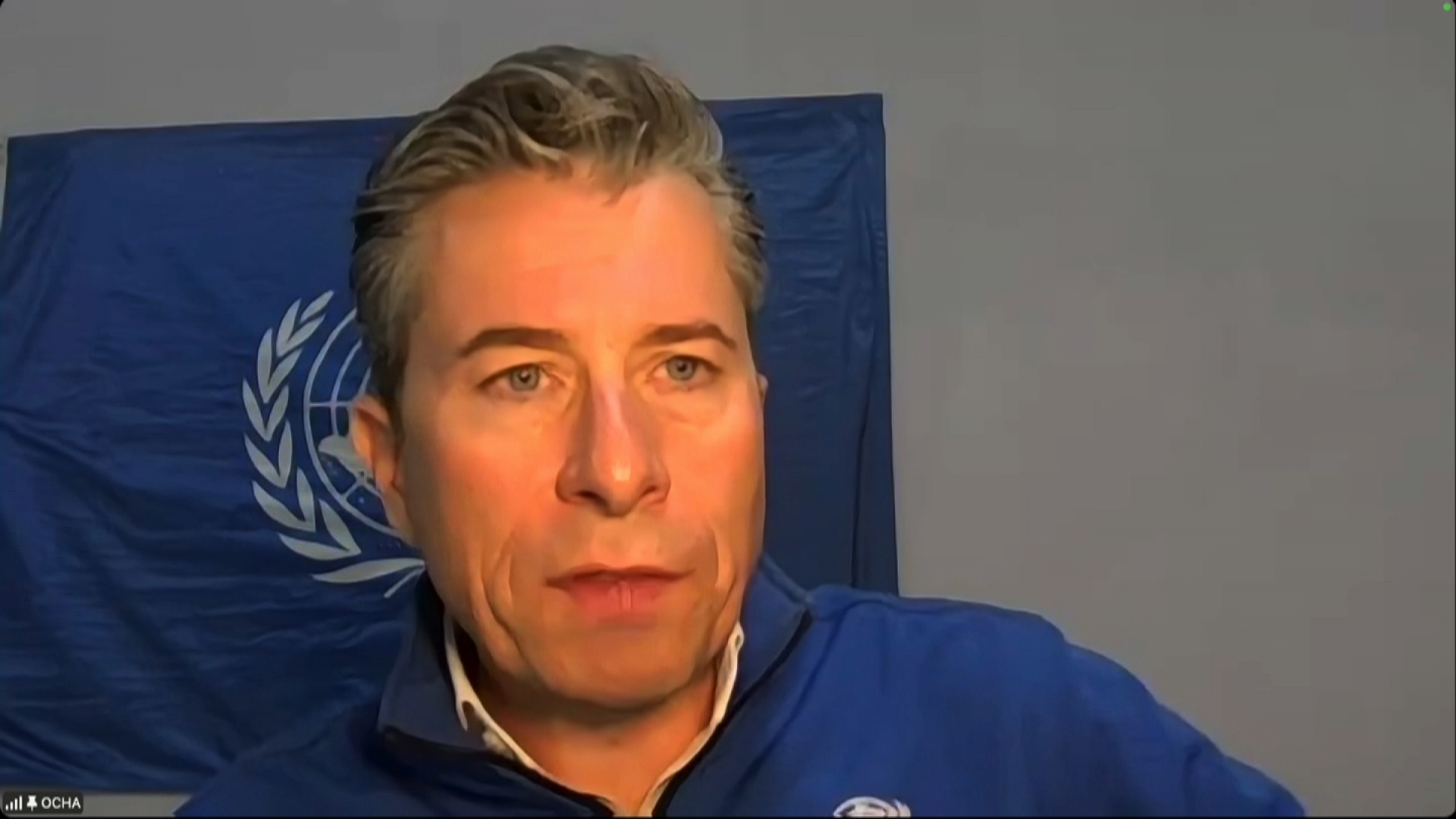
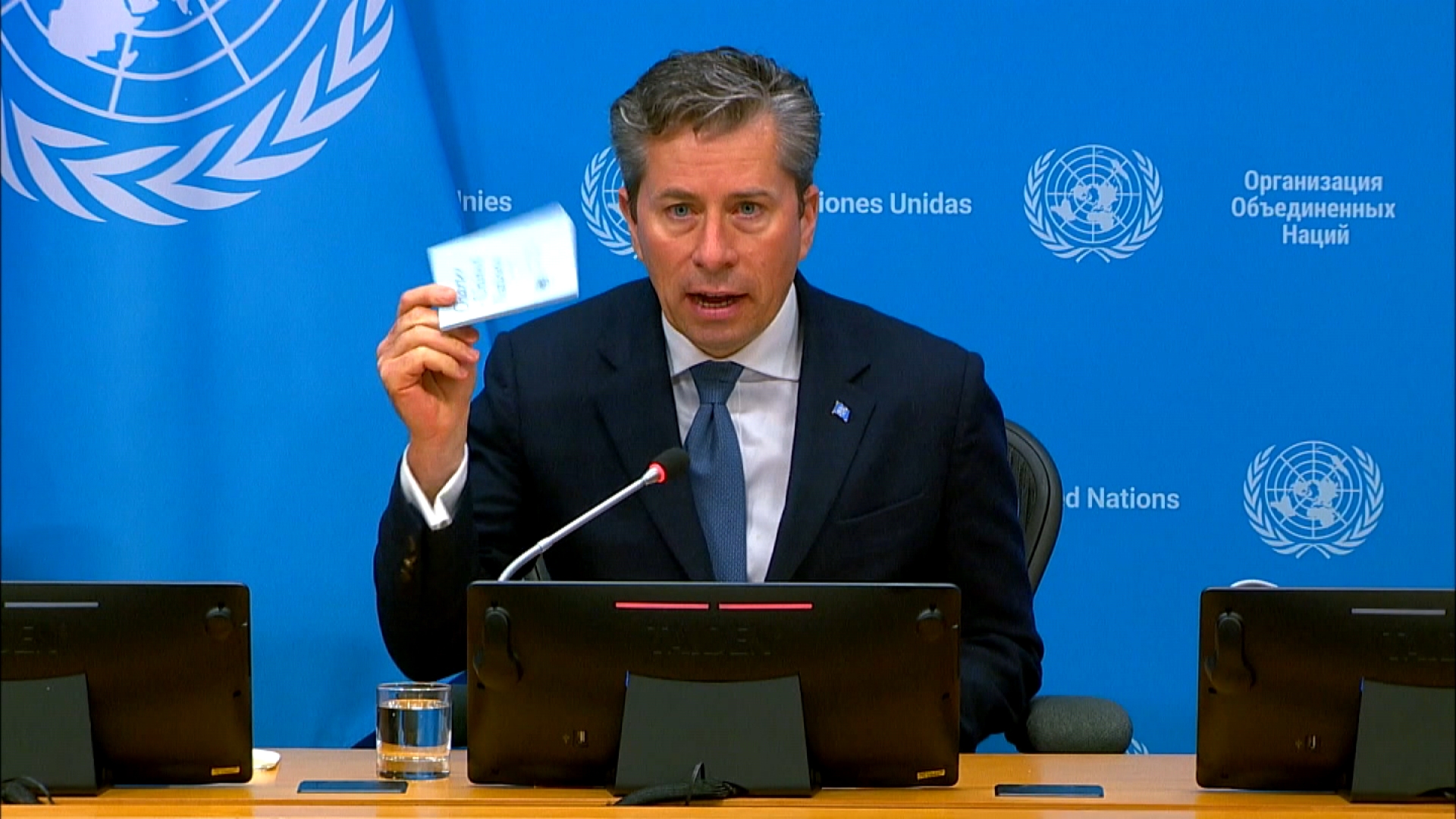
On the eve of World Humanitarian Day, UN Under-Secretary-General for Humanitarian Affairs and Emergency Relief Coordinator Tom Fletcher visited Kherson, one of Ukraine’s most dangerous frontline cities, to see first-hand the humanitarian impact of continued hostilities and the growing threat posed by drones to civilians and aid workers.
During the first day of his visit, Fletcher met people living under constant threat of attacks, humanitarian workers continuing to provide life-saving assistance in high-risk areas, and local organizations adapting their operations to an increasingly challenging security environment. The visit highlighted the risks faced every day by civilians and those working to assist them, ahead of World Humanitarian Day on 19 August.
Download
There is no media available to download.
Related Content
OCHA / FLETCHER DARFUR VISIT