Media Home
 UN Web TV
 UN Audiovisual Library
 UN Photo
Unifeed
UN / HOLMES SRI LANKA
STORY: UN / HOLMES SRI LANKA
TRT: 2.26
SOURCE: UNTV
RESTRICTIONS: NONE
LANGUAGE: ENGLISH / NATS
DATELINE: 18 APRIL 2009, NEW YORK CITY
FILE - RECENT 2009, NEW YORK CITY
1. Wide shot, exterior United Nations Headquarters
18 APRIL 2009, NEW YORK CITY
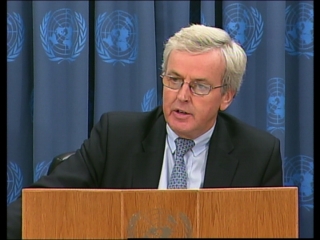
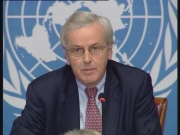
2. Wide shot, press conference
3. SOUNDBITE (English) John Holmes, Emergency Relief Coordinator, United Nations:
“Obviously we are relieved the fighting is over, and hope that all the civilians are indeed out of that zone, and indeed are heading towards safety, but it’s hard for us to be absolutely sure for the moment, that’s one of things that we are still trying to check in so far we are able to do that, but we believe that the civilians are actually out of that zone on the basis of what we know for the moment. What that means is that there are around two hundred and twenty thousand people all together who have already reached the camps, and I think leaves an extra twenty thousand in the last two or three days, we think that there are another forty or sixty thousand on the way to the camps through the crossing point Omantai along the way to the camp Vavuniya and in particular the major camp at Manic farm.”
4. Cutaway, journalists
5. SOUNDBITE (English) John Holmes, Emergency Relief Coordinator, United Nations:
“A key question that will arise more and more now that the fighting seems to be over is the question of resettlement, how fast that can happen, and how fast any type of reconciliation process can start with a view to a kind of political settlement that we all want to see which would enable some of these wounds to continue to be healed.”
6. Cutaway, journalists
7. SOUNDBITE (English) John Holmes, Emergency Relief Coordinator, United Nations:
“I think it would also be very important for him to be talking to the government about what happens next in terms of beginning to heal some of these wounds. Obviously, their legacy of bitterness which may have been left by the fighting, to look forward to political progress, to encourage that, to offer to help in so far that help is wanted or required. So I think there will be plenty things to discuss if he goes.”
8. Cutaway, journalists
9. SOUNDBITE (English) John Holmes, Emergency Relief Coordinator, United Nations:
“They should be moved back to where they came from originally as quickly as possible. The government has said that several times privately and publicly that eighty percent of those in those camps will be resettled by the end of 2009. That’s an ambitious target but I very much hope it will be met.”
10. Wide shot, press conference
United Nations (U.N.) Emergency Relief Coordinator John Holmes told journalists today at that he was relieved “the fighting was over” in Sri Lanka and hoped that all the civilians “were indeed” out of the conflict zone.
Holmes said that it was hard for him to be absolutely sure of that information and that they were still confirming it, but he believed that the civilians were actually out of that zone on the basis of what the government had reported.
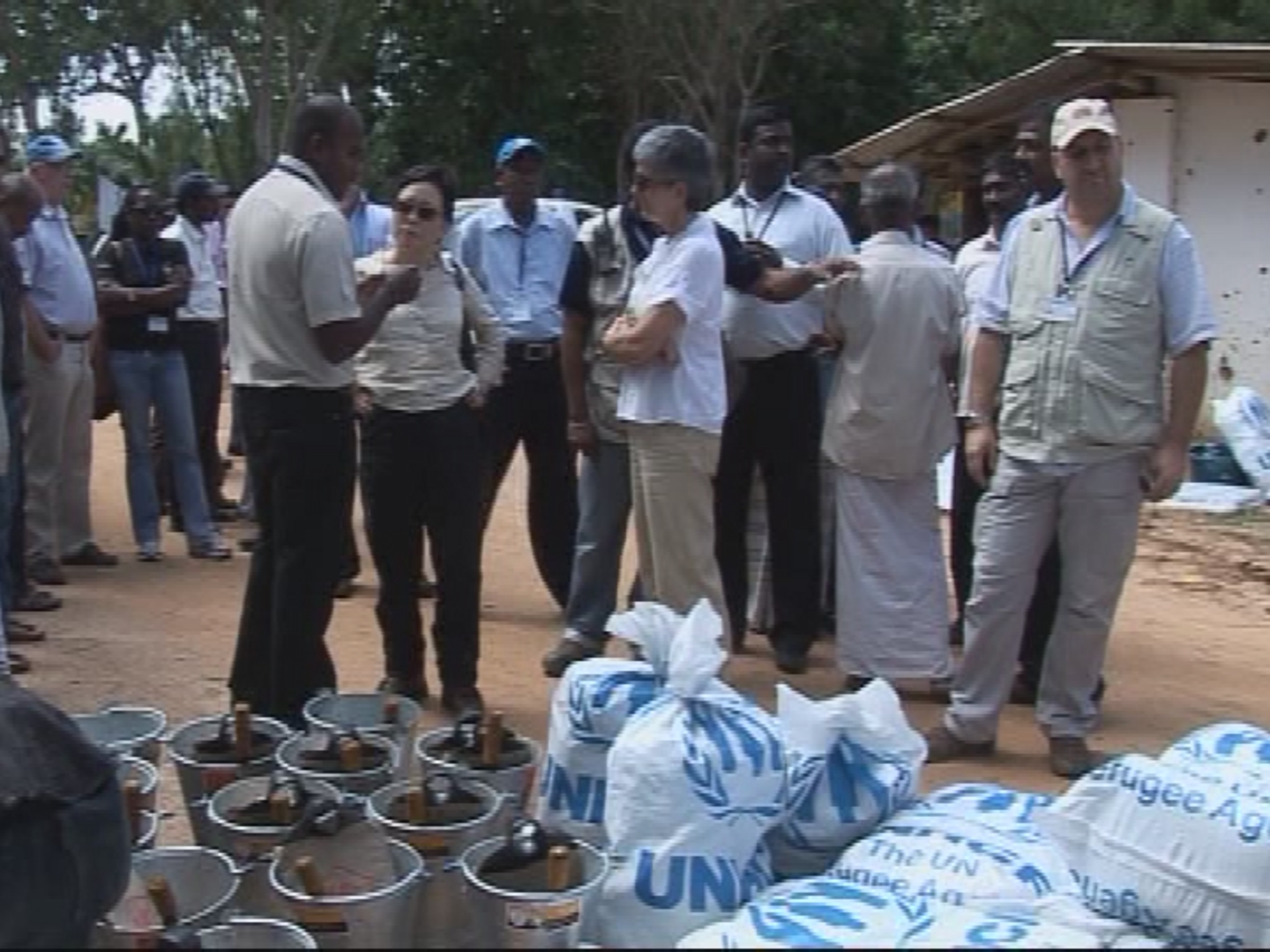
Holmes said according to Sri Lankan government officials, there were around, “two hundred and twenty thousand” people all together who had already reached the camps and he thought that there were another, “forty or sixty thousand” on the way to the camps.
He said the key question now would be resettlement, and how fast that could happen, as well as how fast any type of reconciliation process could start.
Asked by a reporter what talking points the Secretary-General would have should he were to travel to Sri Lanka to meet with government officials, Holmes said that although that information hadn’t been confirmed, he thought it would important for him to be talking about what happens next in terms of beginning to heal some of these wounds, to encourage political progress, and to offer to help “in so far that help is wanted or required.”
Holmes said the next step should be to move people back to where they came from originally as quickly as possible.
Download
There is no media available to download.