Media Home
 UN Web TV
 UN Audiovisual Library
 UN Photo
Unifeed
UN / FORCE COMMANDERS
Download
There is no media available to download.
STORY: UN / FORCE COMMANDERS
TRT: 2.54
SOURCE: UNTV / UNAMID / MONUC
RESTRICTIONS: NONE
LANGUAGES: ENGLISH / NATS
DATELINE: 6 AUGUST 2009, NEW YORK CITY / FILE
FILE – RECENT, NEW YORK CITY
1. Wide shot, exterior UN headquarters
6 AUGUST 2009, NEW YORK CITY
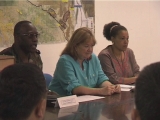
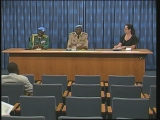
2. Wide shot, press conference
3. Med shot, audience
4. SOUNDBITE (English) General Martin Luther Agwai, Force Commanders of UN-AU Mission in Darfur (UNAMID):
“We are beginning to expand now, to spread. And if we are able to get all the equipment and all the forces deployed, we’ll be able to tell more of the right things happening on the ground.”
FILE – UNAMID – 17 JULY 2008, NYALA, SOUTH DARFUR, SUDAN
5. Wide shot, Chinese peacekeepers unloading bags from truck
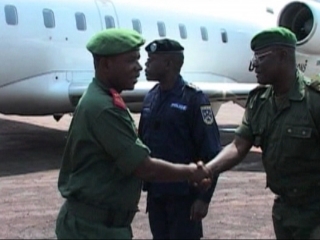
6. Med shot, General Agwai shaking hands with troops
6 AUGUST 2009, NEW YORK CITY
7. SOUNDBITE (English) General Martin Luther Agwai, Force Commanders of UN-AU Mission in Darfur (UNAMID):
“We have seen, there are evidence on the ground, the same forces that are supposed to provide that security turn back to molest the same people they are supposed to secure. Sometimes also it’s not the government forces, it’s the movements, but it’s really on the ground and that is why we have to do this patrolling.”
FILE – UNAMID – 24 MARCH 2009, ELFASHER, NORTH DARFUR, SUDAN
8. Med shot, UNAMID peacekeepers patrolling the camp
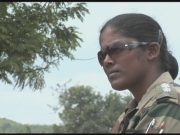
9. Close up, peacekeeper
10. Wide shot, UNAMID peacekeeper in an armed pick-up overlooking
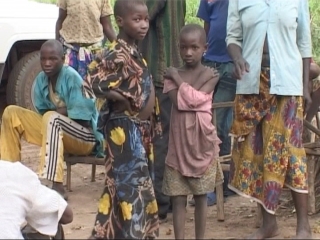
11. Med shot, UNAMID peacekeeper talking to IDP
6 AUGUST 2009, NEW YORK CITY
12. SOUNDBITE (English) General Martin Luther Agwai, Force Commanders of UN-AU Mission in Darfur (UNAMID):
“I’m happy that, yes, there is still a gap, but things thank god did not go as bad as we all thought.”
FILE – UNAMID – 24 MARCH 2009, ELFASHER, NORTH DARFUR, SUDAN
13. Wide shot, UNAMID water truck reversing
14. Med shot, UNAMID peacekeepers overlooking
15. Wide shot, IDP lining up for water
16. Close up, woman collecting water
6 AUGUST 2009, NEW YORK CITY
17. Wide shot, press conference
18. SOUNDBITE (English) Lt. General Babacar Gaye, Force Commander of the UN Mission in the Democratic Republic of the Congo (MONUC):
“We still drastically need these extra troops because they will be for us additional boots on the ground to implement our protection mandate. Everything is on track, but unfortunately the first boots are still expected.”
FILE – MONUC – 16 DECEMBER 2008, DUNGU, DEMOCRATIC REPUBLIC OF CONGO
19. Med shot, Gaye inspecting MONUC troops at camp
6 AUGUST 2009, NEW YORK CITY
20. SOUNDBITE (English) Lt. General Babacar Gaye, Force Commander of the UN Mission in the Democratic Republic of the Congo (MONUC):
“It’s why we have decided to send as soon as possible a fact-finding mission every time there is this kind of accusation. You know that it is up to OIOS to investigate these kind of things. But this fact-finding mission is the way for us to react as promptly as possible in order at least to save evidences and so on and so forth. In both cases that probably your question is related to, there was nothing on the ground for being an evidence that something took place.”
21. Wide shot, audience
The force commanders of the UN peacekeeping missions in Darfur and the Democratic Republic of Congo today (6 August) briefed the press at UN headquarters in New York.
The outgoing military commander of the joint United Nations-African Union mission in Darfur (UNAMID), Martin Luther Agwai told reporters that his mission had made progress in stabilizing the situation in Darfur, but was still in urgent need of equipment and troops to boost mobility.
Agwai said there were still “too many” internally displaced people (IDPs) in Darfur, and UNAMID was currently not able to provide round-the-clock security for all IDP camps. But he said “we are beginning to expand now” and if equipment like utility helicopters become available and all forces are deployed according to the goal of 92 percent deployment by the end of the year, “we’ll be able to tell more of the right things happening on the ground”.
Currently UNAMID provides 24/7 security only to the largest and most volatile camps that number up to 100,000 people. Patrols are dispatched to smaller camps according to a set schedule, for example to protect women who are vulnerable to rape while collecting firewood.
Asked who was responsible for such attacks, Agwai pointed to members of both the government forces and rebel movements. He said there was “evidence on the ground” that “the same forces that are supposed to provide that security turn back to molest the same people they are supposed to secure”.
In response to a question on the impact of the Sudanese government’s March decision to expel 13 international non-governmental organizations (NGOs) following the indictment of President Omar al-Bashir by the International Criminal Court, Agwai said there was still a gap in delivering humanitarian aid but “things thank god did not go as bad as we all thought.”
However Agwai said UNAMID was “feeling the pinch”; in the absence of another source, peacekeepers have continued to deliver 40,000 liters of water to the ZamZam IDP camp every day since March.
The commander of the peacekeeping force in the Democratic Republic of the Congo, Babacar Gaye told reporters that as the largest UN peacekeeping mission, MONUC faced “all the problems” of UN peacekeeping.
Responding to a question about the 3,000 additional troops mandated to MONUC after the crisis in North Kivu last fall, Gaye said they were still “drastically” needed to implement MONUC’s protection mandate. However, those troops still had not arrived.
Asked about the results of a recent MONUC fact-finding mission to investigate claims of sexual exploitation and abuse by peacekeepers in the east, Gaye said that the allegations were “not precise enough” to see anything on the ground, and “there was nothing on the ground for being an evidence that something took place.” That was why it had been decided to “send as soon as possible a fact-finding mission every time there is this kind of accusation” so that evidence could be secured.