Media Home
 UN Web TV
 UN Audiovisual Library
 UN Photo
Unifeed
UN / IAEA
STORY: UN / IAEA
TRT: 3.39
SOURCE: UNTV
RESTRICTIONS: NONE
LANGUAGE: ENGLISH / NATS
DATELINE: 2 NOVEMBER 2009, NEW YORK CITY
RECENT 2009, NEW YORK CITY
1. Wide shot, exterior United Nations headquarters
2 NOVEMBER 2009, NEW YORK CITY
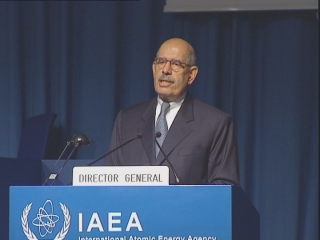
2. Wide shot, Mohamed ElBaradei approaches podium
3. Cutaway, delegates
4. SOUNDBITE (English) Dr. Mohamed ElBaradei, Director-General, International Atomic Energy Agency (IAEA):
“While I leave office after 12 years with pride in the IAEA’s many achievements, I must also express some disappointment. Disappointment that we are still fighting the same battles to secure sufficient funding as we were back in the 1990s; that the development side of our mandate remains chronically under-funded; and that we still lack adequate legal authority to do our job effectively in verification, safety and security.”
5. Cutaway, delegates
6. SOUNDBITE (English) Dr. Mohamed ElBaradei, Director-General, International Atomic Energy Agency (IAEA):
“Important lessons need to be learned from Iraq and the DPRK. The main one is that we must let diplomacy and thorough verification take their course, however lengthy and tiresome the process might be. We need to carefully assess the veracity of intelligence information. We must engage those with whom we have differences in dialogue rather than seeking to isolate them. We must act within the framework of international institutions - in this case, the IAEA and the Security Council - and empower them, rather than bypass them through unilateral action.”
7. Cutaway, delegates
8. SOUNDBITE (English) Dr. Mohamed ElBaradei, Director-General, International Atomic Energy Agency (IAEA):
“Nevertheless, a number of questions and allegations relevant to the nature of that program are still outstanding and need to be clarified by Iran through transparency and cooperation with the Agency. As I have pointed out many times, however, addressing the concerns of the international community about Iran’s future intentions is primarily a matter of confidence-building, which can only be achieved through dialogue.”
9. Cutaway, delegate
10. SOUNDBITE (English) Dr. Mohamed ElBaradei, Director-General, International Atomic Energy Agency (IAEA):
“I therefore urge Iran to be as forthcoming as possible in responding soon to my recent proposal, based on the initiative of the US, Russia and France, which aimed to engage Iran in a series of measures that could build confidence and trust and open the way for comprehensive and substantive dialogue between Iran and the international community. The issue at stake remains that of mutual guarantees amongst the parties. I should add, however, that trust and confidence-building are an incremental process that requires focusing on the big picture and a willingness to take risks for peace.”
11. Cutaway, delegate
12. SOUNDBITE (English) Dr. Mohamed ElBaradei, Director-General, International Atomic Energy Agency (IAEA):
“The Agency cannot do its nuclear verification work in isolation. It depends on a supportive political process, with the Security Council at its core. The Council needs to develop an effective, comprehensive compliance mechanism that does not rely only on sanctions, which too often hurt the vulnerable and the innocent. It must focus more on conflict prevention and address the insecurities that lie behind many cases of proliferation, such as mistrust and unresolved conflict.”
13. Wide shot, ElBaradei steps down from podium
14. Wide shot, General Assembly Hall
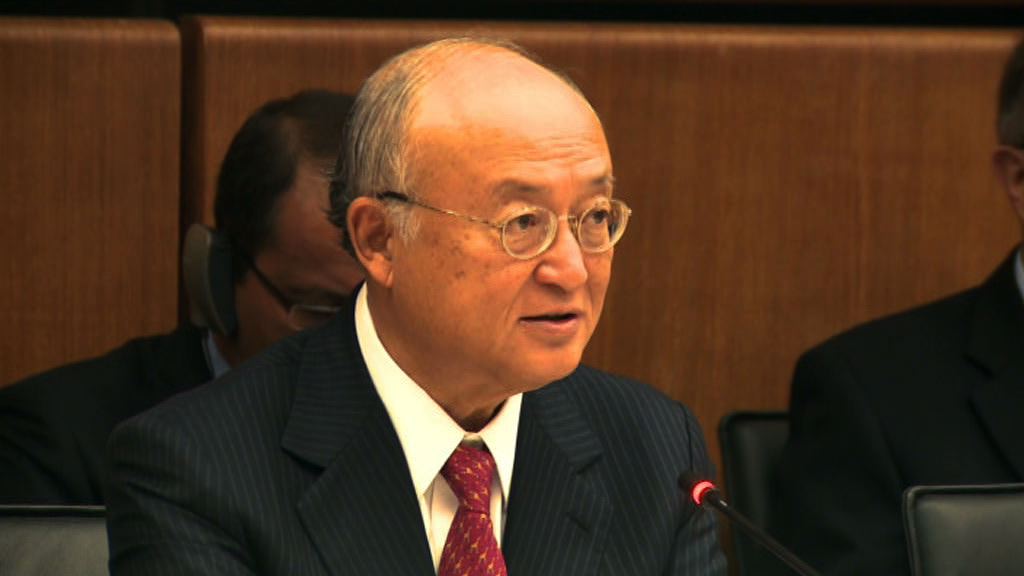
Today (2 November), IAEA Director General Mohamed ElBaradei addressed the United Nations General Assembly’s 64th Session in New York.
ElBaradei outlined the ways in which the Agency has evolved over the last twelve years and the considerable progress made in bringing the benefits of peaceful nuclear technology to developing countries, improving their access to energy, health care, food and clean water.
While expressing disappointment that development areas of the Agency’s work remain under funded, and the continuing need for further legal authority to effectively undertake verification, safety and security activities, the Director-General was heartened that recent political developments could lead to a world free of nuclear weapons.
The Director-General advocated the use of diplomacy rather than military force and isolation in dealing with non-compliant states, and called for a new system with effective global mechanisms for conflict prevention, peacekeeping and peacemaking.
He said that there were important lessons to be learned from dealing with Iraq and the Democratic People's Republic of Korea (DPRK), the main one being that “we must let diplomacy and thorough verification take their course, however lengthy and tiresome the process might be. We need to carefully assess the veracity of intelligence information”.
ElBaradei reminded delegates that six years had passed since Iran had been reported to the IAEA Board of Governors for failing to declare material and activities to the Agency, in violation of its safeguards agreement. He urged Iran to be as forthcoming as possible in responding soon to his recent proposal, based on the initiative of the United States, Russia and France, which aimed to engage Iran in a series of measures that could build confidence and trust and open the way for comprehensive and substantive dialogue between Iran and the international community.
ElBaradei also said that the Agency couldn’t do its nuclear verification work in isolation. He added that it depended on a supportive political process, with the Security Council at its core. He stressed that the “Council needs to develop an effective, comprehensive compliance mechanism that does not rely only on sanctions, which too often hurt the vulnerable and the innocent.”
Download
There is no media available to download.