Media Home
 UN Web TV
 UN Audiovisual Library
 UN Photo
Unifeed
HAITI / SANITATION
STORY: HAITI / SANITATION
TRT: 2.32
SOURCE: UNICEF
RESTRICTIONS: NONE
LANGUAGE: ENGLISH / CREOLE / NATS
DATELINE: 6-7 FEBRUARY 2010, LEOGAN, JACMEL, HAITI
1. Pan right, damage
2. Wide shot, damaged
3. Zoom out, palace
4. Pan right, damage
5. Pan right, camp
6. Wide shot, stripping roof
7. Wide shot, Pierre Fuijee with baby
8. SOUNDBITE (Creole) Pierre Fuijee, lawyer:
“Since the event, it has been very hard for us because eight people died in our family The situation is really difficult, especially with the small one and now the rain is threatening and we cant protect ourselves because we live in tents.”
9. Tilt down, corrugated steel falling
10. Med shot, mother and baby
11. Med shot, girls with water bowls
12. Pan right, bladder to taps
13. Close up, taps
14. Med shot, girls with pots
15. Pan right, woman to latrine
16. Close up, latrine
17. SOUNDBITE (English) Rolando Wallusche Saul, Water and Sanitation Specialist, UNICEF:
“We’re in an emergency phase which means that we need to deliver water and we need to deliver emergency sanitation, well you have a big likelihood of spreading of diarrheal diseases, that’s why is very important to build latrines, from the point of you of a health situation but also to try to give them back what they had even if the settings are not optimal, but it’s a need, sanitation is as important as water.”
18. Wide shot, coast
19. Pan right, church
20. Wide shot, petrol station
21. Pan right, from damage to street
22. Pan right, camp
23. Wide shot, army tents
24. Pan right, latrines
25. Close up, latrines
26. Wide shot, woman entering latrine
27. Wide shot, family in tent
28. SOUNDBITE (Creole) Malepa Oliali, mother:
“It’s okay for me, I use the water for drinking, cooking and washing, the toilets are being built and I have a tent for me, my husband and my children. Before I came here I was afraid, I thought there would be another earthquake.”
29. Wide shot, camp
30. Pan right, from tents to latrines
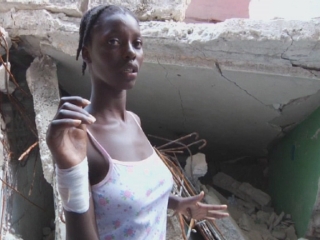
Televisions, newspapers, magazines and the internet have taken stories and visuals of Haiti’s January 12th magnitude 7 earthquake to the entire world. But while much of the focus has been on the devastation and the resultant makeshift camps in the capital, Port Au Prince, the earthquake wreaked havoc in other parts of the country too.
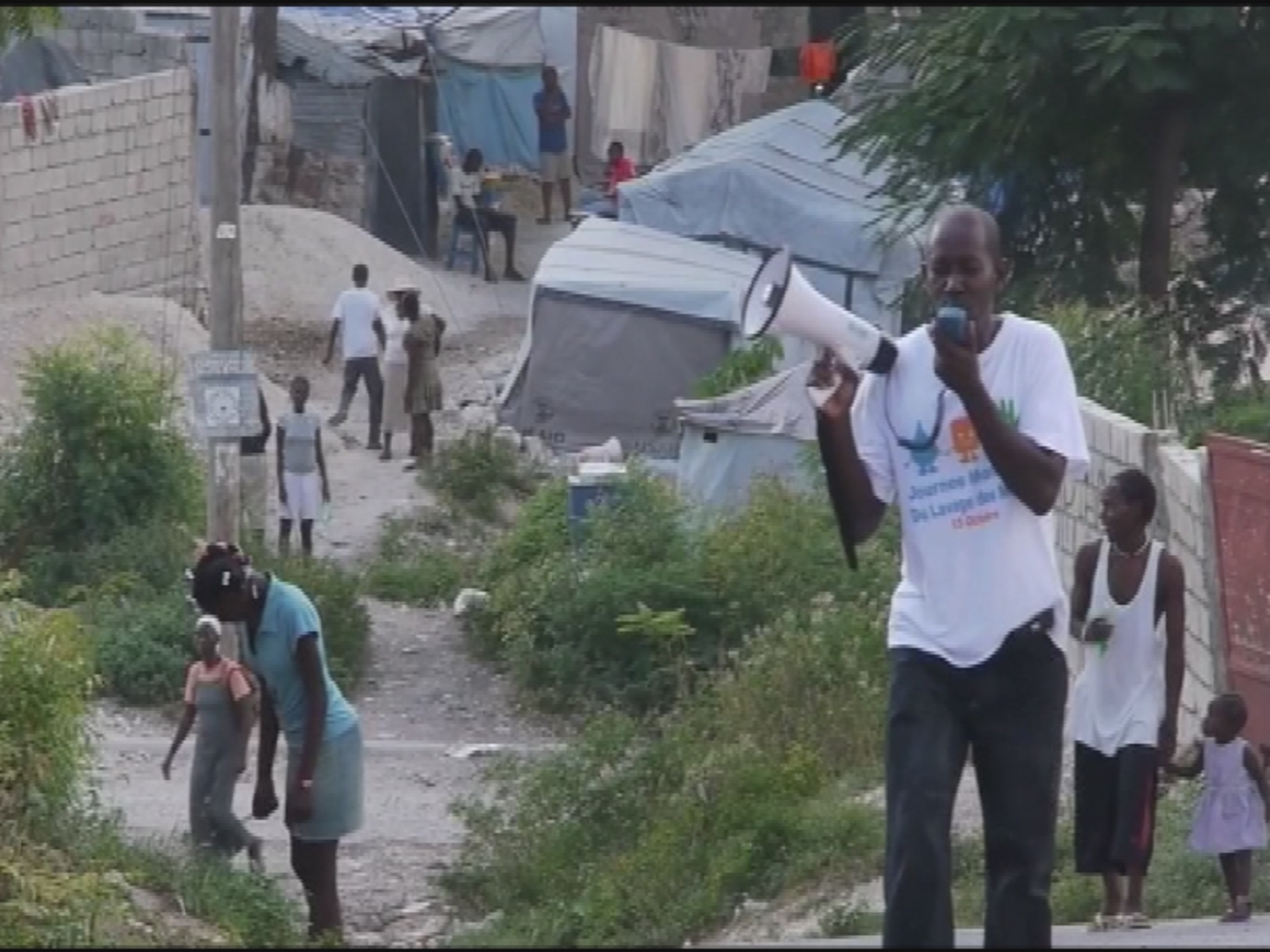
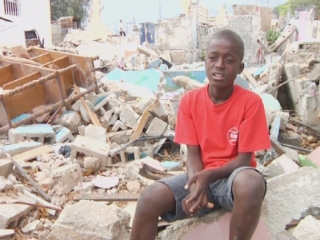
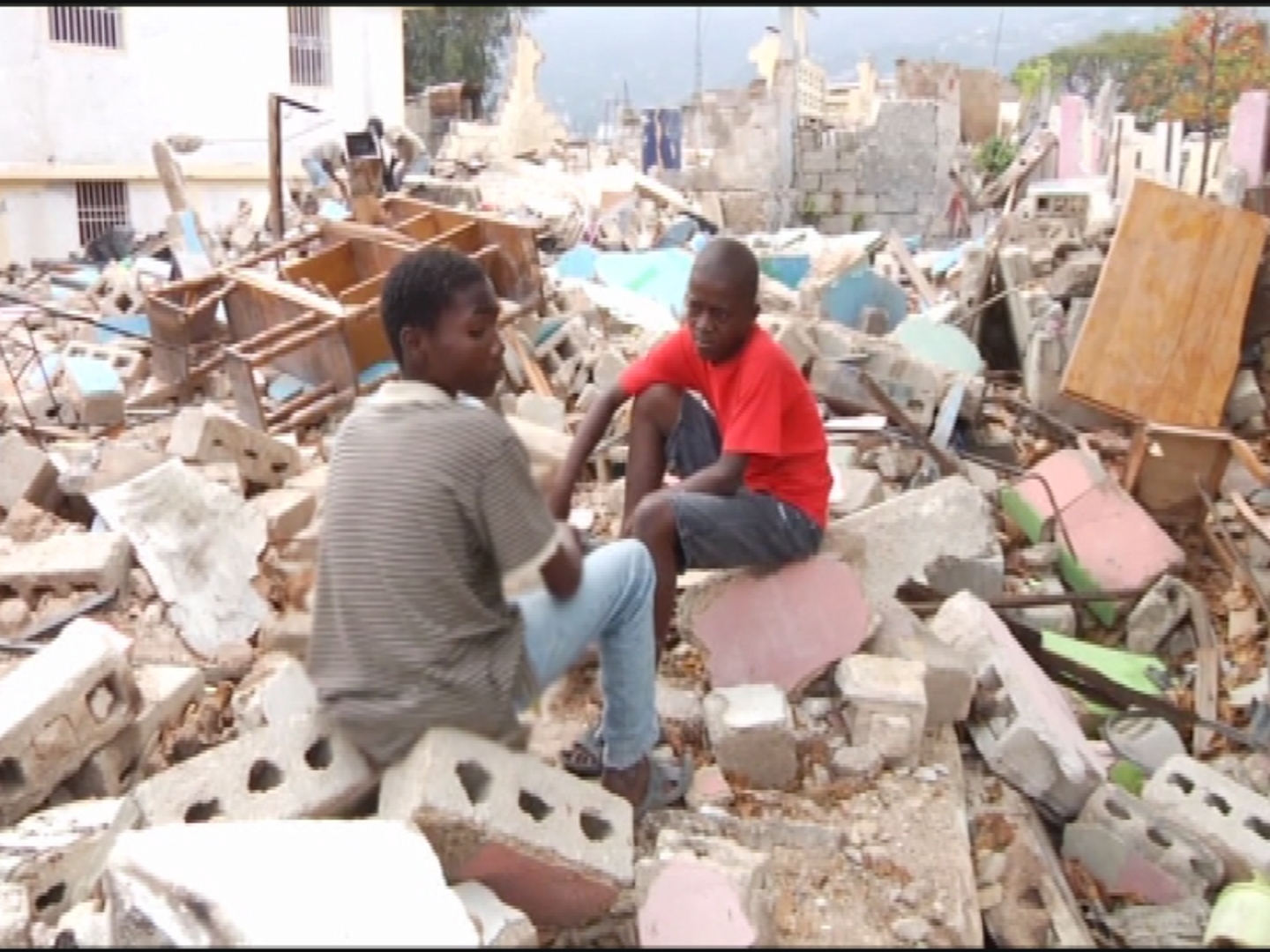
Leogane, a small town, an hour’s drive from the capital, was closer to the epicenter of the quake and much of it was flattened. Of those who survived, most lost their homes and have settled in makeshift camps on whatever piece of open land they can find. This camp, on the grounds of a damaged school is home to hundreds of displaced survivors; they strip the roof of the school to build themselves a home. Pierre Fuijee was a lawyer, but like everyone in this camp, he lost everything in the quake including family.
SOUNDBITE (Creole) Pierre Fuijee, lawyer.
“Since the event, it has been very hard for us because eight people died in our family The situation is really difficult, especially with the small one and now the rain is threatening and we cant protect ourselves because we live in tents.”
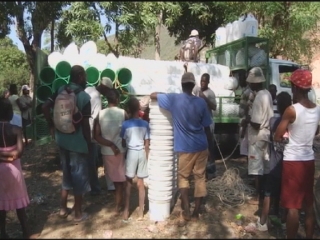
Life here is tough, apart from the lack of proper shelter; lack of access to clean water and toilets in camps throughout the country means that the threat of waterborne disease is ever-present. But UNICEF and its partners have been working hard to ensure that those living here have access to clean water, and sanitation facilities. A water bladder has been set up, connected to a series of taps, its refilled daily and provides clean water for cooking drinking and bathing. Separate latrines for men and women have also been dug, giving each privacy, but also keeping the camps themselves clear of human waste.
SOUNDBITE (English) Rolando Wallusche Saul, Water and Sanitation Specialist, UNICEF:
“We’re in an emergency phase which means that we need to deliver water and we need to deliver emergency sanitation, well you have a big likelihood of spreading of diarrheal diseases, that’s why is very important to build latrines, from the point of you of a health situation but also to try to give them back what they had even if the settings are not optimal, but it’s a need, sanitation is as important as water.”
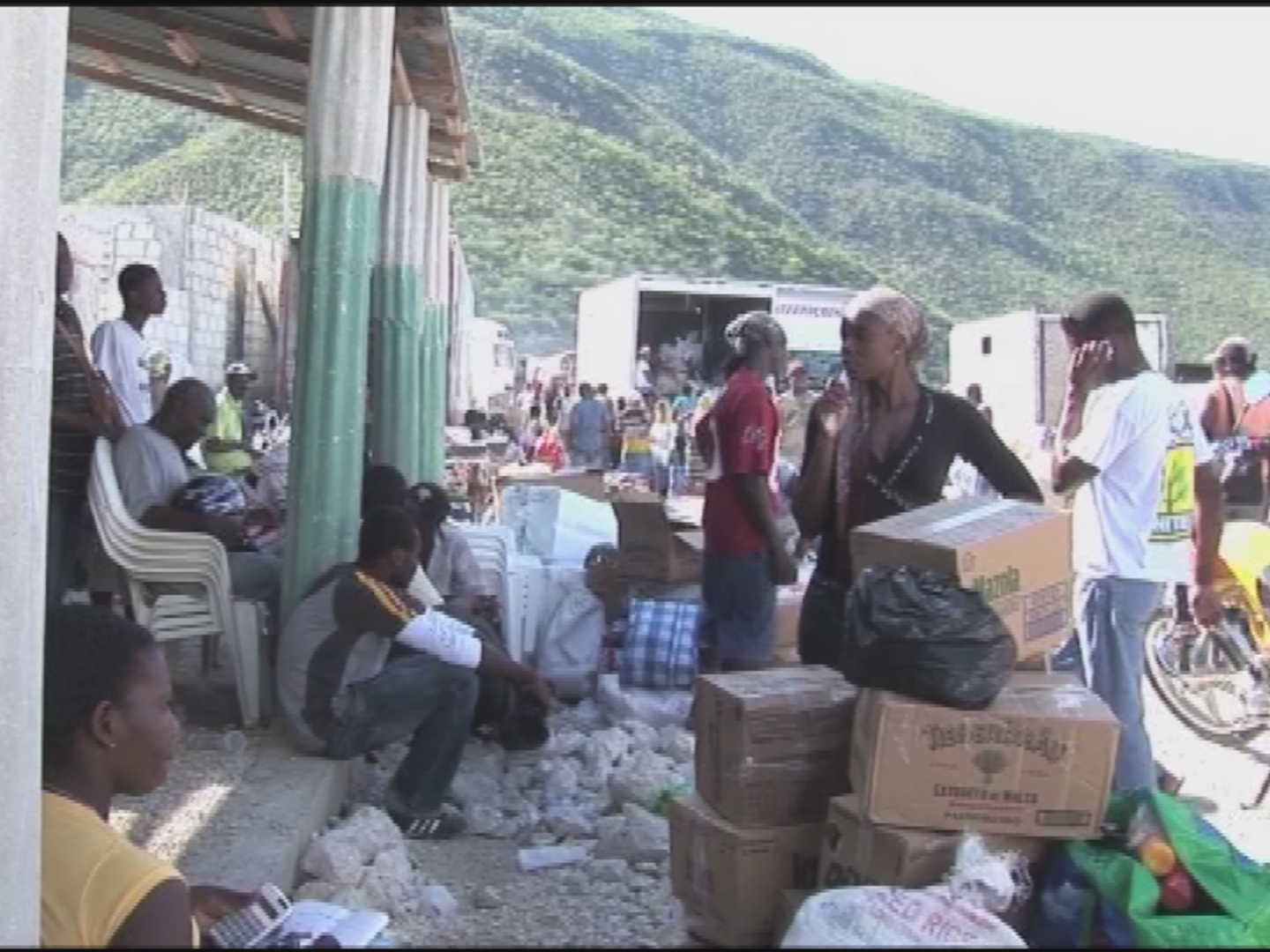
The pretty coastal town of Jacmel, once a haven for tourists, was also affected. While many of its historical buildings survived, many of its housing areas were flattened. Thousands have gathered in camps around the town. Here in the largest camp, thousands of people who have lost their homes seek shelter. The Venezuelan army is providing compartmentalized army tents while UNICEF and partners are providing water and building ever more latrines to cater to the growing numbers of displaced. Malepa Oliali was living in the ruins of her home before coming here.
SOUNDBITE (Creole) Malepa Oliali, mother:
“It’s okay for me, I use the water for drinking, cooking and washing, the toilets are being built and I have a tent for me, my husband and my children. Before I came here I was afraid, I thought there would be another earthquake.”
While those affected by the earthquake throughout Haiti attempt to rebuild their lives, UNICEF and its partners are doing all they can to ensure that everyone of them is able to live as normal a life as possible in the most abnormal circumstances. And in delivering clean water and latrines they are ensuring that those who survived the quake, survive its aftermath.
Download
There is no media available to download.