Media Home
 UN Web TV
 UN Audiovisual Library
 UN Photo
Unifeed
SWAZILAND / SEXUAL ABUSE
STORY: SWAZILAND / SEXUAL ABUSE
TRT: 3:37
SOURCE: UNICEF
RESTRICTIONS: NONE
LANGUAGE: ENGLISH / NATS
DATELINE: 18-19 MARCH 2010, SITSATSAWENI, SWAZILAND
1. Med shot, girls’ feet and hoes as they clear grass
2. Med shot, caregivers walking
3. SOUNDBITE (English) Tjengisile Shabangu, Shoulder to Cry on Co-ordinator, World University Press:
“Ok, this is Msnandra family. They are not even comfortable to spend quality time around, because they are scared.”
4. Wide shot, caregivers come through gate, wide
5. Med shot, girls clear grass
6. Wide shot, girls’ home
7. Med shot, cattle byre wrapped around fence
8. Close shot, girl’s hand on shovel handle
9. Wide shot, 3 caregivers sit outside house
10. SOUNDBITE (English) Tjengisile Shabangu, Shoulder to Cry on Co-ordinator, World University Press:
“The youngest if seven years is presently not here because their uncle came through the window and beat all of them and told the youngest child who is seven years to undress because there is no child that can sleep dressed.”
11. Med shot, broken windows of house
12. Wide shot, exterior of house with children in foreground
13. Various shots, girls dig and clear grass
14. Med shot, caregivers sitting under tree
15. Wide shot, caregivers meeting under tree
16. Various shots, caregivers
17. Various shot, lawyers at Mbabane Magistrate’s court, wide Mbabane
18. Wide shot, Qondile Zwane prosecutor
19. Close shot, lighting in child-friendly space
20. Various shots, dolls
21. Med shot, Qondile Zwane’s hands and doll
22. SOUNDBITE (English) Qondile Zwane, Senior Crown Counsel:
“The purpose of this room is to enable the child to be able to play and not to really concentrate on what they are really saying so we’re interviewing them we will ask them what daddy was wearing on this particular day when this happened, but it the children cannot really talk or say whatever happened to them we usually give them the dolls to demonstrate to us what happened. So this is usually daddy this one here. What did he do to you? So if for instance, you ask first, then the child will show you, Daddy hit me first. And then the child will show you for instance that this was her maybe not wearing her panties, she’ll tell you, she’ll take it out, and say I was not wearing a panty while was bathing.”
23. Close up, doll
24. Close up, collage of family
25. Close up, Sexual Offences Unit sign
26. Wide shot, Manzini police station
27. Close up, Manzini police station sign
28. Various shots, Manzini police station
29. Various shots, dolls
30. Close up, sexual abuse pamphlet
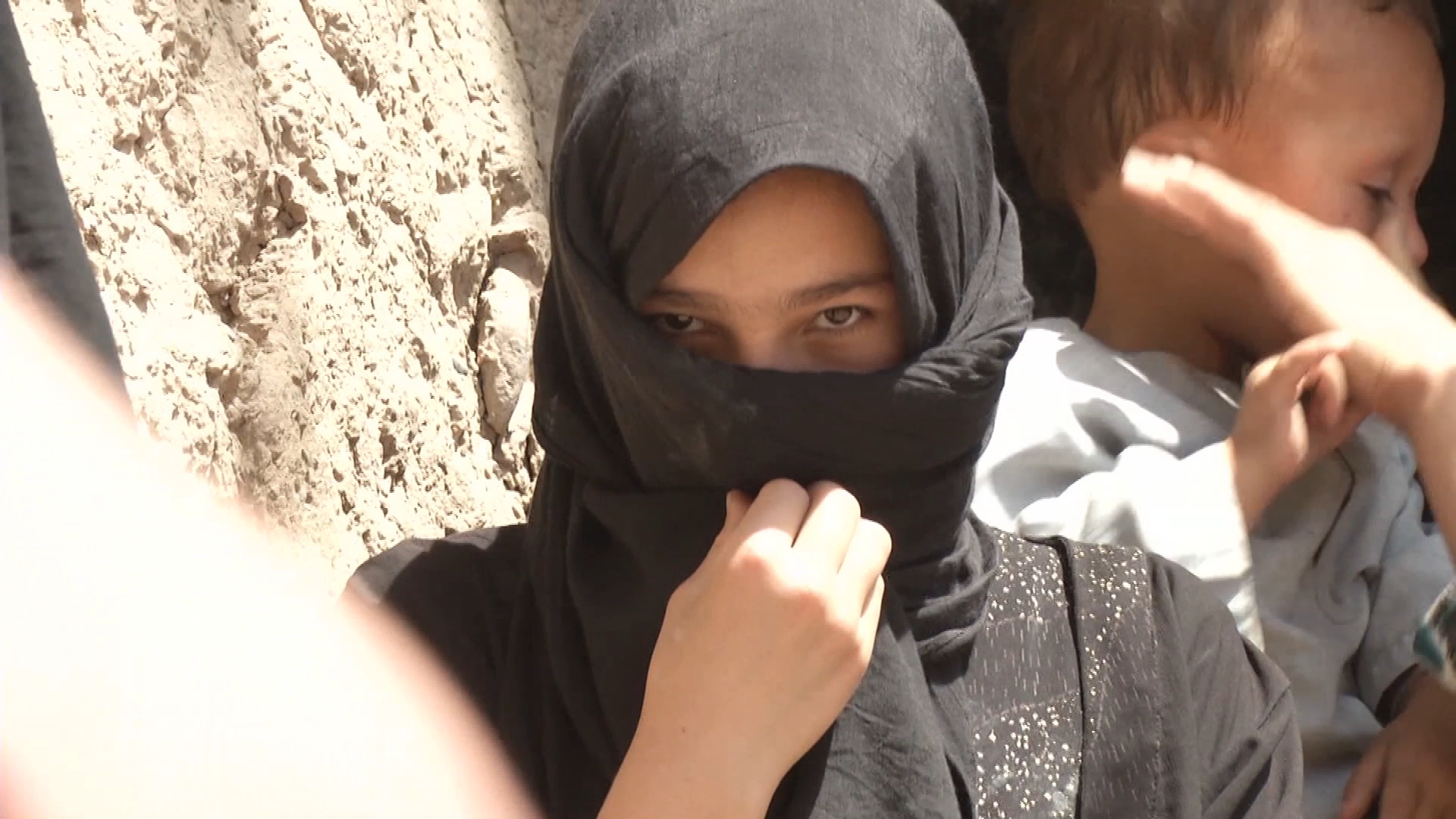
31. Close up, child
32. Med shot, child in mother’s arms
A visit from Shoulder to Cry on community workers allows three orphaned sisters an opportunity to leave the security of their home to clear their over-grown yard.
The girls inherited the two bedroom house when their father died last year. Their mother had died a few years before.
Many people in this rural community in the Lubombo region in Swaziland die from AIDS. This southern African kingdom has the highest HIV rate in the world.
SOUNDBITE (English) Tjengisile Shabangu, Shoulder to Cry on Co-ordinator, World University Press:
“Ok, this is Msnandra family. They are not even comfortable to spend quality time around, because they are scared.”
The girls fear to be caught outside alone by their 40-year-old uncle.
SOUNDBITE (English) Tjengisile Shabangu, Shoulder to Cry on Co-ordinator, World University Press:
“The youngest if seven years is presently not here because their uncle came through the window and beat all of them and told the youngest child who is seven years to undress because there is no child that can sleep dressed.”
The girls escaped to a neighbor Zandile Mbhamali’s house to get help. Zandile is one of 11, 000 volunteer child protectors trained by UNICEF. Across the country, they are the first line of defense for many children.
A 2007 survey conducted by UNICEF and the US Center for Disease Control, revealed alarmingly high levels of violence against girls in Swaziland. Approximately one third of girls younger than 18 experienced sexual abuse and one in four had been physically abused.
In response, the Government, along with UNICEF, NGOs and civil society has taken more serious measures against abuse, and want to create a culture of zero tolerance.
Qondile Zwane, a junior Crown Counsel, has been prosecuting individuals who violate children’s rights. Qondile works in a specially designed victim-friendly space, built with support from UNICEF. Together with the police, she tries to gather enough evidence to take cases of sexually abused children to the High Court.
SOUNDBITE (English) Qondile Zwane, Senior Crown Counsel:
“The purpose of this room is to enable the child to be able to play and not to really concentrate on what they are really saying so we’re interviewing them we will ask them what daddy was wearing on this particular day when this happened, but it the children cannot really talk or say whatever happened to them we usually give them the dolls to demonstrate to us what happened. So this is usually daddy this one here. What did he do to you? So if for instance, you ask first, the child will show you, Daddy hit me first. And then the child will show you for instance that this was her maybe not wearing her panties, she’ll tell you, she’ll take it out, and say I was not wearing a panty while was bathing.”
Despite Qondile’s passion, successful prosecutions are a long, difficult, process. As part of the state’s strategy, police have set up units to tackle abuse in each of Swaziland’s 24 police stations.
They are working closely with community police and child protection volunteers. Community involvement is crucial as children often know their abusers.
Protecting children in this patriarchal and tradition-bound kingdom remains a challenge, yet these initiatives are starting to make a difference, even in the remote areas.
Download
There is no media available to download.