Media Home
 UN Web TV
 UN Audiovisual Library
 UN Photo
Unifeed
HAITI / CHOLERA OUTBREAK
STORY: HAITI / CHOLERA OUTBREAK
TRT: 2:24
SOURCE: MINUSTAH
RESTRICTION: NONE
LANGUAGE: CREOLE / ENGLISH / NATS
DATELINE: 23 OCTOBER 2010, ST MARC AND PONT SONDE, HAITI
23 OCTOBER 2010, PONT SONDE, ARTBONITE REGION
1. Wide shot, market on a bridge onto river Artibonite
2. Med shot, people selling on the bank of the river
3. Med shot, people wearing mask
4. VOXPOP (Creole) Georges:
“We don’t know which kind of disease this is. We can’t control it.”
5. VOXPOP (Creole) Mirlene:
“We are in danger. You have to do something for us. We are living in dirty country with waste and dirty water. We don’t have any clean water to drink.”
23 OCTOBER 2010, ST MARC
6. Wide shot, woman walking towards hospital
7. Med shot, entrance of St Nicholas hospital
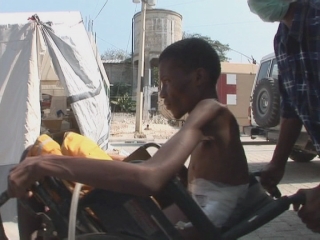
8. Med shot, sick person being carried away with IV
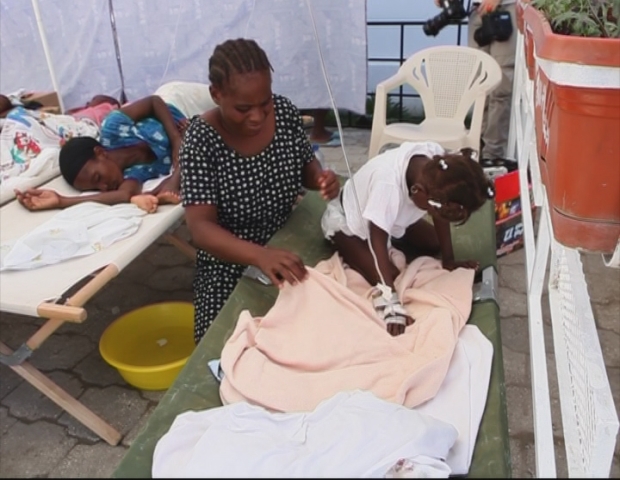
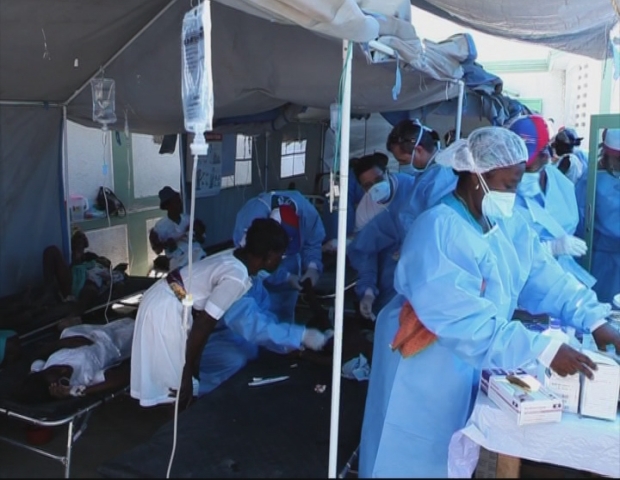
9. Wide shot, sick people being treated in hospital courtyard
10. Med shot, sick man taking an IV
11. Med shot, sick man vomiting
12. SOUNDBITE (Creole) Nerlande Fenelon, Statistician St Nicholas hospital:
“We need more hands, more staff and more equipment to be able to treat all those people who need to be hospitalized”
13. Med shot, woman with child in hospital
14. Tilt up, sick woman being treated onto nurse giving an IV
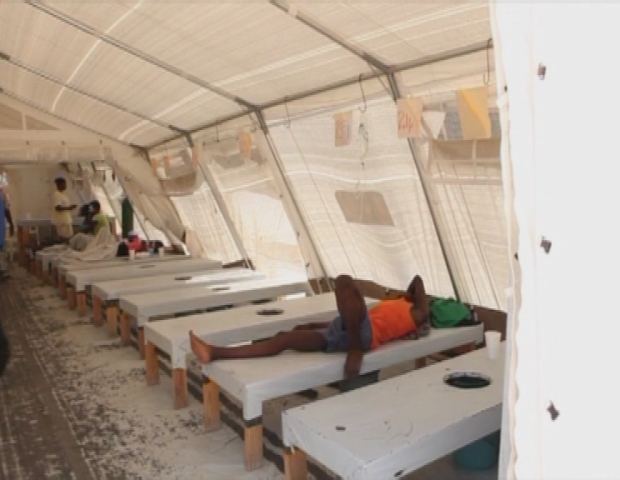
15. Tilt down, interior of hospital with sick people on the ground
16. Med shot, sick woman lying on the ground
17. Med shot, man taking medicine with water
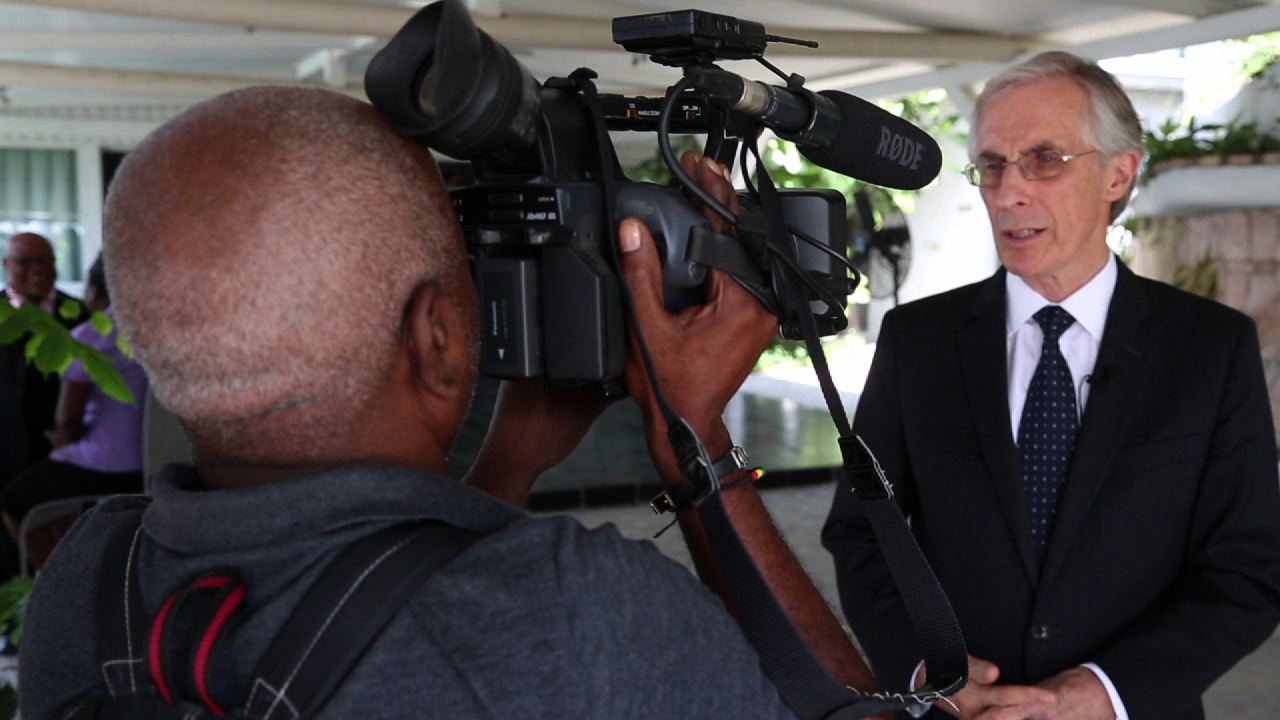
18. SOUNDBITE (English) Jessica Duplessis, Information officer, OCHA:
“Distribution of water sanitation and hygiene supplies are absolutely essential because this is a water borne illness. So distribution of water purification tablets and soap are ongoing and widespread. The idea is to have 40 litres of water per family per day, that (can be) cleaned by using water purification tablets and chlorine.”
19. Various shots, queue of sick people waiting to be treated
The humanitarian community has mobilized its resources to help the Haitian Government respond to an outbreak of cholera in the western region of Caribbean country, with medical supplies being provided and teams of health workers rushing to the affected area.
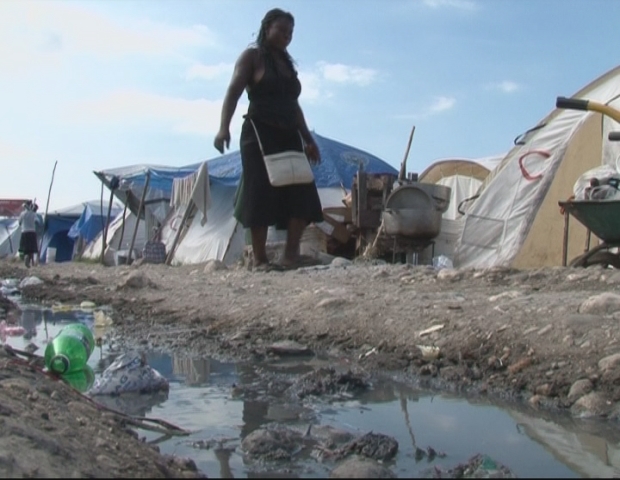
The cholera epidemic has been reported around Saint-Marc in the Artibonite region, far from the camps hosting hundreds of thousands of people who lost their homes following the devastating earthquake of 12 January this year.
People living in Pont Sonde in the Artibonite region expressed fear saying that they do not know how to respond and control the spread of the disease. One resident said “we are in danger” with no “clean water to drink.”
According to the World Health Organization (WHO), there hasn’t been an outbreak of cholera in Haiti in about a century. The Office for the Coordination of Humanitarian Affairs (OCHA) latest figures (24 October) are 254 dead and 3,015 cases of cholera infection confirmed.
WHO and Haiti’s health ministry have also confirmed five cholera cases in Port-au-Prince, but the patients were people who got infected while visiting Artibonite before arriving in the capital.
A statistician at the St Nicholas hospital in the region said that the hospital is in need of “more staff and more equipment to be able to treat all those people who need to be hospitalized.”
Humanitarian agencies have 300,000 doses of antibiotics in the in country ready for distribution and the United Nations (UN) believes that the spread of cholera can be curbed by improving the availability of clean water, using soap to wash hands before meals, and improving sanitation.
Some 10,000 boxes of water purification tablets, 2,500 jerry cans, and the same number of buckets and hygiene kits are being distributed in the affected area.
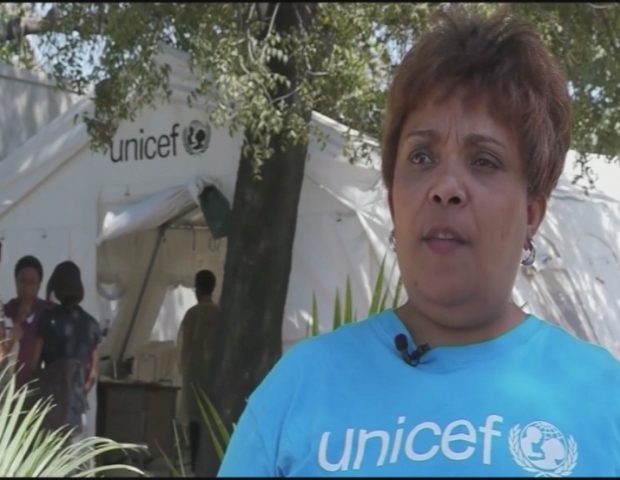
Jessica Duplessis from the Office for Coordination of Humanitarian Affairs (OCHA) said that the “distribution of water sanitation and hygiene supplies are absolutely essential because this is a water borne illness.” She added that “the idea is to have 40 litres of water per family per day.”
OCHA reported that there have been no major outbreaks of infectious diseases in Haiti in the immediate aftermath of the earthquake, nor has there been a ‘second wave’ of deaths feared six months ago, when it was thought that the massive displacement might lead to hunger- and exposure-related diseases and other illnesses which would claim many lives.
Download
There is no media available to download.