Media Home
 UN Web TV
 UN Audiovisual Library
 UN Photo
Unifeed
HAITI / SANITATION IDP CAMPS
STORY: HAITI / SANITATION IDP CAMPS
TRT: 2:28
SOURCE: MINUSTAH
RESTRICTIONS: NONE
LANGUAGE: CREOLE / ENGLISH / NATS
DATELINE: 12, 6 NOVEMBER 2010, PORT-AU-PRINCE, HAITI
16 NOVEMBER 2010, MAIGAMATE CAMP, PORT AU PRINCE, HAITI
1. Wide shot, Woman working in camp with sewage water in front
2. Tilt up, boy sleeping on the ground onto women talking
3. Pan right, wrapped sewage container onto several wrapped containers
4. Pan left, pans outside a tent
5. Med shot, girl entering her tent with pans piled outside
6. SOUNDBITE (Creole) Rachelande Valmy, Spokesperson, Women Committee of Maigate Camp:
"The toilets are broken, sewage water is pouring on the floor while there is Cholera. We are really living in bad conditions. People are sleeping on the floor, pregnant women live on the floor with their sick babies in their hands. We are really having a hard time."
12 NOVEMBER 2010, CAMP "PISTE”, PORT AU PRINCE, HAITI
7. Wide shot, camp "Piste"
8. Wide shot, tractor passing by the entrance of the camp
9. Med shot, man's feet stepping on a decontamination bin
10. Med shot, man washing his hands at the entrance of the camp
11. Med shot, Red Cross nurse watching outside observation center
12. Med shot, man spraying his feet with sanitation liquid
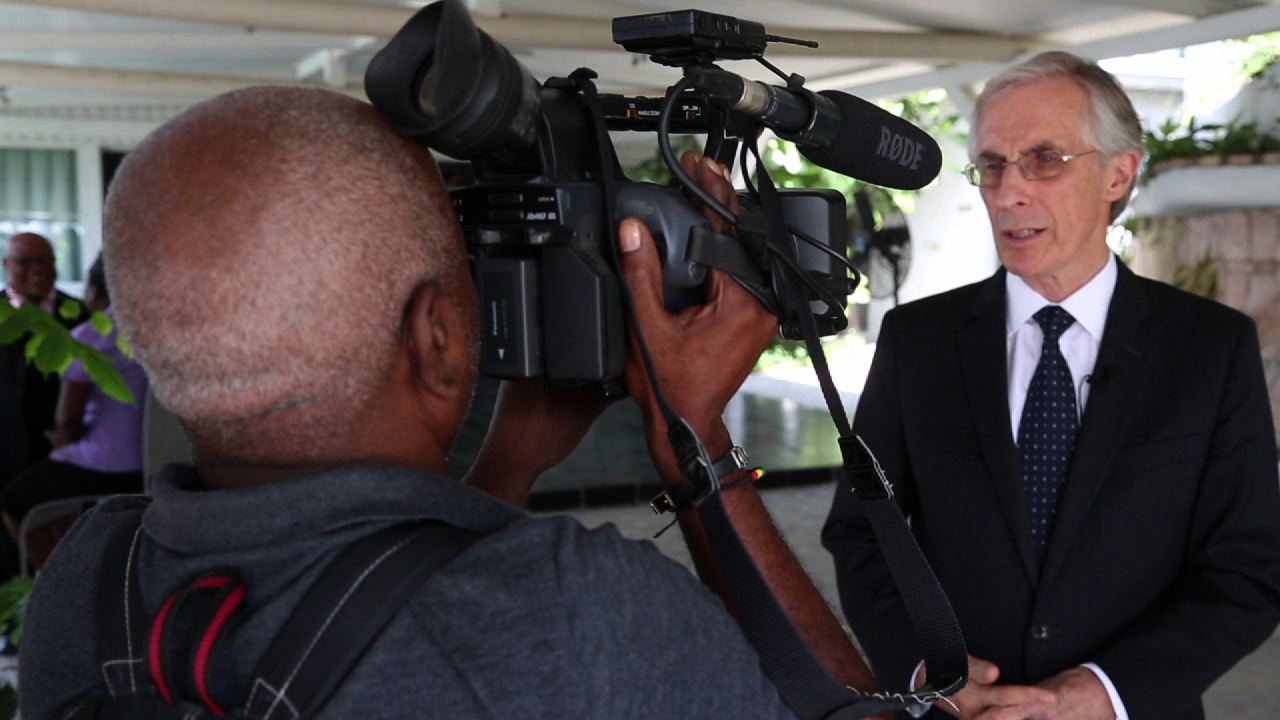
13. SOUNDBITE (English) Barry Jatca, Health and Hygiene Officer, British Red Cross:
"At the moment we've got the observation unit here, which is looking after people with any form of diarrhoea and vomiting to make sure that we take immediate measures to stabilize their conditions."
14. Pan left, International Red Cross Federation officer walking in camp
15. Med shot, family under a tarpaulin with IFRC officer arriving in the back
16. Med shot, Red Cross officer talking
17. SOUNDUP (Creole) Red Cross Officer:
"What should you do to avoid Cholera?"
18. Close up, girl in the camp
19. SOUNDUP (Creole) Girl:
“We have to wash our hands."
20. SOUNDUP (Creole) Red Cross Officer:
"Bravo!"
21. Med shot, banner on the gate of the camp reading "Hello water, hello soap, baby microbe."
19. Med shot, man reading information posters
20. SOUNDBITE (English) Barry Jatca, Health and Hygiene Officer, British Red Cross:
“We've also had community cleaners who are taking responsibilities of cleaning their own latrines that is for people living next to the latrines. Cleaning the latrines and making sure that they are kept at a standard that is accepted by the people who live around them."
21. Med shot, men cleaning latrines
22. Med shot, latrines
23. Wide shot, people cleaning series of latrines cabanas
24. Med shot, man driving truck
25. Med shot, Red Cross water truck parking
26. Med shot, man opening water citron on top of the truck
27. Med shot, man taking a sample of water outside citron
28. Med shot, man shaking sample of water
29. Med shot, man putting sample inside measuring instrument
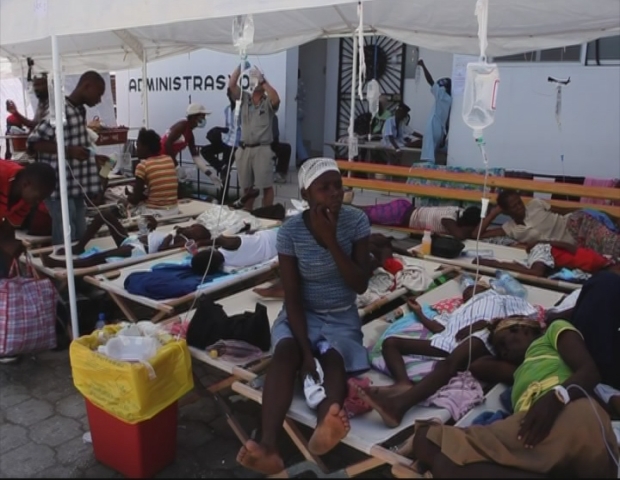
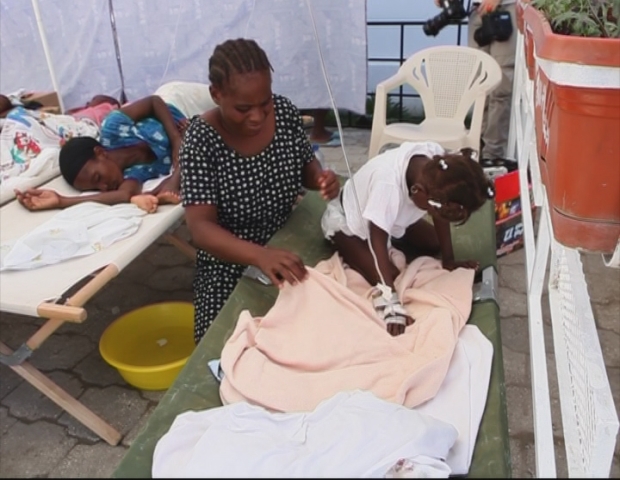
Ten months after a major earthquake and almost a month after the discovery of cholera in Haiti, 1.3 million internal displaced people (IDP) are still living under very precarious sanitation conditions in Haiti's capital.
Maigate camp is located just outside the Haiti’s international airport in Port Au Prince. The 8,000 people living in Maigate lack of all essential sanitary and medical aid. Sewage containers, which haven't been emptied for five months, have now started to leak.
SOUNDBITE (Creole) Rachelande Valmy, Spokesperson, Women Committee of Maigate Camp:
"The toilets are broken, sewage water is pouring on the floor while there is Cholera. We are really living in bad conditions. People are sleeping on the floor; pregnant women live on the floor with their sick babies in their hands. We are really having a hard time."
Sanitation in camps has always been a major concern for the Red Cross in Haiti. The International Federation of Red Cross and Red Crescent noted that resources and innovative solutions are urgently needed to support Haitian authorities to provide improved sanitation services to people affected by the quake.
In contrast, in another camp in Port au Prince, where 10,000 families live, the Red Cross works with the local communities to build clean latrines and improve sanitary conditions. Moreover, an observation center was installed to monitor cases of diarrhoea.
SOUNDBITE (English) Barry Jatca, Health and Hygiene Officer, British Red Cross:
"At the moment we've got the observation unit here, which is looking after people with any form of diarrhoea and vomiting to make sure that we take immediate measures to stabilize their conditions."
Cholera, dysentery and many other diseases can be avoided with just access to clean water and latrines. Health officers from the Red Cross today go door to door distributing informational material needed to educate people on basic ways to avoid cholera.
SOUNDBITE (English) Barry Jatca, Health and Hygiene Officer, British Red Cross:
"We've also had community cleaners who are taking responsibilities of cleaning their own latrines that is for people living next to the latrines. Cleaning the latrines and making sure that they are kept at a standard that is accepted by the people who live around them."
Furthermore, water trucks are travelling around the capital delivering 2.5 million litres of clean water every day.
Earlier this week, the World Health Organization reported that in Port au Prince, the number of hospital admissions and deaths due to cholera are at 953 and 46 respectively. In the metropolitan area, cases have been confirmed in six of the seven communes.
Download
There is no media available to download.