Media Home
 UN Web TV
 UN Audiovisual Library
 UN Photo
Unifeed
UZBEKISTAN / MIDWIVES
STORY: UZBEKISTAN / MIDWIVES
TRT: 3.25
SOURCE: UNFPA
RESTRICTIONS: NONE
LANGUAGE: UZBEK / RUSSIAN / ENGLISH / NATS
DATELINE: 10 JUNE, 2011, TASHKENT, UZBEKISTAN
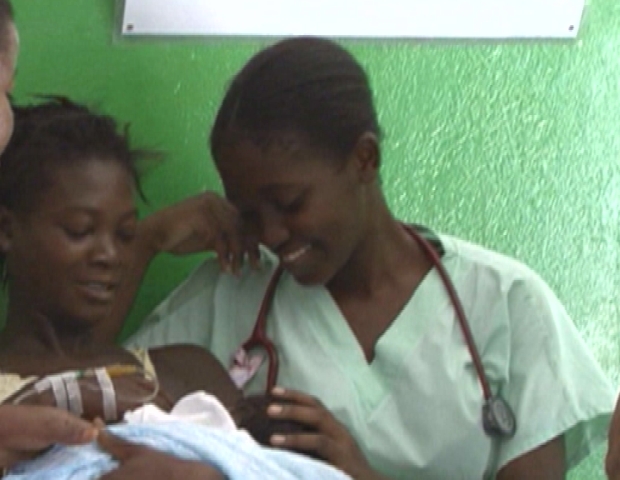
1. Various Shots, Ziyoda Karimova recovering in bed with her newborn baby two hours after giving birth.
2. Close up, baby lying on breast.
3. SOUNDBITE (Uzbek) Ziyoda Karimova, mother:
“This is my third child, and all three have been born here. The staff are great.”
4. Wide shot, birthing room at Republican Center for Obstetrics and Gynaecology, Tashkent.
5. Med shot, mother being cared for by midwife Musaeva Khurshida.
6. Various shots, exterior hospital grounds with midwife Khurshida Musaeva and UNFPA staff talking
7. SOUNDBITE (Uzbek) Khurshida Musaeva, midwife:
“I want the same kind of services here, to be available to every woman in Uzbekistan.”
8. Various shots, consultation at Republican Center, outpatient area
9. Med shot, two expectant women arriving at rural clinic, in Qibray District, Tashkent Region
10. Wide shot, women entering Baykurgan Community Rural Health Clinic
11. SOUNDBITE (Russian) Dr. Asomiddin Kamilov, Deputy Minister of Health, Uzbekistan:
“The figures speak for themselves. In the 90’s we had a maternal mortality ratio of 65 per 100,000 live births. Now it is about 20, and we are working for further improvements.”
12. Various shots, exterior and interior of clinic
13. Wide shot, midwife meeting with newly arriving expectant mothers in waiting room
14. Wide shot, expectant mother, Malokhat Rapikova (19 years old) entering clinic for consultation with midwife Nabira Usmonova
15. SOUNDBITE (Russian) Dr. Asomiddin Kamilov, Deputy Minister of Health, Uzbekistan:
“UNFPA is our partner in training midwives. One of the biggest concerns is that we have more than 20-thousand midwives in the country and training needs to be a continuing process.”
16. Various shots, blood pressure taking sequence in clinic
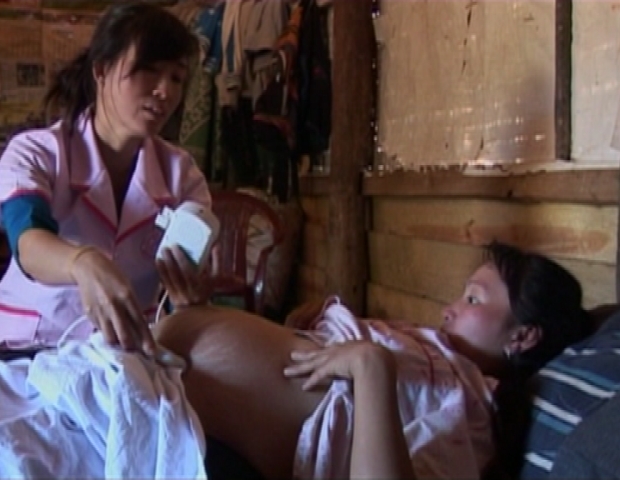
17. Various shots, monitoring of heart beat in clinic
18. SOUNDBITE (Uzbek) Nabira Usmonova, Midwife:
“All our equipment we got in the past several years, but for a clinic this size, serving 8-thousand people, it would be good to have more equipment such as ultra-sound.”
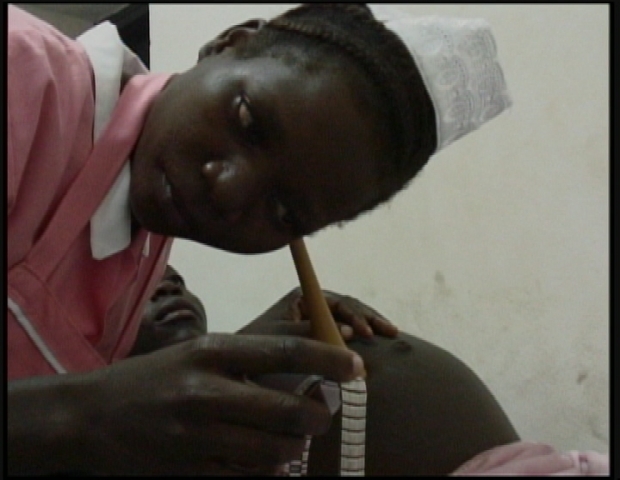
19. Various shots, examination sequence with midwife Nabira Usmonova, and pregnant woman, Shokhista Nazarchaeva (age 22 years) measuring stomach and listening to baby heart-beat with old style listening tube
20. SHOTLIST (Uzbek) Shokhista Nazarchaeva, mother to be:
“Yes, I am nervous, but the staff here put me at ease.”
21. Various shots, consultation between midwife and expectant mother
22. SOUNDBITE (Uzbek) Shokhista Nazarchaeva, mother to be:
“My wish is for my son to be healthy, and to grow up to become a doctor.”
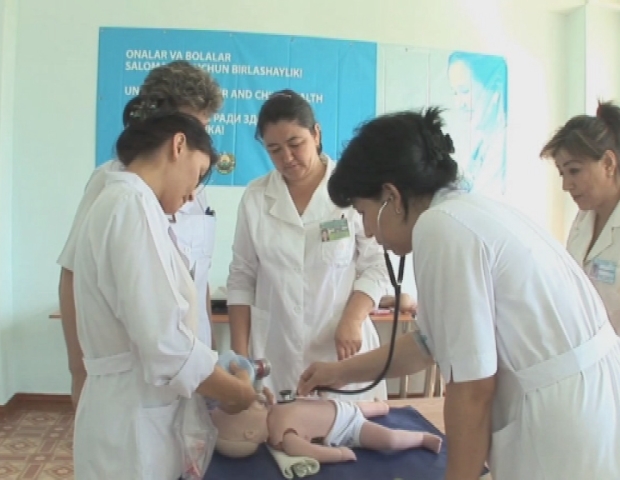
23. Various shots, midwife training session at institute for continuing education in Tashkent.
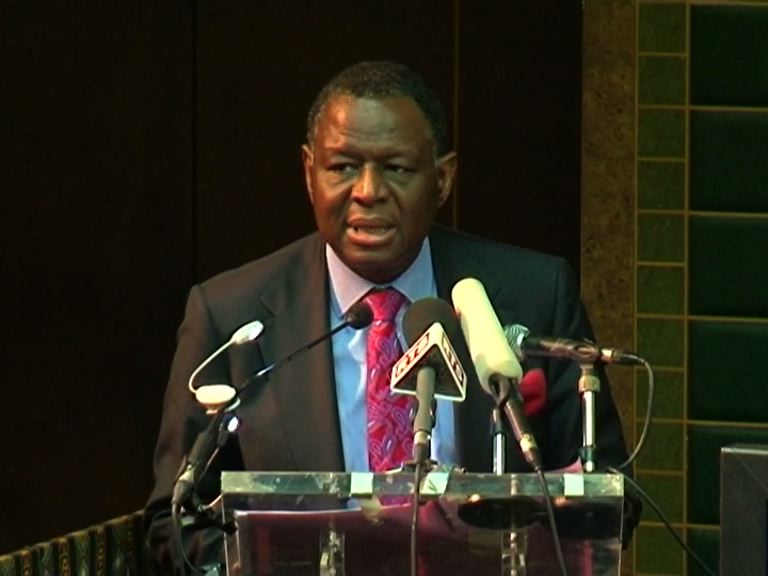
24. SOUNDBITE (English) Karl Kulessa, UNFPA Representative, Uzbekistan:
“I think the Government has set maternal health as a big priority, as a major priority. This was clear from the speech by the President in November of last year. He stressed, and I think we agree with him, that Millennium Development Goal Number 5, on maternal health, is a major priority in this country, and we’re working very closely with the Government to realizing this goal.”
25. baby heart-beat monitoring sequence from Republican Center
26. Various shots, Gulmira Kadirova with new baby, and her family
27. Wide shot, Gulmira Kadirova and baby joined by husband and other family members to leave hospital together
Bonding with her son, born just two hours earlier, mother Ziyoda knows the system that has brought her baby into this world, is very different from the one that delivered her.
In a fully equipped birthing room, with a family member and a skilled midwife present, its evidence of how far child delivery in Uzbekistan has developed.
In the thirty years since she became a midwife, Khurshida Musaeva has witnessed the transformation at this national hospital in the capital Tashkent.
Although almost all deliveries happen in maternity hospitals in Uzbekistan, in the quality of services at rural level, inequities exist, a problem which the Government is addressing through healthcare reform.
In Uzbekistan, midwives play a critical role in delivering antenatal care for pregnant women and assisting physicians in the process of delivery.
Their role in making further improvements in quality is vital.
In a country that produces on average, 265 obstetric complications daily, the majority of maternal deaths still occur among women from the countryside, with training, equipment and supplies seen as major challenges.
Midwife Nabira, has worked in the same clinic for more than 30 years. The dedication and abundance of midwives, is a big reassurance for first time mothers like Shokhista.
And the enduring trust in those caring for her is clear.
The United Nations Population Fund, UNFPA, has been supporting Government improvements in reproductive health for more than a decade.
Problems, such as gaps in the training of midwives, and also a lack of funding persist.
But the same period has seen big improvements.
Back at the national Center in Tashkent, Gulmira Kadirova is preparing to present her family’s newest addition to the world - baby Nozima.
With traditional flowers and warm embraces, the family emerge, a joyous moment for them, for the midwives who delivered the baby, cause for professional pride.
Download
There is no media available to download.