Media Home
 UN Web TV
 UN Audiovisual Library
 UN Photo
Unifeed
TIMOR-LESTE/ PRISON VOTE
STORY: TIMOR-LESTE / PRISON VOTE
TRT: 3.19
SOURCE: UNMIT
RESTRICTIONS: NONE
LANGUAGE: ENGLISH / TETUN
DATELINE: 17 MARCH 2012, GLENO, TIMOR LESTE
1. Wide shot, mobile polling station in prison
2. Wide shot, Gleno prison
3. Close up, prison banner
4. Wide shot, prison
5. Wide shot, prisoner waiting outside for vote
6. Close up, voter registration card
7. Med shot, prisoner waiting
8. Close up, Voter Registration Card
9. Wide shot, prison guard votes
10. Wide shot, prisoners waiting outside for voting
11. Med shot, prisoner and voting staff checking name
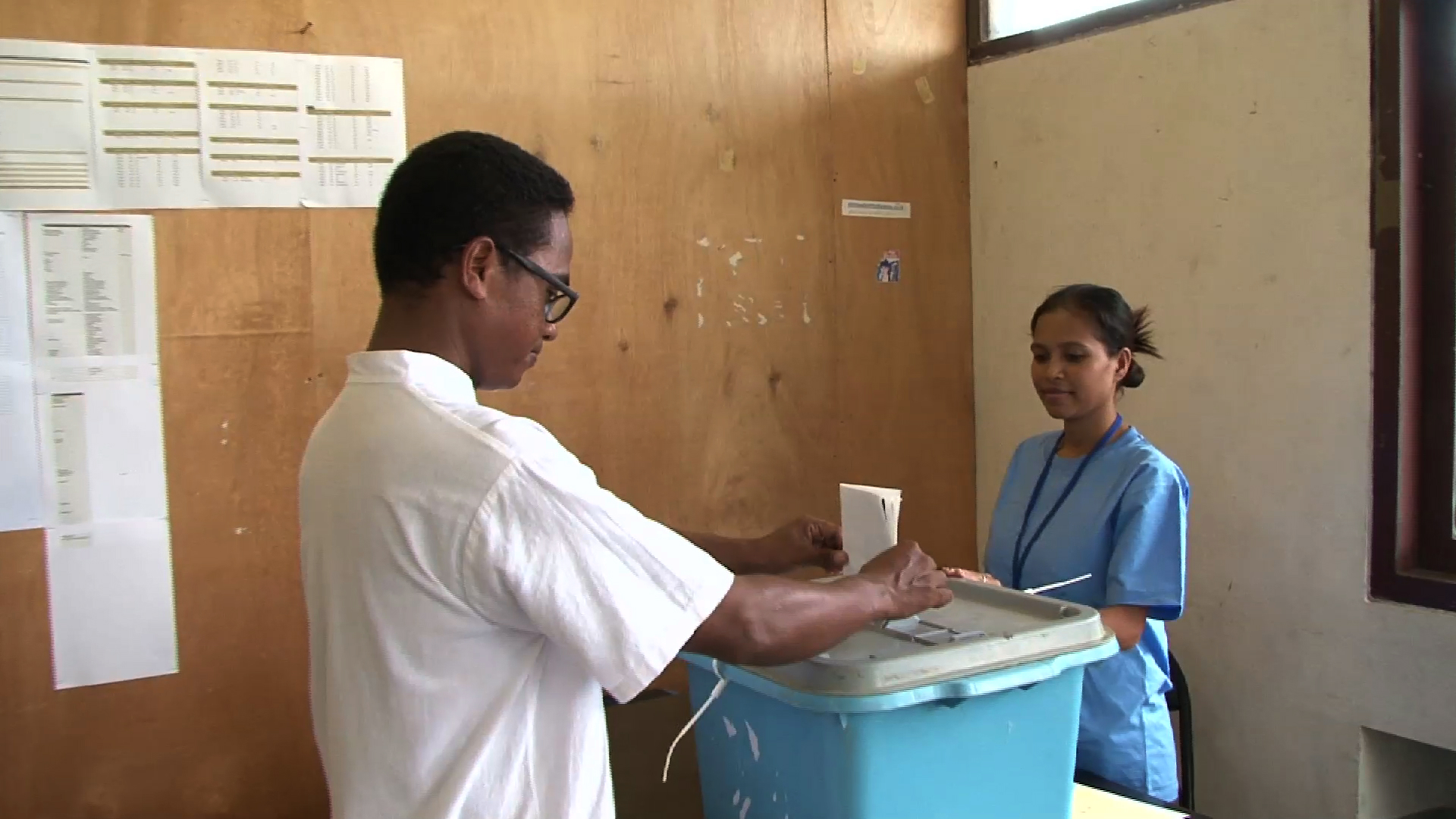
12. Med shot, prisoners voting
13. Close up, prisoner Voting
14. Close up, women Prisoner voting
15. Close up, other women Prisoner voting
16. Med shot, prisoner with voting staff
17. Wide shot, prison
18. SOUNDBITE (Tetun) J.V., prisoner:
“I am in prison but I get my freedom to participate in the election.”
19. SOUNDBITE (Tetun) A.J., prisoner:
“I gave my vote to serve as an example to the people of Timor-Leste to follow my participation in the election.”
20. SOUNDBITE (Tetun) O.A., prisoner:
“I have a right to participate in the election. I feel happy now even though I am still in prison.”
21. SOUNDBITE (Tetun) Cristiano Salsinha, Gleno Prison Director:
“A citizen needs first an electoral ID card, a national registration to participate in the election. There are 33 prisoners here in Gleno but only 29 voted because the others do not have the necessary ID.”
22. SOUNDBITE (English) Carolyn Tanner, UN Human Rights Officer –UNMIT Human Rights and Transitional Justice Section:
“The international covenant on civil and political rights guarantees that every citizen should have the right to vote and there are some limits of when you can vote and when you can take away the right to vote but every citizen is guaranteed the rights and when Timor decided to give the right to all prisoners to vote as well it was a really progressive move because it is a controversial topic in some countries. What the United Nations Human Rights Committee has said is that you are allowed to limit the right to vote but only if it’s reasonable, objective and proportionate, and they found that completely prohibiting prisoners to voting isn’t a legitimate move.”
23. SOUNDBITE (English) Alan Swaine, UN Corrections Officer, UNMIT Administration of Justice Support Unit (AJSU):
“They still remain members of their society, they are serving a punishment for a misjudgement against society that they’ve been found guilty of, but nonetheless they are still a member of that society, and therefore they have the right to vote and to be active in that selection process of who is going be their government, who is going to be their leaders, they have a right to state their opinion and to do so by way of voting.”
24. Tilt up, prison
Their faces can’t be seen but their smiles are everywhere. This group of men and women are lined up for a very special occasion. They are in prison and have been convicted, but are free to choose their president.
Gleno, in Ermera district, is one of only two prisons in Timor-Leste. It is about 50 miles from the capital city of Dili. Twenty-nine prisoners in Gleno exercised their right to vote on election day.
SOUNDBITE (Tenum) A.J., prisoner:
“I gave my vote to serve as an example to the people of Timor-Leste to follow my participation in the election.”
Their participation was possible because the Southeast Asian nation allowed mobile polling stations inside the prisons. Its classroom became a voting centre like any other, with supervisors, ID lists, ballots and ink.
SOUNDBITE Cristiano Salsinha, Gleno Prison Director:
“A citizen needs first an electoral ID card, a national registration to participate in the election. There are 33 prisoners here in Gleno but only 29 voted because the others do not have the necessary ID.”
Voting included prison guards, who also cast their ballots. The electoral process at Gleno was monitored by Timorese authorities, election observers and UN officials.
SOUNDBITE (English) Carolyn Tanner, UN Human Rights Officer, UNMIT Human Rights and Transitional Justice Section:
“The international covenant on civil and political rights guarantees that every citizen should have the right to vote and there are some limits of when you can vote and when you can take away the right to vote but every citizen is guaranteed the rights and when Timor decided to give the right to all prisoners to vote as well it was a really progressive move because it is a controversial topic in some countries. What the United Nations Human Rights Committee has said is that you are allowed to limit the right to vote but only if it’s reasonable, objective and proportionate, and they found that completely prohibiting prisoners to voting isn’t a legitimate move.”
SOUNDBITE (English) Alan Swaine, UN Corrections Officer, UNMIT Administration of Justice Support Unit (AJSU):
“They still remain members of their society, they are serving a punishment for a misjudgement against society that they’ve been found guilty of, but nonetheless they are still a member of that society, and therefore they have the right to vote and to be active in that selection process of who is going be their government, who is going to be their leaders, they have a right to state their opinion and to do so by way of voting.”
Being here does not exclude my right to vote, stressed one prisoner.
SOUNDBITE (Tetum) O.A., prisoner:
“I have a right to participate in the election. I feel happy now even though I am still in prison.”
After voting they were escorted back to their cells. And they were still smiling.
(SOUNDBITE) J.V., prisoner:
“I am in prison but I get my freedom to participate in the election.”
Download
There is no media available to download.