Media Home
 UN Web TV
 UN Audiovisual Library
 UN Photo
Unifeed
MALAYSIA / UNDOCUMENTED CHILDREN
STORY: MALAYSIA / UNDOCUMENTED CHILDREN
TRT: 2.45
SOURCE: UNICEF
RESTRICTIONS: NONE
LANGUAGE: ENGLISH / INDONESIAN / NATS
DATELINE: JUNE 2011, LAHAD DATU, SABAH, MALAYSIA
1. Various shots, plantation workers
2. SOUNDBITE (Indonesian) Maria Rafael, Plantation Worker
“We were very concerned about this because we knew that to enroll in school you need a birth registration. We were very worried. We could not go back (to Indonesia) because we did not have enough money. We were resigned and left it to
3. Various shots, school room
4. Various shots, children working on plantation
5. SOUNDBITE (English) Torben Venning, Director, Borneo Child Aid Society
“They see their children growing up with possibly even less education than they came with from Indonesia and that would be a tragic thing for any parent to see: their children growing up without even the few years of schooling that they have had themselves.”
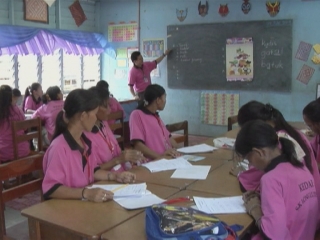
6. Various shots, children in classroom
7. SOUNDBITE (English) Victor Karunan, UNICEF Deputy Representative, Malaysia
“It’s very important for business to understand while they are providing employment to the families, to work on the estate or in the business enterprise, that they also have a responsibility to the families and the children who are born of those parents.”
8. Various shots, school
9. SOUNDBITE (English) Daniel Lo, General Manager, Hap Seng Plantation River Estates
10. Various shots, Maria at home
11. SOUNDBITE (Indonesian) Maria Rafael, Plantation Worker
“My hope is for my daughter to continue her schooling. As long as I can work and afford it, I will do what I can to realize this. We want to continue working here and hope the company will help provide schools for our children. Please help us with this and help our children study to the best of their ability.”
12. Various shots, Maria at home
On the sprawling Hap Seng palm oil plantation on the eastern edge of Malaysian Borneo, Maria Rafael oversees a work team, clearing away brush and dead branches from the trees.
She left her hometown in Indonesia nearly 30 years ago, hoping to make a better living on the plantations in Malaysia’s Sabah state.
While the work has been tough, she says her biggest concern is the future of her daughter, Augustina Felicity, 14, who has no birth certificate.
Without documentation, her daughter is not eligible to attend regular Malaysian schools.
SOUNDBITE (Indonesian) Maria Rafael, Plantation Worker:
“We were very concerned about this because we knew that to enroll in school you need a birth registration. We were very worried. We could not go back (to Indonesia) because we did not have enough money. We were resigned and left it to fate.”
Fate has given her a chance. Her daughter now attends a special school built on the plantation estate with the support of the management and Borneo Child Aid Society.
But many others are not so fortunate.
With no classes to attend, many of these children start helping their parents on the plantation, in effect becoming child laborers without even the rudimentary knowledge of their parents.
SOUNDBITE (English) Torben Venning, Director Borneo Child Aid Society:
“They see their children growing up with possibly even less education than they came with from Indonesia and that would be a tragic thing for any parent to see: their children growing up without even the few years of schooling that they have had themselves.”
Borneo Child Aid Society is working with plantation owners across Sabah to set-up some 100 schools, providing a basic education to about nine thousand children.
In addition to the Malaysian school curriculum, this school also teaches the Indonesian curriculum, so that students can later enroll in secondary or higher education in their home country.
And in order to persuade other enterprises across the region about the advantages, both business-wise and human of this initiative, UNICEF is supporting the Borneo Child Aid Society and is collaborating with the Palm Oil industry in Malaysia.
SOUNDBITE (English) Victor Karunan, UNICEF Deputy Representative, Malaysia
“It’s very important for business to understand while they are providing employment to the families, to work on the estate or in the business enterprise, that they also have a responsibility to the families and the children who are born of those parents.”
That message is gaining influence. Many managers are starting to see the benefits of offering schooling for their workers’ children.
SOUNDBITE (English) Daniel Lo, General Manager, Hap Seng Plantation River Estates,
“To provide education to the children is very important. This is a basic human right. And it’s also to stabilize the work force. I hope that other plantation companies will follow the same, to provide a basic education to their children.”
For Rafael, the plantation’s school has given her daughter a rare opportunity. She hopes that now her daughter will be able to enroll in high school, even though she has no documentation.
SOUNDBITE (Indonesian) Maria Rafael, Plantation Worker
“My hope is for my daughter to continue her schooling. As long as I can work and afford it, I will do what I can to realize this. We want to continue working here and hope the company will help provide schools for our children. Please help us with this and help our children study to the best of their ability.”
Download
There is no media available to download.