Media Home
 UN Web TV
 UN Audiovisual Library
 UN Photo
Unifeed
HAITI / FISHER HUMANITARIAN
STORY: HAITI / FISHER HUMANITARIAN
TRT: 2.56
SOURCE: MINUSTAH
RESTRICTIONS: NONE
LANGUAGE: ENGLISH / NATS
DATELINE: 10 APRIL 2012, PORT-AU-PRINCE, HAITI / FILE
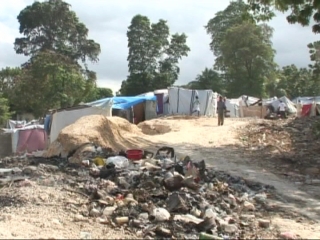
FILE - 13 MARCH 2012, VILLAGE DE DIEU SLUM, PORT-AU-PRINCE, HAITI
1. Med shot, Nigel Fisher, UN Humanitarian Coordinator in Haiti visiting UN clearing ravines in slum area
2. Pan right, UN peacekeepers onto UN bulldozers clearing piles of garbage in the area
10 APRIL 2012, PORT-AU-PRINCE, HAITI
3. SOUNDBITE (English) Nigel Fisher, United Nations Humanitarian Coordinator in Haiti:
“Here in Haiti, we still have an ongoing cholera epidemic, even though it is less than last year. We still have half a million people in camps after the earthquake. Again that’s down from one and a half million from last year but it is still a lot of people. We have the hurricane season coming up and we are already in the midst of heavy rains. We have food insecurity. So we still have a lot of humanitarian issues here in Haiti. And right now we have a consolidated appeal for 2012 – it totals about 230 million and so far we’ve only got nine percent funded. So the situation is quite serious.”
FILE - 29 SEPTEMBER 2011, PORT-AU-PRINCE, HAITI
4. Wide shot, Valerie Amos, UN Under-Secretary-General for Humanitarian Affairs and Emergency Relief Coordinator visiting a camp for internally displaced people (IDPs)
5. Pan right, Valerie Amos looking at female latrines in camp
10 APRIL 2012, PORT-AU-PRINCE, HAITI
6. SOUNDBITE (English) Nigel Fisher, United Nations Humanitarian Coordinator in Haiti:
"Their situation is in fact deteriorating. After two years tents and tarpaulins are in bad shape. And because of declines in funding, we have a number of operational organizations and NGOs actually pulling out of the camps. So until recently we had real problems for example providing sanitation and ensuring latrines get emptied and we have problems providing water supplies and new shelters.”
FILE - 13 MARCH 2012, VILLAGE DE DIEU SLUM, PORT-AU-PRINCE, HAITI
7. Med shot, boy walking next to dirty ravine
8. Close up, trash floating in flooded ravine
9. Wide shot, area with flooded ravine
10 APRIL 2012, PORT-AU-PRINCE, HAITI
10. SOUNDBITE (English) Nigel Fisher, United Nations Humanitarian Coordinator in Haiti:
“We had half a million cases of cholera last year. It was huge. Infections rates have gone down. And the mortality rates have as well which is good news. But WHO estimates that we could have up to 200 000 cases this year, which is still an epidemic of considerable proportions. And again we are finding that we have less resources and the government is still very weak and cannot take over all the functions that were performed last year by the international community. So yes, we are also facing a budget crunch with regards to cholera as well.”
FILE - 3 APRIL 2012, JEAN MARIE VINCENT CAMP, PORT-AU-PRINCE, HAITI
11. Med shot, female IDP cleaning alley outside her tent
12. Wide shot, children running in the camp
10 APRIL 2012, PORT-AU-PRINCE, HAITI
13. SOUNDBITE (English) Nigel Fisher, United Nations Humanitarian Coordinator in Haiti:
“We really have to come down to core needs. So for example people in the camps. We don’t pretend that conditions in which they live in areas they should be. They are pretty bad. But the minimum that we want to try and do is ensure protected chlorinated water, that we can dispose of human waste, clean out the latrines, make sure the camps don’t flood and as people need new shelters, then to provide at least tarpaulins.”
FILE - 21 MARCH 2012, CITE SOLEIL, HAITI
14. Med shot, buckets with tap being handed over to school representatives
15. Med shot, children brushing their teeth together with MINUSTAH peacekeeper
16. Close up, water being filled in bucket
The United Nations Humanitarian Coordinator in Haiti, Nigel Fisher expressed deep concerns about the lack of financial resources for this year’s humanitarian operations in Haiti where disaster responses are still very much needed.
SOUNDBITE (English) Nigel Fisher, United Nations Humanitarian Coordinator in Haiti:
“Here in Haiti, we still have an ongoing cholera epidemic, even though it is less than last year. We still have half a million people in camps after the earthquake. Again that’s down from one and a half million from last year but it is still a lot of people. We have the hurricane season coming up and we are already in the midst of heavy rains. We have food insecurity. So we still have a lot of humanitarian issues here in Haiti. And right now we have a consolidated appeal for 2012 – it totals about 230 million and so far we’ve only got nine percent funded. So the situation is quite serious.”
More than two years after the major earthquake hit Haiti, about 400 000 internally displaced people (IDPs) are still living in camps, and Fisher is worried that they are being left with dramatic living conditions.
SOUNDBITE (English) Nigel Fisher, United Nations Humanitarian Coordinator in Haiti:
"Their situation is in fact deteriorating. After two years tents and tarpaulins are in bad shape. And because of declines in funding, we have a number of operational organizations and NGOs actually pulling out of the camps. So until recently we had real problems for example providing sanitation and ensuring latrines get emptied and we have problems providing water supplies and new shelters.”
On the cholera front, despite major improvement of the response, Haitian authorities are still in great need of assistance. With an early start of the rainy season, popular areas prone to flooding are facing serious risks of contamination.
SOUNDBITE (English) Nigel Fisher, United Nations Humanitarian Coordinator in Haiti:
“We had half a million cases of cholera last year. It was huge. Infections rates have gone down. And the mortality rates have as well which is good news. But WHO estimates that we could have up to 200 000 cases this year, which is still an epidemic of considerable proportions. And again we are finding that we have less resources and the government is still very weak and cannot take over all the functions that were performed last year by the international community. So yes, we are also facing a budget crunch with regards to cholera as well.”
With more than 53.9 million US dollars needed for the April-June period, humanitarian actors are trying their best to cope with the most urgent matters on the field.
SOUNDBITE (English) Nigel Fisher, United Nations Humanitarian Coordinator in Haiti:
“We really have to come down to core needs. So for example people in the camps. We don’t pretend that conditions in which they live in areas they should be. They are pretty bad. But the minimum that we want to try and do is ensure protected chlorinated water, that we can dispose of human waste, clean out the latrines, make sure the camps don’t flood and as people need new shelters, then to provide at least tarpaulins.”
Due to this funding shortfall, Haiti was selected to receive an emergency allocation of eight million US dollars through the United Nations Central Emergency Fund (CERF) window for underfunded crises.
Download
There is no media available to download.