Media Home
 UN Web TV
 UN Audiovisual Library
 UN Photo
Unifeed
YEMEN / MALNUTRITION
STORY: YEMEN / MALNUTRITION
TRT: 1.51
SOURCE: WFP
RESTRICTIONS: NONE
LANGUAGE: ENGLISH / NATS
DATELINE: 25 SEPTEMBER 2012, HODEIDA AND RAYMA GOVERNATE, YEMEN / 15 SEPTEMBER 2012, MAHWEET GOVERNATE, YEMEN
25 SEPTEMBER 2012, HODEIDA GOVERNATE, YEMEN
1. Tracking shot, mountains
2. Various shots, mothers and children at health nutrition clinic
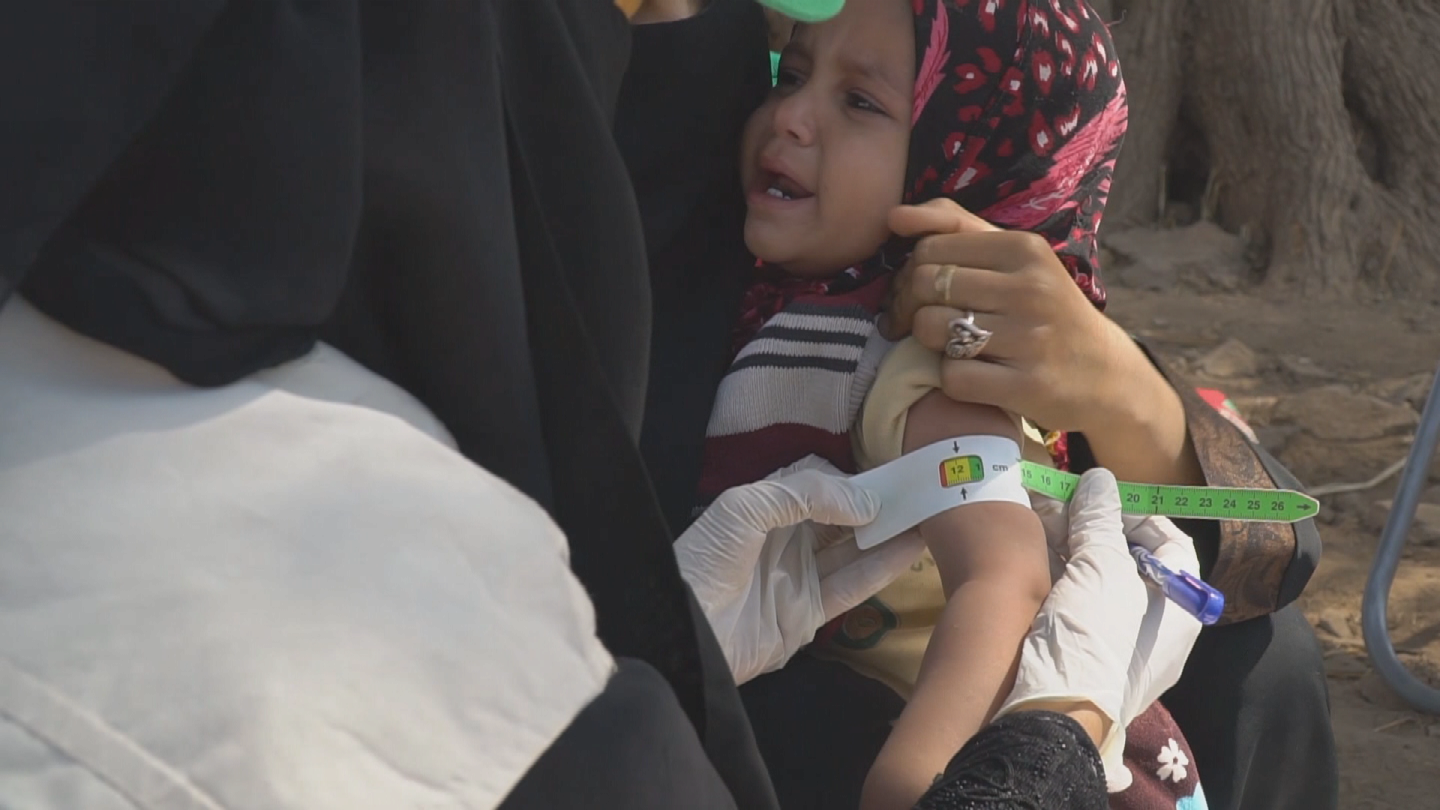
3. Various shots, children being tested for malnutrition and supplied with special supplementary foods
25 SEPTEMBER 2012, RAYMA GOVERNATE, YEMEN
4. Various shots, emergency food distribution
15 SEPTEMBER 2012, MAHWEET GOVERNATE, YEMEN
5. Various shots, emergency food distributions
6. SOUNDBITE (English) Saleh Ali Shroof, age 25:
“We want to do to Saudi Arabia because we don’t have any work here.”
7. Various shots, emergency food distributions
The World Food Programme (WFP) plans, by the end of the year, to double the size of its emergency programme in Yemen, which has the third highest rate of malnutrition in the world.
Child malnutrition is a serious problem in Yemen, with almost half of children under age five — about two million children — chronically malnourished and another one million suffering from acute malnourishment.
Here in Hodeidah governate the acute malnutrition rate is almost double the 15 percent rate set as the emergency threshold by the World Health Organization.
WFP is responding to the problem by delivering micronutrient-enriched supplementary foods — Plumpy’doz, Plumpy’sup, SuperCereal, sugar and vegetable oil — to 675,000 pregnant women, nursing mothers and children under age five.
Food distributions are part of the on-going scale up in WFP’s emergency assistance to severely food insecure people, who can’t produce or buy enough food to feed themselves on a daily basis.
A recent assessment by WFP and its partners indicated that more than five million Yemenis fall into this category.
By the end of the year, WFP’s emergency programme is set to double in size, growing from 1.8 million to 3.9 million people. The agency is finalizing plans to reach all five million of the severely food insecure next year, at a total cost of more than $300 million.
But the agency already faces a shortfall of some $69 million on this year’s $223 million budget.
The increase also represents a huge logistical challenge, involving the doubling of distribution points from 3,000 to 6,000 in Yemen’s thirteen poorest governates, including Mahweet and Rayma.
People receive a monthly ration of 25 kilogrammes of wheat and 2.2 litres of vegetable oil, which will provide them with a safety net of around 500 kilocalories a day. That’s about one-quarter of the 2,100 kilo calories the average adult needs per day.
Download
There is no media available to download.