Media Home
 UN Web TV
 UN Audiovisual Library
 UN Photo
Unifeed
WORLD BANK / JIM YONG KIM
STORY: WORLD BANK / JIM YONG KIM
TRT: 2:20
SOURCE: WORLD BANK
RESTRICTIONS: NONE
LANGUAGE: ENGLISH / NATS
DATELINE: 2 APRIL 2013, WASHINGTON, DC
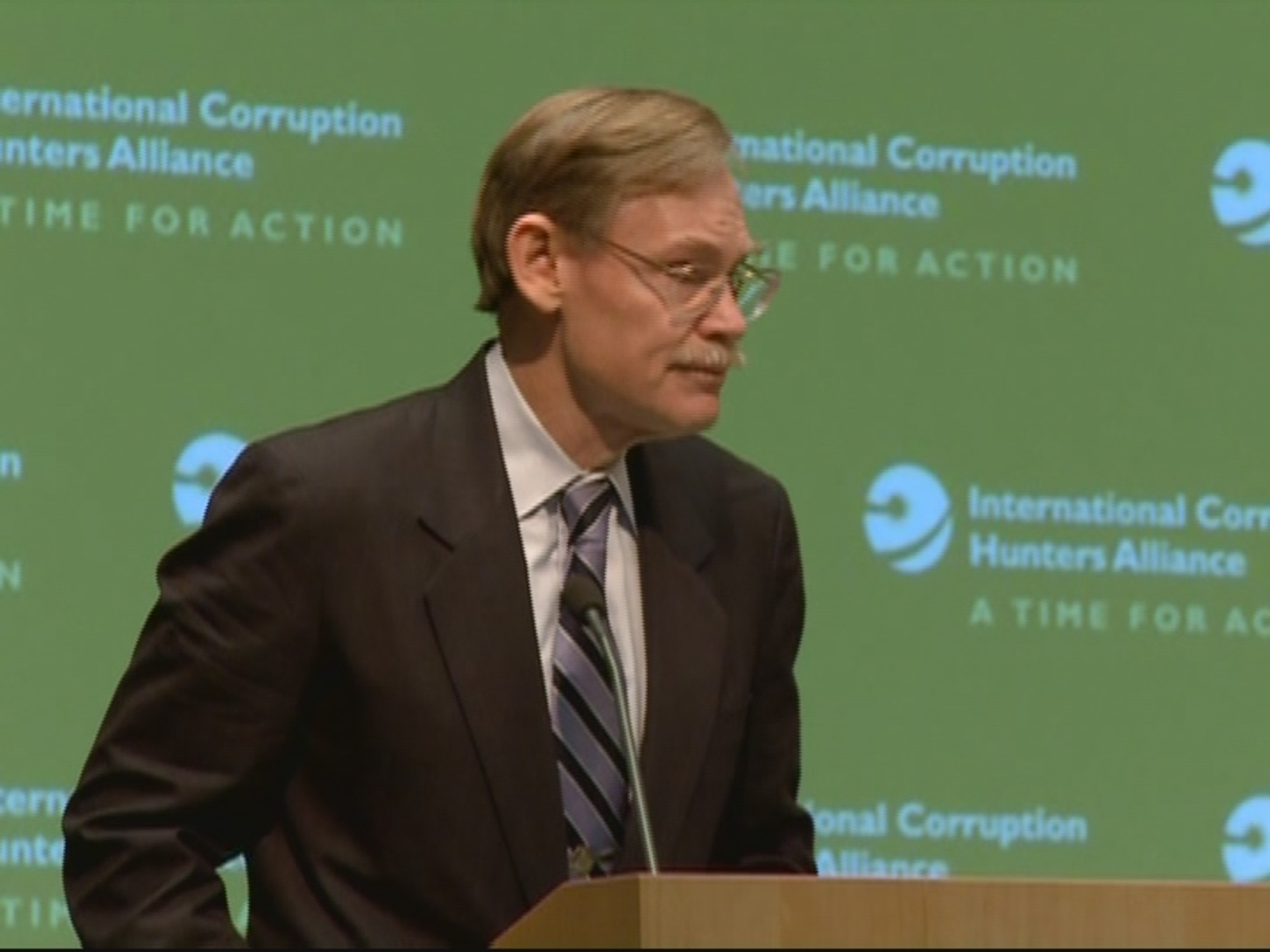
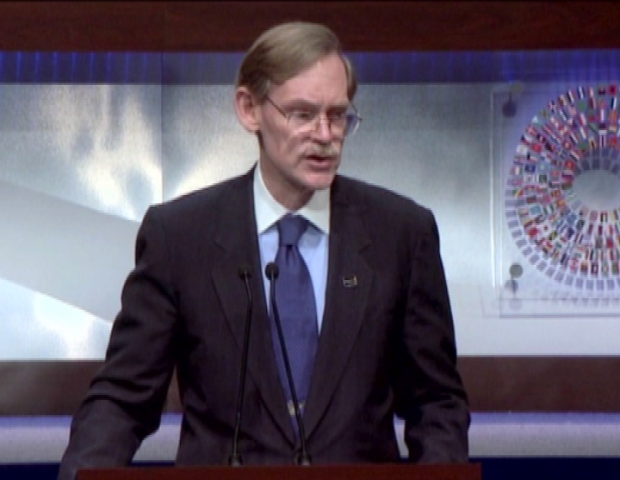
1. Wide shot, Jim Yong Kim at the podium
2. Med shot, audience
3. SOUNDBITE (English) Jim Yong Kim, President, World Bank Group:
“We are at an auspicious moment in history, when the successes of past decades and an increasingly favorable economic outlook combine to give developing countries a chance, for the first time ever, to end extreme poverty within a generation. Our duty now must be to ensure that these favorable circumstances are matched with clarity of purpose and resolute action to realize this historic opportunity. We know the end of poverty will not come easily. In the years ahead, as we push toward this goal, the job will become tougher and tougher, because those remaining in poverty will be the hardest to reach.”
4. Close up, audience
5. SOUNDBITE (English) Jim Yong Kim, President, World Bank Group:
“Increasingly, countries are looking to the World Bank Group for support in tackling delivery challenges. They tell us they have record numbers of children in school, but tests show that far too many can’t read or write by the fifth grade. They tell us plans for new sanitation plants, or new roads, or new bridges have been approved, but years later they still are not completed. These are delivery failures, and for many countries, they’re the greatest obstacle to development progress. That’s why we are working with countries and partners to develop what we are calling a science of delivery for development. As it matures, this new field will provide frontline development practitioners with knowledge, tools, and support networks.”
6. Close up, audience
7. SOUNDBITE (English) Jim Yong Kim, President, World Bank Group:
“If we act today, if we work relentlessly toward these goals of ending extreme poverty and boosting shared prosperity, we have the opportunity to create a world for our children which is defined not by stark inequities but by soaring opportunities; a sustainable world where all households have access to clean energy; a world where everyone has enough to eat; a world where no one dies from preventable diseases; a world free of poverty.”
8. Close up, audience
The World Bank Group President, Jim Yong Kim, today (3 April) outlined a bold global agenda for ending extreme poverty by 2030 and promoting shared prosperity to boost the incomes of the poorest 40 per cent of the population.
In a speech at Georgetown University, Kim urged developing countries, donors, and development partners to work together to support equitable and inclusive growth, especially in fragile and conflict-affected states, and to fight climate change.
SOUNDBITE (English) Jim Yong Kim, President, World Bank Group:
“We are at an auspicious moment in history, when the successes of past decades and an increasingly favorable economic outlook combine to give developing countries a chance, for the first time ever, to end extreme poverty within a generation. Our duty now must be to ensure that these favorable circumstances are matched with clarity of purpose and resolute action to realize this historic opportunity. We know the end of poverty will not come easily. In the years ahead, as we push toward this goal, the job will become tougher and tougher, because those remaining in poverty will be the hardest to reach.”
Speaking in advance of the upcoming World Bank/IMF Spring Meetings, Kim observed that developing economies rebounded quickly from the crisis and are now in a fundamentally sound position, thanks to greater macroeconomic stability, a stronger rule of law, and increased investments in human capital and infrastructure. Productivity growth in the private sector, the source of 90 percent of all jobs, is high.
Kim asserted that to meet global challenges, fighting extreme poverty alone is not enough.
SOUNDBITE (English) Jim Yong Kim, President, World Bank Group:
“Increasingly, countries are looking to the World Bank Group for support in tackling delivery challenges. They tell us they have record numbers of children in school, but tests show that far too many can’t read or write by the fifth grade. They tell us plans for new sanitation plants, or new roads, or new bridges have been approved, but years later they still are not completed. These are delivery failures, and for many countries, they’re the greatest obstacle to development progress. That’s why we are working with countries and partners to develop what we are calling a science of delivery for development. As it matures, this new field will provide frontline development practitioners with knowledge, tools, and support networks.”
Kim noted that Friday, April 5 marks 1,000 days until the end of 2015, the deadline for achieving the MDGs, and while progress on the MDGs has been impressive, it remains uneven across populations and sectors. Kim called on the global community to use these last 1,000 days to redouble efforts in areas where there have not been strong enough advances.
SOUNDBITE (English) Jim Yong Kim, President, World Bank Group:
“If we act today, if we work relentlessly toward these goals of ending extreme poverty and boosting shared prosperity, we have the opportunity to create a world for our children which is defined not by stark inequities but by soaring opportunities; a sustainable world where all households have access to clean energy; a world where everyone has enough to eat; a world where no one dies from preventable diseases; a world free of poverty.”
Kim noted that the first Millennium Development Goal (MDG), to halve extreme poverty, was achieved in 2010, five years ahead of time, after developing countries spent years investing in social safety nets and working hard to build the fiscal space and create the macroeconomic buffers to respond effectively if a crisis hit.
Download
There is no media available to download.