Media Home
 UN Web TV
 UN Audiovisual Library
 UN Photo
Unifeed
GENEVA / CLIMATE CHANGE REPORT
STORY: GENEVA / CLIMATE CHANGE REPORT
TRT: 2.04
SOURCE: CH UNTV
RESTRICTIONS: NONE
LANGUAGE: ENGLISH / NATS
DATELINE: 3 JULY 2013, GENEVA, SWITZERLAND
FILE – RECENT, PALAIS DES NATIONS, GENEVA, SWITZERLAND
1. Wide shot, exterior Palais des Nations
3 JULY 2013, GENEVA, SWITZERLAND
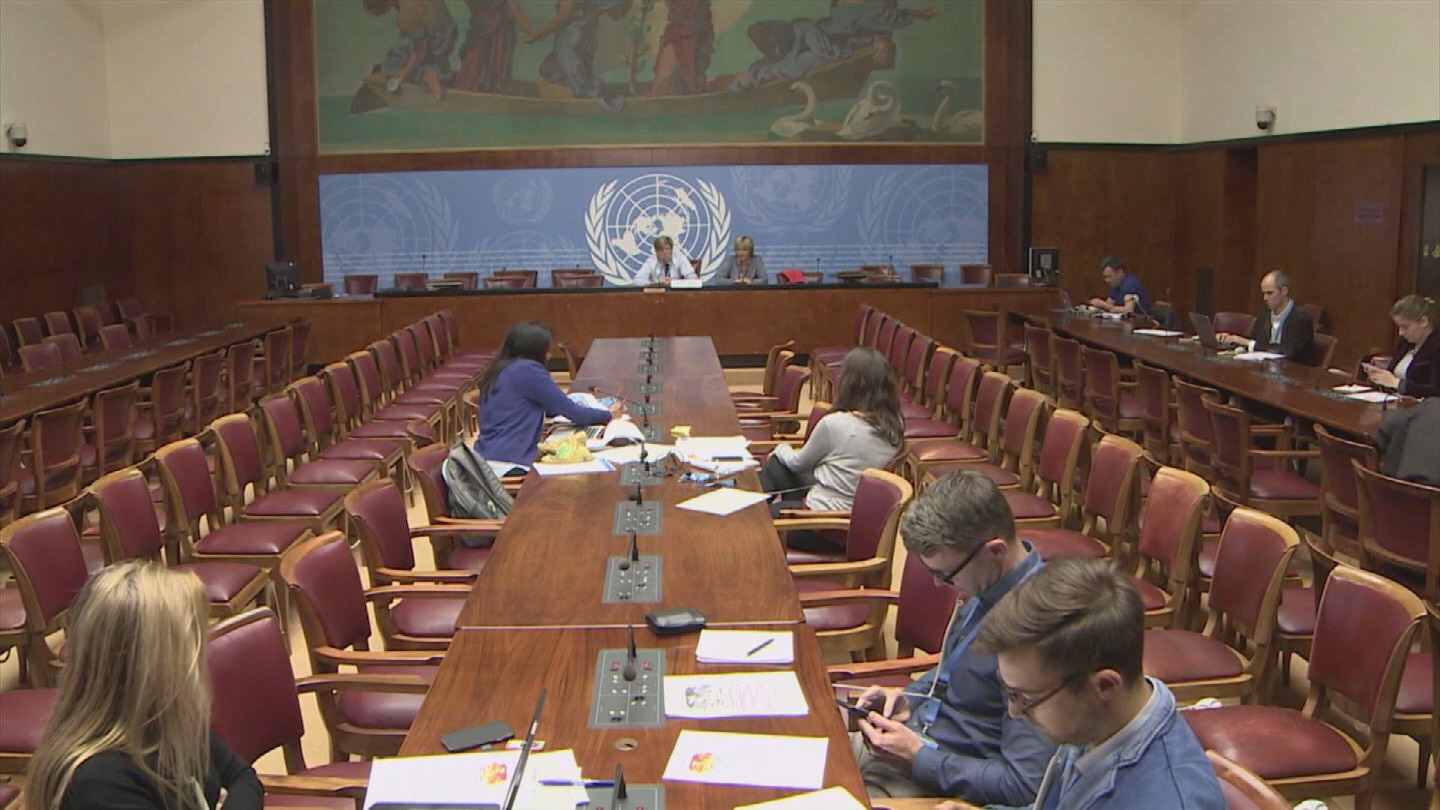
2. Pan right, Salle III
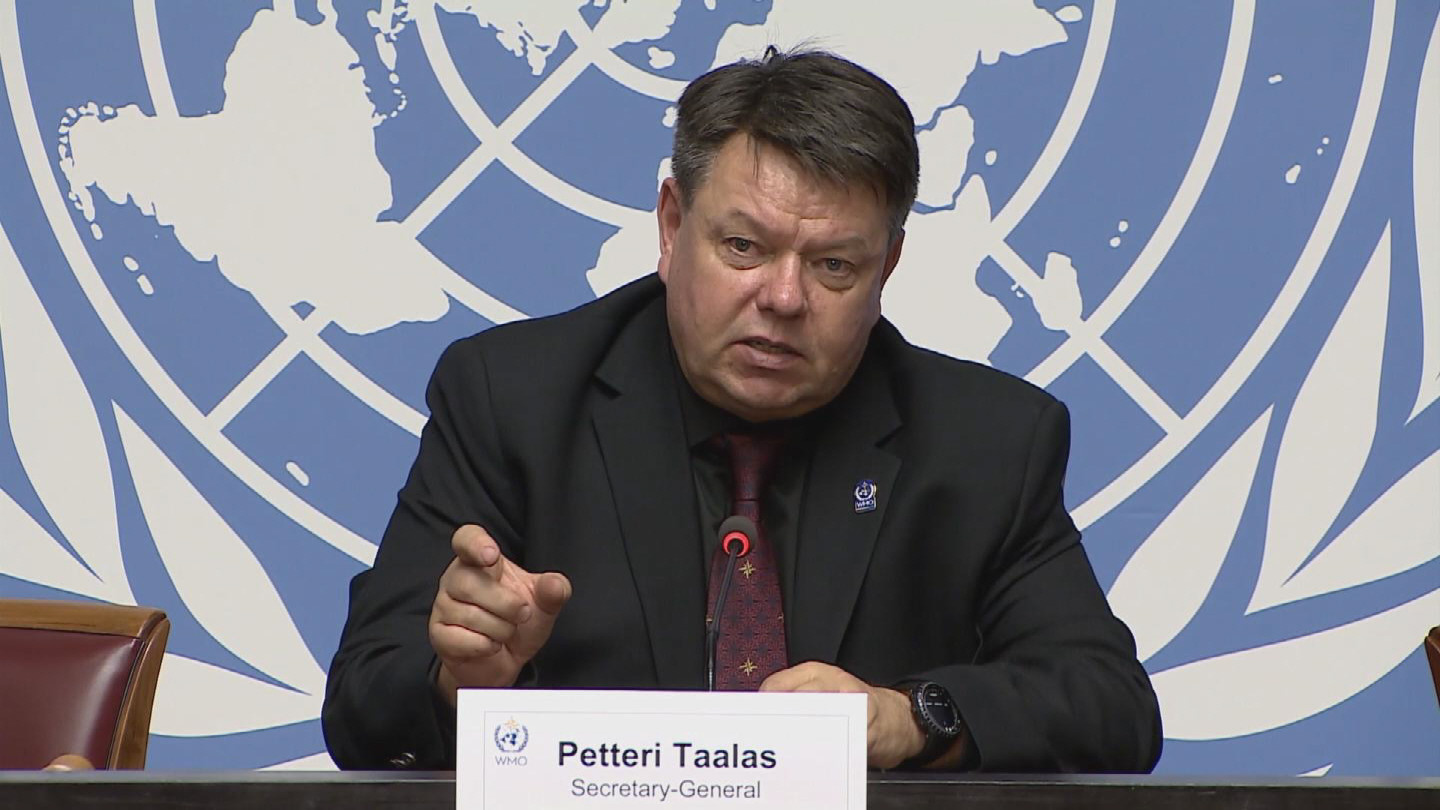
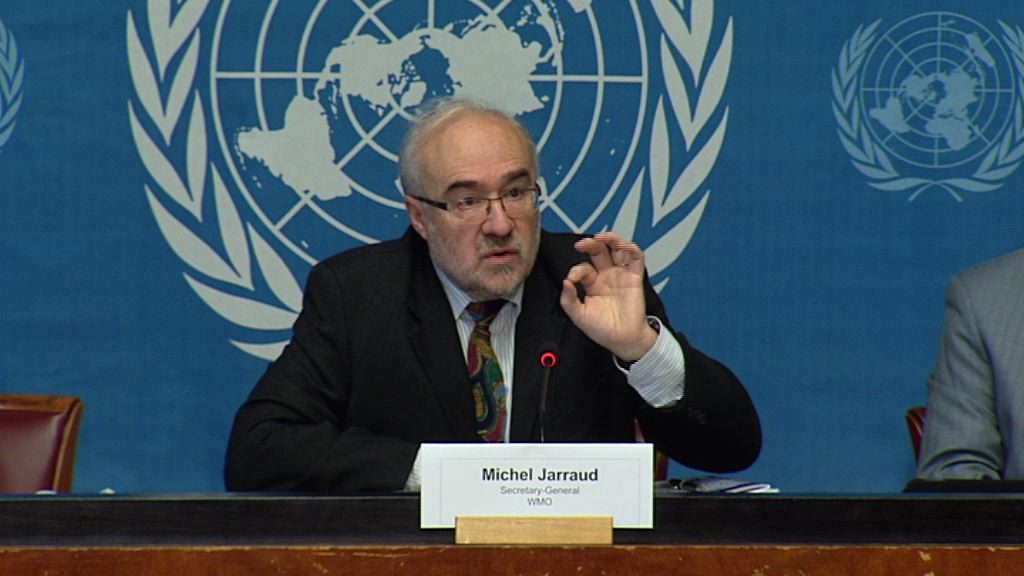
3. SOUNDBITE (English) Michel Jarraud, Secretary-General, World
Meteorological Organization (WMO):
“In many places, you have heard that temperature increase has reached a plateau. Now, I would really like you to have a look at this graphic. Which plateau are we talking about? There is no plateau on this, there is no plateau if you filter out this very short term variability. The last decade was the warmest by a significant margin. Actually the increase between the 90s, 91 to the 2002 is the largest since we have had instrumental records, so if anything we should not talk about the plateau, we should talk about the acceleration.”
4. Cutaway, Global Climate Change report
5. SOUNDBITE (English) Michel Jarraud, Secretary-General of the World Meteorological Organization:
“We should not focus on individual years. We should look at the trend because you have El Niño you will have La Niña, you will have in the future other El Niño, La Niña years so if you want to look at this trend it is important to filter to have this average of a long enough period. Actually ten years may not be long enough but still it gives us a good feeling.”
6. Cutaway, journalists taking notes
7. SOUNDBITE (English) Michel Jarraud, Secretary-General of the World
Meteorological Organization:
“For the 2003 heat wave, the world health organization estimates that the additional death toll for western Europe was over 60,000 people. It is a big, it is a big impact. And for Russia alone I think it was estimated to be about 50,000 people alone in the 2010 heat wave.”
8. Cutaway, Michel Jarraud talking at podium
9. SOUNDBITE (English) Michel Jarraud, Secretary-General of the World
Meteorological Organization:
“Out of these 139 members, 94 percent of them reported that the last decade was the warmest, so it’s not just isolated 94% of the countries experienced their warmest decade in this 2001-2010 period.”
10. Cut a way, journalist typing, Salle III, Palais des Nations, Geneva.
11. Cut a way, wide of podium, Salle III, Palais des Nations, Geneva.
12. Cut a way, journalist typing, Salle III, Palais des Nations, Geneva.
13. Cut a way, journalist on phone, Salle III, Palais des Nations, Geneva
The world has experienced unprecedented high-impact climate extremes during the 2001-2010 decade, which was the warmest since the start of modern measurements in 1850 and continued an extended period of accelerating global warming a new report by the World Meteorological Organization (WMO) said.
Launching the report “The Global Climate 2001-2010, A Decade of Climate Extremes”
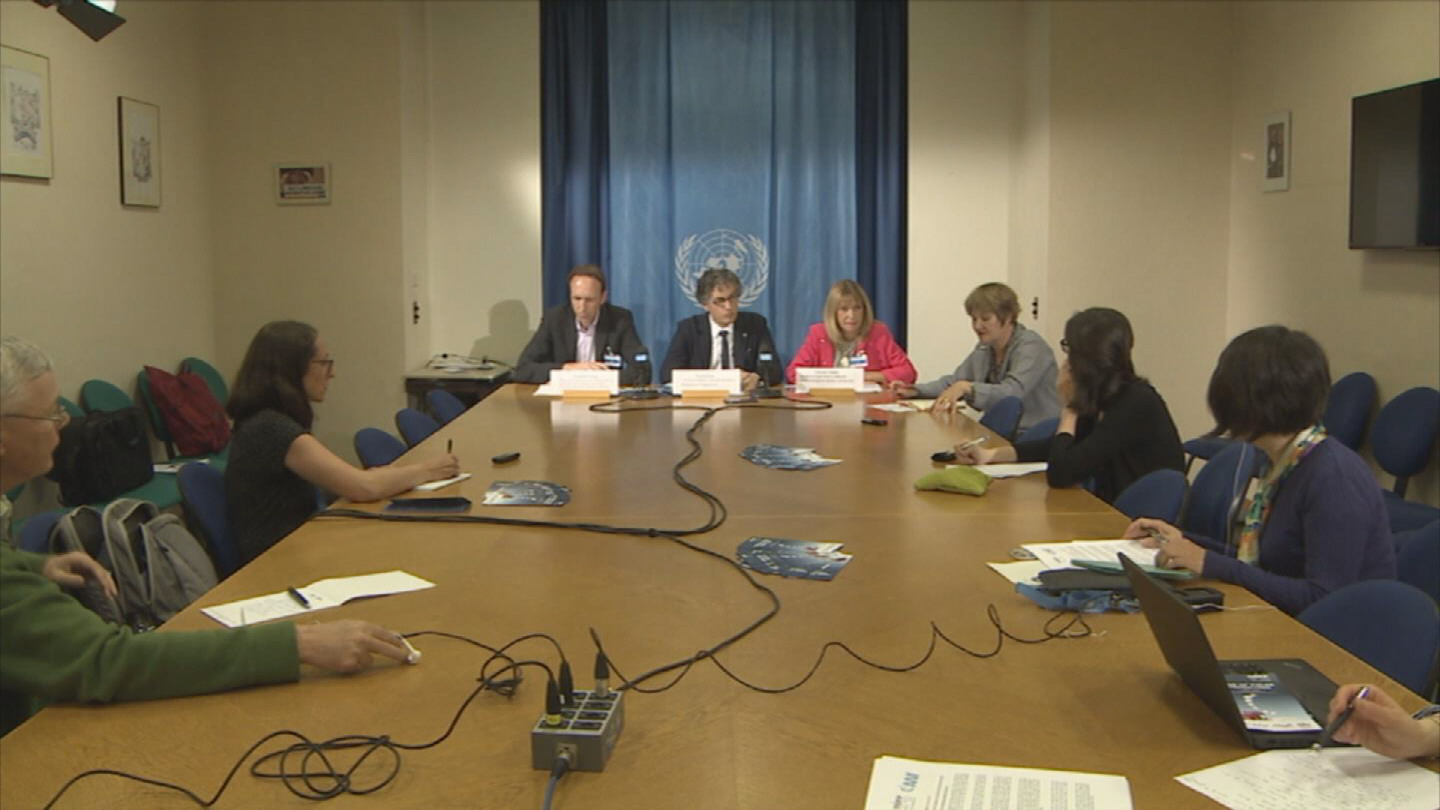
Today (3 July) at the united Nations in Geneva, WMO’s Secretary-General Michel Jarraud told journalists at the briefing launching the report that “The last decade was the warmest by a significant margin. Actually the increase between the 90s- 91 to the 2002 is the largest since we have had.”
The decade was the warmest for both hemispheres and for both land and ocean surface temperatures.
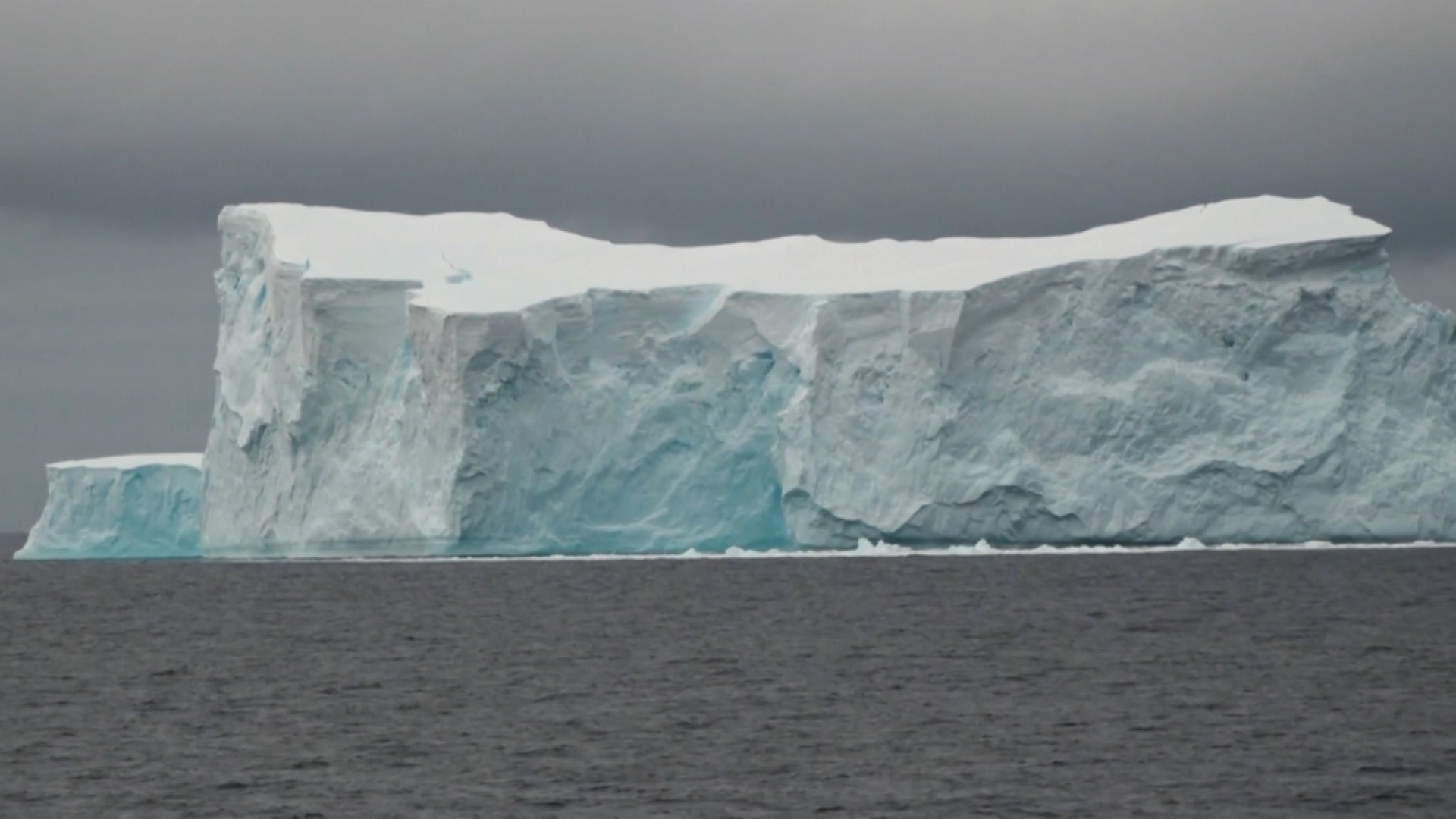
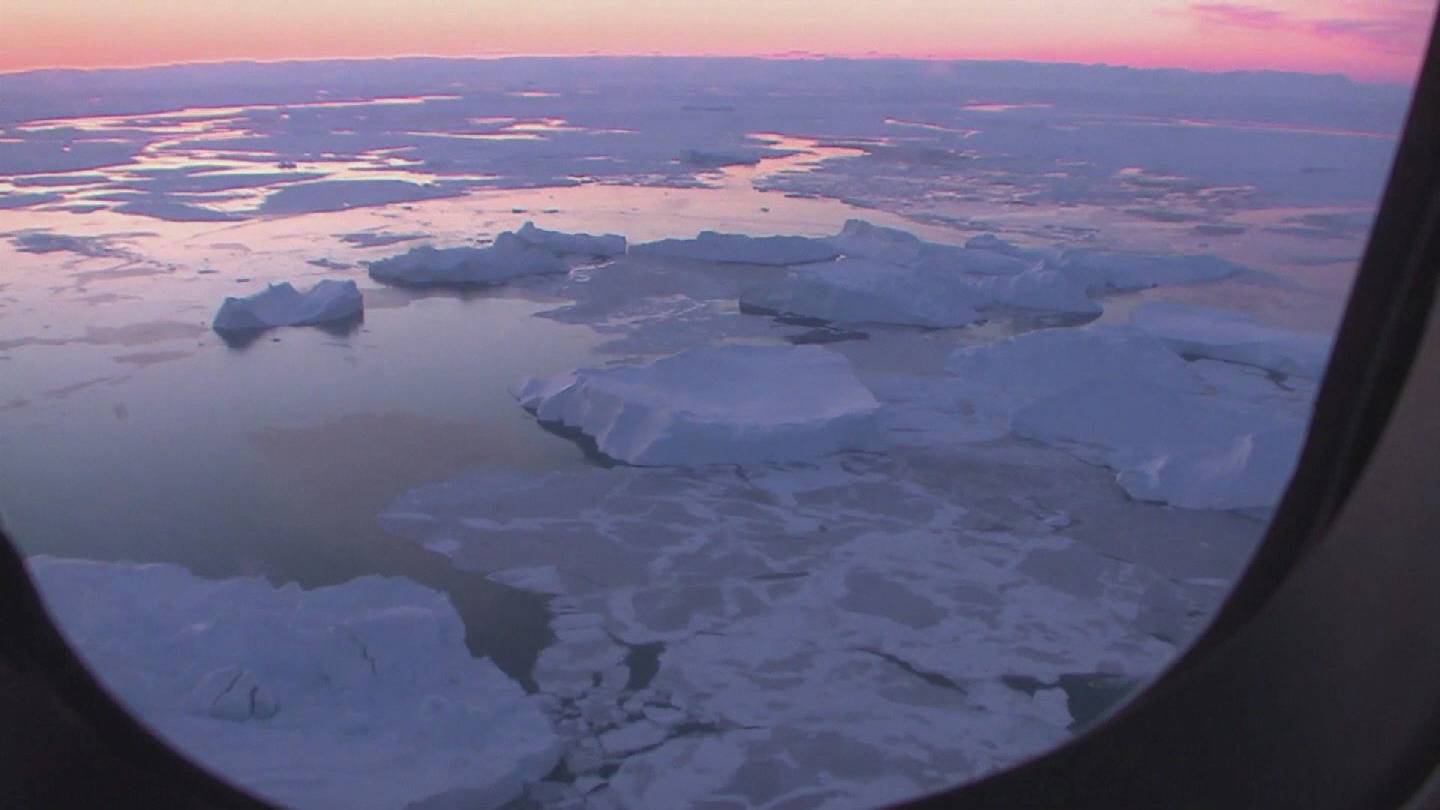
The record warmth was accompanied by a rapid decline in Arctic sea ice, and accelerating loss of net mass from the Greenland and Antarctic ice sheets and from the world’s glaciers. As a result of this widespread melting and the thermal expansion of sea water, global mean sea levels rose about 3 millimeters (mm) per year, about double the observed 20th century trend of 1.6 mm per year. Global sea level averaged over the decade was about 20 cm higher than that of 1880, according to the report.
Deaths from extreme events totaled 370,000 people, up 20 percent from the 1990s, the Geneva-based WMO said, though the world population also rose sharply over the period, from 5.3 billion in 1990 to 6.9 billion in 2010.
The jump in the death toll was caused mainly by a heat wave in Europe in 2003 which killed 66,000 and a heat wave in Russia in 2010 in which 55,000 people died.
Jarraud said that “For the 2003 heat wave, the world health organization estimates that the additional death toll for Western Europe was over 60,000 people. It is a big, it is a big impact. And for Russia alone I think it was estimated to be about 50,000 people alone in the 2010 heatwave”
The report analyzed global and regional temperatures and precipitation, as well as extreme events such as the heat waves in Europe and Russia, Hurricane Katrina in the United States of America, Tropical Cyclone Nargis in Myanmar, droughts in the Amazon Basin, Australia and East Africa and floods in Pakistan.
Download
There is no media available to download.