Media Home
 UN Web TV
 UN Audiovisual Library
 UN Photo
Unifeed
UN / DRC SEXUAL VIOLENCE
UNTV / FILE
STORY: UN / DRC SEXUAL VIOLENCE
TRT: 2.36
SOURCE: UNTV
RESTRICTIONS: NONE
LANGUAGE: ENGLISH / NATS
DATELINE: 9 APRIL 2014, NEW YORK CITY / FILE
FILE – RECENT, NEW YORK CITY
1. Wide shot, exterior United Nations headquarters
9 APRIL 2014, NEW YORK CITY
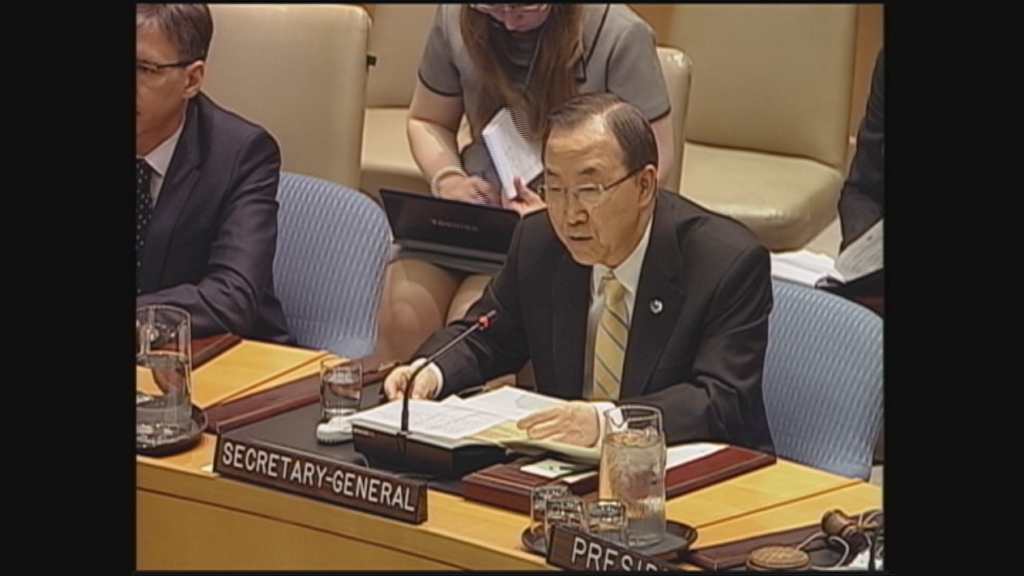
2. Wide shot, press conference
3. Wide shot, reporters
4. SOUNDBITE (English) Navi Pillay, UN High Commissioner for Human Rights:
“It appears that armed groups and State agents were each allegedly responsible for about half of all the cases of sexual violence that we recorded. Incidents of sexual violence were mainly registered during attacks on villages, alongside other human rights violations, including killings, wounding, abductions and or lootings.”
5. Med shot, reporters
6. SOUNDBITE (English) Hervé Ladsous, Under-Secretary-General for Peacekeeping Operations:
“There is no point of putting somebody, a perpetrator, behind bars for a short period when after that short period that person can escape and start committing the same crimes again. So, it takes a very important effort to make sure that a functioning and a fair system is in place. And that goes from the local police officer who listens to the testimony of the victim, it extends to the prosecutor, to the judge and finally to the penitentiary system.”
7. Wide shot, reporters
8. SOUNDBITE (English) Zainab Bangura, Special Representative of the United Nations Secretary General on Sexual Violence in Conflict:
“Our emphasis moving forward is to provide appropriate, timely and adequate services for victims as well as livelihood support for survivors so that they can begin to rebuild their lives. It is only when the people of DRC can live free of the threat of conflict-related sexual violence that the country can reach its full potential.”
9. Med shot, reporters
10. SOUNDBITE (English) Navi Pillay, UN High Commissioner for Human Rights:
“I understand the challenges, however, I certainly hold the Government responsible for lack of political will in the delivery of convictions.”
11. Med shot, reporters
12. SOUNDBITE (English) Zainab Bangura, Special Representative of the United Nations Secretary General on Sexual Violence in Conflict:
“When Minova fell we saw what happened, and when the FARDC went back into the conflict to the M23 we definitely because we had walked to the militants and said to them this is unacceptable through us, through DPKO, we saw a drop in the sexual violence that was committed by the FARDC. So, that is not easy, this has been going on for the last 20 years, but I think somehow we see a light out in the tunnel.”
13. Med shot, reporters
14. Wide shot, end of presser
FILE - IRIN - SEPTEMBER 2012, KANYARUCINA CAMP, DRC
13. Pan right, IDP camp
14. Various shots of women and children in the camp
FILE – IRIN - NORTH KIVU, DRC
15. Various shots, women and children
FILE - IRIN - SEPTEMBER 2012, RWINDI, DRC
16. Various shots, soldiers dancing
United Nations officials today (9 Apr) called on the Government of the Democratic Republic of the Congo (DRC) to step up the fight against impunity for rape and sexual violence, which remain widespread and largely unpunished despite some progress in holding perpetrators accountable.
Speaking to a press conference in New York UN High Commissioner for Human Rights Navi Pillay noted that according to an in-depth report from the UN Joint Human Rights Office in the DRC (UNJHRO), rebel groups and Government forces “were each allegedly responsible for about half of all the cases of sexual violence that we recorded.”
Pillay said “incidents of sexual violence were mainly registered during attacks on villages, alongside other human rights violations, including killings, wounding, abductions and or lootings.”
The report documents serious incidents of sexual violence in the country, with over 3,600 victims registered by the office between January 2010 and December 2013.
The Head of Peacekeeping Operations, Hervé Ladsous, stressed the need to combat impunity and said there was “no point of putting somebody, a perpetrator, behind bars for a short period when after that short period that person can escape and start committing the same crimes again.”
Ladsous said “it takes a very important effort to make sure that a functioning and a fair system is in place. And that goes from the local police officer who listens to the testimony of the victim, it extends to the prosecutor, to the judge and finally to the penitentiary system.”
The report also illustrates the systematic nature of some incidents of sexual violence, particularly in the volatile eastern part of the country, with a large number of cases committed in homes or when women are working fields, going to the market or fetching water.
The Special Representative of the Secretary General on Sexual Violence in Conflict, Zainab Bangura, called for “appropriate, timely and adequate services for victims as well as livelihood support for survivors so that they can begin to rebuild their lives.”
She said that “only when the people of DRC can live free of the threat of conflict-related sexual violence that the country can reach its full potential.”
Pillay noted that the vast majority of the cases documented in the report were women, but there were also around 906 children and 81 male victims. Nearly half of the 3,600 victims were in the strife-torn eastern province of North Kivu. The youngest victim was only two years old and the oldest was 80 years old.
She said she understood the challenges in combating sexual violence, but said “I certainly hold the Government responsible for lack of political will in the delivery of convictions.”
The findings of the report indicate that rape is used as a weapon of war to intimidate local communities, and to punish civilians for their real or perceived collaboration with armed groups or the national army.
The report also shows that armed groups were responsible for just over half the rapes, mostly committed during attacks aimed at gaining control of territories rich in natural resources.
Bangura commented on the trial of 39 FARDC soldiers accused of committing sexual violence in Minova, in the Eastern DRC, in November 2012.
She said “when Minova fell we saw what happened, and when the FARDC went back into the conflict to the M23 we definitely because we had walked to the militants and said to them this is unacceptable through us, through DPKO, we saw a drop in the sexual violence that was committed by the FARDC. So, that is not easy, this has been going on for the last 20 years, but I think somehow we see a light out in the tunnel.”
In a related development, the Secretary-General’s Special Envoy for the Great Lakes Region, Mary Robinson, was in Bukavu in DRC’s South Kivu province yesterday, where she met with local authorities and women’s organizations.
Robinson said that she was shocked by the number of women and young girls who continue to be victims of sexual violence in the DRC, and she reiterated the need to end impunity and seek transitional
Download
There is no media available to download.