Media Home
 UN Web TV
 UN Audiovisual Library
 UN Photo
WHO / SUICIDE
Download
There is no media available to download.
Share
STORY: WHO / SUICIDE
TRT: 2:22
SOURCE: WHO
RESTRICTIONS: NONE
LANGUAGE: ENGLISH / NATS
DATELINE: 29 AUGUST 2014, GENEVA, SWITZERLAND / RECENT
RECENT – GENEVA, SWITZERLAND
1. Wide shot, exterior World Health Organization Headquarters
29 AUGUST 2014, GENEVA, SWITZERLAND
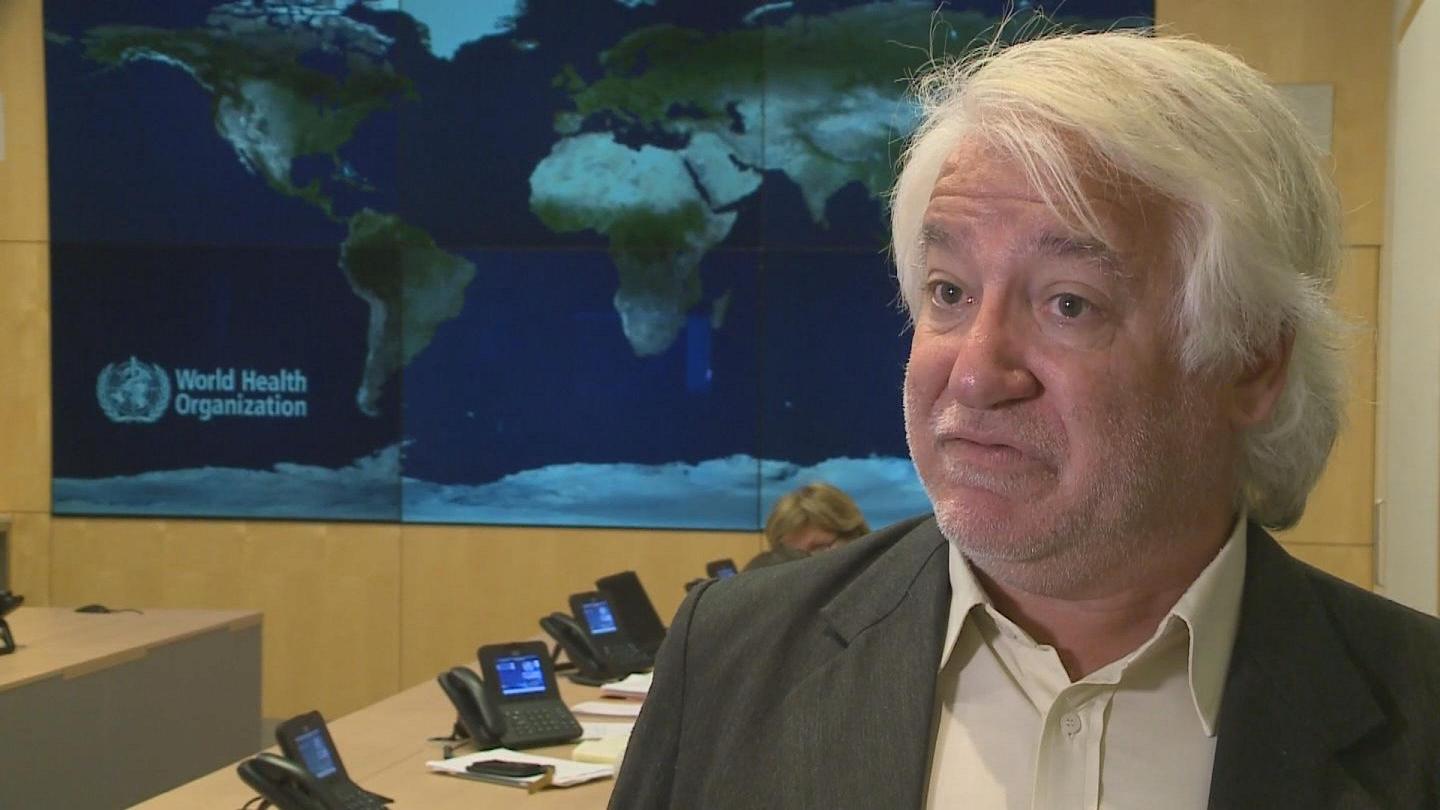
2. Med shot, pan left Shekhar Saxena walking into his office with interviewer
3. SOUNDBITE (English) Shekhar Saxena, WHO Director of the Department of Mental Health and Substance Abuse:
“Suicide is a public health issue, but it has remained unfortunately very silent. Not many people talk about it. But WHO realising the importance of this area is now issuing its report, its first report on suicide prevention.”
4. Still image, Saxena holding the WHO report
5. SOUNDBITE (English) Shekhar Saxena, WHO Director of the Department of Mental Health and Substance Abuse:
“A large number of these deaths are amongst young people and this is loss of precious life, in their prime, and that needs to be reduced, or stopped.”
6. Close up, Saxena talking
7. SOUNDBITE (English) Shekhar Saxena, WHO Director of the Department of Mental Health and Substance Abuse:
“A lot can be done for preventing suicides. Governments can have policies which go for many sectors to prevent suicides and a very strong framework to have action against suicide. Health professionals can identify people at high risk of suicide early, which includes people with mental health disorders, with large amounts of distress, and also with alcohol and drug abuse problems. And communities can be more caring. People who are attempting suicide are seeking help and if they are listened to, and provided immediate help a lot of suicides can be prevented.”
8. Med shot, Saxena talking to the interviewer
9. SOUNDBITE (English) Shekhar Saxena, WHO Director of the Department of Mental Health and Substance Abuse:
“We know that preventing access to means of suicide is very helpful. And some of the common means of committing suicide are pesticide ingestion, which many people will find it difficult to believe, but a large number of people in rural areas commit suicide by ingesting dangerous pesticides. Access to them can be reduced and suicide rates can come down. Other methods are hanging, as well as use of firearms, and again control mechanisms to make sure that people who are suicidal don’t have easy access to these means will be very helpful.”
10. Med shot, Saxena talking to the interviewer
The World Health Organization is calling for coordinated action to reduce suicides worldwide.
More than 800,000 people are dying each year as a result of suicide – around one person every 40 seconds and there are many more people who attempt it.
In its first global report on suicide prevention launched today (4 Sept), WHO said 75 percent of suicides occur in low- and middle-income countries.
In a recent interview at WHO Headquarters in Geneva, the Organization’s Director of the Department of Mental Health and Substance Abuse Shekhar Saxena said “suicide is a public health issue, but it has remained unfortunately very silent. Not many people talk about it. But WHO realising the importance of this area is now issuing its report, its first report on suicide prevention.”
Suicide occurs all over the world and can take place at almost any age. Globally, suicide rates are highest in people aged 70 years and over. In some countries, however, the highest rates are found among the young.
Notably, suicide is the second leading cause of death in 15-29 year-olds globally.
Saxena stressed “this is loss of precious life, in their prime, and that needs to be reduced, or stopped.”
The report is also calling for responsible reporting of suicide in the media, by avoiding language that sensationalizes suicide and explicit description of methods used.
Saxena said “a lot can be done for preventing suicides. Governments can have policies which go for many sectors to prevent suicides and a very strong framework to have action against suicide.”
He explained that health professionals can identify people at high risk of suicide early, which includes people with mental health disorders, with large amounts of distress, and also with alcohol and drug abuse problems.
He underscored “and communities can be more caring. People who are attempting suicide are seeking help and if they are listened to, and provided immediate help a lot of suicides can be prevented.”
The Organization is also calling for the decriminalization of suicide noting that the incarceration of individuals who have attempted to take their own lives is not an effective deterrent measure.
Saxena also said “we know that preventing access to means of suicide is very helpful. And some of the common means of committing suicide are pesticide ingestion, which many people will find it difficult to believe, but a large number of people in rural areas commit suicide by ingesting dangerous pesticides. Access to them can be reduced and suicide rates can come down. Other methods are hanging, as well as use of firearms, and again control mechanisms to make sure that people who are suicidal don’t have easy access to these means will be very helpful.”
WHO member states recently endorsed an action plan which seeks to reduce suicide rate by 10 per cent worldwide by 2020.