Media Home
 UN Web TV
 UN Audiovisual Library
 UN Photo
SOMALIA / MENTAL HEALTH
Download
There is no media available to download.
Share
STORY: SOMALIA / MENTAL HEALTH
TRT: 2:36
SOURCE: UNSOM
RESTRICTIONS: NONE
LANGUAGE: ENGLISH / SOMALI / NATS
DATELINE: 24 - 26 JULY, 2017, BAIDOA, SOMALIA
1. Various shots, participants in the training
2. SOUNDBITE (English) Amelie Runesson, Corrections Advisor, United Nations Assistance Mission In Somalia (UNSOM):
“We know that the rate of mental health illness is one of the highest in the world in Somalia actually. I think one main reason for that is due to the war, that a lot of people have encountered for instance attacks and the sudden death of close ones. So this training aims to shed the light first of all for the stigma surrounding mental health, and then provide the participants with the basics in common psychiatric disorders such as Post Traumatic Stress Disorder, and also to give them the basics in psychological assessment and specifically suicide screening.”
3. Various shots, participants in the training
4. SOUNDBITE (English) Issak Mohamud Mursal, Acting Director General, Ministry Of Health In South West State, Somalia:
“We have the concern that mental illness people have been increasing for the last 10 years or 20 years.”
5. Various shots, training
6. SOUNDBITE (Somali) Dr. Adan mohamed abdirahman, Director, Baidoa Psychiatric Hospital:
“We are very pleased with this workshop because there has been no training on mental health conducted since the centre (Baidoa Psychiatric Hospital) was opened five years ago. It is a historic day and we are very happy. There is a saying in Somalia which holds that ‘knowledge precedes action.’ Before a person treats patients, they first of all have to learn. So, the training is useful and the professionals will learn to care for mentally ill patients.”
7. Various shots, training
8. SOUNDBITE (English) Amelie Runesson, Corrections Advisor, United Nations Assistance Mission In Somalia (UNSOM):
“I think it was very clear that they talked about, instead of talking about someone as ‘crazy,’ the importance of using the word ‘mental health’. And also how to advocate for this group, both here in Baidoa and also on a more regional level.”
9. Various shots, training
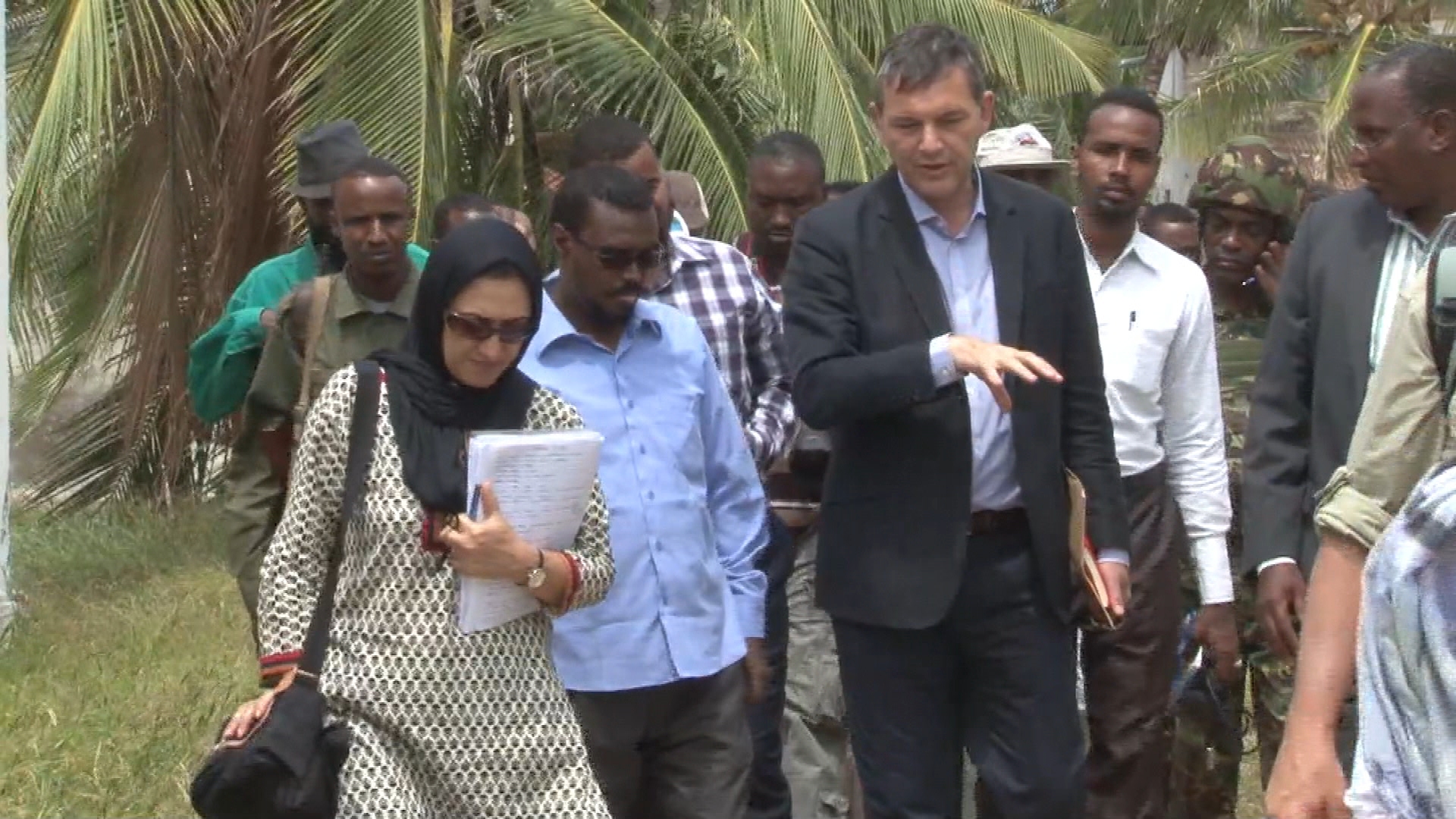
The UN held a capacity-building workshop for thirty mental health professionals from institutions in Baidoa, the capital of Somalia’s South West state.
The training was held between 24 and 26 July 2017 and provided basic preparation for handling psychiatric disorders. Participants included staff from Baidoa central prison, the city’s psychiatric hospital, and the Baidoa Disarmament, Demobilisation and Rehabilitation centre.
Issak Mohamud Mursal, the acting Director General of the Ministry of Health in South West state, noted that the training would boost efforts to treat the increasing number of mental illness cases in Somalia.
Mursay said, “We have concern that mentally ill people have been increasing in the last 10 years or 20 years,” adding that the problem was that they had not received any training similar to this one.
The state of mental health in Somalia has been on the back burner of health priorities for decades, although available statistics show that the incidence of mental illness in the country is one of the highest in the world.
“I think one reason for that is due to the war, that a lot of people have encountered for instance attacks and sudden deaths,” said Amelie Runesson, a Corrections Advisor with the United Nations Assistance Mission in Somalia (UNSOM).
She added “this training aims to shed light first of all for the stigma surrounding mental health and then provide participants with the basics in common psychiatric disorders, such as Post Traumatic Stress Disorder, and also to give them the basics in psychological assessment, specifically suicide screening.”
Participants discussed ways to end the stigma surrounding mental illness and review treatment techniques for common psychiatric disorders.
“In Somalia individuals with mental health problems are commonly called ‘crazy,’” noted Runesson. “One of the key messages delivered was the importance of rather understanding it as an illness which can be treated. Changing the vocabulary is a first step to challenge the stigmatization.”
Figures at the Baidoa psychiatric hospital indicate an increase in the number of patients diagnosed with mental illnesses. Prisoners and detainees are more prone to mental illness, according to the World Health Organisation. Most patients present symptoms of conditions such as schizophrenia, anxiety, depression and epilepsy, according to the hospital’s director.
“We are very pleased with this workshop because there has been no training on mental health conducted since the centre (Baidoa Psychiatric Hospital) was opened five years ago. It is a historic day and we are very happy,” said Dr. Adan Mohamed Abdirahman, the Director of the Baidoa Psychiatric Hospital. “There is a saying in Somalia which holds that ‘knowledge precedes action.’ Before a person treats patients, they first of all have to learn. So, the training is useful and the professionals will learn to care for mentally ill patients.”
The first of its kind in the region, the three-day training was jointly organized by the Rule of Law and Security Institutions Group (ROLSIG) of UNSOM and the United Nations Office on Drugs and Crime (UNODC).