Media Home
 UN Web TV
 UN Audiovisual Library
 UN Photo
OHCHR / STATE AND RELIGION
Download
There is no media available to download.
Share
STORY: OHCHR / STATE AND RELIGION
TRT: 02:29
SOURCE: OHCHR
RESTRICTIONS: PLEASE CREDIT UN HUMAN RIGHTS OFFICE ON SCREEN
LANGUAGE: ENGLISH / NATS
DATELINE: 02 MARCH 2018, GENEVA, SWITZERLAND
02 MARCH 2018, GENEVA, SWITZERLAND
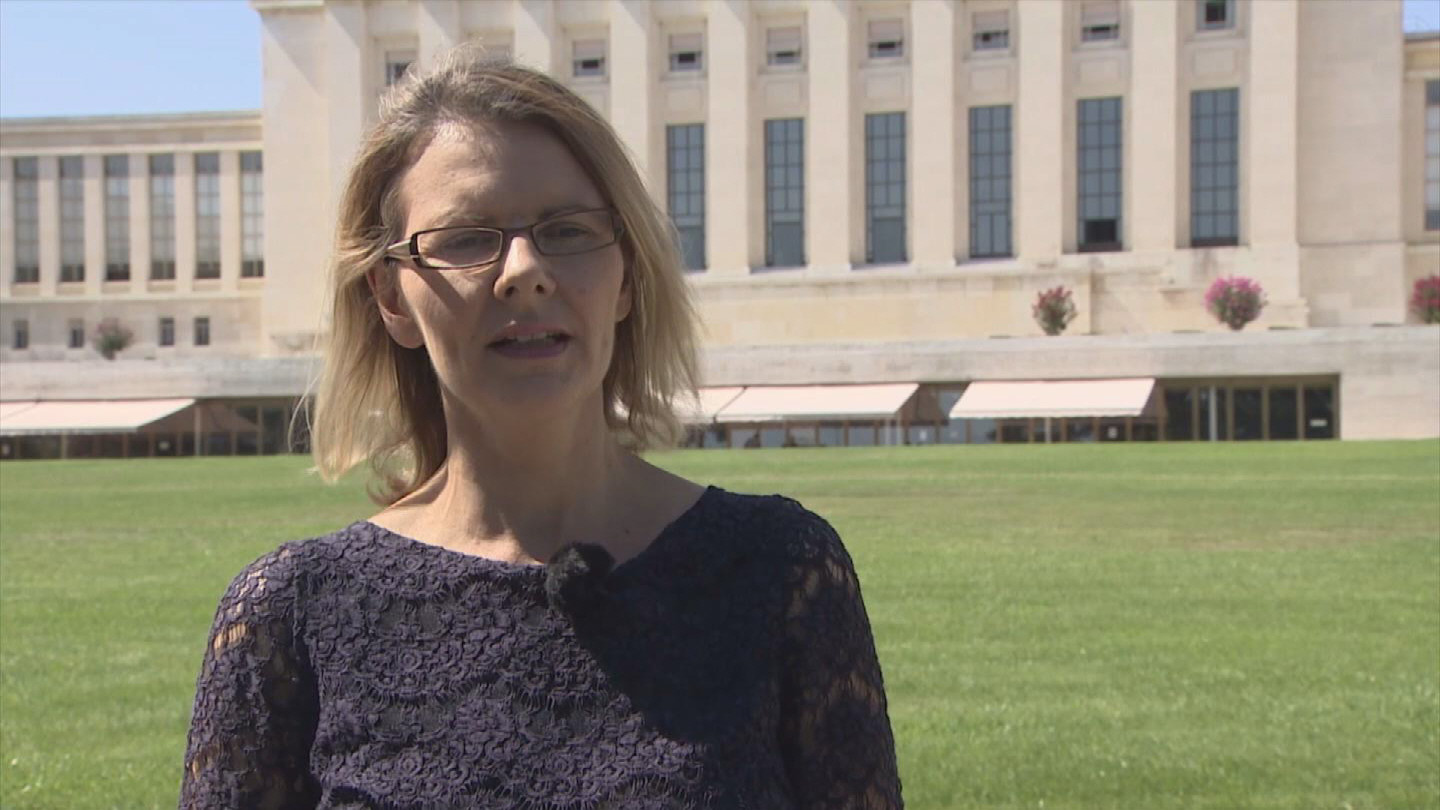
1. Wide shot, Palais des Nations exterior
2. Tilt up, Human Rights Council room
3. Wide shot, dais
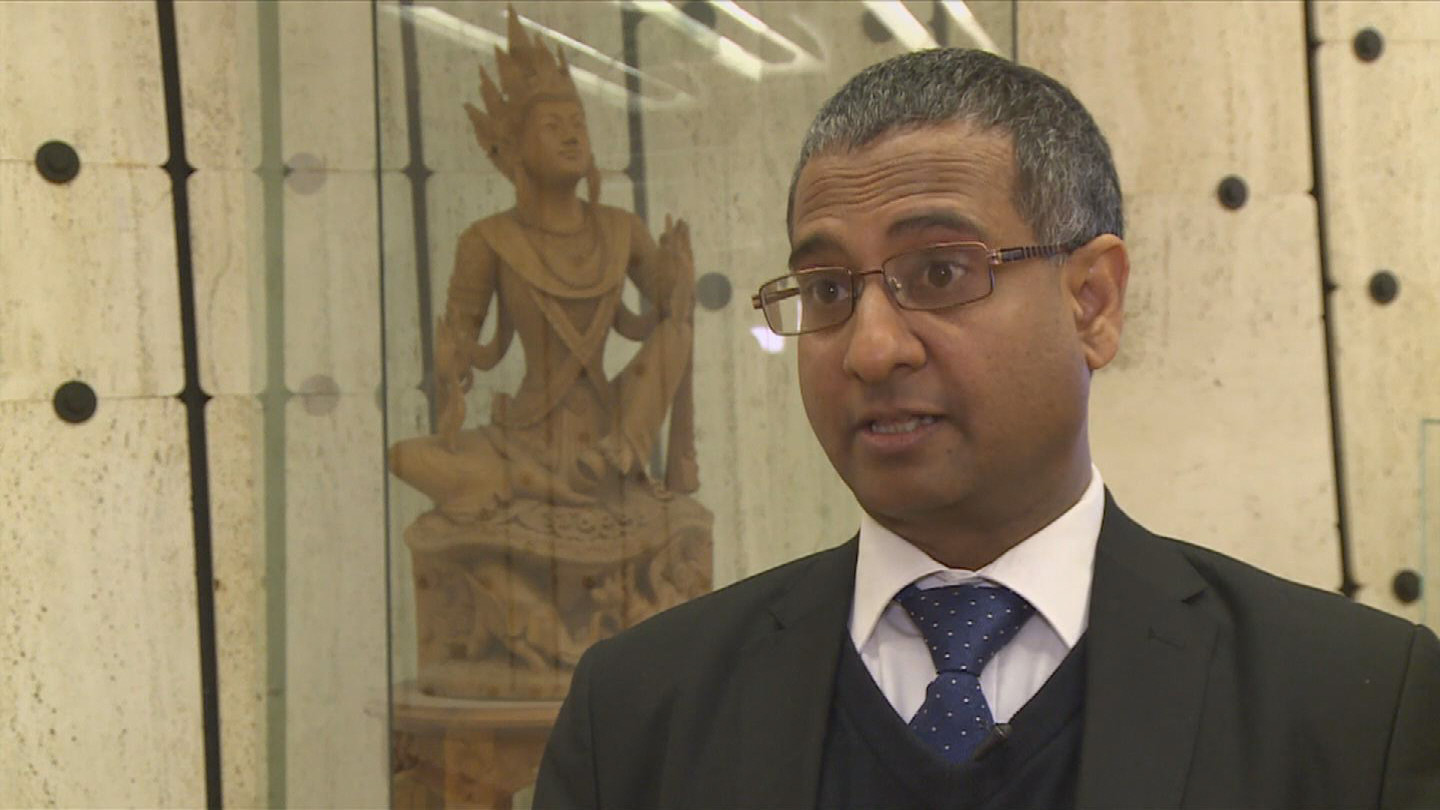
4. SOUNDBITE (English) Ahmed Shaheed, Special Rapporteur on Freedom of Religion or Belief, United Nations:
“The challenge in the world today is to respond to the growing diversity of communities and migration, be it people migrating for work or refugees, brings this question of increasing diversity in communities. So, what would work best for supporting diversity and pluralism would be those models that put a distance between religion and State. What is important is that the State be able to fulfil its role of being an impartial guarantor of rights to everybody. So when a State identifies with a religion, it might in some cases defend, promote, and protect that religion at the expense of individuals who may or may not subscribe to that religion.”
5. Med shot, delegate at Human Rights Council
6. SOUNDBITE (English) Ahmed Shaheed, Special Rapporteur on Freedom of Religion or Belief, United Nations:
“What will help States deal with the influx of refugees and migration and growing diversity is to have a principal distance between State and Religion; one where the State can cooperate or accommodate religions but without discriminating on account of religion or belief.”
7. Med shot, delegates at Human Rights Council
8. SOUNDBITE (English) Ahmed Shaheed, Special Rapporteur on Freedom of Religion or Belief, United Nations:
“The right to freedom or belief is about the individual’s right to belief or not belief whatever they want. The right does not give the State any right or space to protect religions per se. Blasphemy laws try to protect certain truth claims at the expense of individuals who are the actual rights bearers. So, when there are blasphemy laws or anti-conversion laws or apostacy laws, what happens is that [the] State tries to protect one religion or belief, and because of that individuals suffer. To have a real pluralistic society one needs to respect freedom of expression as well and that requires that blasphemy laws are not implemented or even used.”
9. Close up, Shaheed clasping hands
10. SOUNDBITE (English) Ahmed Shaheed, Special Rapporteur on Freedom of Religion or Belief, United Nations:
“There is no one model that is of itself sufficient to guarantee everybody’s rights. It requires pluralism, it requires respect for human rights and it requires to respect freedom of religion and belief in law and in practice.”
11. Med shot, Special Rapporteur in hallway
A UN study found that the right to religious freedom can be undermined because of the relationship between the State and religion.
The study conducted by the United Nations Special Rapporteur on Freedom of Religion and Belief, Ahmed Shaheed, emphasized the obligation of States to guarantee freedom of religion, particularly with growing diversity through migration.
SOUNDBITE (English) Ahmed Shaheed, Special Rapporteur on Freedom of Religion or Belief, United Nations:
“The challenge in the world today is to respond to the growing diversity of communities and migration, be it people migrating for work or refugees, brings this question of increasing diversity in communities. So, what would work best for supporting diversity and pluralism would be those models that put a distance between religion and State. What is important is that the State be able to fulfil its role of being an impartial guarantor of rights to everybody. So when a State identifies with a religion, it might in some cases defend, promote, and protect that religion at the expense of individuals who may or may not subscribe to that religion.”
Shaheed cited three types of relationships between the State and religion, namely: States with official or favoured religions, States with no identification towards a religion, and States that pursue policies to heavily restrict the role of religion.
He noted that States that enforce an official religion have very high levels of restrictions on freedom of religion and often discriminate against individuals from minority religious groups, women, and others.
SOUNDBITE (English) Ahmed Shaheed, Special Rapporteur on Freedom of Religion or Belief, United Nations:
“What will help States deal with the influx of refugees and migration and growing diversity is to have a principal distance between State and Religion; one where the State can cooperate or accommodate religions but without discriminating on account of religion or belief.”
The Special Rapporteur called for the abolition of blasphemy laws as they stifle freedom of religion.
SOUNDBITE (English) Ahmed Shaheed, Special Rapporteur on Freedom of Religion or Belief, United Nations:
“The right to freedom or belief is about the individual’s right to belief or not belief whatever they want. The right does not give the State any right or space to protect religions per se. Blasphemy laws try to protect certain truth claims at the expense of individuals who are the actual rights bearers. So, when there are blasphemy laws or anti-conversion laws or apostacy laws, what happens is that [the] State tries to protect one religion or belief, and because of that individuals suffer. To have a real pluralistic society one needs to respect freedom of expression as well and that requires that blasphemy laws are not implemented or even used.”
Shaheed noted that there was “no one model that is of itself sufficient to guarantee everybody’s right”. He added that the freedom of belief requires pluralism, respect for human rights, and respect for freedom of religion and belief “in law and in practice.”