Media Home
 UN Web TV
 UN Audiovisual Library
 UN Photo
UN / MANDELA LECTURE GUTERRES
Download
There is no media available to download.
Share
STORY: UN / MANDELA LECTURE GUTERRES
TRT: 2 :56
SOURCE : UNIFEED / NELSON MANDELA FOUNDATION
RESTRICTIONS : NONE
LANGUAGE : ENGLISH / NATS
DATELINE : 18 JULY 2020, NEW YORK CITY / 18 JULY 2020, SOUTH AFRICA / FILE
FILE – RECENT - NEW YORK CITY
1. Wide shot, exterior, United Nations Headquarters
18 JULY 2020, NEW YORK CITY
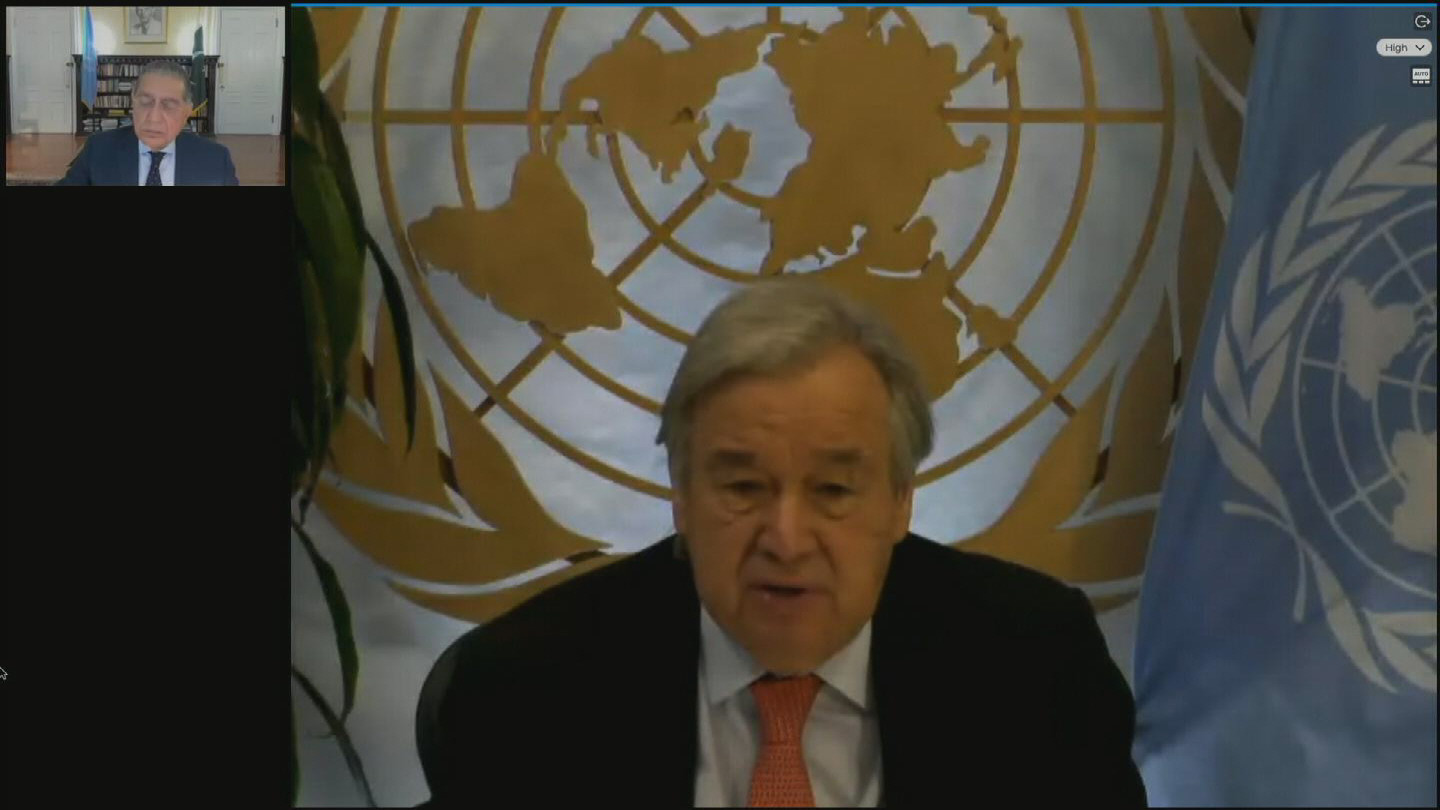
2. SOUNDBITE (English) António Guterres, Secretary-General of the United Nations:
“COVID-19 has been likened to an x-ray, revealing fractures in the fragile skeleton of the societies we have built. It is exposing fallacies and falsehoods everywhere: the lie that free markets can deliver healthcare for all; the fiction that unpaid care work is not work; the delusion that we live in a post-racist world; the myth that we are all in the same boat. Because while we are all floating on the same sea, it’s clear that some are in superyachts while others are clinging to the floating debris.”
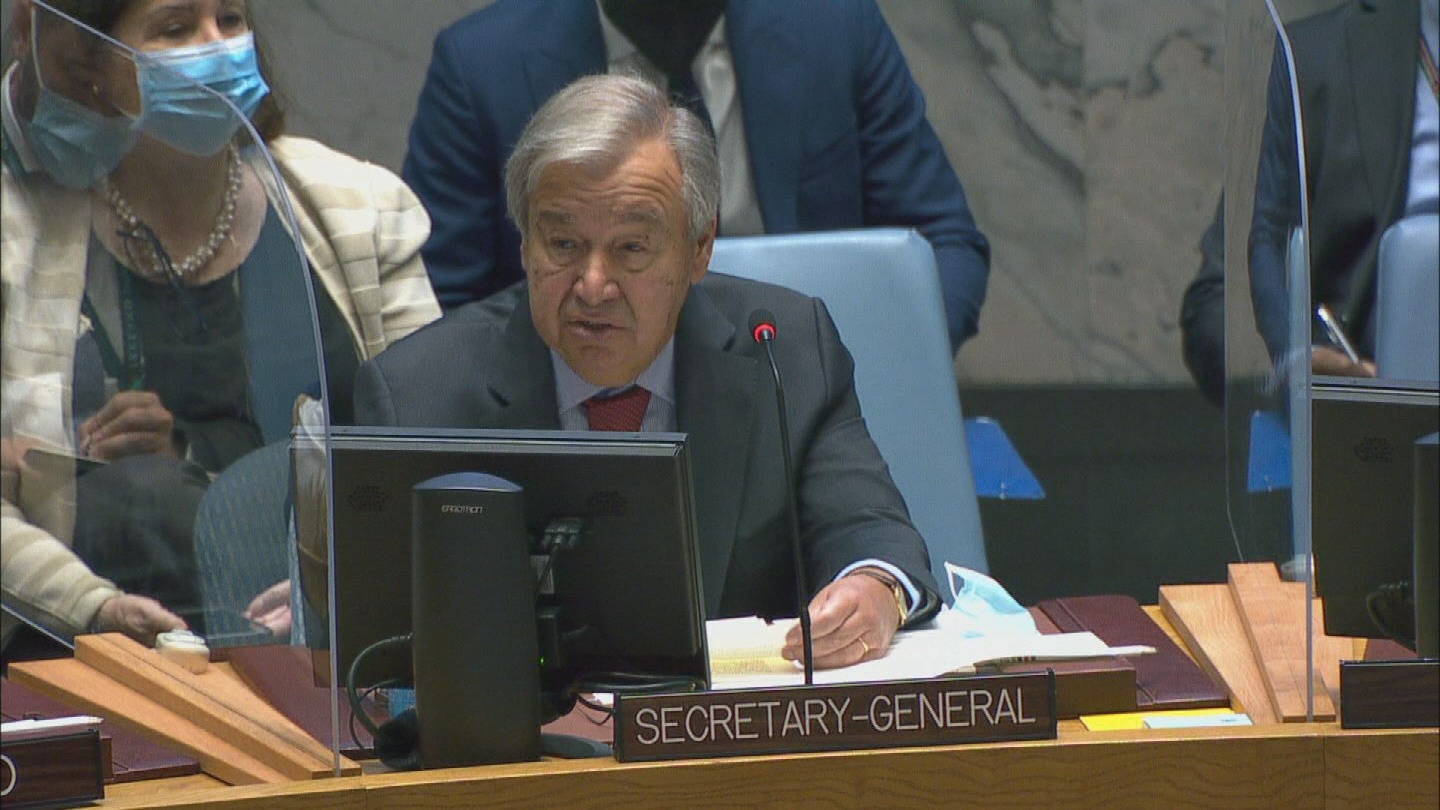
3.Wide shot, Guterres at the podium
4. SOUNDBITE (English) António Guterres, Secretary-General of the United Nations:
“The anti-racism movement that has spread from the United States around the world in the aftermath of George Floyd’s killing is one more sign that people have had enough: enough of inequality and discrimination that treats people as criminals on the basis of their skin colour; enough of the structural racism and systematic injustice that deny people their fundamental human rights.”
5. Wide shot, Guterres at the podium
6. SOUNDBITE (English) António Guterres, Secretary-General of the United Nations:
“Political leaders must raise their ambition, businesses must raise their sights, and people everywhere must raise their voices. There is a better way, and we must take it.”
7. Wide shot, Guterres at the podium
NELSON MANDELA FOUNDATION - 18 JULY 2020, SOUTH AFRICA
8.Wide shot, stage of the Nelson Mandela Annual Lecture
FILE – NELSON MANDELA FOUNDATION - RECENT – SOUTH AFRICA
9.SOUNDBITE (English) Cyril Ramaphosa, President of South Africa:
“Across the world, people are rising and taking a firm stand against racism, injustice and inequality. In his memory, we must strive all the harder to build societies that are rooted in mutual respect, tolerance and reconciliation.”
NELSON MANDELA FOUNDATION -18 JULY 2020, SOUTH AFRICA
10.Wide shot, stage of the Nelson Mandela Annual Lecture
FILE – NELSON MANDELA FOUNDATION - RECENT – SOUTH AFRICA
11. SOUNDBITE (English) Cyril Ramaphosa, President of South Africa:
“Even as we live in these troubled times, it was Nelson Mandela who taught us to remain courageous and to persevere. We have it within us to rise above the devastation brought about by this pandemic.”
NELSON MANDELA FOUNDATION - 18 JULY 2020, SOUTH AFRICA
12.Wide shot, stage of the Nelson Mandela Annual Lecture
FILE – NELSON MANDELA FOUNDATION - RECENT – SOUTH AFRICA
13. SOUNDBITE (English) Graça Machel, Former First Lady of South Africa and Human Rights Activist:
“Our new social contract for this new era must be driven by human interest above market interest. As we commemorate Mandela Day amid this challenging season of COVID, let us take inspiration from Madiba’s legacy and seize this time to dismantle the structural systemic barriers which are reinforce inequality and disenfranchisement.”
NELSON MANDELA FOUNDATION - 18 JULY 2020, SOUTH AFRICA
14.Wide shot, stage of the Nelson Mandela Annual Lecture
UN chief António Guterres said that COVID-19 “has been likened to an x-ray, revealing fractures in the fragile skeleton of the societies,” adding that “while we are all floating on the same sea, it’s clear that some are in superyachts while others are clinging to the floating debris.”
Speaking at the 18th Nelson Mandela Annual Lecture via video link from New York today (18 Jul), the UN Secretary-General António Guterres said that the pandemic has demonstrated the fragility of the world, adding that it has laid bare risks the world has ignored for decades: inadequate health systems; gaps in social protection; structural inequalities; environmental degradation; the climate crisis.
He said, the pandemic is “exposing fallacies and falsehoods everywhere: the lie that free markets can deliver healthcare for all; the fiction that unpaid care work is not work; the delusion that we live in a post-racist world.”
The UN chief noted that inequality defines our time. More than 70 per cent of the world’s people are living with rising income and wealth inequality. The 26 richest people in the world hold as much wealth as half the global population.
He also stated that People’s chances in life depend on their gender, family and ethnic background, race, whether or not they have a disability, and other factors. Multiple inequalities intersect and reinforce each other across the generations. The lives and expectations of millions of people are largely determined by their circumstances at birth. And inequality works against human development – for everyone.
On racism and the legacy of colonialism, Guterres said, “the anti-racism movement that has spread from the United States around the world in the aftermath of George Floyd’s killing is one more sign that people have had enough: enough of inequality and discrimination that treats people as criminals on the basis of their skin colour; enough of the structural racism and systematic injustice that deny people their fundamental human rights.”
He also noted that the legacy of colonialism still reverberates, and the world sees this in economic and social injustice, the rise of hate crimes and xenophobia; the persistence of institutionalized racism and white supremacy.
On climate inequality, Guterres said that today’s young climate protestors are on the frontlines of the fight against inequality.
He said, “political leaders must raise their ambition, businesses must raise their sights, and people everywhere must raise their voices. There is a better way, and we must take it.”
On the way forward, Guterres noted that the response to the pandemic, and to the widespread discontent that preceded it, must be based on a New Social Contract and a New Global Deal that create equal opportunities for all and respect the rights and freedoms of all.
He explained that the world is seeing beginnings of a new movement. This movement rejects inequality and division, and unites young people, civil society, the private sector, cities, regions and others behind policies for peace, our planet, justice and human rights for all. It is already making a difference.
In a pre-recorded video message showed at the Annual Lecture, President of South Africa Cyril Ramaphosa said, “across the world, people are rising and taking a firm stand against racism, injustice and inequality. In his memory, we must strive all the harder to build societies that are rooted in mutual respect, tolerance and reconciliation.”
He added, “even as we live in these troubled times, it was Nelson Mandela who taught us to remain courageous and to persevere. We have it within us to rise above the devastation brought about by this pandemic.”
Also in a pre-recorded message, Graça Machel, Former First Lady of South Africa and Human Rights Activist said, “our new social contract for this new era must be driven by human interest above market interest. As we commemorate Mandela Day amid this challenging season of COVID, let us take inspiration from Madiba’s legacy and seize this time to dismantle the structural systemic barriers which are reinforce inequality and disenfranchisement.”
The 2020 Nelson Mandela Annual Lecture was held online for the first time, in light of the ongoing COVID-19 pandemic. The lecture series, held annually by the Nelson Mandela Foundation, on the birthday of the first democratically-elected President of South Africa, aims to encourage dialogue by inviting prominent personalities to discuss major international challenges.