Media Home
 UN Web TV
 UN Audiovisual Library
 UN Photo
JORDAN / REFUGEES COVID-19 VACCINE
Download
There is no media available to download.
Share
UNHCR
STORY: JORDAN / REFUGEES COVID-19 VACCINE
TRT: 2:12
SOURCE: UNHCR
RESTRICTIONS: PLEASE CREDIT UNHCR ON SCREEN
LANGUAGE: ENGLISH /NATS
DATELINE: 14 JANUARY 2021, IRBID, JORDAN
1. Wide shot, entrance of the Health centre in Irbid
2. Med shot, Iraqi refugees Raia and Ziad entering into the Health centre
3. Med shot, Ziad and Raia go to the main desk for documents check
4. Wide shot, Doctor and Layaly Gharaybeh, UNHCR Ppublic health officer talking
5. Med shot, Doctor and Layaly Gharaybeh, UNHCR Ppublic health officer talking
6. SOUNDBITE (English) Layaly Gharaybeh, UNHCR public health officer:
“Refugees are identified for the vaccine in the same way citizens are. Everybody has to look into the [vaccination registration] platform, register and, according to the system that has been put by the government, priority in Phase 1 will be given to those who are elderly with chronic diseases. Those who have been identified as from the priority category, they will receive an SMS message on their mobile informing them about the date and time and location of the health center where they are supposed to take the vaccination.”
7. Close up, vaccines in a fridge
8. SOUNDBITE (English) Layaly Gharaybeh, UNHCR public health officer:
“The pandemic has affected refugees, if not in the same way as citizens, maybe harder, because as we all know refugees are one of the most vulnerable communities in this world. A lot of refugees have lost their jobs in the lockdown, in the early stage of the pandemic. A lot of them are struggling to find a new job after, we would say, gradual return of usual life.”
9. Wide shot, nurse preparing vaccine
10. Close up, nurse holding up a syringe with vaccine
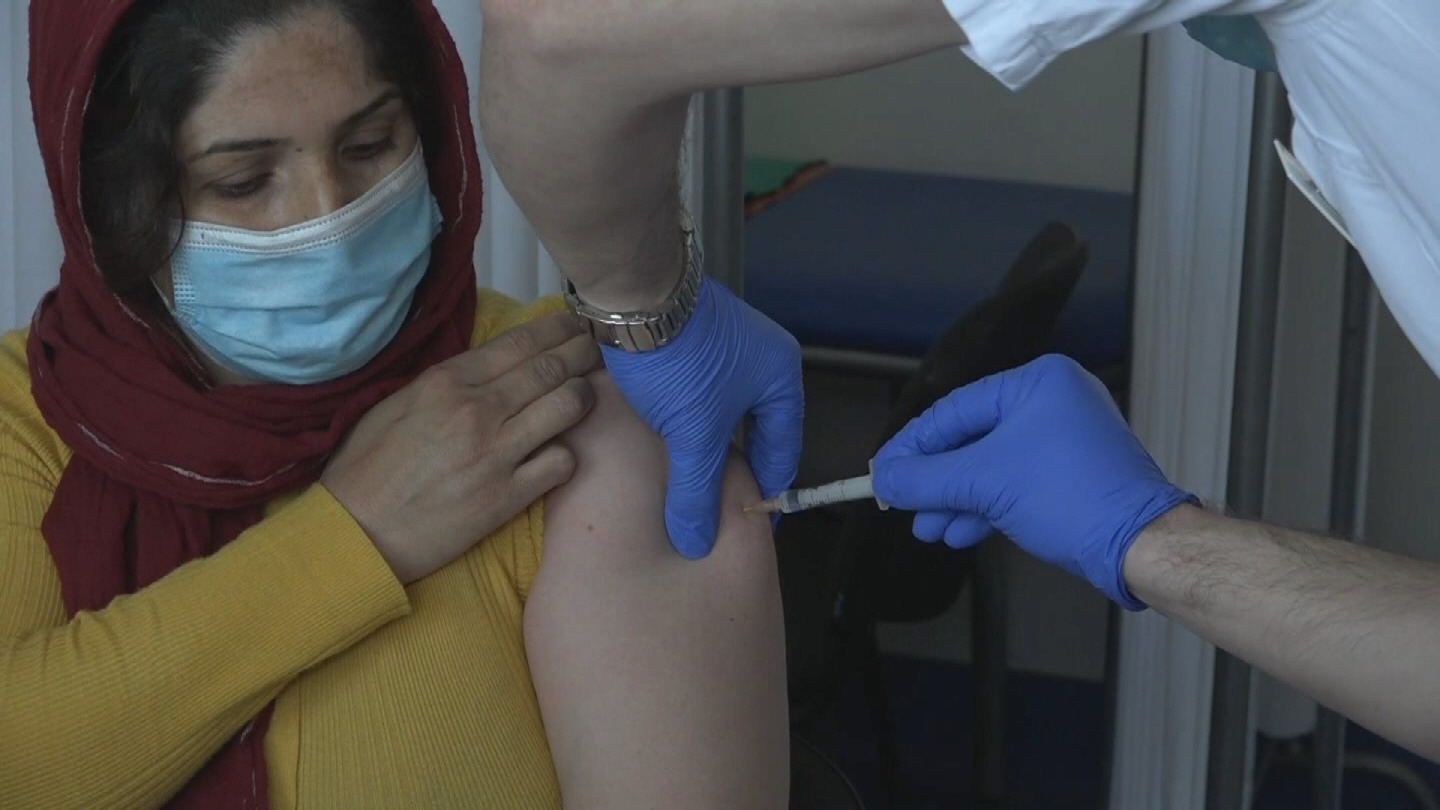
11. Med shot, Ziad receiving vaccine
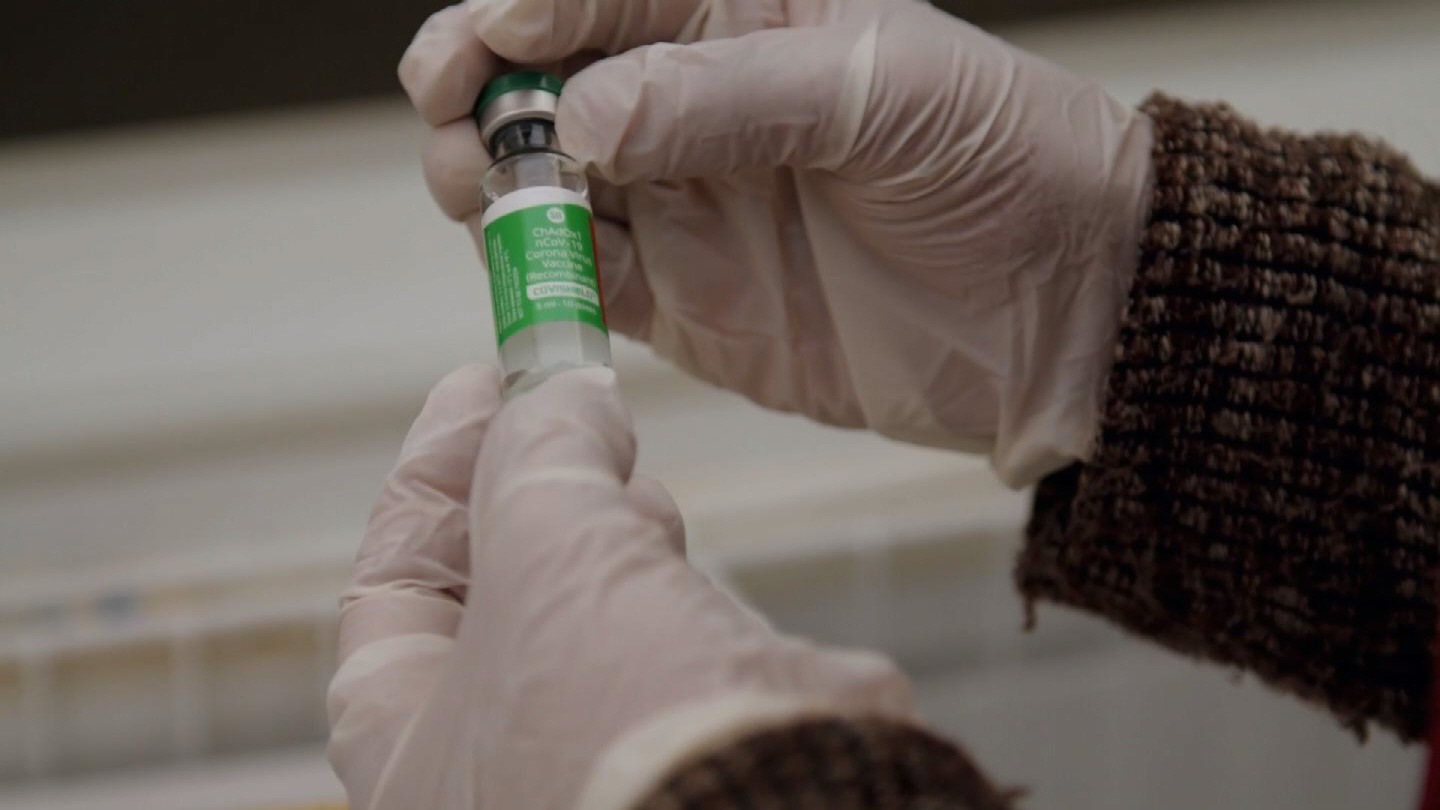
Refugees in Jordan began receiving vaccinations against COVID-19 on Thursday (14 Jan) in Jordan as part of a government initiative that includes all citizens, refugees and residents in a comprehensive national health response.
The Jordanian Ministry of Health kicked off a vaccination campaign against COVID-19 on Wednesday at 29 health centers across the Kingdom. Over 200,000 people have enrolled on the national platform vaccine.jo, and UNHCR is currently aware of 53 refugees who have already received vaccination appointments.
UNHCR has been supporting the government’s efforts by encouraging and helping refugees to sign-up for the vaccine and providing transportation to health clinics where needed.
In the northern city of Irbid on Thursday, an Iraqi couple – Raia, a trained pharmacist, and her husband Ziad, a doctor by profession – were among the group of the world’s first refugees to be vaccinated. They both received the Sinopharm vaccine developed in China after being prioritized due to Ziad’s chronic diseases, which placed him in the high-risk category.
A further 43 refugees from Zaatari Refugee Camp also received the vaccine Thursday at the Chest and Diseases Center in Mafraq, the nearest town to the camp, with more planned over the coming days.
As part of the country’s national COVID-19 vaccination plan, anyone living on Jordanian soil, including refugees and asylum seekers, is entitled to receive the vaccine free of charge. Only those refugees who are in one of the national priority categories will receive vaccinations initially. Others may follow as rollouts are scaled up.
UNHCR is continuously advocating at country, regional and global levels for refugees and other people we protect to be included in national strategies. As a priority, vaccines are being made available to the most vulnerable, such as older people, those with chronic diseases, or people who are immune-compromised, as well as healthcare workers and others with system-critical functions.
Jordan – which is host to some 750,000 refugees registered by UNHCR – introduced some of the most stringent lockdown measures in the world during the early phase of the pandemic in an effort to contain the spread of the virus.
While the proportion of refugees that have tested positive for COVID-19 in the country has remained low at 1.6 per cent, compared with three per cent among the general Jordanian population,
Since the onset of the COVID-19 pandemic, refugees have been generously included in the Government of Jordan’s the national response plan, able to access health care and medical treatment on par with Jordanian citizens.